

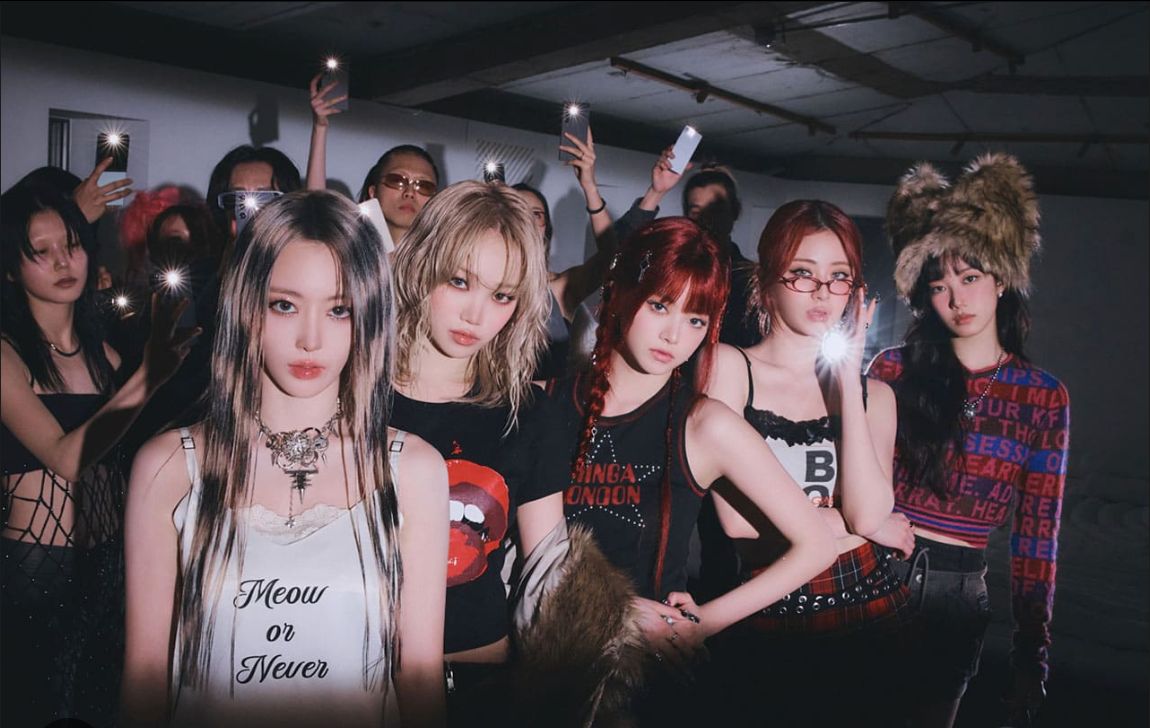
Korean fashion-tech startup Kyndof completed a groundbreaking 3.8 billion KRW (approximately $2.6 million USD) funding round through selection for South Korea’s prestigious TIPS Global Track program just yesterday. This latest development positions the K-Pop fashion startup at the forefront of a rapidly expanding global market that’s reshaping how entertainment and fashion intersect.
The K-Pop fashion industry is experiencing unprecedented growth, with market valuation for K-pop events alone reaching $13.28 billion in 2024. Within this booming ecosystem, Kyndof funding represents more than just financial backing—it signals a technological revolution in fashion production that could redefine how celebrity costumes are created globally.
The TIPS Global Track Achievement
Kyndof secured its position in the TIPS Global Track program through a recommendation from Bluepoint Partners, marking a significant milestone for the K-Pop fashion startup. TIPS Global Track supports early-stage startups with proven global market capabilities, providing up to 1.2 billion KRW (approximately $870,000) in R&D funding over three years.
The significance of this achievement extends beyond the immediate funding. TIPS has supported over 3,200 startups since inception, helping them attract 15 trillion KRW in follow-up investment and creating 22,549 new jobs. In 2023, CB Insights recognized TIPS as one of the Top 4 Global Accelerators, highlighting the program’s global significance.
Kyndof’s Revolutionary Business Model
What sets this Korean fashion tech startup apart is its unique approach to fashion production. Kyndof operates using AI agent builders, workflow engines, and automation hubs to power two distinct brands: 2000 Atelier for K-Pop artist stage costumes and 2000 Archives as a B2C fashion brand.
The company has created stage costumes for major K-Pop groups including BLACKPINK, aespa, LE SSERAFIM, and IVE, while also serving American, European, and Japanese artists. Their competitive advantage lies in short production times and high-quality finishes, which has driven strong customer retention rates.
Remarkably, Kyndof achieved profitability in its first year of operation (2023), with revenues growing at an average annual rate of over 200% and international sales comprising more than 30% of total revenue.
Market Opportunities Driving Investment
The timing of this Kyndof $2.6M investment aligns perfectly with explosive industry growth. South Korea’s clothing market reached $29.64 billion in 2024 and is projected to grow at 3.42% CAGR to hit $41.49 billion by 2034. More specifically, the K-pop industry is projected to become a $16.25 billion industry by 2035, with the events market alone valued at $13.28 billion in 2024.
The global luxury fashion market’s pivot toward Asia-Pacific regions creates additional opportunities. Growth is concentrated in Asia-Pacific, projected as the fastest-expanding luxury market through 2030, with South Koreans becoming the world’s biggest per-capita luxury spenders at $325 each.
Strategic Investment Partners
Bluepoint Partners led this funding round, with participation from Murex Partners, BASS Ventures, the Incheon Creative Economy Innovation Center, and The Invention Lab. This diverse investor group brings both financial resources and strategic expertise to support Kyndof’s expansion plans.
Bluepoint Partners’ Senior Examiner Ryu Go-un emphasized that “Kyndof has built a unique model connecting K-Pop’s global cultural assets to revenue, combining data-driven operations with AI to drive structural innovation in the fashion industry”.
AI-Powered Fashion Production
The company’s technology infrastructure sets it apart in the competitive landscape. Kyndof plans to use funding for AI agent platform enhancement, fashion and 3D modeling automation solutions, international partnership development, and global market expansion acceleration.
CEO Kim Seong-bin envisions expanding Korea’s content industry competitiveness into brand development, stating plans to “build a brand house model supporting various K-lifestyle brands through vertically integrated infrastructure”.
This approach addresses a critical industry need. Strategic collaborations between K-pop idols and luxury fashion brands are propelling growth, while the pervasive influence of K-pop on social media platforms like TikTok significantly contributes to expanding reach and engagement.
The Fast-Autocouture Concept
Kyndof’s “Fast-Autocouture” concept represents a paradigm shift in fashion production. Traditional haute couture requires weeks or months for completion, while stage costume needs often emerge with days or hours of notice. By combining AI-driven design processes with automated production systems, Kyndof bridges this gap.
The genre’s ability to shape global youth identity, particularly among Gen Z, through diverse aesthetic and expressive freedom solidifies its market position. This demographic shift creates sustained demand for rapid fashion responses to viral trends and cultural moments.
Global Expansion Strategy
International expansion represents a key growth driver for this K-Pop fashion startup. Fashion and beauty industries in South Korea benefit from K-pop idol influence, leading to collaborations and increased demand for Korean-inspired fashion, while collaboration between K-pop artists and major global brands shows growing cross-marketing influence.
The company’s existing international presence provides a foundation for scaled expansion. New Jeans serves as ambassador for global brands like Levi’s, Coca-Cola, and Calvin Klein, while BLACKPINK members collaborate with luxury brands including Chanel, Cartier, and Dior.
Technological Innovation in Fashion
Beyond costume creation, Kyndof’s technology platform has broader applications across fashion manufacturing. The COVID-19 pandemic accelerated apparel industry investment in online sales channels, leading fashion brands to experiment with big data analytics, artificial intelligence, virtual or augmented reality, and smart factory technologies.
Key market strategies include heavy investment in digital retail channels, collaborations between K-fashion brands and global designers, sustainability-focused collections, and AI-driven personalization to enhance customer engagement.
Investment Impact Analysis
This TIPS Global Track funding provides multiple benefits beyond capital injection. The new international R&D track supports innovative startups with funding for international collaborations and resources for global expansion.
Minister of SMEs and Startups Han Seong-sook noted the expansion addresses long-standing structural issues in early-stage support systems, where previous evaluation mechanisms often penalized unconventional ideas.
Challenges and Market Risks
Despite growth opportunities, the Korean fashion tech startup faces several challenges. Analysts warn that the Korean entertainment industry faces risks including renegotiating contracts with key performers, controversies surrounding stars’ personal lives, and declining album sales in China.
To sustain growth, the industry must leverage new talent, increase streaming revenues, and hold more concerts with existing artists, with companies that continually evolve business models to make deeper inroads in new markets proving most successful.
Future Growth Projections
Market forecasts suggest substantial growth potential for fashion technology companies. The K-pop Events Market reached $13.28 billion in 2024 and expects growth at 7.5% CAGR from 2025 to 2032, reaching $23.69 billion.
Google Trends data highlights consistent and growing interest in K-pop merchandise, particularly toward the latter half of 2025, aligning with trends showing K-pop idols as major fashion influencers driving demand for luxury collaborations and everyday streetwear.
Competitive Landscape
Kyndof operates in an increasingly competitive environment. K-pop idols increasingly become central figures in the fashion industry, competing with traditional models and influencers for brand endorsements and runway appearances, expanding the competitive arena beyond music.
However, their technological differentiation provides competitive advantages. After EXO’s Kai became a Gucci global ambassador, the brand’s South Korean sales surged dramatically, demonstrating the commercial impact of K-pop fashion partnerships.
This Korean fashion tech startup’s success reflects broader industry transformation. This isn’t a fleeting trend driven by cultural curiosity but a calculated, multi-billion-dollar strategy reshaping luxury fashion economics. Kyndof funding positions the company to capitalize on this transformation through innovative technology and strategic positioning.
The convergence of K-Pop cultural influence, technological innovation, and global fashion demand creates unprecedented opportunities. As the growing fanbase and cultural influence serves as vital driving forces behind escalating growth prospects for the K-Pop Event Market Industry, companies like Kyndof that bridge entertainment and technology stand to benefit significantly.
With this TIPS Global Track selection and resulting investment, Kyndof demonstrates that Korean startups can successfully combine cultural assets with cutting-edge technology to create globally competitive businesses. Their journey from startup to funded scale-up provides a roadmap for other entrepreneurs seeking to monetize Korea’s cultural influence through technological innovation.
Frequently Asked Questions
What is Kyndof funding and how much did they raise?
Kyndof funding refers to the 3.8 billion KRW (approximately $2.6 million USD) investment secured through South Korea’s TIPS Global Track program selection, completed on December 26, 2024.
What makes Kyndof different from other K-Pop fashion startups?
Kyndof operates using AI agent builders, workflow engines, and automation hubs, creating stage costumes for major K-Pop groups while maintaining short production times and high-quality finishes through their “Fast-Autocouture” approach.
Which K-Pop groups has Kyndof created costumes for?
The Korean fashion tech startup has created stage costumes for BLACKPINK, aespa, LE SSERAFIM, IVE, and various American, European, and Japanese artists through their 2000 Atelier brand.
What is TIPS Global Track and why is selection important?
TIPS Global Track is a government program supporting early-stage startups with proven global capabilities, providing up to 1.2 billion KRW in R&D funding over three years and recognized as one of the Top 4 Global Accelerators by CB Insights.
How large is the K-Pop fashion market opportunity?
The K-pop industry is projected to become a $16.25 billion industry by 2035, with events alone valued at $13.28 billion in 2024, while South Korea’s clothing market reached $29.64 billion in 2024.
Who led the Kyndof $2.6M investment round?
Bluepoint Partners led the investment round, with participation from Murex Partners, BASS Ventures, Incheon Creative Economy Innovation Center, and The Invention Lab.
What are Kyndof’s expansion plans with the new funding?
The Korean fashion tech startup plans to enhance AI agent platforms, expand fashion and 3D modeling automation solutions, build international partnerships, and accelerate global market expansion.