

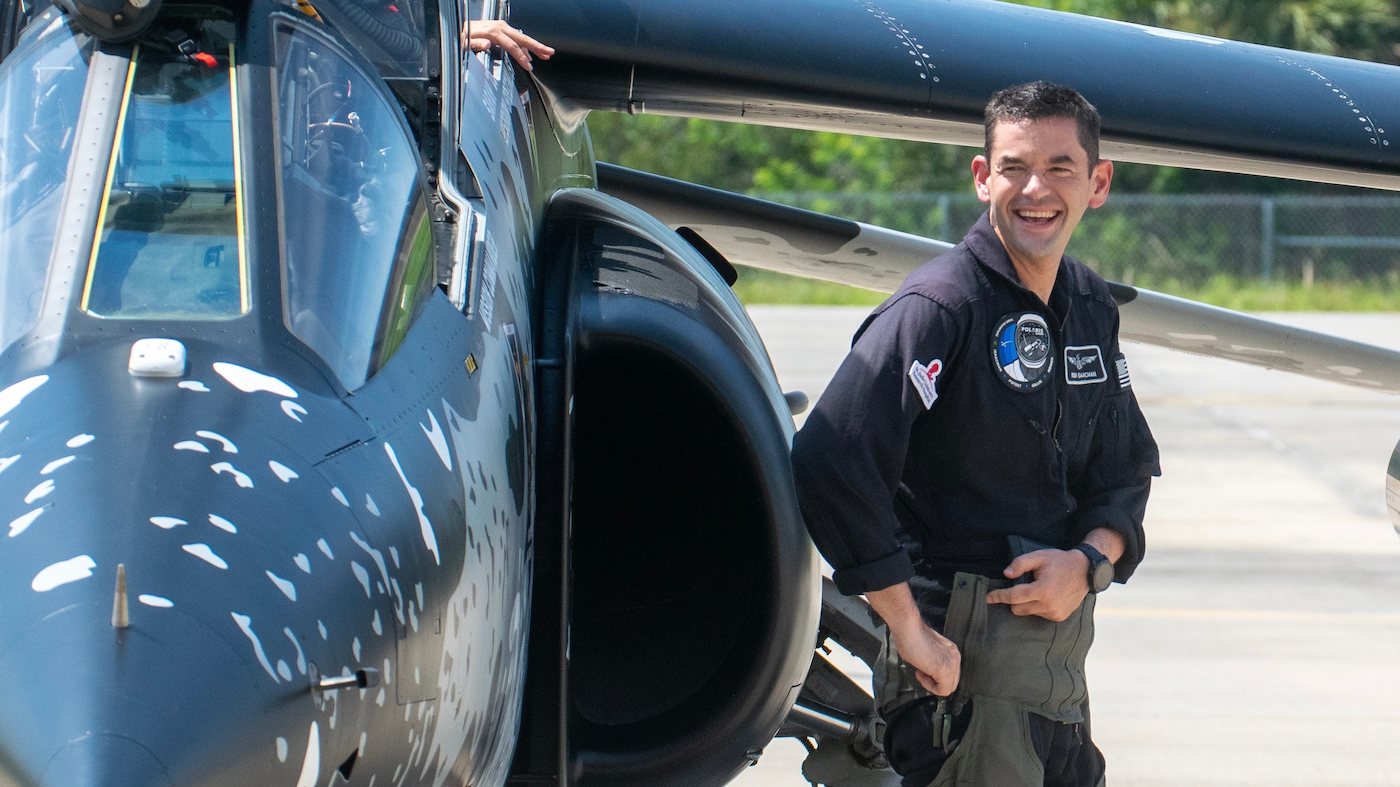
The U.S. Senate confirmed billionaire entrepreneur Jared Isaacman as NASA administrator on Wednesday in a decisive 67-to-30 vote, marking the end of a dramatic political saga that began more than a year ago. This confirmation makes the 42-year-old billionaire with an estimated net worth of $1.4 billion the first private astronaut to lead America’s premier space agency during one of the most competitive eras in space exploration history.
The vote concludes what arguably represents the most unusual effort to select a leader in NASA’s history. President Donald Trump first nominated Isaacman in December 2024, then abruptly withdrew his nomination in May 2025, only to renominate him again in November. The rollercoaster nomination process reflects the complex political dynamics surrounding commercial space partnerships and the future direction of American space exploration.
From Teen Entrepreneur to Space Industry Pioneer
Jared Isaacman’s journey from a basement startup to the NASA administrator’s office reads like a modern American success story. At age 16 in 1999, Isaacman founded United Bank Card with a $10,000 check from his grandfather as seed money, setting up shop in his childhood home’s basement. The payment processing company eventually evolved through several name changes to become Shift4 Payments, which went public on the New York Stock Exchange in mid-2020.
Today, Shift4 Payments processes payments for upwards of 200,000 businesses in the retail, leisure, hospitality, and restaurant industries. By 2020, it had scaled to process $200 billion in payments per year, establishing Isaacman as a major force in fintech. Yet his ambitions extended far beyond payment processing.
In 2012, Isaacman founded Draken International at Lakeland Linder International Airport in Florida, which by 2015 secured contracts to provide training for the military and defense industry and operates one of the world’s largest fleets of privately-owned fighter jets. His aerospace ventures positioned him perfectly for the next chapter of his career.
Breaking Space Barriers as a Private Astronaut
Jared Isaacman NASA administrator brings unprecedented space experience to the role. He commanded Inspiration4 – the first all-civilian spaceflight – using SpaceX’s Crew Dragon Resilience which launched from Kennedy Space Center on September 16, 2021. The mission wasn’t just a joyride; it raised over $250 million for St. Jude Children’s Research Hospital.
His space credentials continued growing with the Polaris Dawn mission in 2024. During this mission, he became the first private citizen to perform a spacewalk. The four-person crew reached a peak altitude of 1,400 km (870 mi), farther away from Earth than any human has gone since the last time Americans walked on the Moon.
These missions weren’t just personal achievements – they demonstrated private industry’s growing capabilities in human spaceflight. His hands-on experience as both a mission commander and spacewalker provides unique insights into the challenges and opportunities facing NASA’s future partnerships with commercial space companies.
Navigating Political Turbulence and Corporate Conflicts
The path to confirmation wasn’t smooth for the new NASA administrator 2025. Trump’s decision to withdraw Isaacman’s nomination coincided with a public feud between Trump and Musk, highlighting the complex relationships between politics, personalities, and space policy.
During his confirmation hearing, Isaacman faced scrutiny about his connection to Musk, including how his business dealings are intertwined with SpaceX. He downplayed the association, saying his trips to space were with SpaceX because it is “the only organization that can send astronauts to and from space”. He emphasized their professional relationship, stating: “There are no pictures of us at dinner, at a bar, on an airplane or on a yacht because they don’t exist”.
The Trump administration NASA appointment also faced questions about potential conflicts of interest. In response to concerns, Isaacman pledged to resign from his role at Shift4 and cancel the remaining Polaris Program missions if confirmed, and assured lawmakers that the Artemis and Commercial Lunar Payload Services programs would remain top priorities.
A Vision for NASA’s Future: Project Athena and Beyond
Who is Jared Isaacman as a leader? His vision for NASA emerged during confirmation hearings through discussions of Project Athena, a comprehensive plan for the agency’s future. The 62-page plan suggested prioritizing Mars missions, focusing on nuclear electric propulsion, overhauling some NASA centers and significantly changing the space agency’s science operations, including a bigger emphasis on commercialization.
While Isaacman described Project Athena as a “draft document,” he stood by its content, saying it was “all directionally correct”. This signals potential significant changes ahead for NASA’s structure and priorities under his leadership.
During nearly three hours of testimony, Isaacman presented a vision of revitalizing NASA with a “mission-first” culture focused on efficiency, innovation, and strategic leadership in space, questioning why current programs take so long and cost so much. His business background suggests he’ll bring entrepreneurial thinking to an agency that’s historically moved at bureaucratic speeds.
The China Challenge and Artemis Urgency
The Shift4 founder NASA appointment comes at a crucial time for American space dominance. NASA’s Artemis program has faced numerous delays and cost-overruns, while China’s space program has advanced at a furious pace in recent years. Both countries want to establish long-term human presence on the lunar surface, making this a new space race with geopolitical implications.
During his confirmation hearing, Isaacman pledged: “America will return to the moon before our great rival, and we will establish an enduring presence to understand and realize the scientific, economic and national security value on the lunar surface,” while stressing the need to beat China, saying “We are in a great competition with a rival that has the will and means to challenge American exceptionalism”.
NASA aims to send four astronauts on a flight around the moon next year in a crucial test of its next-generation rocket and spacecraft. Isaacman will inherit the pressure to deliver on these ambitious timelines while managing budget constraints and technical challenges.
Industry Support and Bipartisan Backing
Despite political controversies, Jared Isaacman NASA administrator received significant support from the aerospace community. A coalition of 36 former NASA astronauts supported Isaacman taking on the agency’s top job, stating “We believe that Jared Isaacman is clearly qualified to lead NASA at this critical juncture”.
Dave Cavossa, president of the Commercial Space Federation, said “With decades of experience as an entrepreneur, business leader, and commercial space pioneer, Mr. Isaacman is ideally suited to lead NASA at this critical time in the agency’s history”.
The final confirmation vote showed bipartisan support – while opposition was concentrated among Democrats, 16 Democrats joined 51 Republicans in supporting his confirmation. This level of bipartisan backing suggests potential for bridging political divides in space policy.
Budget Battles and Workforce Challenges Ahead
The new NASA administrator faces immediate operational challenges. Earlier this year, Trump’s budget blueprint suggested cutting more than $6 billion, or roughly 24%, from NASA’s funding, though those proposals met strong opposition in the House and Senate. Balancing ambitious exploration goals with budget realities will test Isaacman’s business acumen.
Reuters reported a 20% workforce cut as part of the administration’s efficiency push, raising questions about whether NASA can maintain safety and reliability while accelerating timelines – particularly for human spaceflight – without rebuilding critical expertise.
Isaacman will lead an agency of roughly 14,000 employees as NASA pushes forward with its most expensive human exploration roadmap in decades. Managing this transition while maintaining NASA’s technical excellence and safety standards represents one of his biggest challenges.
Commercial Space Integration and the Future
The confirmation of billionaire founder Jared Isaacman as NASA administrator signals a new era of commercial space integration. His ascent signals how central commercial space has become to NASA’s future—especially as the agency faces workforce strain and pressure to move faster on Artemis, the Moon-to-Mars strategy, and major science missions.
In Senate testimony, Isaacman expressed strong support for increased commercial partnerships in emerging technologies such as advanced air mobility and is expected to continue NASA’s collaboration with the Federal Aviation Administration and other agencies on matters of aviation safety, sustainability and technology.
His background running Shift4 Payments and Draken International, combined with his experience as a commercial astronaut, positions him to navigate the complex relationships between government oversight and private innovation. This could accelerate NASA’s evolution from a primarily government-operated agency to one that leverages commercial capabilities more extensively.
What This Means for America’s Space Future
Jared Isaacman’s confirmation ends a prolonged leadership gap at NASA and puts a high-profile commercial astronaut in charge at a uniquely volatile moment: geopolitical pressure to land Americans on the Moon before China, internal debates over how much NASA should rely on private industry, and major budget and workforce constraints.
The appointment represents a clear shift toward embracing commercial space partnerships while maintaining American leadership in exploration. Isaacman brings a unique combination of entrepreneurial success, hands-on space experience, and aviation expertise that could reshape how NASA approaches its missions.
Senator Tim Sheehy captured the optimism surrounding this appointment: “For nearly 70 years, the United States has been at the forefront of space exploration. President Trump knows how critical it is to reinvigorate NASA as we aim to reach new heights in the greatest frontier ever known, and I’m confident he will work tirelessly to ensure America wins the 21st century space race”.
The Road Ahead: Balancing Innovation and Tradition
As Jared Isaacman NASA administrator begins his tenure, he faces the delicate task of modernizing NASA while preserving its scientific mission and safety culture. His success will be measured not just in timelines met or budgets balanced, but in whether America maintains its edge in space exploration during an era of unprecedented international competition.
The billionaire founder brings a fresh perspective to an agency known for its methodical approach. Whether his entrepreneurial mindset can accelerate American space achievements while maintaining NASA’s legendary safety standards will determine the legacy of this historic appointment.
His confirmation marks more than just a leadership change – it represents America’s commitment to leveraging private sector innovation while pursuing the bold goal of returning humans to the Moon and eventually reaching Mars. The space race of the 21st century has begun, and America just chose its champion.
Frequently Asked Questions
When was Jared Isaacman confirmed as NASA administrator?
Jared Isaacman was confirmed as NASA administrator by the U.S. Senate on December 17, 2025, in a 67-to-30 vote, ending more than a year of political uncertainty.
What is Jared Isaacman’s background before becoming NASA administrator?
Isaacman is the billionaire founder and CEO of Shift4 Payments, which processes $200 billion annually. He also founded Draken International and commanded two private SpaceX missions: Inspiration4 and Polaris Dawn.
What makes Jared Isaacman unique as NASA administrator?
He’s the first private astronaut to lead NASA, having personally funded and commanded civilian spaceflights. His net worth of $1.4 billion and hands-on space experience bring unprecedented entrepreneurial and practical expertise to the role.
What challenges will Jared Isaacman face as NASA administrator?
Key challenges include beating China in the space race, managing budget cuts of up to 24%, overseeing a 20% workforce reduction, and balancing commercial partnerships while maintaining NASA’s safety standards and scientific mission.
What is Project Athena and how might it change NASA?
Project Athena is Isaacman’s 62-page vision for NASA that proposes prioritizing Mars missions, focusing on nuclear electric propulsion, overhauling NASA centers, and emphasizing commercialization of space science operations.
Why was Jared Isaacman’s nomination controversial?
His nomination faced scrutiny over ties to Elon Musk and SpaceX, potential conflicts of interest with his companies, and concerns about prioritizing commercial partnerships over traditional NASA programs. Trump also withdrew and renominated him during political tensions.
What are Isaacman’s goals for NASA’s future?
His priorities include ensuring America returns to the Moon before China, establishing permanent lunar presence, advancing the Artemis program, increasing commercial partnerships, and creating a “mission-first” culture focused on efficiency and innovation.