
Intel Doubles Down on ai chip startup SambaNova — A $15M Investment Raising Boardroom Questions

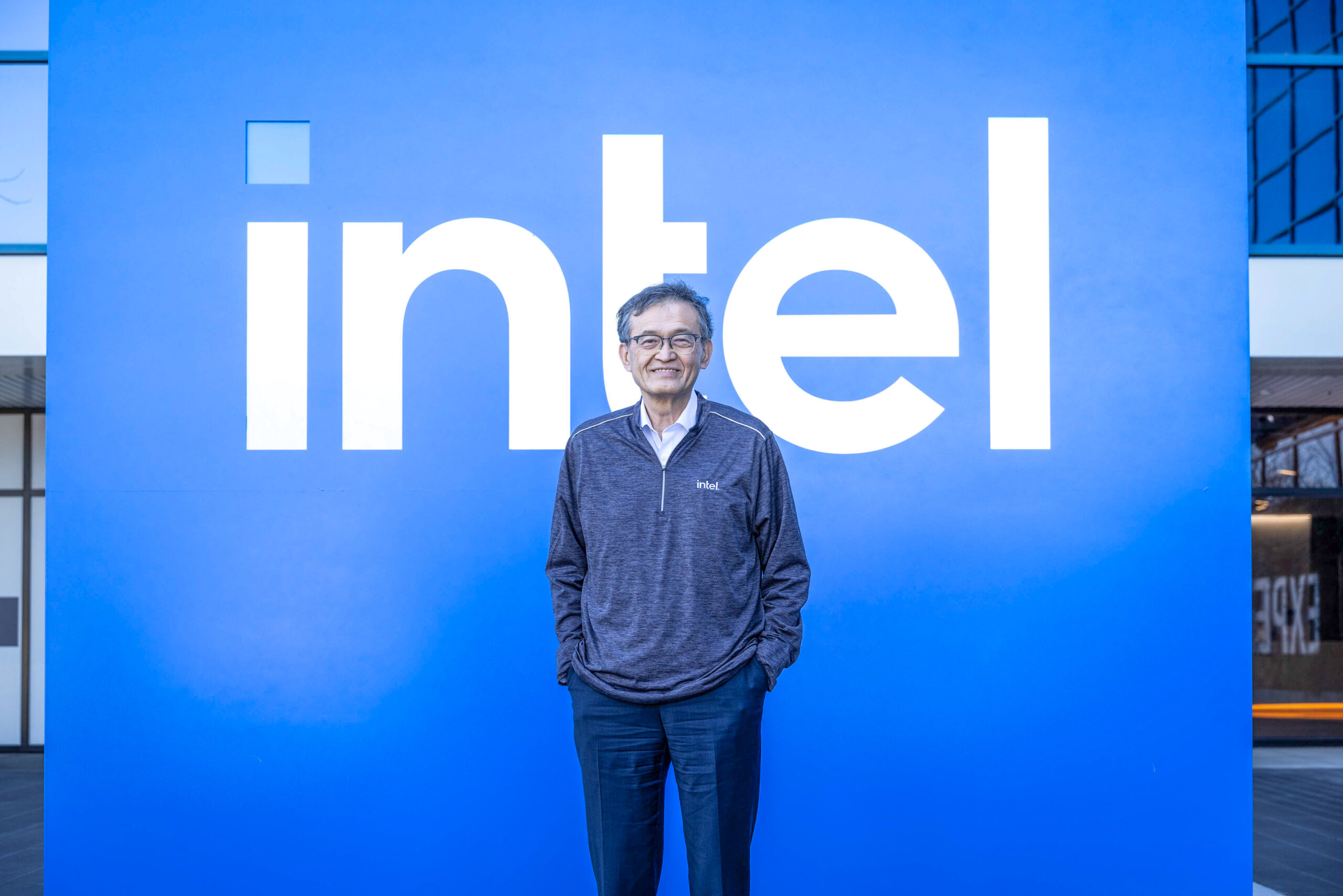
Chipmaker Intel has planned to invest another $15 million in SambaNova, a chip startup chaired by Intel CEO Lip-Bu Tan. That single fact carries a lot of weight. Subject to regulatory approval, the investment would increase Intel’s ownership of SambaNova to 9%. It isn’t an isolated move — it’s the latest chapter in a rapidly escalating relationship between one of the world’s oldest chipmakers and one of Silicon Valley’s most closely watched AI hardware bets.
The ai chip startup SambaNova sits at the intersection of enormous technological ambition and genuine corporate governance tension. To understand the intel sambanova investment 2026 story fully, you need to look at the failed acquisition talks, the $350 million fundraise, the next-generation chip quietly threatening Nvidia’s throne, and the boardroom questions nobody can quite dismiss.
From Failed Acquisition to a Calculated Partnership
The Intel-SambaNova alliance wasn’t born from goodwill. It emerged from collapse. Intel previously looked at buying SambaNova for $1.6 billion, but talks fell apart, Bloomberg reported in January. Five weeks later, both companies announced Plan B.
In February 2026, SambaNova raised $350 million in a Series E funding round led by Vista Equity Partners and Cambium Capital, with participation from Intel Capital. That round came with strings attached — good ones. SambaNova agreed to adopt Intel server chips and graphics cards in a multiyear collaboration. Acquisition off the table. Strategic partnership locked in.
The $15 million investment follows another $35 million that Intel put into SambaNova in February, which, along with other financing, had boosted Intel’s stake to 8.2%, from 6.8% the previous year. That’s nearly $50 million deployed in under two months. Fast. SambaNova counts Hugging Face, Meta, and major AI labs as customers, and through the new partnership, Intel and SambaNova will work together on sales and marketing to boost adoption. For Intel, that customer list is valuable leverage in a market it has struggled to crack.
The Governance Question Surrounding Intel Capital Portfolio Startups
Strip away the strategy, and a thornier issue remains. Intel CEO Lip-Bu Tan has been SambaNova’s chairman since 2017 and was an early financial backer. Walden International, the venture firm he started in 1987, placed an early bet on the startup alongside Google’s venture arm. Now he runs the company investing in his own chairmanship. That’s an unusual arrangement.
Intel disclosed in a late March securities filing that there were four unnamed companies whose financings were material to disclose because of their size and benefit to Tan. Reuters identified them. The four Tan-affiliated companies are EPIC Microsystems, 3D Glass Solutions, OPAQUE Systems, and SambaNova. Intel capital portfolio startups with direct ties to the CEO — that’s not standard corporate practice anywhere.
Two corporate governance experts told Reuters that such Intel transactions raised red flags because of the conflicts inherent in dealmaking with Tan’s portfolio companies. Intel pushed back. In a statement, Intel said it “maintains rigorous, well-established governance and conflict-of-interest policies, with active Board oversight.” The company also confirmed that Tan recused himself from discussions about the collaboration. Wharton School professor Daniel Taylor told Reuters he didn’t see anything inherently wrong with the disclosure itself.
Some chip-industry analysts have welcomed Tan’s industry relationships, which in Tan’s view have made him uniquely able to negotiate deals that benefit all parties. When it comes to venture capital in semiconductors, long-tenured investors holding overlapping positions is genuinely common. The depth of this case, however, goes well beyond ordinary overlap.
The Technology at Stake: Next Generation AI Accelerators and the SN50
Set governance aside for a moment. The technology underneath this investment is legitimately impressive. SambaNova has unveiled its latest chip, the SN50, which it says is five times faster than Nvidia Blackwell and offers 3X the throughput, enough to run agentic AI models exceeding 10 trillion parameters. Bold claims. Exciting ones.
Built on TSMC’s 3nm process with a dual-chiplet design, the SN50 roughly doubles the compute unit count of the previous SN40L while adding native FP8 support and a three-tier memory system designed specifically for the long-context, multi-step reasoning workloads that agentic AI demands. This is a purpose-built design — not a repurposed GPU. It targets next generation ai accelerators tailored to inference at scale, not the brute-force training workloads Nvidia dominates.
Performance Claims and Real Benchmark Nuance
When running FP8 precision, a Llama 3.3 70B model reportedly achieves 895 tokens per second per user on the SN50, compared to 184 tokens per second per user on Nvidia’s B200. That’s a significant margin — if it holds in production. Fairness demands context: SambaNova claims 5x maximum throughput and 3x better energy efficiency over the NVIDIA B200, with 8x total cost of ownership savings, though none of these figures have been independently verified.
Intel’s Xeon CPUs excel at general-purpose operations, while the SN50 is optimized for the rapid processing of large datasets. Combining them in a single cloud would allow more efficient task distribution, improving latency, throughput, and overall AI workload performance. On paper, it’s a compelling stack. Real-world enterprise deployments will be the true test.
SoftBank Corp. will be the first customer to deploy the SN50 in its next-generation AI data centers in Japan, supporting low-latency inference services for sovereign and enterprise customers across Asia-Pacific. General availability of SambaRack SN50 systems is expected in the second half of 2026. That deployment timeline matters — it’s when claims meet reality.
ai inference chip market trends: The $50B+ Inference Opportunity
Why does all this matter so much right now? Because inference is where the AI economy is actually moving. Inference workloads now account for roughly two-thirds of all AI compute in 2026, up from a third in 2023 and half in 2025, and the market for inference-optimized chips will grow to over $50 billion in 2026. That number, from Deloitte’s 2026 technology forecast, frames the strategic urgency for every player in this space.
The AI inference market is expected to grow from $106.15 billion in 2025 to $254.98 billion by 2030, with a CAGR of 19.2%. According to Verified Market Research, the ai inference chip market specifically is projected to grow from $31 billion in 2024 to $167 billion by 2032 at a 28.25% CAGR. Those are the ai inference chip market trends rewarding purpose-built silicon and punishing general-purpose solutions.
SambaNova has shifted its focus toward AI inference — the computing power used to run models like chatbots — and says it is aligning its strategy and new chip offerings around this transition. That shift is perfectly synchronized with where enterprise spending is flowing. Enterprises don’t just want AI experiments anymore. They want production-ready inference at a manageable cost per token.
Enterprise AI Hardware Solutions: What Organizations Actually Need
Running generative AI in production at enterprise scale demands very different hardware than training it. Generic GPU clusters built for model development often don’t meet strict enterprise ai hardware solutions requirements around latency, data privacy, energy efficiency, and total cost of ownership. That’s the gap SambaNova is explicitly targeting.
The joint effort between Intel and SambaNova targets AI-native companies, model providers, enterprises, and government organizations worldwide. Governments, specifically, are driven by sovereignty concerns — they need supply-chain independence from any single vendor. The planned Intel-powered AI cloud aligns with enterprise demand for architectural diversity, particularly among sovereign and regulated deployments seeking supply-chain control and software portability.
Intel will help accelerate SambaNova’s cloud expansion through reference architectures, deployment blueprints, and partnerships with software vendors and systems integrators. The companies also plan to co-market and co-sell the new platform using Intel’s existing enterprise relationships and partner channels. For SambaNova, that enterprise reach is the crucial ingredient it has always lacked. For Intel, it’s a chance to participate in inference infrastructure without building everything from scratch.
Venture Capital in Semiconductors: SambaNova’s Long Funding Journey
SambaNova was founded in 2017 and became a unicorn in 2020, reaching that milestone in just three years. The pace was fast. The capital requirements were steep. SambaNova has raised $1.48 billion in total funding from investors including Intel Capital, Google Ventures, and BlackRock.
The most recent $350 million Series E was co-led by Vista Equity Partners and Cambium Capital, with participation from Battery Ventures, T. Rowe Price, and returning investors including BlackRock and Intel Capital. According to PitchBook, startups developing chips raised $17.6 billion last year. Venture capital in semiconductors is at a historic high — and SambaNova has absorbed a meaningful share of that capital. Analysts estimate 2025 revenue at $75 to $100 million on over $1.5 billion raised. The commercialization clock is ticking.
What This Means for Intel’s AI Strategy
Intel needs this partnership badly. Intel’s Gaudi 3 AI accelerator captured around 8.7% of the AI training market in 2025, showing growing but still modest enterprise adoption. Nvidia still controls roughly 80 percent of the AI accelerator market. AMD is closing ground. Internal chip development has been slow to convert into market share.
The global AI chip market was valued at $94.44 billion in 2025 and is projected to grow from $121.73 billion in 2026 to approximately $1,104.68 billion by 2035, at a CAGR of 27.88%. According to Precedence Research, missing this market cycle entirely is simply not an option for a company in Intel’s position.
Constellation Research analyst Holger Mueller noted it’s still possible for Intel — with SambaNova’s help — to make a genuine splash in the AI chip market, observing that “Nvidia gets all of the attention and has most of the market share, but AI models don’t actually care about who makes the chip they’re running on.” Performance is the only currency that matters in this race. Intel is betting its partnership with the ai chip startup SambaNova will finally give it enough of it.
Conclusion
The intel sambanova investment 2026 story is really three stories in one. It’s a technology bet on next generation ai accelerators built for the inference era. It’s a corporate governance debate about intel capital portfolio startups tied directly to a CEO’s personal wealth. And it’s a broader contest to build enterprise ai hardware solutions capable of offering enterprises a credible alternative to Nvidia.
SambaNova is timing the ai inference chip market trends correctly. Intel is betting that Tan’s relationships are more asset than liability. The venture capital in semiconductors community is watching closely. SN50 performance data, when independent benchmarks arrive in the second half of 2026, will deliver the clearest verdict on whether this partnership is history in the making — or another cautionary tale about AI hardware ambition.
Frequently Asked Questions
Why is Intel investing more money into SambaNova in 2026?
Intel is deepening its financial stake in SambaNova as part of a broader strategic partnership aimed at competing in the AI inference chip market. The planned $15 million investment, pending regulatory approval, would raise Intel’s ownership to 9%. It follows Intel’s larger $35 million investment from February 2026 and reflects a coordinated push to deploy SambaNova’s inference architecture alongside Intel’s Xeon CPUs in enterprise data centers.
Who is Lip-Bu Tan, and why does his dual role at Intel and SambaNova matter?
Lip-Bu Tan has been SambaNova’s chairman since 2017 and was an early financial backer through his venture firm Walden International. He is also Intel’s CEO. This dual role creates an overlap between personal financial interests and Intel’s corporate investment decisions — a situation corporate governance experts have raised as a potential conflict. Tan has recused himself from the relevant internal discussions.
What is the SambaNova SN50 chip, and how does it compare to Nvidia’s B200?
The SN50 is the fifth-generation Reconfigurable Dataflow Unit, built on TSMC’s 3nm process with a dual-chiplet design. It roughly doubles the compute unit count of the previous generation while adding native FP8 support and a three-tier memory system. SambaNova claims 5x throughput advantage over Nvidia’s B200, but these figures are based on internal benchmarks and have not yet been independently verified.
How much funding has SambaNova raised in total?
SambaNova has raised a total of $1.48 billion across five funding rounds, with its latest being a $350 million Series E round closed in February 2026. Investors include Intel Capital, Google Ventures, BlackRock, SoftBank Vision Fund, Vista Equity Partners, and T. Rowe Price.
How large is the AI inference chip market right now?
The market for inference-optimized chips will grow to over $50 billion in 2026. Over the longer term, the AI inference market is projected to grow from $106.15 billion in 2025 to $254.98 billion by 2030.
Did Intel try to acquire SambaNova outright before this investment?
Intel previously looked at buying SambaNova for $1.6 billion, but those acquisition talks fell apart, as Bloomberg reported in January 2026. The current investment and partnership arrangement emerged as an alternative path after the acquisition failed.
Who are SambaNova’s main customers?
SambaNova counts Hugging Face, Meta, and major AI labs as customers. SoftBank Corp. will be the first customer to deploy the SN50 in its next-generation AI data centers in Japan.