

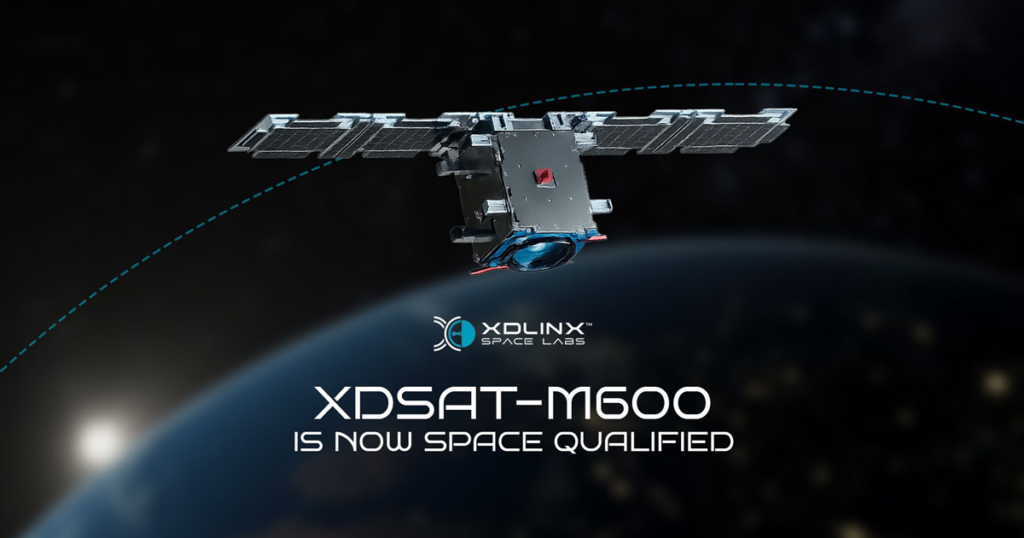
Built in just 10 months at a cost saving of 75% over comparable satellite missions, India’s first software-defined satellite — Janus-1 — didn’t just prove a concept. It rewrote the rulebook on what a lean Indian space startup can pull off. What sets Janus-1 apart is its core philosophy: unlike traditional satellites that are hard-coded for a single mission, these platforms can be reconfigured through software to perform different tasks, allowing one base design to be adapted for imaging, communications, or navigation, reducing costs and development time. That’s not incremental progress. That’s a structural shift in how India approaches the commercial space sector.
What Is a Software-Defined Satellite, and Why Does It Matter?
Software-defined satellites are satellites equipped with reprogrammable onboard systems that allow operators to modify their functionality while in orbit. Unlike conventional satellites, which are hardwired for specific pre-defined missions, they leverage advanced software platforms featuring flexibility to be reconfigured according to evolving mission requirements, environmental conditions, and technological advancements.
Think of a traditional satellite as a Swiss Army knife permanently locked on the knife blade. A software-defined satellite? That’s the full toolkit — switchable, on demand, from the ground. Previously, operators could not alter a satellite’s function, so a new mission demanded a whole new satellite or development program. That meant massive costs, long lead times, and serious inflexibility. The software-defined model obliterates all three.
Software-defined satellites offer on-orbit reconfiguration of various parameters including beams, coverage areas, bandwidth, power levels, and frequencies. The standardized and modular platforms of these satellites yield efficiencies for both manufacturers and operators, resulting in cost savings and expedited time-to-market. And for defense customers, military users benefit from enhanced resilience and security offered by this type of satellite.
The technology backbone is software-defined radio (SDR). Software-defined satellites leverage advances in software-defined radio (SDR) techniques. They demand sophisticated processor technology on board the satellite, taking advantage of graphics processing units (GPUs) and field-programmable gate arrays (FPGAs). The SDR techniques must be applied to the whole payload, which requires this additional processing power.
XDLINX Space Labs: The Indian Space Startup Changing the Game
Founded in 2022 in Hyderabad, XDLINX Space Labs began with a bold vision to redefine space missions and make innovative satellite technology accessible to a broader range of clients. Short runway. Enormous ambition. XDLINX Labs is an Indian space technology start-up specializing in developing nano and micro satellites with hosted payload options for customers, aiming to commoditize deep space technology for enabling space missions.
The company is led by CEO Rupesh Gandupalli, who brings rare pedigree to this Indian space startup. Rupesh Gandupalli played a key role in not only flying 88 satellites in an Indian PSLV-C37 in February 2017 but also was responsible for procuring and putting together almost 2,013 components in each of those small satellites. He knows satellites — deeply. And he built XDLINX to solve the problems he watched slow the industry down for years.
In October 2024, XDLINX Space Labs announced the successful completion of a $7 million seed funding round. The round was led by Ashish Kacholia of Lucky Investments with additional backing from E2MC, Mana Ventures, and a prominent family office. That capital injection is accelerating an already impressive development pipeline, covering everything from next-generation optical payloads to sovereign ISR constellation work.
Janus-1: India’s Pioneering Software-Defined Satellite Takes Orbit
The Antaris Janus-1 smallsat successfully reached orbit — riding on ISRO’s SSLV-D2 rocket, which was launched from the Satish Dhawan Space Centre of India under a commercial arrangement with New Space India Limited (NSIL). The date was February 10, 2023. A milestone that many in the global small satellite community took notice of immediately.
Janus-1 is a software-defined 6U technology demonstration satellite designed and built using the Antaris cloud software platform and SatOS software, as well as XDLinx’s modular spacecraft bus. The multi-purpose satellite carries a reprogrammable payload architecture designed for genuine in-orbit reconfiguration. The satellite features five payloads from a range of global providers and performs Internet of Things (IoT) communications, advanced experimental laser communications, radio communications and machine learning (ML) during orbit.
Here’s what makes this machine genuinely remarkable. Janus-1 is a 6U category among the CubeSats measuring 10×20×30cm and weighing just around 10 kg, making it the largest nano-satellite built on Indian soil. The entire satellite was built in 10 months, which is less than half the usual time required to manufacture satellites of this size. That speed-to-orbit capability is a direct product of XDLINX’s flexible satellite architecture — a philosophy that treats software as the mission enabler, not an afterthought.
While the launch marked the start of Janus-1’s on-orbit mission, the satellite had been “in flight” for months via the company’s unique TrueTwin digital twinning technology, which creates a digital version of the satellite at the start of the project and then integrates with hardware-in-the-loop as hardware becomes available. That’s a genuinely forward-thinking approach that compresses development cycles radically.
How In-Orbit Reconfiguration and SDR Power Multi-Mission Operations
Changing the configuration of a satellite in-orbit was once the distant dream of many operators, but the development of software-defined satellites has enabled companies to remotely reconfigure payloads using ground commands. This is bringing new capabilities, commercial applications, and risk mitigation strategies to today’s missions.
For XDLINX, in-orbit reconfiguration is the central commercial differentiator. XDLINX builds software-defined satellites where one base design can be configured for different missions, from imaging to communications to navigation. The mission will showcase its software-defined satellite technology, capable of switching roles between imaging, communications, and navigation. One platform. Many missions. Zero need for a dedicated replacement satellite when your requirements evolve.
The software-defined radio (SDR) component adds another layer of power. By integrating processing in the space platform, regenerative or software-defined satellites can demodulate, perform channelisation, and complete signal processing and modulation before retransmission. This approach increases processing gain, ultimately reducing the full link budget. Another major benefit is that the satellite becomes a node in a network, which can assist in forming a highly intelligent network.
Enhanced resilience is another key benefit — these satellites adapt to unforeseen challenges, such as interference, cyber threats, or component failures, by reprogramming their operations to mitigate issues. In a world of increasingly contested orbital environments, that adaptability isn’t just smart engineering. It’s mission-critical.
The XDLINX Roadmap: What’s Coming Next for This Indian Space Startup
XDLINX isn’t resting on Janus-1’s success. The pipeline is aggressive and diverse. XDLINX Space Labs has announced that it will fly a largely self-funded imaging satellite in the last quarter of 2026. This decision reflects the company’s determination to prove its technology in orbit without waiting for external customers. The satellite will carry an optical payload — essentially a camera that captures images of Earth in visible light from hundreds of kilometres above.
That’s bold. Self-funding a satellite launch is rare even for well-capitalized Western startups, let alone an Indian space startup just a few years old.
Another innovation is the use of edge computing onboard its satellites. Instead of transmitting every captured image to Earth, the satellite filters data in orbit, sending down only useful frames. This onboard intelligence reduces bandwidth demand dramatically and cuts ground processing costs — a massive operational advantage for commercial clients.
The multi-purpose satellite ambition extends further. XDLINX Space Labs has announced a strategic partnership with Sisir Radar, a pioneer in advanced SAR technology, to build India’s first private L-band SAR satellite, powered by Antaris software. Set to launch by 2027, this partnership marks a significant leap forward in India’s remote sensing capabilities.
In May 2026, XDLINX inaugurated its Advanced Space Systems Integration and Testing Lab in Hyderabad, attended by ISRO Chairman Dr V. Narayanan. The facility includes precision optical benches, an Attitude Determination and Control System lab, and a high-grade clean-room for satellite assembly. This lab strengthens India’s sovereign satellite infrastructure and aligns with the Atmanirbhar Bharat initiative, which calls for 75% indigenous subsystems in missions.
Software-Defined Satellites and the Global Market Opportunity
XDLINX is swimming in a very large ocean. Projections indicate we could see as many as 10,000 software-defined satellites in orbit by 2031. The cumulative market revenue from these platforms is expected to reach a staggering $170 billion within the same timeframe.
The adoption curve is accelerating fast. Currently, 54% of satellites are deemed to be addressable by flexible payloads and platforms. By 2033, this figure is projected to increase to nearly 80%, with High Throughput Satellite (HTS) and Very High Throughput Satellites (VHTS) anticipated to be the main drivers in the adoption of flexible satellite architecture.
Global heavyweights like Airbus, Thales, and Boeing have all committed to the software-defined satellite paradigm. Airbus introduced its fully reconfigurable software-defined geostationary platform OneSat and had already won a contract with Inmarsat to manufacture three satellites for its next-generation Global Xpress Flex system. “Software is the asset, while hardware is the commodity,” says Adam Johnson, SmartSat director for Lockheed Martin.That sentiment perfectly encapsulates where XDLINX has planted its flag.
In telecommunications, software-defined satellites enable operators to dynamically allocate bandwidth and frequencies to address changing user demands, optimize signal coverage, and support emerging technologies like 5G and IoT. In Earth observation missions, these satellites can adjust sensor parameters to focus on specific regions or respond to environmental changes, improving data collection and processing for applications such as climate monitoring, disaster management, and urban planning.
Why India’s Commercial Space Sector Is Ready for This Moment
India’s broader commercial space sector provides the perfect launchpad — figuratively and literally — for XDLINX’s ambitions. India’s space ecosystem crossed an important scale milestone in 2025, with over 300 active space startups now operating across launch vehicles, satellite platforms, Earth observation, satellite communications, propulsion, electronics, space situational awareness, and downstream analytics.
The policy scaffolding has never been stronger. Key catalysts include the Space Sector Reforms of 2020 and the subsequent Indian Space Policy 2023. These initiatives established a clear regulatory framework, empowering Non-Governmental Entities (NGEs) to operate in tandem with ISRO. The Indian Space Promotion and Authorisation Centre (IN-SPACe) now acts as the central authority, streamlining approvals and oversight for private players.
Indian space-tech startups raised a cumulative amount of approximately $170 million in equity funding over the course of 2025, compared to approximately $70 million in 2024 — representing a 143% increase year-on-year. Capital is flowing. Confidence is high. And the value of India’s space sector is currently estimated at approximately $8.4 billion, with projections indicating a significant rise to $40–45 billion over the next decade.
For XDLINX, timing is everything. The software-defined satellite approach is already adopted by major global manufacturers but remains rare among Indian firms — which means the Hyderabad-based company holds a genuine first-mover advantage in the domestic market for flexible satellite architecture.
The Bigger Picture: What Flexible Satellite Architecture Unlocks
The implications of a software-defined satellite ecosystem extend well beyond a single company’s product roadmap. The satellite industry is undergoing a monumental shift, moving away from static, single-purpose hardware to dynamic, adaptable platforms. At the heart of this revolution are software-defined satellites — a technology poised to redefine space and ground operations. These aren’t just incremental improvements; they represent a fundamental change in how we design, deploy, and utilize assets in orbit.
XDLINX’s model of commoditizing deep space technology is precisely what India’s commercial space sector needs to compete globally. The company’s strategy is to commoditise deep space technology by offering ready-to-launch satellite platforms. It has already developed multiple bus platforms and is contracted to deliver a sovereign constellation of 15 satellites within two years.
That’s the story here. Not just a single impressive satellite. It’s a scalable, software-first platform strategy that positions India — and specifically one Hyderabad-born startup — to capture a meaningful slice of a $170 billion market.
Conclusion: A New Orbit for India’s Space Ambitions
XDLINX Space Labs and its Janus-1 software-defined satellite represent something genuinely rare in the Indian startup ecosystem: a deep-tech company that has already proven its technology in orbit, built a credible expansion roadmap, and aligned itself perfectly with both domestic policy tailwinds and global market demand. The reprogrammable payload approach, the software-defined radio backbone, the edge computing onboard intelligence — all of it points toward a future where satellites are as adaptable as the missions they serve.
If you’re a government agency, defense operator, or commercial Earth observation customer still investing in rigid, single-purpose hardware, the question isn’t whether software-defined satellite technology will disrupt your model. The question is how soon — and whether you’ll be leading that change or scrambling to catch up.
India’s space revolution has found one of its most compelling advocates in a 6U CubeSat that weighed 10 kilograms and changed the conversation entirely.
Frequently Asked Questions
Q1: What is a software-defined satellite?
A1: A software-defined satellite is a satellite equipped with reprogrammable onboard systems that allow operators to modify its functionality while in orbit. Unlike traditional satellites hardwired for a single mission, a software-defined satellite can be reconfigured through software commands sent from the ground to perform different tasks such as imaging, communications, or navigation — all using the same physical hardware platform.
Q2: What is XDLINX Space Labs, and where is it based?
A2: XDLINX Space Labs is a Hyderabad-based Indian space startup founded in 2022. It specializes in developing nano and micro satellites with hosted payload options, offering end-to-end small satellite mission services covering design, supply chain, integration, space qualification, and operations. The company focuses on software-defined satellite platforms for both global commercial and defense ISR missions.
Q3: What was Janus-1, and why was it significant?
A3: Janus-1 was a software-defined 6U nanosatellite developed by XDLINX Space Labs in collaboration with Antaris and Ananth Technologies. Launched aboard ISRO’s SSLV-D2 rocket on February 10, 2023, it was built in just 10 months at a cost saving of 75% over comparable satellite missions. It demonstrated multi-tenancy payload capabilities and is recognized as the world’s first satellite fully conceived, designed, and manufactured using an Indian company’s end-to-end cloud platform.
Q4: What is software-defined radio (SDR), and how does it work in satellites?
A4: Software-defined radio (SDR) is a radio communication technology where components that have traditionally been implemented in hardware are instead implemented through software. In the context of satellites, SDR allows the satellite to dynamically change its communication frequencies, waveforms, and signal processing parameters. This is achieved using onboard processors, graphics processing units (GPUs), and field-programmable gate arrays (FPGAs), giving the satellite the ability to adapt its communications to different missions or changing operational demands.
Q5: What is in-orbit reconfiguration, and what are its benefits?
A5: In-orbit reconfiguration refers to the ability to change a satellite’s mission parameters, payload settings, or operational behavior after it has already been launched into space — using software commands sent from the ground. The key benefits include the ability to adapt to new customer requirements, switch between mission types such as Earth observation and communications, dynamically allocate bandwidth and coverage areas, and mitigate interference or component failures without launching a new satellite.
Q6: What are XDLINX Space Labs’ upcoming missions and projects?
A6: XDLINX Space Labs plans to launch a self-funded imaging satellite in the last quarter of 2026, followed by a collaborative multi-payload mission in the first quarter of 2027. The company is also finalizing its Elevation-1 project featuring a miniaturized space-grade E-band payload for high-speed communications. Additionally, XDLINX has partnered with Sisir Radar to build India’s first private L-band SAR satellite, set to launch by 2027, and is developing a 190 kg-class satellite with multi-spectral optical and Synthetic Aperture Radar payloads.
Q7: How large is the global software-defined satellite market?
A7: The global market for software-defined satellites is projected to be substantial and fast-growing. Industry projections indicate that as many as 10,000 software-defined satellites could be in orbit by 2031, with cumulative market revenue from these platforms expected to reach $170 billion within the same timeframe. Additionally, a Novaspace market analysis estimates that by 2033, nearly 80% of all satellites will be addressable by flexible payloads and platforms, up from 54% currently.