
Hyundai CES 2026 tech Revolution: Breakthrough Robotics and Solar Innovation Reshape Industry

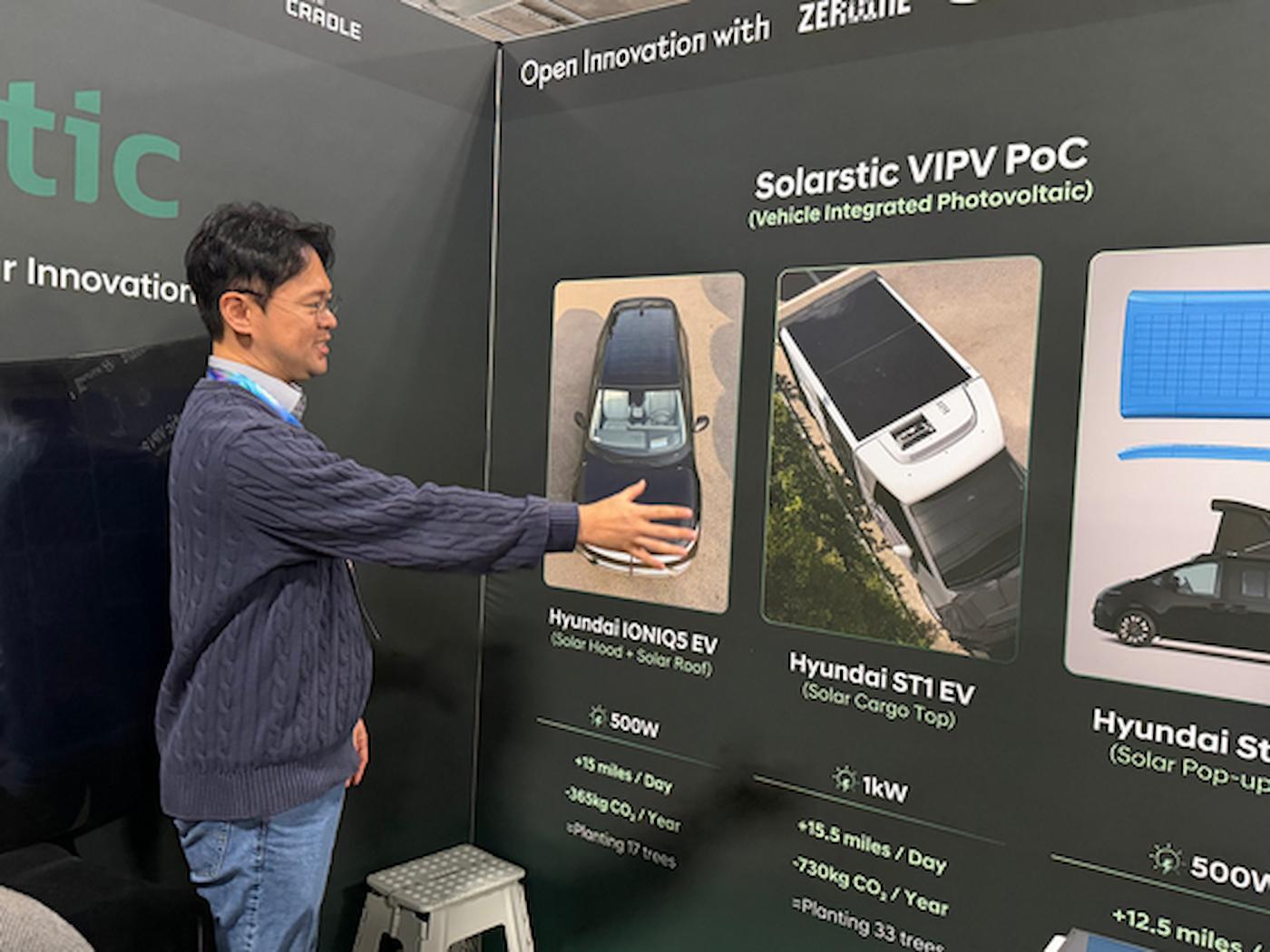
ZER01NE, Hyundai Motor Group’s open innovation platform, showcased 10 groundbreaking startups at CES 2026, demonstrating cutting-edge AI, energy solutions, and robotics that position the Korean automaker as a formidable force in next-generation technology. The event marks Hyundai’s boldest technological leap yet. Mass production targets reach unprecedented scale.
These demonstrations come at a pivotal moment. Hyundai announced plans to build 30,000 robots annually starting in 2028, directly challenging Tesla’s humanoid ambitions. Their strategy integrates manufacturing prowess with advanced AI capabilities.
Revolutionary Robot tech CES 2026 Transforms Manufacturing
Boston Dynamics is making the final version of Atlas available to Hyundai and Google DeepMind first, marking a significant milestone in commercial robotics deployment. This humanoid represents years of development. Industrial applications drive initial implementation.
The Atlas robot demonstrates remarkable versatility. Atlas will be able to operate fully autonomously, lift up to 110 pounds and automatically replace its own battery, capabilities that exceed most current industrial robots. Human-robot collaboration becomes reality. Workplace safety improves dramatically.
Hyundai plans to use Atlas in its car plants in 2028, focused on tasks like parts sequencing, with the target for that being 2028, while the company claims they’ll be doing complex component assembly by 2030. Manufacturing evolution accelerates rapidly. Production efficiency gains momentum.
The Robot Metaplant Application Center (RMAC) provides crucial training infrastructure. Before deployment in SDF, robots first undergo learning and training at the Robot Metaplant Application Center (RMAC), providing robots with a technical training environment allows them to learn and adapt through every lift, turn, and recovery in authentic factory conditions, with the RMAC set to open in 2026 and Atlas robots trained at RMAC will start sequencing tasks at HMGMA by 2028. Structured learning ensures safety. Validation processes mature continuously.
Hyundai startups CES 2026 Spotlight Game-Changing Innovation
Since its establishment in 2018, ZER01NE has been fostering both internal and external startups to develop an open innovation ecosystem, supporting Hyundai Motor Group employees with creative ideas through its ZER01NE Company Builder, which has successfully spun off 40 independent startups to date. Internal innovation thrives consistently. Entrepreneurial culture emerges.
The startup portfolio spans diverse technological domains. This year’s startups will showcase pioneering solutions across energy, AI and robotics: IdeAOcean: AI-driven design software and modular hardware development solution based on autonomous mechanism design technology. Technical diversity strengthens competitive positioning. Market opportunities multiply.
Through CES 2026, ZER01NE aims to showcase its open innovation initiatives, providing participating startups with opportunities to build connections within an extensive global network, strengthen collaboration frameworks, and discover and explore new business prospects to enable their growth as global enterprises. Global partnerships accelerate growth. Strategic alliances form naturally.
MobED Platform: Award-Winning Mobility Solution
Hyundai Motor Company has won the Best of Innovation Award in Robotics at CES 2026 for MobED (Mobile Eccentric Droid), making this the first time Hyundai Motor has received the prestigious Best of Innovation award at CES. Industry recognition validates innovation. Technical excellence receives acknowledgment.
The MobED platform demonstrates exceptional adaptability. MobED features AI-based algorithms and autonomous driving technology, and supports a wide range of applications, including logistics, broadcasting, guidance services, and digital signage, due to its modular design that accommodates diverse top-mounted modules, with unique capabilities including artificial intelligence (AI)-driven autonomous navigation, a customizable modular design, and sensors that provide safe, intuitive operation, empowering the platform to navigate both narrow indoor paths and rugged outdoor terrains. Application versatility drives adoption. Technical sophistication enables flexibility.
Commercial availability approaches rapidly. Mass production for both models will commence in early 2026. Market entry accelerates timeline. Production scaling begins immediately.
Solar technology CES 2026 Powers Sustainable Future
Hyundai’s solar technology initiatives represent significant advancement in renewable energy integration. Hyundai Mobility Solar is a solar module product which can be integrated with an electric car, can be applied on both the car roof and car hood, generating electricity during driving and parking and extending the driving range of the electric car per each charge, relieving the ‘range anxiety’ of the electric car consumers. Energy independence increases substantially. Consumer confidence improves significantly.
Manufacturing capabilities continue expanding. All EV plants powered by solar and wind, with the Ulsan EV plant in South Korea serving as a model, featuring a 50 MW solar farm and AI-driven energy management. Sustainability goals align perfectly. Environmental impact diminishes consistently.
HD Hyundai Energy Solutions has set a goal to mass produce ultra-high efficiency solar panels by 2026, planning to embark on the mass production of large-area high-efficiency HJT solar panels by 2026, with the key objective to increase the power generation efficiency of solar panels from the early 20s to 26%. Efficiency improvements drive adoption. Technology breakthroughs accelerate progress.
Strategic AI Partnerships Transform Development
While Hyundai and Boston Dynamics develop the robot hardware, they’ll work together with Google’s DeepMind AI division on developing the software, going with the division’s recent “Gemini Robotics” model, which is designed to allow robots to perceive, reason from and interact with the physical world, which is a huge get for Hyundai, as DeepMind is broadly considered one of the most sophisticated AI labs in the world. Technology partnerships accelerate innovation. AI capabilities enhance dramatically.
The collaboration extends beyond basic functionality. Advanced perception systems emerge. Machine learning algorithms improve continuously. Real-world applications multiply rapidly.
Partnerships with global AI leaders initiate joint innovation for human progress, accelerating technological development of next-generation humanoids through Boston Dynamics and Google DeepMind collaboration, driving safe and efficient deployment of humanoids by integrating cutting-edge robotics and AI technologies. Safety protocols mature systematically. Deployment strategies strengthen consistently.
Manufacturing Excellence Drives Scale
Hyundai will build 30,000 units per year by 2028 and construct a factory in the U.S. with the capacity to build 30,000 units on its own, as part of Hyundai’s new effort to invest $26 billion into the U.S. over the next four years. Investment commitments demonstrate confidence. Production capacity scales aggressively.
The integrated value chain provides competitive advantages. Thanks to various capabilities within the Group, we can supply parts, mass-produce robots, and provide one-stop robotics-as-a-Service (RaaS), working with affiliates like Boston Dynamics, the Group is expanding its mass-production expertise from automotive to robotics, increasing overall value for customers. Vertical integration reduces costs. Customer value propositions strengthen.
Interactive CES 2026 Experience
All CES 2026 visitors who enter Hyundai’s on-site exhibition get a fascinating demonstration of smart robotic innovation designed to enhance lives, with visitors exploring and experiencing the development process and technologies across six dedicated zones, from human-robot collaboration to robot-to-robot collaboration and the integration of robots with mobility technologies, showcasing the essence of human-centered AI Robotics supporting people from working environments to daily life. Immersive experiences engage audiences. Technology demonstrations educate effectively.
Real-world applications take center stage. Atlas demonstrations show the prototype performing advanced industrial applications, Spot performs industrial site management tasks, including inspection and gauge monitoring, powered by Orbit facility management software, with MobED demonstrations highlighting the next-generation mobile robot platforms, MobED Basic and MobED Pro. Practical implementations showcase value. Industrial applications prove viability.
Future Vision: Human-Centered Robotics
Under the theme ‘Partnering Human Progress’, Hyundai outlines tangible plans to accelerate commercialization of human-centered AI Robotics—amplifying human potential and empowering people in both work and everyday life. Human augmentation drives development. Collaborative frameworks emerge naturally.
Updated with technology designed to assist people, Boston Dynamics’ AI Robotics support people by easing their workload for a number of tasks, carrying heavy objects that were once the duties of humans as just one example of its promise and potential, relieving humans of physically demanding or repetitive tasks while learning and adapting in its role as a workplace partner, becoming a trusted and dependable robotics colleague. Workplace transformation accelerates. Human-robot partnerships mature.
The comprehensive approach integrates multiple technologies. This approach enables the advancement of AI Robotics capabilities, accelerates mass production, and expands service applications – forming a core strategy for the Group to lead the Physical AI era, with seamless integration of capabilities in robotics, components, logistics, and software adding global scale and tangible value. Strategic integration maximizes impact. Competitive advantages compound consistently.
Investment in Innovation Ecosystem
The Group recently announced an investment of KRW 125.2 trillion in Korea over the next five years starting from 2026, with this investment primarily focusing on advancing robotics powered by AI technologies, aiming to secure future growth engines while fostering an innovative robotics ecosystem in Korea. Financial commitments support expansion. Innovation ecosystems flourish systematically.
Long-term vision guides development strategies. Technology leadership positions strengthen. Market opportunities expand continuously. Consumer benefits multiply substantially.
The Hyundai CES 2026 tech showcase demonstrates unprecedented technological convergence. Solar technology CES 2026 innovations complement Robot tech CES 2026 breakthroughs. Hyundai innovation CES establishes new industry benchmarks. Strategic partnerships accelerate commercialization timelines while manufacturing excellence ensures scalable deployment.
These developments position Hyundai as a transformative force across multiple technology domains. The integration of robotics, solar energy, and AI creates synergistic advantages that competitors will struggle to match. Consumer benefits include enhanced safety, improved efficiency, and sustainable transportation solutions that reshape industry expectations permanently.
Frequently Asked Questions
What robots did Hyundai unveil at CES 2026?
Hyundai showcased the Atlas humanoid robot, MobED mobile platform that won the CES Best of Innovation Award, and Spot industrial inspection robot, all demonstrating advanced AI and autonomous capabilities.
When will Hyundai start using robots in manufacturing?
Hyundai plans to deploy Atlas robots at car plants by 2028 for parts sequencing tasks, with complex assembly operations beginning by 2030 after training at their Robot Metaplant Application Center.
What solar technology did Hyundai present at CES 2026?
Hyundai demonstrated Mobility Solar modules that integrate with electric vehicles on roofs and hoods, plus announced plans for ultra-high efficiency solar panels reaching 26% efficiency by 2026.
How many startups participated in Hyundai’s CES 2026 showcase?
ZER01NE, Hyundai’s innovation platform, showcased 10 startups specializing in AI, energy solutions, and robotics, representing their fourth consecutive CES appearance since 2023.
What’s Hyundai’s robot production target?
Hyundai announced plans to build 30,000 robots annually by 2028, including construction of a US factory with 30,000-unit capacity as part of their $26 billion American investment.
Which AI companies are partnering with Hyundai for robotics?
Hyundai is collaborating with Google’s DeepMind AI division and Nvidia to develop advanced robotics software, leveraging DeepMind’s Gemini Robotics model for real-world interaction capabilities.
What makes Hyundai’s MobED robot special?
MobED features AI-driven autonomous navigation, modular design supporting diverse applications, and can navigate both indoor and outdoor terrains, making it suitable for logistics, broadcasting, and digital signage applications.