
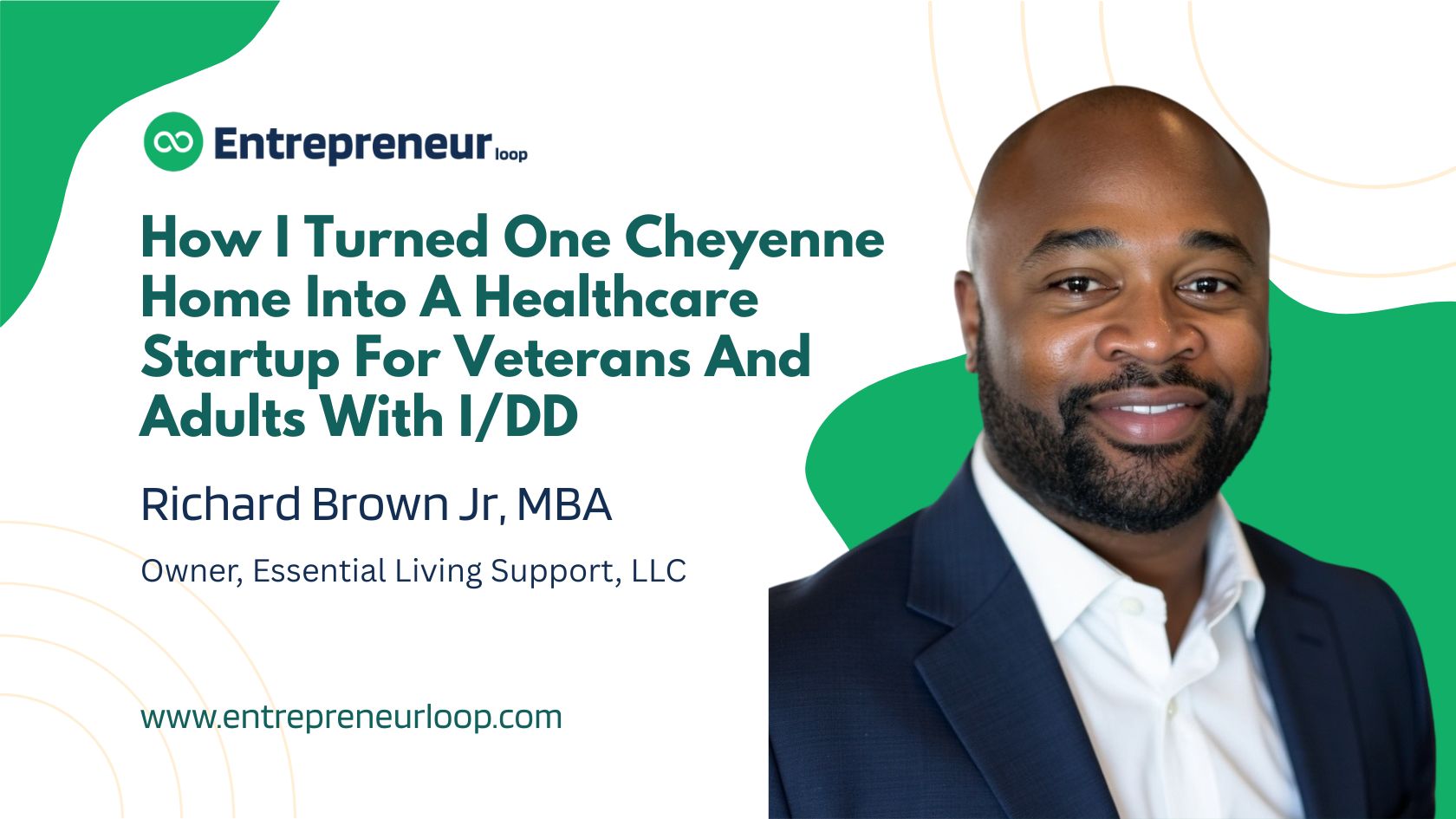
How I Turned One Cheyenne Home Into A Healthcare Startup For Veterans And Adults With I/D

When people hear “startup,” they usually picture software, investors, and a team in hoodies staring at laptops. My startup looks very different.
It is a single-family home on a quiet street in Cheyenne, Wyoming. There is a service dog, laundry running, a pot on the stove, and Veterans and adults with intellectual and developmental disabilities (I/DD) living together in a place that feels like home, not a facility.
I built Essential Living Support, LLC from that one house. My “product” is not an app. It is a carefully designed home environment, a service model aligned with federal and state programs, and a commitment to the people others often overlook.
This is my startup story and some of the strategies I used to build a healthcare business from the ground up.
Who I Am And Why I Built This
I am a Veteran and the founder of Essential Living Support, LLC, a home and community based services provider in Cheyenne. I hold:
- A Master of Business Administration in Healthcare Management
- A Bachelor of Science in Healthcare Administration with a concentration in Healthcare Information Systems
My career has taken me through several corners of the healthcare and human services world. I worked for Child Protective Services in Texas, seeing firsthand what happens when systems fail families. I worked in a state supported living facility, in community services, and later in security at a Microsoft data center and in federal contracting environments.
On paper, those roles may look disconnected. In reality, they all taught me the same thing:
systems are built around buildings, policies, and budgets far more often than they are built around people.
I did not want to complain about that for the rest of my career. I wanted to build a different kind of system, even if it started with only one home and a handful of residents.
Choosing A Very Different Kind Of Startup
When I enrolled in my MBA in Healthcare Management, I expected to be surrounded by people who wanted to run hospitals or large health systems. Many of my classmates did. I respected that, but I knew that was not my path.
While they were working on strategies for multi-million dollar organizations, I was sketching something much smaller:
One home.
A VA approved Medical Foster Home program.
And a model that could support both Veterans and adults with I/DD under one roof.
Most startup advice says “find a problem and solve it with technology.” I went the other way. I chose to build something intentionally high touch and in person, with technology supporting it in the background rather than leading the story.
The Problem I Decided To Solve
In rural and small city communities like Cheyenne, families often face terrible choices. A Veteran or adult with I/DD needs more support. The options usually look like this:
- Stay at home with an exhausted family caregiver
- Move into a large facility far away from their community
- Wait for services that are underfunded and overstretched
I watched Veterans who had served their country end up in environments that did not feel anything like “home.” I watched adults with I/DD lose independence because the only available option was a setting designed for staff convenience, not for their growth.
My core problem statement became simple and personal:
How do I create a single home where Veterans and adults with I/DD can receive nursing home level or intensive support, but still feel like they live in a real home with dignity, routine, and choice?
Designing The Home As The Minimum Viable Product
In the startup world, people talk about an MVP, a minimum viable product. For Essential Living Support, my MVP was a real home in Cheyenne.
I treated that home like a product that needed to be designed:
- Layout and environment
Could people with mobility limitations move comfortably? Was there space for quiet, for socializing, and for staff to work without turning the house into an office? - Daily flow
What does morning look like for a Veteran with complex medical needs and for an adult with I/DD who thrives on routine? How do meals, medications, and community outings fit together? - Safety and compliance
My background in healthcare administration meant I could think in terms of risk, policy, and documentation. I asked myself how to embed safety and compliance into the environment without letting them dominate the feel of the home. - Technology as a silent partner
I did not want screens everywhere. Instead, I wanted technology behind the scenes: secure documentation, reminders, communication tools for coordinating with VA and waiver teams, and a strong focus on privacy and security. My information systems training helped here.
Building Credibility Before Scale
One of the biggest startup strategy lessons I learned from my MBA is that credibility is an asset, especially in healthcare. You do not get many second chances when families are trusting you with someone they love.
I used my education, background, and lived experience intentionally to build that credibility:
- Academic foundation
My MBA in Healthcare Management and BS in Healthcare Administration – Healthcare Information Systems gave me a framework for understanding finance, operations, quality, and regulatory compliance. It also positioned me as someone who understands not just “care” but the business systems that support care. - Direct care experience
Having done front line work with individuals with high medical and behavioral needs, I do not design anything from a distance. I know what it is like to be awake at three in the morning helping someone through a crisis. That shapes the staffing and training decisions I make. - Veteran perspective
Being a Veteran myself, I understand the culture, the language, and the pride that can coexist with vulnerability. That matters when you are asking someone who has led troops or managed missions to accept help bathing or walking.
Instead of chasing rapid scale, I focused on building one strong, credible operation in Cheyenne. My strategy was simple:
Get one home right.
Serve a small number of people exceptionally well.
Become the name that local professionals and families trust.
A Different Kind Of Growth Strategy
Most startup strategies are about user growth, recurring revenue, and “runway.” Here is how I reframed those ideas for my business.
- Narrow, high value customer segments
I do not serve “everyone.” I prioritize:
- Veterans who may qualify for nursing home level care but want a home environment
- Adults with I/DD who benefit from stable, predictable routines and community integration
Each person represents significant monthly revenue because of the intensity of the services provided. That means I do not need thousands of “users.” I need a small number of the right residents whose needs match what this home is designed to do well.
- Local first, not global
A software startup can be global from day one. A Medical Foster Home in Cheyenne cannot. It is hyper local by design.
So my marketing “stack” is different:
- Deep investment in Google Business Profile and local SEO
- Long form content that answers real questions families ask about VA options, I/DD services, and aging in place
- Relationships with local providers, case managers, VA teams, and advocates
Instead of paid ads at scale, my growth strategy is rooted in trust, search visibility, and reputation within a specific radius around my front door.
- Quality as the growth engine
My most important metric is not clicks, impressions, or followers. It is the quality of life for the people who live in this home and the confidence of the families and professionals who refer to me.
When a VA social worker or a waiver case manager has a good experience with Essential Living Support, that becomes a referral source. When a family sees their Veteran or loved one stabilize, gain weight, smile more, or engage in the community again, they tell others.
In this model, quality is not just a moral obligation. It is the primary driver of sustainable growth.
New Ideas I Am Testing As I Grow
As I continue building Essential Living Support, I am experimenting with several ideas that I believe represent “new ways” of doing things in home and community based care.
- Blending populations thoughtfully
Many systems keep Veterans and adults with I/DD entirely separate. I am exploring where they can share space, routines, and activities safely and respectfully, and where they need distinct supports. The goal is not to blur identities but to create a richer, more human environment than a single label can provide. - Home as a platform
Rather than seeing the home as just a physical location, I treat it as a platform that can support different service lines: VA Medical Foster Home, respite, homemaker services, and specialized support. This platform mindset helps me design policies, documentation, and training that can flex to different funding sources and programs without losing consistency. - Data informed, not data obsessed
My healthcare information systems background pushes me to collect and use data, but I am careful about the kind of data I prioritize. I care about fall incidents, mood changes, hospitalizations, and sleep patterns more than vanity metrics. That data informs staffing, routines, and environmental changes in the home. - Founder as visible caregiver
Instead of hiding behind a desk, I choose to remain visible in the day to day life of the home. Families and professionals meet me in the environment where their loved one actually lives. My degrees and titles matter less to them than whether I show up, listen, and follow through.
What I Would Tell Other Founders In Care Based Startups
If you are thinking about starting a business in the healthcare or human services space, especially something home based, here are a few lessons from my journey so far.
- Start with one well designed service and one clearly defined population
- Let your education and background work for you, not as decoration, but as the backbone of how you design, manage, and explain your model
- Design your “MVP” at the level of a day in the life of a real person, not at the level of a spreadsheet
- Treat regulatory and funding constraints like design challenges rather than excuses
- Anchor your growth strategy in quality, relationships, and trust, especially in a local market
My startup is still small. I do not have a unicorn valuation or a pitch deck for venture capital. What I do have is a home in Cheyenne where Veterans and adults with I/DD are living in a way that is safer, calmer, and more personal than many of the options they were given.
For me, that is what entrepreneurship looks like: using everything I have learned in healthcare management, information systems, and direct care to build something that did not exist before, one home and one person at a time.
Best regards,
Richard Brown Jr., MBA, Healthcare Management
Founder and Owner, Essential Living Support, LLC
Specializing in VA Medical Foster Home and I/DD services in Cheyenne, WY
www.essentiallivingsupport.com
(254) 217-6669