

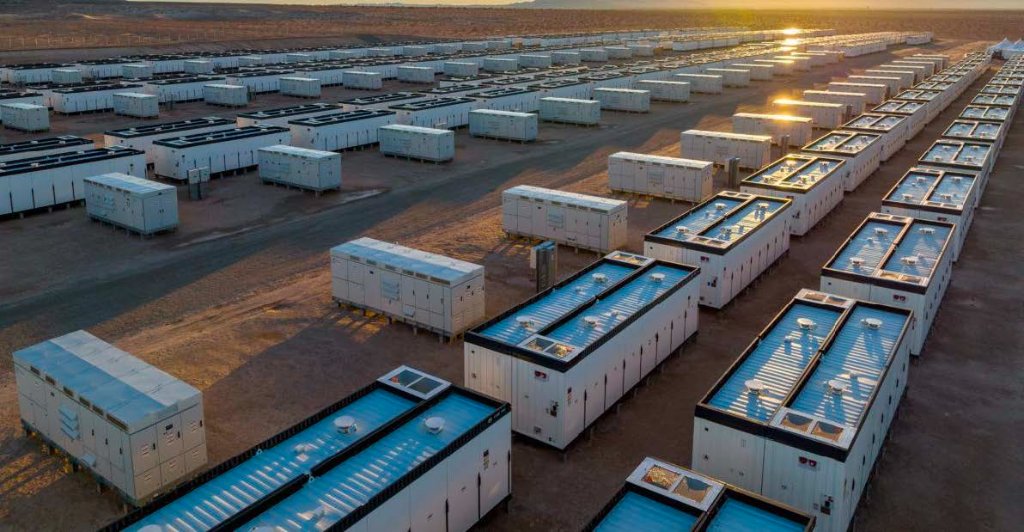
Australia has overtaken both Russia and China to become the world’s largest holder of economic vanadium resources, now controlling approximately 49% of global reserves — and a newly launched commercial player is betting the country is finally ready to put that mineral wealth to work at home. Eora Energy has officially launched in Australia, positioning itself as a challenger in the vanadium flow batteries sector, with a sharp focus on eliminating diesel from remote mining operations and powering the nation’s surging data centre market. This is not a speculative play. It’s a strategic industrial move backed by decades of Australian research — and it’s arriving at exactly the right moment.
What Are Vanadium Flow Batteries and Why Do They Matter?
Unlike conventional lithium-ion cells, vanadium flow batteries store energy in liquid electrolyte held in external tanks. Power capacity and energy capacity are completely decoupled — each can be scaled independently for the specific application. That flexibility is a commercial advantage that industrial operators simply can’t get from most other battery chemistries.
Maria Skyllas-Kazacos presented the first successful demonstration of an all-vanadium redox flow battery in the 1980s, with her design patented by the University of New South Wales in Australia in 1986. China has dominated commercial deployments in the decades since, but the technology’s birthplace is now reclaiming it — building a domestic industry from the ore in the ground to fully assembled commercial systems.
Vanadium flow batteries are designed for durability and long-duration storage, operating for more than 20 years without degradation — a fundamental contrast to lithium-ion, which loses capacity progressively under heavy cycling. Safety matters too. The electrolyte in a vanadium flow battery is water-based and therefore non-flammable, making vanadium flow batteries 100% non-flammable — a critical property in bushfire-prone Australia.
Eora Energy’s Mission: Delivering Off Grid Mining Energy Solutions
Eora Energy’s platform draws on what the company describes as 40 years of Australian innovation via the University of New South Wales, combined with global manufacturing capabilities and deep research and development through an international partner network. Its initial commercial focus targets two high-value sectors: remote mining and digital infrastructure.
Remote mining sites across Australia face complex logistics and high operational costs associated with diesel supply, making integrated storage systems an increasingly attractive proposition. Fuel delivery to sites hundreds of kilometres from the nearest service hub is logistically fragile and financially draining — one supply disruption, one weather event, and the entire operation goes dark. Eora’s vanadium flow batteries platform directly tackles this problem, emerging as one of the most compelling off grid mining energy solutions to enter the Australian market in years.
Eora is actively working with government agencies, industry partners, and regional stakeholders to accelerate pilot projects and unlock funding pathways, aligning with Australia’s sovereign capability agenda and keeping manufacturing and deployment firmly on domestic soil. That alignment opens government funding doors that purely foreign-owned operators cannot access.
Why Diesel Has a Deadline in Australia’s Mining Sector
The economics of diesel are already collapsing under scrutiny. Transitioning from diesel to clean energy storage eliminates costs of fuel, its transport, and diesel generator purchasing and maintenance. Those savings compound dramatically over the 20-year life of a vanadium storage system.
Other companies are already proving the case. Australian Flow Batteries installed a containerised hybrid solar and vanadium redox flow battery diesel replacement system at the Onslow Marine Support Base in the Pilbara, demonstrating that the technology performs reliably in some of Australia’s most demanding conditions. These real-world deployments are building the commercial confidence that enterprises like Eora Energy need to scale their own off grid mining energy solutions.
Vanadium Redox Flow Battery Benefits That Change the Industrial Calculus
The case for vanadium flow batteries in industrial applications rests on four converging strengths. Each one matters individually. Together, they create a compelling argument that’s difficult to ignore:
- Safety: VRFBs are an ideal technology for Australia’s bushfire-prone climate, due to the lack of fire risk associated with the aqueous electrolyte liquid that, unlike lithium-ion batteries, cannot experience thermal runaway.
- Longevity: Vanadium flow batteries can discharge fully at 100% without decaying and losing capacity, unlike lithium batteries. Over a 20-year asset life, that’s a transformational difference in total lifecycle cost.
- Scalability: Power and energy can be scaled independently, meaning the same fundamental technology works as a 78kWh microgrid pilot or a 500MWh grid stabilisation installation.
- Circularity: The vanadium electrolyte can be re-used and does not need to be disposed of, giving operators a genuine circularity advantage when managing ESG obligations.
These vanadium redox flow battery benefits are already registering in global market data. The global vanadium redox flow battery market was valued at $188.7 million in 2023 and is projected to reach $523.7 million by 2030, growing at a CAGR of 15.8%. That growth trajectory is not speculative — it’s being driven by exactly the industrial and grid-scale applications where vanadium redox flow battery benefits outperform every alternative.
Long Duration Energy Storage Australia: The National Opportunity
While VRFBs have lower energy density than lithium-ion batteries, limiting their suitability for mobile applications, they are well-suited to grid-scale storage, a market expected to expand rapidly as Australia pursues its decarbonisation targets.
Western Australia is already acting decisively on long duration energy storage. The state committed AU$150 million toward a 50MW/500MWh vanadium flow battery project in Kalgoorlie, administered by the Department of Energy and Economic Diversification, requiring technology manufactured within WA using locally sourced vanadium. That would make it the largest VRFB installation outside China — a milestone for long duration energy storage australia’s development, not just the state’s grid.
Western Australia also revealed a long-duration vanadium flow battery pilot in Kununurra, exploring the technology in microgrids and off-grid power systems, with a 78kW/220kWh system supplied by VSUN Energy being used to evaluate long-duration energy storage in the state.
Queensland is contributing supply-side muscle. Queensland has one of the world’s largest known resources for vanadium, with several companies currently exploring mining in the North West Mineral Province. The Australian vanadium supply chain is forming in three integrated stages:
- Vanadium extraction from deposits in Queensland’s Julia Creek and Western Australia’s Murchison region
- High-purity electrolyte manufacturing at facilities in Townsville and Perth
- Complete vanadium flow battery assembly at planned commercial facilities, following vanadium refining and electrolyte manufacturing in Townsville
The convergence of abundant vanadium resources, growing demand for long-duration storage, and policy support for sovereign capability creates favourable conditions for the development of the VRFB industry in Australia.
Commercial Flow Battery Storage Systems for Data Centres
Mining is not Eora’s only market. Australia’s data centre sector is growing at extraordinary speed, and it’s straining the grid to its limits. The company is also engaging with data centre operators as Australia’s digital infrastructure expansion places unprecedented strain on grid capacity, with hyperscale facilities now requiring energy equivalent to tens of thousands of homes.
Commercial flow battery storage systems are arguably the ideal answer for this sector. No thermal runaway risk in server halls full of sensitive hardware. No capacity fade halfway through a decade-long infrastructure lease. No degradation surprises on year eight of a 20-year contract. The operational predictability of vanadium flow batteries matches perfectly with the financial discipline that large-scale digital infrastructure requires.
Eora’s outreach to data centre operators signals a smart commercial pivot. Commercial flow battery storage systems capable of guaranteeing decades of stable performance, without fire risk, represent a differentiated pitch in a market typically dominated by diesel generators and lithium-ion backup solutions.
Vanadium Energy Storage Technology Trends Driving Growth
Globally, vanadium energy storage technology trends are pointing sharply upward. The global all-vanadium redox flow battery market produced over 2,000 MWh of energy storage capacity in 2024, with over 300 installations deployed worldwide and more than 60% targeting renewable energy integration. Modular designs now support systems from 50kW to 2MW, and stack lifetimes are routinely exceeding 15,000 cycles.
In Australia, vanadium energy storage technology trends reflect a unique confluence: a country with the world’s largest vanadium reserves, established research heritage, growing policy support, and urgent demand from mining, data centres, and a grid undergoing rapid renewable transformation.
Construction was completed at a factory making electrolyte for vanadium redox flow battery systems in Western Australia, with Australian Vanadium Limited finishing work on the facility in Perth — which will have an annual production capacity for 33MWh of electrolyte. Meanwhile, Vecco Group’s Townsville Vanadium Battery Manufacturing Facility opened in Queensland, with an initial 175MWh annual production capacity of liquid electrolyte, ramping up to as much as 350MWh.
A channel partnering strategy is helping Australian vanadium battery companies begin exporting to India, Vietnam and the Middle East, signalling that vanadium energy storage technology trends are pulling international interest toward Australian-made solutions. The domestic opportunity is substantial — but the global opportunity is considerably larger.
Replacing Diesel with Renewable Energy: The Commercial Case
Replacing diesel with renewable energy is no longer purely an environmental argument — it’s a hardheaded business decision that CFOs are increasingly making on pure cost grounds. Diesel prices are volatile. The costs of transporting fuel, maintaining and replacing generators every few years are high, and those costs compound relentlessly over the operational life of a remote site.
Vanadium flow batteries, paired with solar PV, attack each of these pressure points simultaneously. The vanadium battery used doesn’t require air conditioning and has a lifespan to match the solar array — and when paired together, the levelised cost of energy from the panels and from the storage becomes very competitive. Replacing diesel with renewable energy at scale in Australia is no longer a future aspiration. It’s an active commercial reality being operationalised right now by companies like Eora Energy, Australian Flow Batteries, and a growing ecosystem of deployers targeting the country’s most energy-hungry remote sites.
Costello characterised the opportunity as clear: reduce diesel dependence, stabilise the grid and establish Australia as a global leader in long-duration energy storage, with the question now being whether the country is ready to back the technologies that can deliver it.
The Path Forward for Vanadium Flow Batteries in Australia
Eora Energy’s arrival in the market matters for reasons beyond the company itself. Every new player entering the vanadium flow batteries sector deepens competition, accelerates manufacturing scale, and builds the ecosystem of skills, suppliers, and project financiers that the broader industry needs to reach its potential.
In Australia, a range of policies and incentives support the development of sustainable energy infrastructure, including the Capacity Investment Scheme for advancing renewable energy storage technologies like vanadium to improve grid stability. The policy scaffolding is in place. The supply chain is building. The technology, invented on Australian soil four decades ago, is finally coming home — commercially ready, backed by the world’s largest vanadium reserves, and supported by a wave of industrial operators who can no longer justify diesel as their default energy solution.
Whether you’re a mining operator evaluating your energy future, an infrastructure investor following the clean energy transition, or a procurement manager in a hyperscale data centre — now is the time to engage seriously with what vanadium flow batteries can deliver. The technology is proven. The economics are moving. And Australia, for the first time in decades, looks positioned to lead rather than follow.
Frequently Asked Questions
What is Eora Energy and what is its core focus?
Eora Energy is a newly launched Australian company that has entered the vanadium flow batteries market, focusing on two primary sectors: remote mining operations, where it aims to replace diesel generators with long-duration battery storage, and data centres, where it targets firming capacity for growing digital infrastructure. The company combines 40 years of UNSW research heritage with global manufacturing partnerships and a locally anchored deployment strategy.
How long do vanadium flow batteries actually last?
Vanadium flow batteries are engineered for service lives exceeding 20 years, with no meaningful degradation in storage capacity over that period. Because energy is stored in liquid electrolyte rather than within the cell stack itself, the chemistry does not degrade with deep cycling — a fundamental advantage over lithium-ion systems, which lose capacity progressively with each charge-discharge cycle.
Why are vanadium flow batteries better suited to off grid mining energy solutions than lithium alternatives?
For remote mining applications, vanadium flow batteries offer decisive advantages: they are non-flammable and non-explosive (eliminating fire risk in remote environments), operate across wide temperature ranges without air conditioning, degrade minimally under heavy cycling, and their power and energy capacity can be independently scaled to match the actual site load. The vanadium electrolyte is also reusable and recyclable, supporting ESG obligations over long operational horizons.
What is long duration energy storage and why is it critical for Australia?
Long duration energy storage refers to battery systems capable of storing and dispatching energy for four or more hours — often six to twelve hours in grid applications. As Australia’s electricity grid increasingly relies on solar and wind, long duration energy storage australia needs to bridge the gap between daytime generation peaks and evening or overnight demand, ensuring continuous supply when renewable output drops.
How significant are Australia’s vanadium reserves compared to the rest of the world?
Australia now holds approximately 49% of global economic vanadium reserves, having overtaken China and Russia as of 2025. Major deposits are concentrated in Western Australia and Queensland, positioning Australia to develop a fully integrated domestic supply chain — from ore extraction through electrolyte manufacturing to commercial vanadium flow battery assembly.
Is replacing diesel with renewable energy using vanadium flow batteries financially viable today?
Yes, and increasingly so. When the full cost of diesel operations is properly accounted for — remote transport, storage infrastructure, generator purchasing, and ongoing maintenance — the total cost of ownership is significantly higher than the fuel price alone. Vanadium flow batteries paired with solar PV compete directly with diesel on a levelised cost basis for sites operating over multi-year or decade-long horizons, making the case for replacing diesel with renewable energy commercially compelling.
What are the biggest barriers to broader adoption of commercial flow battery storage systems in Australia?
The primary barriers are higher upfront capital costs compared to lithium-ion alternatives on a per-kWh installed basis, and the relative early-stage nature of the domestic supply chain. Both are being actively addressed: government funding programs under initiatives like the Capacity Investment Scheme are reducing the cost gap, and new electrolyte production facilities in Perth and Townsville are building the manufacturing base needed to lower unit costs as deployment volumes scale.