

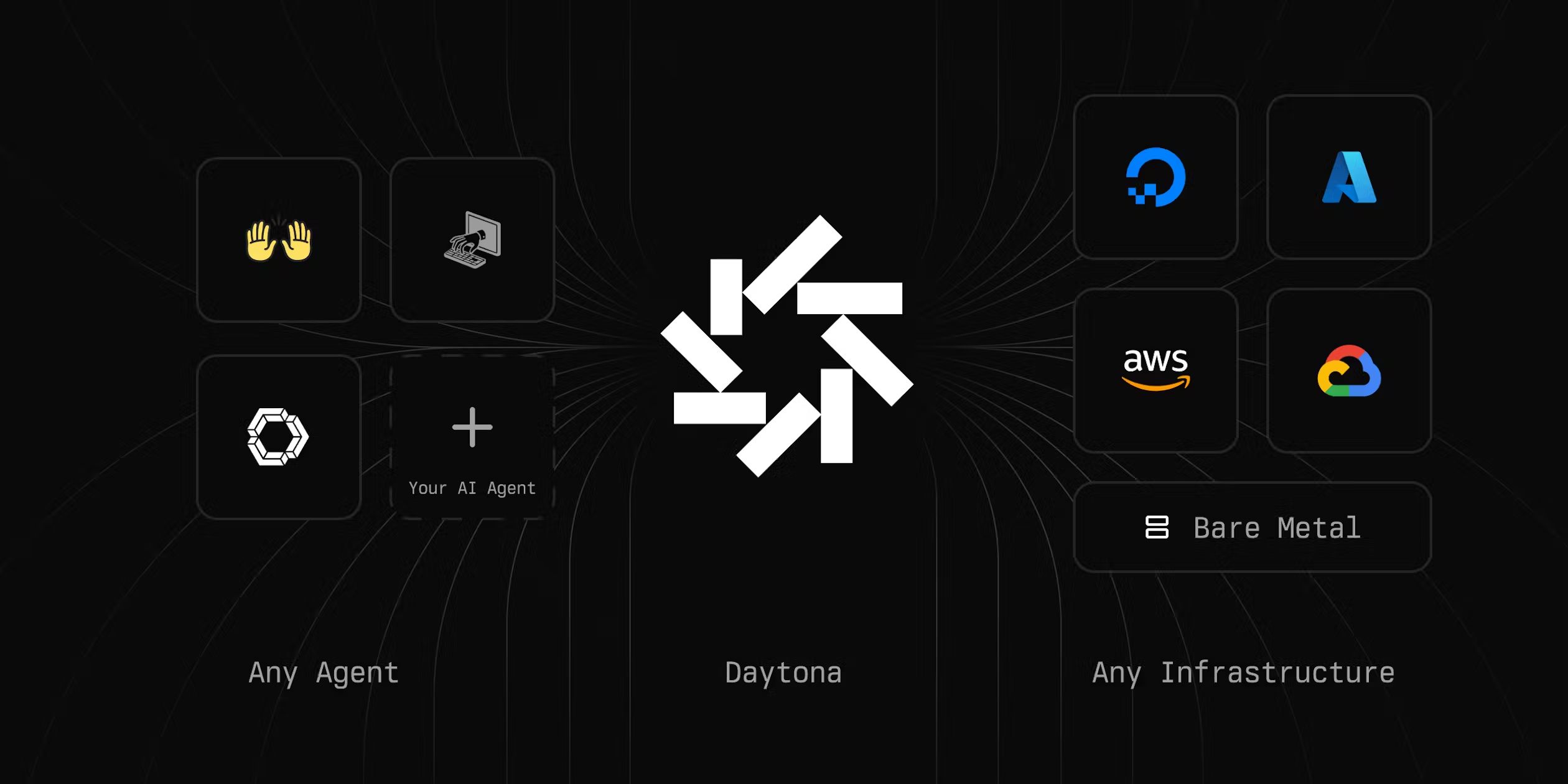
New York-based startup Daytona just secured $24 million in Series A funding from industry heavyweights including Datadog and Figma. The timing couldn’t be better. As enterprises rush to deploy autonomous AI agents, they’re hitting a critical infrastructure problem: where do these agents safely execute code without breaking production systems?
This Daytona AI agent tools funding represents more than just another venture round. It signals a fundamental shift in how we think about AI development infrastructure. While everyone’s been obsessing over large language models and chatbots, a quiet revolution has been brewing underneath—and Datadog Figma Daytona just threw serious weight behind it.
Why AI Agents Need Specialized Development Environments
Here’s the thing most people miss about AI agents. They’re not just fancy chatbots. These autonomous systems need to write code, test APIs, and interact with complex software environments. You can’t just let them loose in your production infrastructure. That’s like giving a toddler the keys to a Ferrari.
FirstMark Capital led the Daytona investment round, recognizing this massive gap in the market. Traditional development environments weren’t built for non-human developers. They assume a careful human is making thoughtful decisions. AI agents? They iterate fast, make mistakes, and need guardrails.
The challenge is real. When an AI agent starts writing and executing code autonomously, you need sandboxed environments that can spin up instantly, isolate potential disasters, and provide the tools for AI agents startup teams are desperately seeking.
What Makes Daytona Different from Traditional Dev Tools
Daytona isn’t trying to reinvent GitHub or VS Code. Instead, they’re building something fundamentally new: infrastructure specifically designed for the AI agent development startup ecosystem. Think of it as creating a safe playground where AI agents can experiment without consequences.
Their approach focuses on three core principles. First, instant provisioning. AI agents don’t want to wait 20 minutes for a development environment to spin up. Second, complete isolation. When an agent breaks something—and they will—it shouldn’t take down anything else. Third, reproducibility. Every environment needs to be identical, eliminating the classic “works on my machine” problem.
What’s fascinating about the FirstMark Capital Daytona partnership is the investor’s track record. FirstMark previously backed companies like Shopify, Pinterest, and Airbnb—all businesses that fundamentally changed their respective industries. They clearly see Daytona doing the same for AI infrastructure.
The Strategic Importance of Datadog and Figma’s Investment
Corporate venture investments tell you where the smart money sees the future heading. Datadog and Figma didn’t just write checks—they’re betting their strategic futures on this technology.
For Datadog, a leading monitoring and analytics platform, the connection is obvious. Their customers are already deploying AI agents. Those agents need observability, debugging tools, and performance monitoring. By backing Daytona, Datadog positions itself at the center of enterprise AI agent platforms before the market explodes.
Figma’s involvement is equally strategic but less obvious. As a collaborative design tool, Figma understands multiplayer workflows better than almost anyone. AI agents represent the ultimate multiplayer challenge: humans and machines working together in real-time. The tools for AI agents startup companies will need collaborative features that blend human creativity with machine execution.
Together, these investors bring more than money. They bring distribution channels, enterprise relationships, and deep technical expertise in building developer tools at scale.
The Explosive Growth of Enterprise AI Agent Platforms
Let’s talk numbers. The global AI market hit $196 billion in 2023 and continues accelerating. But here’s the kicker—most of that spending has gone into model training and deployment, not agent infrastructure.
That’s changing fast. Companies aren’t satisfied with AI that just answers questions anymore. They want agents that actually do things: write code, manage databases, coordinate workflows, and make autonomous decisions. This shift creates enormous demand for the kind of infrastructure Daytona provides.
The Daytona investment round comes at a perfect moment. OpenAI recently launched its Frontier platform targeting enterprise AI agents. Anthropic continues pushing Claude’s agentic capabilities. Every major tech company is racing to enable autonomous AI systems.
But there’s a bottleneck. These AI agents need somewhere to actually execute their tasks. They need development environments that understand their unique requirements. That’s where Daytona steps in, providing the critical infrastructure layer the entire ecosystem desperately needs.
Technical Innovation: Sandboxed Environments at Scale
The technical challenge Daytona solves is genuinely hard. Creating one sandboxed environment is easy—any cloud provider can do it. Creating thousands that spin up in seconds, remain perfectly isolated, yet integrate seamlessly with existing tools? That’s engineering wizardry.
Their architecture leverages containerization but goes several steps further. Each AI agent gets its own complete development environment with full tool access but zero ability to escape its sandbox. Think Docker meets virtual machines meets sophisticated access controls.
Performance matters enormously here. When an AI agent decides it needs to test something, waiting even 30 seconds kills the autonomous workflow. Daytona’s infrastructure provisions complete environments in under 5 seconds. That’s fast enough to keep AI workflows feeling natural.
The security implications are massive too. Companies won’t deploy AI agents if they’re worried about data leaks or system compromise. Daytona’s isolation guarantees mean agents can work with production data safely, experiment aggressively, and fail without consequences.
How This Funding Accelerates the AI Agent Revolution
The Daytona AI agent tools funding isn’t just about one company’s success. It’s a catalyst for an entire industry. With $24 million in the bank and heavyweight backers, Daytona can now do several critical things.
First, they’ll expand their engineering team significantly. Building this kind of infrastructure requires top-tier distributed systems engineers, security experts, and developer experience designers. Talent is expensive but essential.
Second, they’ll accelerate enterprise adoption. The money enables a proper sales and customer success organization. Right now, early adopters are testing Daytona. This funding pushes them toward mainstream enterprise deployment.
Third, they’ll build partnerships. The AI tooling ecosystem is fragmented. Integrating with observability platforms, CI/CD systems, code repositories, and security tools requires significant engineering effort. This funding makes those integrations possible.
Most importantly, it validates the entire category. Other entrepreneurs see Datadog Figma Daytona succeeding and start building complementary tools. Investors see FirstMark Capital Daytona betting big and look for similar opportunities. A whole ecosystem begins forming.
The Competitive Landscape and Market Positioning
Daytona isn’t operating in a vacuum. Several companies are circling adjacent problems, though none have quite nailed the AI agent development use case yet.
GitHub Codespaces offers cloud-based development environments, but they’re designed for human developers. Replit provides instant coding environments but lacks enterprise-grade isolation. GitPod focuses on reproducibility but doesn’t address AI-specific workflows.
What sets Daytona apart is their laser focus on autonomous agents. They’re not trying to serve every developer need. Instead, they’re building exactly what AI systems require and doing it exceptionally well. That focus attracts customers who’ve tried retrofitting existing tools and discovered the gaps.
The broader market for enterprise AI agent platforms is projected to exceed $50 billion by 2028. Daytona isn’t competing for the entire pie—they’re targeting the critical infrastructure layer that everyone else depends on.
Their positioning is smart. Rather than compete with OpenAI or Anthropic on model development, they provide the plumbing those AI systems need. Rather than compete with Datadog on monitoring, they integrate deeply with those platforms.
Real-World Applications Driving Demand
Let’s get concrete about why companies need this technology. Several use cases are driving immediate demand for tools for AI agents startup solutions.
Software development teams are deploying AI pair programmers that do more than suggest code—they write entire features autonomously. These agents need safe environments to test their code without risking production systems. Daytona provides exactly that.
DevOps organizations are using AI agents to manage infrastructure, debug issues, and optimize performance. These agents need access to powerful tools but must remain contained. One misconfigured agent shouldn’t be able to accidentally delete production databases.
Data science teams are running AI agents that experiment with different model architectures, tune hyperparameters, and evaluate results. Each experiment needs its own environment with specific dependencies. Spinning these up manually wastes precious time.
Security teams are testing AI-powered penetration testing tools that probe systems for vulnerabilities. Obviously, these need rock-solid isolation. You can’t let an autonomous security agent accidentally cause a real breach.
Each of these scenarios represents millions in potential value for enterprises. The Daytona investment round gives them resources to serve all these markets simultaneously.
The Broader Implications for AI Development
This funding signals something bigger than one company’s trajectory. It suggests we’re entering a new phase of AI development where infrastructure becomes as important as models.
For years, the AI conversation focused almost entirely on model capabilities. GPT-4 is smarter than GPT-3. Claude beats GPT-4 at certain tasks. Gemini has better reasoning. That’s all important, but it’s not sufficient.
As AI systems become more capable and autonomous, the infrastructure they run on becomes critical. You wouldn’t run a website without proper hosting, databases, and CDNs. Similarly, you can’t run enterprise AI agents without proper development infrastructure.
The Datadog Figma Daytona combination suggests that established tech companies recognize this shift. They’re not just passively watching—they’re actively investing in the infrastructure layer that will power the next generation of AI applications.
We’re likely to see more infrastructure-focused AI startups raising significant capital in 2026. The picks-and-shovels approach during gold rushes often proves more profitable than mining for gold directly. Daytona is selling the picks and shovels to everyone rushing into AI agents.
What This Means for Developers and Enterprises
If you’re building with AI agents today, the Daytona AI agent tools funding should get you excited. More investment means better tools, faster development, and stronger ecosystem support.
For individual developers and small teams, this validates that agentic AI represents a real opportunity. You’re not mistaken for believing autonomous agents will transform software development. Major companies and investors agree with you.
For enterprise technology leaders, this signals it’s time to take AI agents seriously. The infrastructure is maturing. The investment capital is flowing. The tools are getting better. Waiting too long means falling behind competitors who moved faster.
For AI researchers and engineers, the AI agent development startup space just became significantly more attractive. More funding means more jobs, better salaries, and more interesting technical challenges to solve.
The timing coincides with other major developments. Y Combinator recently reversed its ban on Canadian startups, expanding opportunities for founders. Generate Biomedicines is pursuing an IPO, showing AI-focused companies can reach public markets. The entire ecosystem is maturing simultaneously.
Looking Ahead: The Future of AI Agent Infrastructure
Where does this go from here? The FirstMark Capital Daytona bet suggests several trends worth watching.
First, we’ll see increasing specialization in AI tooling. Just as developer tools fragmented into version control, CI/CD, monitoring, and security categories, AI infrastructure will fragment too. Daytona owns the development environment piece. Others will tackle orchestration, deployment, monitoring, and governance.
Second, expect consolidation. Once the market matures, larger platforms will acquire successful startups to build comprehensive AI infrastructure suites. Datadog and Figma’s investments might be precursors to future acquisitions.
Third, open source will play a major role. Developers want to avoid lock-in, especially for critical infrastructure. Smart companies will open-source core components while monetizing enterprise features. Daytona would be wise to consider this approach.
Fourth, regulatory pressure will intensify. As AI agents become more autonomous, governments will impose requirements around safety, auditing, and control. Infrastructure providers that build compliance features early will have significant advantages.
The Daytona investment round is just the beginning. The tools for AI agents startup ecosystem will expand dramatically over the next few years, with billions more in venture capital flowing into infrastructure companies.
Conclusion: The Infrastructure Revolution Nobody’s Talking About
While everyone debates whether AI will achieve AGI or take our jobs, a quieter revolution is happening underneath. Companies like Daytona are building the foundational infrastructure that makes any of that possible.
The $24 million Daytona AI agent tools funding from Datadog, Figma, and FirstMark Capital isn’t just another venture round. It’s a statement that the future of AI depends on specialized infrastructure, not just better models. It’s recognition that autonomous agents need purpose-built environments to reach their potential.
For entrepreneurs, this creates opportunities. Adjacent problems in AI infrastructure remain unsolved. For investors, it highlights an overlooked category with massive growth potential. For enterprises, it signals that reliable AI agent tooling is arriving faster than expected.
The age of AI agents is here. Thanks to infrastructure innovators like Daytona, it’s becoming practical, safe, and scalable. That’s worth getting excited about.
Ready to build with AI agents? Explore how development infrastructure specifically designed for autonomous systems can accelerate your AI initiatives. The tools exist now—the question is whether you’ll use them before your competitors do.
Frequently Asked Questions
What is Daytona and what problem does it solve?
Daytona is a New York-based startup that provides sandboxed development environments specifically designed for AI agents. It solves the critical problem of giving autonomous AI systems safe places to write, test, and execute code without risking production infrastructure or data breaches.
How much funding did Daytona raise and who invested?
Daytona raised $24 million in Series A funding led by FirstMark Capital, with participation from major tech companies Datadog and Figma. This investment validates the growing need for specialized infrastructure supporting AI agent development.
Why do AI agents need specialized development environments?
AI agents operate autonomously and iterate rapidly, unlike human developers who carefully review changes. They need isolated environments that spin up instantly, prevent accidental damage to production systems, and provide reproducibility—requirements traditional development tools weren’t designed to meet.
How does Daytona differ from GitHub Codespaces or Replit?
While GitHub Codespaces and Replit offer cloud development environments for human developers, Daytona focuses specifically on AI agent workflows. It provides faster provisioning (under 5 seconds), stronger isolation for autonomous systems, and integrations designed for machine-driven development rather than human collaboration.
What industries are using AI agent development tools?
Software development teams, DevOps organizations, data science teams, and security professionals are the primary users. They deploy AI agents for autonomous coding, infrastructure management, model experimentation, and security testing—all requiring safe, isolated development environments.
Why did Datadog and Figma invest in Daytona?
Datadog invested because their monitoring platform serves customers deploying AI agents who need observability tools. Figma invested due to their expertise in collaborative workflows, recognizing AI agents as the ultimate multiplayer challenge requiring humans and machines to work together seamlessly.
What does this funding mean for the future of AI infrastructure?
The $24 million investment signals that AI infrastructure is becoming as critical as AI models themselves. It validates the picks-and-shovels approach to AI development, suggesting more venture capital will flow into infrastructure companies that enable autonomous AI systems at enterprise scale.