
Canva Acquires Cavalry and MangoAI to Expand Professional Creative Suite

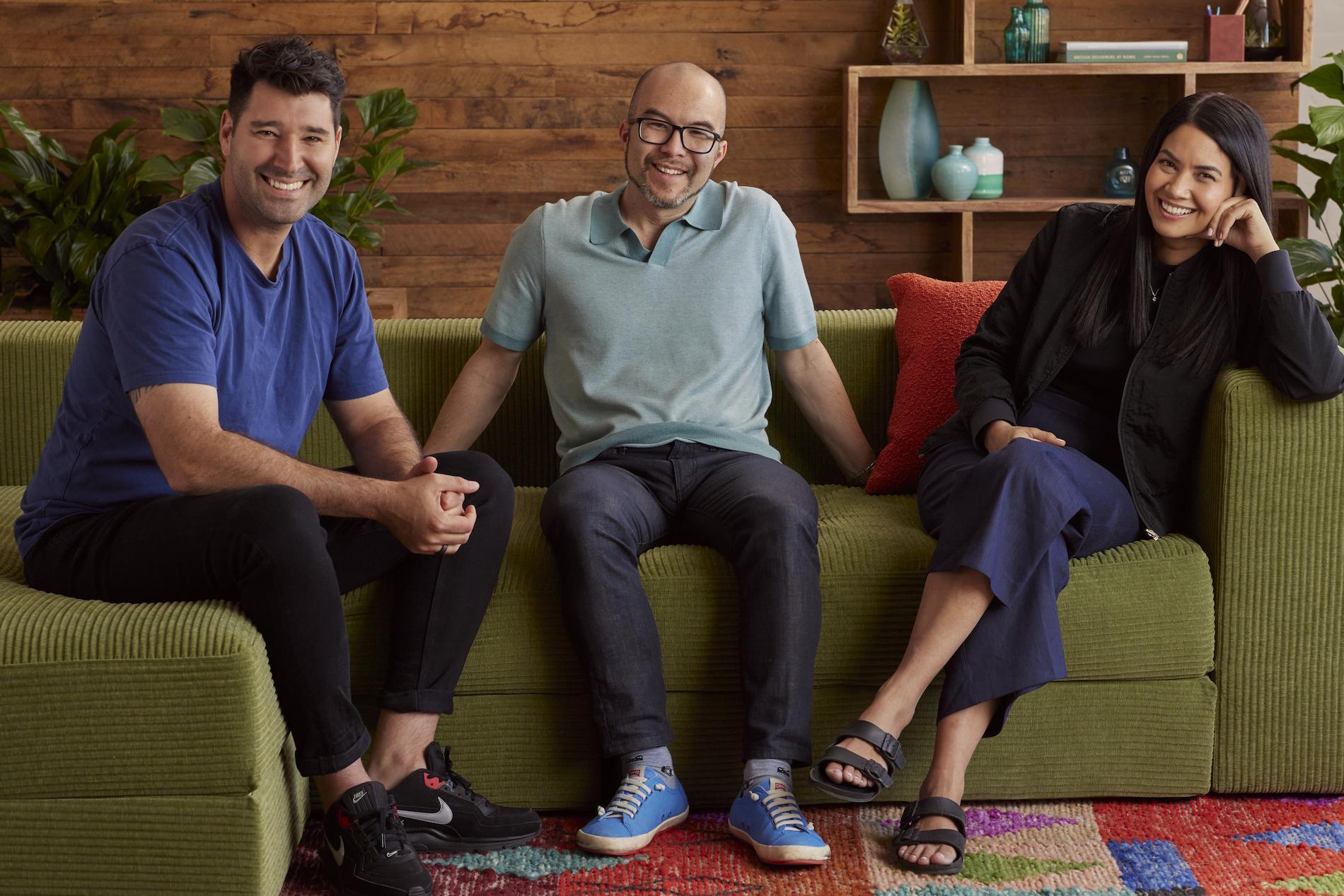
Canva closed 2025 with over $4 billion in annualized revenue, marking a 36% increase from the previous year. Now, the design platform giant is betting its future on professional creative tools through dual strategic acquisitions. On February 23, 2026, the company announced it’s acquiring Cavalry, a UK-based motion graphics software developer, and MangoAI, a stealth AI video advertising platform. This represents the fourth and fifth acquisitions for Canva in two years.
The high-profile venture-backed company is expanding into new areas as Wall Street punishes public market software vendors over AI concerns. With Adobe shares dropping 30% this year, Canva sees opportunity where competitors face vulnerability. These acquisitions signal something bigger than feature expansion. They represent a fundamental shift in how Canva positions itself against legacy creative software companies.
Understanding the Canva Acquisition News
Design software acquisitions 2026 are accelerating at an unprecedented pace. Canva has more than 265 million users globally, including teams at over 95% of Fortune 500 companies, and its AI features have been used more than 24 billion times. The company’s aggressive growth strategy now includes targeted acquisitions that address specific gaps in its professional creative suite.
Cameron Adams, Canva’s co-founder and product chief, told CNBC that customers have been asking what the company can offer in motion graphics, and Cavalry, which Canva has used for its own projects, has gained attention among designers on social media as an alternative to Adobe’s After Effects for some work. This wasn’t a random purchase. Canva identified exactly what professionals wanted and acquired the tool they were already using.
The Canva creative suite expansion demonstrates strategic thinking about market positioning. Rather than building motion graphics capabilities from scratch, they acquired proven technology with an established user base.
Cavalry 2D Animation Enters Canva’s Arsenal
Motion graphics software has historically been dominated by Adobe After Effects. However, Cavalry has been quietly building a following among motion designers who want something faster and more intuitive. The four-person UK startup created a 2D animation tool that combines procedural workflows with real-time rendering.
Amazon, ByteDance, Google, and OpenAI all have employees that are paying customers, according to Cavalry’s website. That’s not a random collection of companies. These are organizations at the forefront of digital design and AI development. Their teams chose Cavalry over industry-standard alternatives.
What makes Cavalry 2D animation different? Unlike traditional animation tools that rely heavily on keyframing, Cavalry uses procedural animation systems that let designers create complex motion graphics by connecting behaviors and modifiers. Think of it like the difference between manually adjusting every frame versus building a system that animates intelligently.
Canva will continue to operate Cavalry for people to use and buy independently, while also incorporating the animation technology into the core Canva product and the Affinity application for professional designers. This dual approach preserves Cavalry’s appeal to professional motion designers while democratizing access for Canva’s broader user base. It’s smart business that recognizes different user needs.
The integration of Cavalry alongside Affinity creates something Adobe has struggled to deliver: a unified professional creative workflow. Canva professional design tools now span photo editing, vector design, layout, and motion graphics. All accessible. All connected. All increasingly competitive.
MangoAI Ad Optimization Powers Creative Automation Tools
MangoAI represents the other side of Canva’s strategy: AI-driven performance optimization. While Cavalry addresses the creation side, MangoAI is a stealth-mode company, whose technology can be used for creating short videos for advertising. The company emerged from stealth with technology built by former Netflix AI leaders.
MangoAI strengthens Canva’s suite of content marketing products, with former Netflix VP of Data Science Nirmal Govind joining as Canva’s first Chief Algorithms Officer. That title didn’t exist at Canva before. Its creation signals how seriously the company takes algorithmic intelligence as a competitive advantage.
The AI video advertising platform uses reinforcement learning to optimize ad performance. MangoAI’s technology tracks how videos perform across platforms, then automatically adjusts content to improve results. It’s not just about making videos faster. It’s about making them more effective through data-driven iteration.
That includes “being able to cut stuff down, being able to repurpose content from other campaigns and put it together, being able to take a great call to action that happens at the end of one video and then append it to the hook that happens in another video,” and “Analyzing all of that across your campaigns is the full vision of Canva Grow, and Mango will help enable that.”
Creative automation tools powered by MangoAI ad optimization will integrate into Canva Grow, the company’s marketing suite. This creates a complete cycle: create content in Canva, launch campaigns through Canva Grow, optimize performance with MangoAI algorithms, then iterate based on real results.
The Canva AI Strategy Takes Shape
Canva AI strategy isn’t about adding chatbots or image generators. Our AI tools have been used more than 24 billion times to generate presentations, transform documents, create videos, and scale content across every channel. The company has built AI into the core creative workflow, not as a novelty feature.
The MangoAI acquisition advances this strategy in a specific direction: intelligent optimization. It’s about intelligent systems that learn from performance, understand context, and continuously improve content, and MangoAI brings deep expertise in data intelligence and reinforcement learning, with technology designed to connect creative output directly to performance.
This matters because AI-generated content is only valuable if it achieves business objectives. Anyone can generate images or videos now. The competitive advantage comes from generating content that performs. MangoAI gives Canva that capability at scale.
“AI is great at getting you to 80%,” Adams said. “That last 20% where you’re confident that you can push this piece of content out and truly represent your brand and speak to your audience and achieve the goals that you want to achieve is vital to have, and that last 20% is really tricky to do.”
The Canva AI strategy acknowledges that pure generation isn’t enough. Human judgment combined with algorithmic optimization creates better results than either alone. That’s the philosophy driving these acquisitions.
Canva New Features Reshape Professional Workflows
What does Canva acquires Cavalry and MangoAI actually mean for users? We’re seeing Canva new features emerge that fundamentally change professional creative workflows. The integration timeline suggests we’ll see initial implementations within months, not years.
Motion graphics capabilities from Cavalry will appear first in standalone Cavalry access, then gradually integrate into the main Canva platform and Affinity suite. This staged rollout lets existing Cavalry users continue their workflows while Canva’s larger audience gains access to professional motion design.
Cavalry brings professional-grade motion design into the Canva ecosystem, joining Affinity, this creates a full creative suite for professional designers covering photo, layout, vector, and now motion editing. That’s a complete toolkit. Designers no longer need multiple disconnected applications for different media types.
MangoAI’s integration into Canva Grow creates new possibilities for marketing teams. Instead of creating ads, launching campaigns, and hoping for good results, teams can now iterate based on performance data. The AI identifies which creative elements drive engagement, then suggests optimizations or automatically generates variations.
Together, these acquisitions position Canva to compete directly with Adobe’s Creative Cloud while offering something Adobe doesn’t: integrated marketing intelligence. Canva professional design tools now extend from creation through distribution to optimization.
Canva vs Adobe Creative Suite: The Competition Heats Up
The elephant in every design software conversation is Adobe. For decades, Creative Suite and later Creative Cloud dominated professional design. Now, Canva is mounting a serious challenge.
Canva ended 2025 with $4 billion in annualized revenue, 265 million users, and positive free cash flow for 9 straight years, while Adobe, by comparison, pulled in $6.2 billion last quarter but only grew 10%, and its stock is down 30% this year. Revenue growth tells the story. Canva is accelerating while Adobe faces market pressure.
What differentiates Canva vs Adobe creative suite? Accessibility remains Canva’s core advantage. Adobe’s professional tools require significant learning investment. Canva democratizes design without sacrificing power for professionals. That’s a compelling value proposition when Affinity is now free.
Canva bought Affinity in 2024 and made it free in October. Giving away professional-grade software signals confidence in the business model. Canva makes money through subscriptions to advanced features, not by charging for basic tools. This approach attracts users, then converts them based on value delivered.
The Cavalry and MangoAI acquisitions address Adobe’s remaining advantages: motion graphics and marketing optimization. After Effects has been the motion graphics standard for years. Now Canva offers a viable alternative integrated with their broader platform. Adobe doesn’t have an answer to intelligent ad optimization at Canva’s scale.
Perhaps most significantly, Canva is winning the AI race. While Adobe adds AI features to existing tools, Canva builds AI into the fundamental creative process. The difference shows in adoption rates and user satisfaction.
Design Software Acquisitions 2026 Reflect Industry Trends
Looking at design software acquisitions 2026 more broadly reveals patterns. Established software companies are racing to add AI capabilities through acquisition rather than internal development. Speed matters more than ever in technology markets.
In 2025, US software companies spent more on acquiring AI companies compared with the previous three years combined. That’s a remarkable acceleration. Companies recognize they can’t build AI capabilities fast enough organically. Acquisition provides instant expertise and proven technology.
Canva’s approach differs from typical tech acquisitions. Rather than “acquihires” focused on talent, they’re acquiring complete products with existing user bases and revenue. Cavalry’s founders, Chris Hardcastle, Ian Waters and Adam Jenns, will join Canva as part of the acquisition, and Nirmal Govind, co-founder, MangoAI, will join Canva as its first Chief Algorithms Officer.
This integration strategy preserves what made the acquired companies valuable while leveraging Canva’s scale for distribution. It’s acquisition done thoughtfully rather than just buying market share.
The creative automation tools category is emerging as particularly valuable. Tools that create content are useful. Tools that create effective content through data-driven optimization are transformative. That’s what makes MangoAI worth acquiring despite being in stealth mode.
What This Means for Creative Professionals and Marketers
For designers and marketing professionals, these acquisitions create both opportunities and challenges. On one hand, powerful professional tools are becoming more accessible and integrated. On the other, the pace of change in creative software is accelerating.
Motion designers now have a legitimate Adobe After Effects alternative that integrates with their broader creative workflow. That matters especially for freelancers and small teams who can’t justify Adobe’s subscription costs. Cavalry’s procedural approach also enables faster iteration, which directly translates to higher productivity.
Marketing teams gain sophisticated ad optimization previously available only to major brands with dedicated data science teams. MangoAI’s reinforcement learning systems automatically identify what content performs, then suggest optimizations. This levels the playing field between enterprise marketing departments and smaller organizations.
The integration of creative tools and marketing intelligence is perhaps most significant. Traditionally, creative and analytics lived in separate silos. Canva is unifying them into a single workflow where creation and optimization inform each other continuously.
However, professionals need to adapt. The skills that mattered yesterday—manual animation, campaign management, traditional analytics—are being augmented or replaced by AI-assisted workflows. The future belongs to professionals who can effectively combine creative judgment with algorithmic insights.
Looking Ahead: Canva’s Professional Creative Vision
Where does Canva go from here? These acquisitions suggest a clear vision: becoming the comprehensive creative operating system for professionals and businesses. Not just a design tool. An end-to-end platform for visual communication.
“Our revenue growth has not stopped, our user growth has not stopped, and the quality of our product is getting better and better with the inclusion of AI,” he said, and Canva, which now has over 5,000 employees, is not currently raising a new funding round. The company is growing sustainably without needing additional capital. That financial stability enables aggressive product development and strategic acquisitions.
The Canva creative suite expansion isn’t finished. Motion graphics and ad optimization fill important gaps, but opportunities remain in areas like 3D design, virtual production, and interactive content. Expect more acquisitions as Canva builds toward comprehensive professional capabilities.
The bigger competitive question is whether Adobe can respond effectively. Their legacy business model based on software licensing conflicts with the freemium, AI-first approach Canva pioneered. Transforming that business model while maintaining revenue is extraordinarily difficult.
For the creative industry, increased competition between Canva and Adobe benefits everyone. Better tools. Lower prices. Faster innovation. The professional design software market has been stagnant for years. These acquisitions inject competitive energy that will drive improvements across the industry.
The trajectory is clear. Canva acquires Cavalry and MangoAI to build a professional creative suite that competes directly with Adobe while offering something Adobe can’t match: seamless integration between creation, marketing, and optimization powered by advanced AI. Whether this strategy succeeds depends on execution. But the ambition and investment suggest Canva is serious about becoming the dominant platform for professional visual communication.
Frequently Asked Questions
What companies did Canva acquire in February 2026?
Canva acquired Cavalry, a UK-based motion graphics software company, and MangoAI, an AI-powered video advertising optimization platform. These represent Canva’s fourth and fifth acquisitions in the past two years as the company expands its professional creative capabilities and AI-driven marketing tools.
What is Cavalry and why did Canva acquire it?
Cavalry is a 2D animation and motion graphics software that serves as an alternative to Adobe After Effects. The four-person UK startup created procedural animation tools used by companies like Amazon, Google, and Netflix. Canva acquired Cavalry to add professional-grade motion design capabilities to its creative suite alongside existing tools like Affinity.
What does MangoAI do and how will it integrate with Canva?
MangoAI specializes in AI-powered video advertising optimization using reinforcement learning to improve ad performance. The technology will integrate into Canva Grow, the company’s marketing suite, enabling automatic content optimization based on performance data across advertising platforms. Former Netflix VP Nirmal Govind joined Canva as its first Chief Algorithms Officer.
Will Cavalry remain available as a standalone product?
Yes, Canva confirmed it will continue operating Cavalry as an independent product that users can purchase separately. Simultaneously, Canva will integrate Cavalry’s animation technology into both the core Canva platform and the Affinity application for professional designers, giving users flexibility in how they access motion graphics capabilities.
How does this acquisition affect Canva’s competition with Adobe?
These acquisitions directly challenge Adobe’s dominance in professional creative software. Canva now offers motion graphics (competing with After Effects) and AI-powered ad optimization (which Adobe lacks) while maintaining advantages in accessibility and pricing. With Affinity available free and 265 million users, Canva presents a comprehensive alternative to Adobe Creative Cloud.
What is Canva’s AI strategy following the MangoAI acquisition?
Canva’s AI strategy focuses on intelligent optimization rather than just content generation. With over 24 billion AI tool uses, the company integrates AI throughout the creative workflow. MangoAI adds reinforcement learning that connects creative output to performance data, enabling content to improve automatically based on real-world results across marketing campaigns.
When will these new features be available to Canva users?
While Canva hasn’t announced specific timelines, the integration will be gradual. Cavalry will initially remain available as a standalone product while Canva integrates its technology into the main platform and Affinity suite. MangoAI’s optimization capabilities will strengthen Canva Grow’s marketing intelligence tools. Initial implementations are expected within months of the February 2026 announcement.