
India Budget 2026 for Startups: 6 Major Grants and Tax Benefits You Can Actually Claim

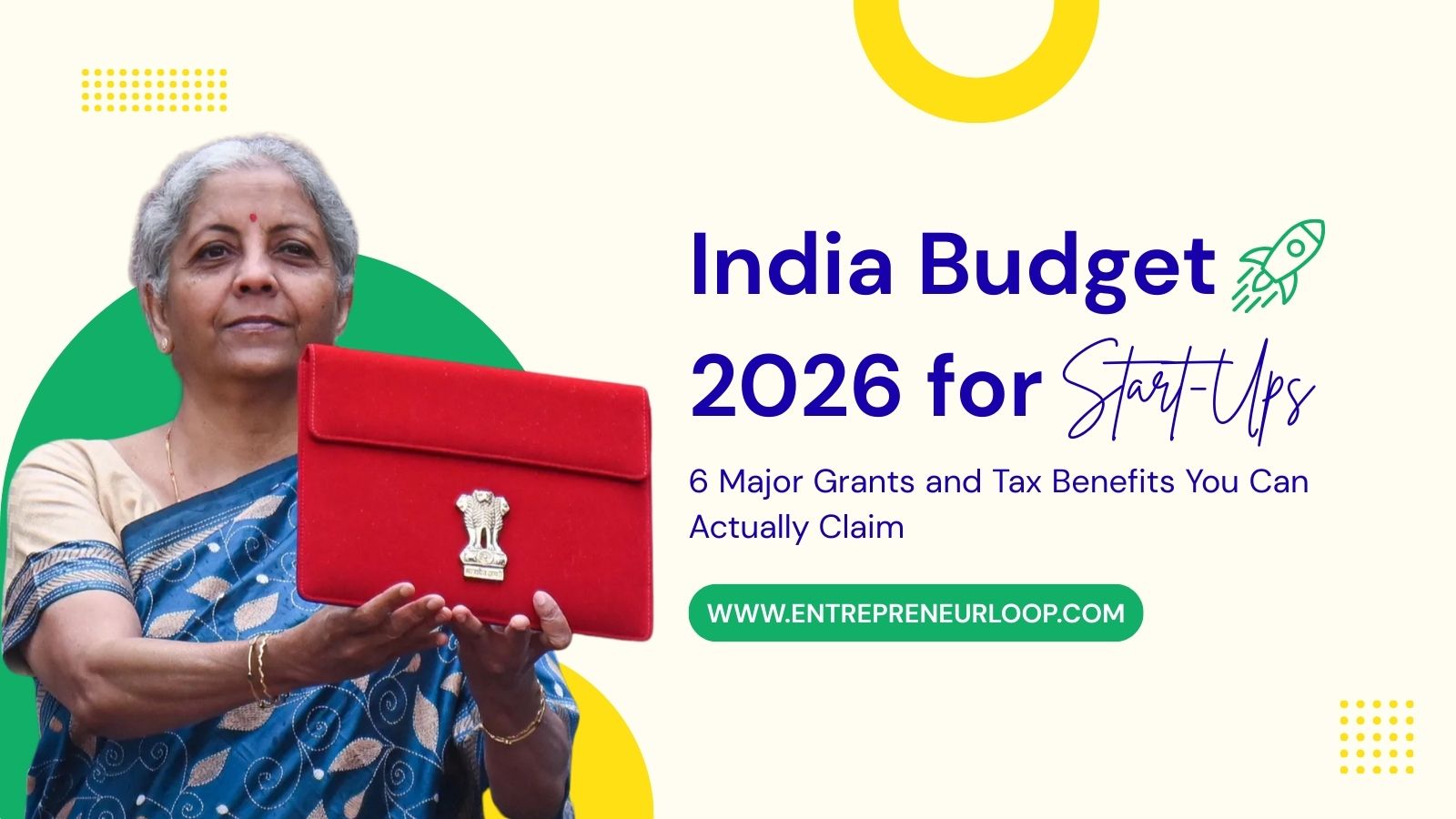
Finance Minister Nirmala Sitharaman unveiled India’s Union Budget 2026-27 on February 1, 2026, delivering her ninth consecutive budget presentation with substantial allocations for the startup ecosystem. With nearly 2 lakh DPIIT-recognized startups now operating across India—officially 1,97,692 as of October 31, 2025—the country has cemented its position as the world’s third-largest startup hub. Capital access continues to evolve as founders navigate the journey from seed funding to sustainable scale.
Budget 2026 addresses these opportunities through a comprehensive framework of funding mechanisms and fiscal incentives. The allocation includes three separate Rs 10,000 crore funds specifically targeting startups, MSMEs, and biopharma innovation, plus a Rs 2,000 crore injection into existing support infrastructure. For founders seeking Budget 2026 grants tax benefits startups, understanding these provisions could mean accessing millions in non-dilutive funding and tax savings.
This budget represents transformative support. Government schemes for startups India 2026 now span early-stage equity funding, manufacturing support, tax holidays, biopharma innovation, and infrastructure development. Whether you’re building deep-tech hardware, scaling a manufacturing operation, developing biotechnology solutions, or launching a SaaS platform, Budget 2026 creates multiple pathways to reduce your tax burden and secure growth capital.
Here’s exactly what you can claim and how to claim startup tax benefits 2026 before application windows close.
📋 Quick Summary: 6 Major Benefits at a Glance
- Rs 10,000 Crore Fund of Funds – Additional equity for early and growth-stage startups via AIFs
- Rs 10,000 Crore SME Growth Fund – Performance-based equity for MSME champions
- Rs 10,000 Crore Biopharma SHAKTI Fund – Dedicated capital for biopharmaceutical innovation
- Rs 2,000 Crore Self-Reliant India Fund Top-Up – Risk capital for micro enterprises
- Section 80-IAC Tax Holiday – 100% profit exemption for 3 consecutive years (incorporation deadline now extended to 2030)
- Cloud Service Tax Holiday – Zero tax until 2047 for foreign providers (reduces your infrastructure costs)
📑 Table of Contents
- Understanding Budget 2026 Grants Tax Benefits Startups: The Strategic Framework
- Grant #1: Rs 10,000 Crore Fund of Funds Expansion for Venture Capital
- Grant #2: Rs 10,000 Crore SME Growth Fund for Manufacturing Champions
- Grant #3: Rs 10,000 Crore Biopharma SHAKTI Fund for Deep-Tech Innovation
- Grant #4: Rs 2,000 Crore Top-Up to Self-Reliant India Fund
- Tax Benefit #1: Section 80-IAC Tax Holiday—Your Rs 77 Lakh Savings Opportunity
- Tax Benefit #2: Cloud Infrastructure Cost Reductions Through Provider Tax Holiday
- Additional Fiscal Benefits: Hidden Opportunities Most Founders Miss
- How to Claim Startup Tax Benefits 2026: Your Comprehensive Action Plan
- Common Mistakes That Cost Startups Crores in Available Benefits
- Who Benefits Most from These New Startup Policies 2026?
- Where India’s Startup Ecosystem Is Heading: Long-Term Strategic Shifts
- Your Move: Taking Action on Budget 2026 Grants Tax Benefits Startups
Understanding Budget 2026 Grants Tax Benefits Startups: The Strategic Framework
Budget 2026-27 adopts an “ecosystem-led approach” that differs fundamentally from previous years. Finance Minister Sitharaman outlined three distinct funding pillars: equity support, liquidity access, and professional compliance assistance. These startup fiscal incentives India 2026 are designed to work synergistically, creating compounding effects on startup runway and growth potential.
The strategic innovation lies in how these benefits stack. You might qualify for multiple programs simultaneously—early-stage equity from the Fund of Funds, biopharma innovation funding, working capital support through TReDS, credit guarantees for loans, and Section 80-IAC tax exemptions. Each benefit amplifies the others, similar to combining power-ups in a strategic game.
What makes these new startup policies 2026 genuinely transformative is the explicit focus on patient capital—long-term funding without pressure for quick exits. Deep-tech startups typically require 9-15 years to commercialize breakthrough innovations. Traditional venture capital operates on 3-5 year exit timelines. Budget 2026 bridges this gap effectively.
The Fund of Funds expansion, SME Growth Fund structure, Biopharma SHAKTI initiative, and existing extended tax holiday timelines all support longer development cycles. For deep-tech founders working on semiconductors, space technology, advanced materials, or biotechnology, this represents a fundamental shift in available support infrastructure.
Traditional e-commerce and SaaS ventures benefit significantly from these provisions. Credit guarantee schemes and working capital support specifically target fast-growth startups during the critical period between seed funding and institutional investment rounds—that crucial phase where securing capital can accelerate growth trajectories.
Budget 2026’s funding mechanisms directly address the gap between seed and Series A funding. You’ve proven your concept, assembled a team, secured initial customers, and utilized your seed capital. Now you need Rs 2-5 crore to scale operations, and Budget 2026 provides multiple pathways to secure this growth capital.
Grant #1: Rs 10,000 Crore Fund of Funds Expansion for Venture Capital
💰 What You Get: Access to early and growth-stage capital through SEBI-registered AIFs
⏱️ Expected Processing Time: 2-4 months for fund diligence after securing DPIIT recognition
Budget 2026 allocates an additional Rs 10,000 crore to the existing Fund of Funds for Startups, substantially expanding the government’s commitment to venture ecosystem development. This capital flows through SEBI-registered venture capital funds and alternative investment funds (AIFs) that have been approved as “daughter funds” under this scheme.
How This Government Schemes for Startups India 2026 Initiative Works
When you pitch a SEBI-registered AIF for funding, that fund may have access to this government corpus. This increases total capital available to VCs and AIFs by billions of rupees, making them more willing to invest in early-stage ventures with high growth potential.
The government essentially de-risks investor capital. By providing a substantial corpus that AIFs can deploy, the government encourages more aggressive capital deployment into startups. Think of it as having the government as a silent co-investor who supports your growth while private investors capture the upside.
This structure strengthens India’s venture ecosystem. The Fund of Funds allocation bridges funding gaps by ensuring VCs have adequate capital reserves to continue supporting portfolio companies through their growth phases, enabling startups to reach their next milestones with sustained backing.
Who Qualifies and How to Access This Startup Funding India Budget 2026
To benefit from this fund, you need DPIIT recognition. Most Category I AIFs invest in DPIIT-recognized entities, as this designation signals government validation of your startup status and innovation credentials.
Strategic Approach: You approach AIFs and VCs who’ve been approved as daughter funds under this scheme. Check the Startup India portal regularly for updated lists of approved funds. Your fundraising strategy should include identifying which AIFs have access to Fund of Funds capital and prioritizing pitches to these investors.
Industry experts confirm this allocation strengthens India’s venture ecosystem. You can now scale with increased domestic capital availability, reducing dependence on foreign capital and maintaining strategic alignment with India-focused business models.
Strategic Implications for Your Fundraising Approach
Think of the Fund of Funds like a water pipeline—the government fills the reservoir, and VCs are the taps that flow to your startup. More water in the reservoir means VCs can turn those taps on more freely, increasing your chances of securing funding and achieving your growth milestones.
For sectors like deep-tech, biotech, clean energy, and advanced manufacturing, this funding mechanism proves particularly valuable. These sectors require substantial capital over extended timelines. The patient capital approach embedded in the Fund of Funds structure aligns perfectly with the actual timelines required for technical innovation and commercialization.
Grant #2: Rs 10,000 Crore SME Growth Fund for Manufacturing Champions
💰 What You Get: Equity and quasi-equity funding (flexible instruments that combine loan and equity characteristics)
⏱️ Expected Processing Time: 4-6 months for application review (phased rollout starting FY27)
Budget 2026 introduces a dedicated Rs 10,000 crore SME Growth Fund designed to create “future champion” enterprises in the MSME sector. This represents a strategic shift to equity funding for MSME startup budget 2026 qualified businesses, particularly those in manufacturing and export-oriented sectors.
Performance-Based Structure Sets This Apart
This fund rewards achievement of specific growth metrics including revenue milestones, employment generation targets, export performance benchmarks, and manufacturing capacity expansion—tangible results that demonstrate your startup’s contribution to India’s industrial ecosystem.
The budget allocation for FY27 starts at Rs 500 crore, indicating a phased rollout approach. This allows the government to test implementation mechanisms, identify successful structures, and scale up proven models. Budget 2028 will likely increase allocations significantly based on initial performance and learnings from the first cohort of funded enterprises.
Why Manufacturing Startups Should Pay Immediate Attention
If your startup is registered under the MSME framework—particularly in manufacturing, export-linked sectors, or industrial production—this fund represents your most significant opportunity in Budget 2026. Manufacturing MSMEs receive preferential treatment across multiple benefit categories, and the SME Growth Fund sits at the center of this comprehensive support package.
Industry observers note this fund can attract foreign investment into India’s MSME segment. By providing equity capital that makes MSME balance sheets stronger, the fund makes these enterprises more attractive for IPOs and positions smaller manufacturers as viable alternatives to offshore production facilities. This aligns with broader government objectives around Atmanirbhar Bharat and supply chain resilience.
Budget 2026 also emphasizes reviving 200 legacy industrial clusters across India. If your manufacturing operation is located in or near one of these clusters, you could potentially access both SME Growth Fund equity AND infrastructure upgrades simultaneously. This location advantage creates compounding benefits—you receive capital plus improved logistics, power supply, raw material access, and skilled labor availability.
Application Process and Timing Considerations
Track DPIIT announcements closely for detailed application procedures. The phased rollout means early applicants in FY27 will benefit from being among the first cohort, with the government eager to establish successful case studies. Ensure your application is comprehensive and demonstrates clear growth trajectories, as the performance-based structure means the government invests in proven execution ability.
Manufacturing MSMEs receive the most comprehensive support package in Budget 2026’s startup funding India budget 2026 provisions. If you’re in this category, prioritize understanding this fund’s requirements and positioning your startup to meet qualification criteria.
Grant #3: Rs 10,000 Crore Biopharma SHAKTI Fund for Deep-Tech Innovation
💰 What You Get: Dedicated funding for biopharmaceutical research, development, and commercialization
⏱️ Expected Processing Time: 4-8 months for application review and approval
Budget 2026 introduces the Biopharma SHAKTI programme with a dedicated Rs 10,000 crore allocation, representing the government’s most significant investment in biotechnology and pharmaceutical innovation to date. This fund specifically targets startups and enterprises working on breakthrough biopharmaceutical solutions, drug discovery, medical devices, diagnostics, and related healthcare technologies.
What Makes Biopharma SHAKTI Different from Other Budget 2026 Grants Tax Benefits Startups
The Biopharma SHAKTI fund acknowledges that pharmaceutical and biotechnology innovation requires exceptionally long development timelines—often 10-15 years from initial research to market approval. This dedicated fund bridges that critical gap by providing patient capital specifically structured for the unique requirements of biopharma ventures:
Key Features:
- Extended funding timelines matching actual drug development cycles
- Support for regulatory approval processes and clinical trials
- Capital for manufacturing infrastructure and quality compliance
- Funding for intellectual property protection and patent filings
- Resources for international market expansion and partnerships
Who Should Apply for Biopharma SHAKTI Funding
If your startup operates in any of these categories, this fund represents your primary funding opportunity in Budget 2026:
Priority Sectors:
- Novel drug discovery and development
- Biosimilars and generic pharmaceutical innovation
- Medical devices and diagnostic equipment
- Biotechnology research and applications
- Vaccine development and manufacturing
- Gene therapy and precision medicine
- Digital health technologies integrated with pharmaceutical solutions
- Manufacturing infrastructure for pharmaceutical production
The fund explicitly prioritizes ventures that can reduce India’s dependence on pharmaceutical imports, strengthen domestic manufacturing capabilities, and position Indian companies as global leaders in biopharmaceutical innovation.
Strategic Implications for Biotech and Healthcare Startups
For deep-tech founders in the healthcare space, Biopharma SHAKTI changes the fundamental equation. You now have access to patient capital that aligns with pharmaceutical development timelines, enabling you to pursue breakthrough innovations at the pace required for proper research, development, and regulatory approval.
The Rs 10,000 crore allocation signals government recognition that India’s pharmaceutical sector—already the world’s largest generic drug manufacturer—can transition from cost-competitive production to breakthrough innovation leadership. Your startup can be part of this transformation with strategic positioning.
Application Strategy:
Monitor the Department of Biotechnology and Department of Pharmaceuticals for detailed application guidelines. Early movers in the first funding cycle will benefit from comprehensive support as the government establishes best practices for this new initiative.
Prepare comprehensive documentation demonstrating:
- Scientific validity and innovation of your research
- Clear path from current development stage to market approval
- Regulatory strategy for Indian and international markets
- Manufacturing and scale-up plans
- Intellectual property strategy
- Team expertise and track record
- Market size and commercial potential
Grant #4: Rs 2,000 Crore Top-Up to Self-Reliant India Fund
💰 What You Get: Risk capital without collateral requirements
⏱️ Expected Processing Time: 3-5 months through designated financial institutions
The Self-Reliant India Fund, originally established in 2021 to support micro enterprises during economic recovery, receives a Rs 2,000 crore injection in Budget 2026. This fund specifically targets micro enterprises—those with investment up to Rs 1 crore and turnover under Rs 5 crore—providing accessible capital for early-stage ventures.
The Micro Enterprise Capital Opportunity This Creates
The Self-Reliant India Fund provides patient capital that supports organic growth, sustainable unit economics, and market presence development without the pressure of venture capital exit requirements. This creates breathing room for micro enterprises to build strong foundations.
What Makes This Different from Other Startup Funding India Budget 2026 Mechanisms
The focus here is on “risk capital”—funding that accepts higher uncertainty in exchange for potential upside, without demanding the collateral that banks typically require. This fund offers quasi-equity structures like convertible instruments that function as loans initially but convert to equity if you hit specific milestones.
You receive funding that provides cash flow support like debt but converts to equity ownership later if your enterprise achieves predetermined growth targets. This structure aligns investor interests with your long-term success while providing immediate capital access without collateral requirements.
Important Application Note: If your startup falls into the micro enterprise category, applications typically route through designated financial institutions and registered incubators. Identify the designated financial institutions in your state or region and submit applications through established channels for efficient processing.
The absence of collateral requirements makes this particularly attractive for first-time entrepreneurs or those building in capital-intensive sectors like hardware manufacturing or biotechnology. You can access capital based on your business potential and growth trajectory.
For founders learning how to claim startup tax benefits 2026, this fund represents an accessible entry point if you’re pre-revenue, early-stage, or operating at micro-enterprise scale.
Tax Benefit #1: Section 80-IAC Tax Holiday—Your Rs 77 Lakh Savings Opportunity
💰 What You Save: 100% profit deduction for 3 consecutive years (approximately Rs 77 lakh tax savings on Rs 3 crore profits)
⏱️ Processing Time: 3-9 months for Inter-Ministerial Board approval
The Section 80-IAC tax holiday remains one of the most powerful tax benefits for Indian startups 2026. The incorporation deadline for eligible startups was recently extended from March 31, 2025, to March 31, 2030—enacted through amendments completed ahead of the February 1 budget presentation. This extension gives entrepreneurs five additional years to launch ventures that still qualify for this substantial benefit.
Understanding What You Actually Receive
Section 80-IAC provides 100% profit deduction for any three consecutive years within your first ten years of operations. This is complete tax elimination on profits for 36 months—potentially saving hundreds of thousands to lakhs of rupees depending on your profit levels.
Let’s examine real numbers. Assume your startup generates:
- Year 4: Rs 50 lakh in profits
- Year 5: Rs 1 crore in profits
- Year 6: Rs 1.5 crore in profits
If you strategically claim your three-year tax holiday for Years 4-6, you save approximately Rs 77 lakh in taxes at current corporate tax rates (assuming 25.17% effective tax rate including surcharge and cess). That’s capital you can reinvest in product development, customer acquisition, talent recruitment, or infrastructure expansion.
For startups operating on growth trajectories, this difference between paying Rs 77 lakh in taxes versus reinvesting that capital into growth can accelerate your path to sustainable profitability and market leadership.
DPIIT Startup Tax Exemption 2026 Qualification Requirements
You need three essential qualifications:
- DPIIT Recognition: Register through the National Single Window System (nsws.gov.in) and obtain your DPIIT recognition certificate
- Incorporation Timing: Your company must be incorporated between April 1, 2016, and March 31, 2030 (extended deadline now in effect)
- Turnover Limit: Annual turnover shouldn’t exceed Rs 100 crore in any financial year during the exemption period
The incorporation deadline extension from 2025 to 2030 is particularly significant. Entrepreneurs now have five additional years to plan, validate ideas, and launch ventures that still qualify for this benefit. This provides flexibility for thorough market validation before formal incorporation.
Important Clarification: While this extension is confirmed and operational for Budget 2026 grants tax benefits startups, it was enacted through amendments completed ahead of the February 1, 2026 budget speech rather than announced during the presentation itself. Regardless of timing, the benefit is fully available to qualifying startups incorporated through March 31, 2030.
The Exact Application Process for This Tax Benefit
The application requires comprehensive documentation:
- Audited financial statements for the last three years or since incorporation
- Income tax returns with acknowledgment receipts
- CA-certified declaration of scalability explaining how your business model can scale rapidly
- Detailed business plan (20-30 pages) demonstrating innovation, market opportunity, and growth trajectory
- Proof of innovative activities such as patents, R&D reports, product development documentation, or technical innovation records
The Inter-Ministerial Board reviews all applications. Processing typically takes 3-9 months, so plan accordingly. Starting the application process well in advance ensures you can claim the benefit when you reach optimal profit levels.
The Strategic Timing Choice Most Founders Leverage
Here’s what sophisticated founders understand: you choose exactly when to claim your three-year window. You’re not required to use it immediately upon incorporation or in your first profitable years.
Most startups benefit from waiting strategically until they reach their highest-profit years to maximize absolute tax savings. Strategic timing means claiming exemption during years generating Rs 2-3 crore in profits rather than years generating Rs 10-15 lakh.
Model your growth projections carefully. Identify your anticipated highest-profit years within your first decade of operations. Claim your Section 80-IAC exemption during those peak years to maximize absolute savings.
Timing Example:
- Standard Timing: Claiming exemption in Years 2-4 when making Rs 10 lakh annually (saves approximately Rs 2.5-3 lakh total)
- Strategic Timing: Claiming exemption in Years 5-7 when making Rs 75 lakh-2 crore annually (saves approximately Rs 50-75 lakh total)
This strategic decision can mean substantial additional capital available for growth, enabling you to bootstrap to profitability or extend runway significantly without additional funding rounds. The capital you save in taxes becomes runway for growth.
Tax Benefit #2: Cloud Infrastructure Cost Reductions Through Provider Tax Holiday
💰 What You Save: Potential 15-25% reduction in cloud infrastructure costs over 2-3 years
⏱️ Timeline: Already in effect for foreign providers operating from Indian data centers
Budget 2026’s tax holiday for foreign cloud service providers operating from Indian data centers creates substantial downstream cost benefits for startup fiscal incentives India 2026.
The 20-Year Tax Holiday Structure
Foreign cloud companies providing services to Indian customers through local data centers and resellers will receive complete tax exemption until 2047. This unprecedented 20-year fiscal incentive fundamentally changes the economics of cloud infrastructure in India, making compute resources cheaper and more accessible for technology startups.
This policy aims to attract major international cloud providers to establish significant data center infrastructure within India, improving latency, data sovereignty compliance, and service reliability while reducing costs through tax advantages.
Why AI, SaaS, and Deep-Tech Startups Should Care About This
For AI, SaaS, and deep-tech startups, cloud infrastructure represents a substantial ongoing operational expense. Industry experts note that a 20-year tax holiday materially changes project economics for cloud providers, improving their internal rates of return and compressing payback periods on data center investments.
Translation: Global cloud providers (AWS, Azure, Google Cloud Platform) will likely pass portions of these tax savings to customers through reduced pricing over the next 2-3 years. Conservative estimates suggest potential cost reductions of 15-25% as competitive pressures encourage providers to share tax benefits with enterprise customers.
If your startup currently spends Rs 5 lakh monthly on cloud infrastructure, potential savings of Rs 75,000-1.25 lakh per month add up to Rs 9-15 lakh annually. That’s significant capital you can redirect toward product development, customer acquisition, or team expansion.
The Infrastructure Startup Market Opportunity
Beyond cost savings, if you’re building infrastructure-focused startups—anything involving data center management, edge computing, hybrid cloud orchestration, or infrastructure security—this policy creates massive new market opportunities.
Increased foreign investment in Indian data center infrastructure drives demand for:
- Data center management software and automation tools
- Edge computing solutions for latency-sensitive applications
- Hybrid cloud orchestration platforms
- Security and compliance management platforms
- Infrastructure monitoring and observability systems
- Disaster recovery and backup solutions
The tax holiday doesn’t just reduce your costs—it creates entirely new addressable markets for infrastructure technology startups to capture. If your startup operates in this space, the next 3-5 years represent a generational opportunity to establish market leadership as India’s data center ecosystem expands dramatically.
Additional Fiscal Benefits: Hidden Opportunities Most Founders Miss
Beyond the major grants and tax benefits, Budget 2026 introduces several supporting mechanisms that strengthen government schemes for startups India 2026.
TReDS Mandate Solves Payment Delays from Government Entities
🎯 What It Provides: 3-5 day invoice discounting for government contracts
Budget 2026 mandates that all Central Public Sector Enterprises must use TReDS (Trade Receivables Discounting System) for MSME purchases. If your startup sells products or services to government entities or PSUs, this single change transforms your cash flow dynamics.
TReDS has already enabled over Rs 7 trillion in MSME financing since its inception. Instead of waiting 60-90 days for payment after delivering goods or services, you can discount your invoices on TReDS platforms within 3-5 days and access working capital immediately.
The discount rate typically ranges from 9-12% annually—efficient financing compared to waiting three months for payment while your operational expenses continue. For startups operating on planned cash flow, this difference between 90-day payment terms versus 3-5 day access to invoice value enables sustainable operations and predictable financial planning.
The mandatory adoption means you’re guaranteed access to this system if you sell to government entities. Credit guarantee backing further reduces risk for financiers, making your invoices attractive to discount and ensuring liquidity.
Credit Guarantee Enhancements Up to Rs 10 Crore
🎯 What You Get: Government-backed credit guarantees eliminating collateral requirements
Credit guarantee coverage for micro and small enterprises increased from Rs 5 crore to Rs 10 crore in Budget 2026. This expansion reduces collateral requirements when seeking working capital loans from banks and financial institutions.
Banks become substantially more willing to lend when government guarantees reduce their default risk. You gain access to entrepreneur funding options without pledging personal property or requiring family co-signers on loans.
For manufacturing startups requiring substantial working capital to manage inventory, raw materials, and production cycles, this doubled guarantee limit provides meaningful access to growth capital that supports scaling operations efficiently.
Corporate Mitras: Affordable Compliance Support for Tier-II/III Startups
🎯 What It Provides: Access to trained para-professionals for compliance management
Budget 2026 proposes training programs for para-professionals who can help MSMEs and startups meet compliance requirements affordably. These “Corporate Mitras” will be trained by ICAI, ICSI, and ICMAI to handle routine compliance tasks at substantially lower costs than traditional chartered accountants or company secretaries.
For startups in Tier-II and Tier-III cities where access to quality CA and legal services is limited and expensive, Corporate Mitras reduce compliance friction significantly.
Instead of paying Rs 50,000-1 lakh monthly for a chartered accountant in major metros, you might access Corporate Mitra services for Rs 15,000-25,000 monthly in your local city. This cost difference becomes particularly meaningful for early-stage startups managing efficient budgets.
Five Lakh First-Time Entrepreneur Loans
🎯 Who Qualifies: Women, SC, and ST first-time entrepreneurs
Budget 2026 introduces a lending program specifically targeting five lakh first-time entrepreneurs from women, SC, and ST demographics. This program offers term loans up to Rs 2 crore over five years at favorable interest rates through designated financial institutions.
If you’re a first-time founder from these demographics, this creates a meaningful alternative to equity dilution. Instead of surrendering 20-30% of your company to raise Rs 1-2 crore in venture capital, you can access government-backed loans at favorable rates while maintaining full ownership and control.
The program explicitly aims to increase entrepreneurship among historically underrepresented groups who can now access improved financing channels. Take advantage of this opportunity if you qualify—the terms will be substantially more favorable than market-rate debt.
How to Claim Startup Tax Benefits 2026: Your Comprehensive Action Plan
Understanding available benefits provides maximum value when you know the specific steps to access them. Here’s your detailed roadmap for claiming Budget 2026 grants tax benefits startups.
Step 1 (5 Minutes): Secure DPIIT Recognition Immediately
Why It’s Essential: Every major benefit requires DPIIT recognition.
Visit the National Single Window System at nsws.gov.in and complete your startup registration immediately. Processing typically takes 2-7 working days once you submit required documentation.
Required Documents:
- Incorporation certificate (for companies) or registration certificate (for LLPs)
- Business description (250 words explaining your innovation or scalable business model)
- Proof that you’re working on innovation, new technology application, or scalable solutions
Tip for Success: If you’re using technology to solve problems in new ways, you likely qualify. The process is straightforward. Apply immediately after incorporation.
Step 2 (30 Minutes): Map Your Comprehensive Eligibility
Action Required: Create a detailed spreadsheet mapping your startup profile to specific schemes.
Evaluate which benefits align with your situation:
- Biopharma or biotech venture? → Prioritize Biopharma SHAKTI Fund applications
- Manufacturing MSME? → Target SME Growth Fund applications
- Deep-tech with long development timelines? → Approach Fund of Funds through SEBI-registered AIFs
- Micro enterprise (pre-revenue or very early stage)? → Focus on Self-Reliant India Fund through designated financial institutions
- Profitable or approaching profitability? → Optimize Section 80-IAC tax exemption timing
- Building in specific sectors? → Identify sector-specific advantages and plan accordingly
Most startups qualify for 2-3 programs simultaneously with strategic planning. These programs are designed to stack and complement each other.
Step 3 (1-2 Weeks): Engage with Registered Incubators
Why This Matters: Many central schemes route applications through recognized incubators and accelerators.
Join recognized incubators such as:
- T-Hub (Hyderabad) for technology startups
- iTNT at IIT Madras for deep-tech ventures
- AIC-SMUTBI at SASTRA University for innovation-focused startups
- NSRCEL at IIM Bangalore for scalable ventures
- CIIE at IIM Ahmedabad for social enterprises and innovative startups
- BIRAC-supported BioNEST incubators for biotechnology ventures
Incubator backing significantly increases your credibility when applying for innovation grants India and government schemes for startups India 2026. Additionally, incubators often provide direct application support, feedback on documentation, and connections to scheme administrators who can expedite processing.
Step 4 (2-4 Weeks): Compile Comprehensive Documentation
For Section 80-IAC tax exemption applications, prepare:
✅ DPIIT recognition certificate (foundational requirement) ✅ Incorporation or registration certificate ✅ Audited financial statements for the last three years or since incorporation ✅ Income tax return acknowledgments for all filed years ✅ CA-certified declaration of scalability explaining rapid growth potential ✅ Detailed business plan (20-30 pages minimum) demonstrating innovation, market size, and growth trajectory ✅ Proof of innovative activities: patents (filed or granted), R&D expense documentation, product development logs, technical innovation records
Critical Timing Advice: Start compiling these documents immediately, even if you’re not ready to apply yet. The approval process takes 3-9 months after submission, so having documents ready dramatically accelerates your timeline when you decide to claim benefits.
Build your documentation continuously from incorporation forward so you have comprehensive materials ready for any opportunity.
Step 5 (Ongoing): Time Your Claims Strategically
The Section 80-IAC tax holiday provides maximum value when claimed during your highest-profit years. Strategic timing multiplies the absolute benefit you receive.
Strategic Timing Framework:
Model your projected growth carefully. Create realistic financial projections for your first 10 years. Identify when you expect to generate your highest absolute profits (not highest growth rates, but highest total profit numbers).
Claim your three-year exemption during those peak years to maximize absolute tax savings.
Example Scenario:
- Years 1-3: Losses (building product, acquiring initial customers)
- Year 4: Rs 25 lakh profit
- Year 5: Rs 75 lakh profit
- Year 6: Rs 1.5 crore profit
- Year 7: Rs 2.2 crore profit
- Year 8: Rs 2.8 crore profit
- Year 9: Rs 3.2 crore profit
- Year 10: Rs 3.5 crore profit
Optimal Timing: Claim your exemption for Years 8-10, saving approximately Rs 2.5-2.8 crore in taxes over three years.
Alternative Timing: Claiming for Years 4-6 would save approximately Rs 60-70 lakh total.
This strategic choice can mean Rs 1.8-2.1 crore in additional capital available for growth, enabling you to extend runway significantly. The capital you save in taxes becomes fuel for growth.
Step 6 (Weekly): Monitor Implementation Timelines and Announcements
Budget announcements translate to action through specific implementation timelines and application windows.
Timeline Tracking Guide:
- Biopharma SHAKTI: Monitor Department of Biotechnology and Department of Pharmaceuticals for guidelines
- SME Growth Fund: Phased rollout starting Q3 2026 (July-September) with Rs 500 crore initial allocation in FY27
- Fund of Funds: Already operational; regularly check Startup India portal for approved SEBI-registered AIFs with access to this corpus
- Self-Reliant India Fund: Applications through designated financial institutions; timelines vary by state
- Section 80-IAC: Already operational; apply once you have complete documentation and strategic timing identified
- TReDS: Already mandatory; register on TReDS platforms if you sell to PSUs
- Credit Guarantees: Available through banks; inquire about CGTMSE coverage when applying for loans
Action Required: Set up Google Alerts for key terms:
- “DPIIT startup schemes”
- “Budget 2026 implementation”
- “Startup funding India budget 2026”
- “Biopharma SHAKTI application”
- “Section 80-IAC application”
- “SME Growth Fund application”
This ensures you receive immediate notifications when application windows open or guidelines are published.
Common Mistakes That Cost Startups Crores in Available Benefits
Even perfectly eligible startups can miss opportunities to capture available startup capital assistance. Learn from these common situations to optimize your approach.
📌 Insight #1: Delaying DPIIT Recognition
The Impact: Missing eligibility windows and extended processing timelines
Some founders adopt a “we’ll get it when we need it” approach to DPIIT recognition. This creates unnecessary urgency when opportunities arise.
The Optimization: Obtain your DPIIT certificate immediately after incorporation. The application takes 5 minutes online, processing completes within a week, and it keeps all options open for future opportunities.
📌 Insight #2: Missing Income Tax Return Filing Deadlines
The Impact: Invalidation of your Section 80-IAC claim eligibility
Late income tax return filing can affect your Section 80-IAC eligibility—even if your startup had no income, operated at a loss, or had zero tax liability.
The Optimization: File returns on time every single year without exceptions, regardless of your profit/loss status. Set calendar reminders for July 1 and September 1 (well in advance of the July 31 deadline) to ensure you maintain consistent compliance.
📌 Insight #3: Suboptimal Tax Holiday Timing
The Impact: Rs 50-75 lakh in reduced tax savings potential
Some startups claim their three-year Section 80-IAC exemption during early, low-profit years when they first achieve profitability. This approach doesn’t maximize the benefit’s value.
Strategic timing means claiming exemption during years generating Rs 2-3 crore in profits rather than years generating Rs 10-15 lakh.
The Optimization: Model your growth trajectory carefully. Identify your anticipated highest-profit years within the first decade. Claim your exemption during those peak years to maximize absolute savings. Be patient and strategic with timing.
📌 Insight #4: Not Monitoring Turnover Thresholds
The Impact: Loss of eligibility as you approach Rs 100 crore threshold
Once your annual turnover crosses Rs 100 crore in any financial year, you lose Section 80-IAC eligibility going forward. If you’re approaching this threshold and haven’t claimed your exemption yet, timing becomes critical.
The Optimization: If your turnover reaches Rs 70-80 crore and you haven’t claimed your exemption, plan your claim immediately for your next high-profit years. Strategic planning ensures you capture the benefit before crossing the threshold.
📌 Insight #5: Insufficient Innovation Documentation
The Impact: Application challenges despite genuine innovation
The DPIIT startup tax exemption 2026 requires substantial proof of innovation. Many genuinely innovative startups can strengthen applications with better documentation of their R&D activities, technical innovations, or novel approaches.
The Optimization: Document your innovation activities continuously from day one:
- Maintain detailed product iteration logs with dates and rationale for each change
- Save all design mockups, prototypes, and technical specifications
- Document technical challenges encountered and solutions developed
- File provisional patent applications to demonstrate innovation intent
- Maintain separate R&D expense tracking within your accounting system
- Keep records of technical publications, conference presentations, or open-source contributions
Build your innovation paper trail continuously so you have comprehensive documentation whenever needed.
📌 Insight #6: Overlooking State-Level Schemes
The Impact: Missing 30-50% more available funding by not exploring state programs
While this article focuses on Union Budget 2026 measures, numerous states offer additional grants, tax benefits, and incentives that stack with central schemes. Many founders benefit from accessing both simultaneously.
The Optimization: Research your state’s specific offerings thoroughly:
- Karnataka: Startup Policy 2022-27 provides grants, stamp duty exemptions, quality certification reimbursement
- Tamil Nadu: Startup and Innovation Policy offers funding support, subsidized workspace, marketing assistance
- Telangana: T-Hub ecosystem provides mentorship, funding access, and global market connections
- Maharashtra: MSINS offers financial assistance, marketing support, and technology adoption incentives
- Gujarat: iCreate ecosystem provides incubation, funding, and market access programs
You might qualify for central AND state benefits simultaneously, effectively expanding your available capital and support infrastructure.
📌 Insight #7: Using Outdated Ecosystem Statistics
The Impact: Misaligning expectations based on outdated statistics
Official government data shows nearly 2 lakh (1,97,692) DPIIT-recognized startups as of October 31, 2025. This current figure helps you assess competition for grants and market positioning accurately.
The Optimization: Always use current official statistics from the DPIIT and Startup India portal. Understanding the actual ecosystem size helps you:
- Assess realistic competition for limited funding pools
- Position your startup accurately in market analyses
- Understand your relative standing within the ecosystem
- Make informed decisions about differentiation strategies
The ecosystem continues growing and evolving. Plan with current data for optimal results.
Who Benefits Most from These New Startup Policies 2026?
Budget 2026 creates distinct advantages for specific startup profiles. Understanding whether your venture falls into priority categories helps you optimize benefit capture.
🚀 Deep-Tech and Hardware Startups
The extension of DPIIT recognition timelines and emphasis on patient capital explicitly recognizes that deep-tech ventures require longer development periods than software or e-commerce startups.
Why This Matters: If you’re building semiconductors, space technology, robotics, advanced materials, or biotechnology solutions, patient capital provisions specifically target your needs. Deep-tech commercialization realistically requires 9-15 years from initial R&D to market-ready products.
Budget 2026 acknowledges this reality through Fund of Funds expansion, Biopharma SHAKTI initiative, extended tax holiday timelines, and emphasis on R&D-intensive ventures. The policy framework now explicitly supports long-term technical innovation.
🏭 Manufacturing MSMEs
Manufacturing startups receive Budget 2026’s most comprehensive support package. Beyond the three Rs 10,000 crore funds and Rs 2,000 crore Self-Reliant India Fund top-up, manufacturers benefit from:
The Complete Package:
- Equity funding through SME Growth Fund with performance-based incentives
- Working capital access through mandatory TReDS adoption by PSUs
- Infrastructure upgrades through revival of 200 legacy industrial clusters
- Expanded credit guarantees up to Rs 10 crore without collateral
- Export-focused credit guarantees up to Rs 20 crore
- Location advantages if situated in designated industrial clusters
If you’re manufacturing anything in India—from electronics to textiles to automotive components—you’re operating in an enhanced policy environment. The government is explicitly supporting your supply chain, financing infrastructure, and market access.
🧬 Biopharma and Healthcare Technology Startups
The dedicated Rs 10,000 crore Biopharma SHAKTI fund positions India’s healthcare innovation sector for unprecedented growth. If you’re working on pharmaceutical innovation, medical devices, diagnostics, or biotechnology applications, this represents the largest single funding commitment the government has made to your sector.
Strategic Advantage: Patient capital aligned with pharmaceutical development timelines means you can pursue breakthrough innovations with proper development cycles. The fund’s structure acknowledges that drug discovery requires decade-long timelines and supports ventures through the entire journey from research to regulatory approval to market launch.
👩💼 Women and Underrepresented Founders
The dedicated lending program targeting five lakh first-time women, SC, and ST entrepreneurs provides capital through improved financing channels.
What You Get: Term loans up to Rs 2 crore over five years at favorable rates through designated financial institutions. This offers an alternative to equity dilution—you can maintain full ownership and control while accessing substantial growth capital.
This program explicitly aims to increase entrepreneurship among historically underrepresented groups. If you qualify, take advantage of these favorable terms that provide enhanced access to growth capital.
🏛️ Business-to-Government (B2G) Startups
If your startup sells products or services to PSUs, government departments, or public sector entities, the mandatory TReDS adoption fundamentally transforms your cash flow dynamics.
Enhanced Cash Flow:
- Discount invoices within 3-5 days through TReDS platforms
- Maintain healthy cash flow for operational expenses
- Pay vendors and employees on time
- Pursue growth opportunities with predictable cash management
This change makes B2G sales attractive from a cash management perspective. The payment timeline transformation creates new opportunities for startups in this category.
🌍 Export-Oriented Startups
Credit guarantee schemes now extend term loans up to Rs 20 crore specifically for exporters, recognizing that export businesses have unique working capital opportunities.
Who This Helps: If you’re building global SaaS products, manufacturing for export markets, or providing offshore services, financing became substantially more accessible. Export-focused startups can now access working capital at scales that support international expansion efficiently.
Where India’s Startup Ecosystem Is Heading: Long-Term Strategic Shifts
Budget 2026 isn’t merely about immediate funding—it signals fundamental strategic shifts in how India approaches innovation and entrepreneurship over the next decade.
Industry leaders characterize this budget as marking India’s transition from “digital adoption” to “deep science innovation,” with explicit allocations for deep-tech Fund of Funds expansion, Rs 10,000 crore Biopharma SHAKTI programme, and Rs 20,000 crore committed to private sector-driven R&D initiatives.
From Quick Wins to Long-Term Bets
The emphasis on patient capital, extended recognition timelines, and sector-specific incentives demonstrates government understanding that building globally competitive startups benefits from different timelines than e-commerce marketplaces or consumer apps.
If you’re working on genuinely hard problems—climate technology, biotechnology, advanced manufacturing, quantum computing, space technology—this budget validates your path. The system is now explicitly designed to support long-term technical innovation.
This shift aligns India’s startup ecosystem with global innovation hubs like Silicon Valley, Boston, and Shenzhen, where patient capital and technical depth drive sustained competitive advantages.
Geographic Rebalancing: Beyond Bangalore and Mumbai
The emphasis on Tier-II and Tier-III cities through Corporate Mitras, industrial cluster revival, and targeted lending programs signals that future startup growth will expand beyond metro-centric concentration.
If you’re building outside major metros, Budget 2026 explicitly supports your positioning. You can access:
- Capital through all major funds
- Affordable compliance support through Corporate Mitras
- Infrastructure improvements through cluster revival programs
- Talent pools as professionals increasingly relocate to smaller cities for quality of life
The playing field between major metros and smaller cities is leveling. The next wave of Indian unicorns might emerge from Coimbatore, Indore, or Visakhapatnam as well as Bangalore or Mumbai.
Foreign Investment Signal
For international investors and multinational corporations, tax holidays and structural reforms signal India’s serious commitment to becoming a global innovation hub—not merely a large consumer market or low-cost manufacturing base.
This could attract substantially more late-stage foreign capital, making exits more feasible for early investors and founders. We might see increased acquisitions by global corporations recognizing Indian innovation assets and more Indian startups pursuing international exchange listings.
The maturation of India’s startup ecosystem toward innovation-driven growth rather than consumer market size creates investment dynamics that favor technical depth and intellectual property creation.
The Biopharma Innovation Push
The Rs 10,000 crore Biopharma SHAKTI programme represents more than funding—it signals India’s ambition to transition from generic drug manufacturing to breakthrough pharmaceutical innovation. With nearly 2 lakh startups in the ecosystem, the government is explicitly prioritizing sectors where India can establish global leadership through technical innovation.
This strategic choice could position India as a major player in global pharmaceutical innovation over the next decade, creating opportunities for startups that build complementary technologies, services, and infrastructure supporting this sector’s growth.
Your Move: Taking Action on Budget 2026 Grants Tax Benefits Startups
Budget 2026’s grants and tax benefits for Indian startups 2026 create a genuinely valuable opportunity window. Access requires proactive engagement and strategic planning. These benefits flow to eligible startups who actively claim them.
Your Immediate Action Items (This Week)
Complete these foundational steps immediately:
✅ Secure DPIIT recognition if you don’t currently have it (5-minute online application, 2-7 day processing)
✅ Audit your tax structure comprehensively to identify where Section 80-IAC provides maximum benefit based on profit projections
✅ Research SEBI-registered AIFs with confirmed access to Fund of Funds corpus for future fundraising approaches
✅ Assess Biopharma SHAKTI eligibility if you operate in healthcare, pharma, or biotech sectors
✅ Begin documenting innovation activities systematically for future Section 80-IAC applications
✅ Connect with recognized incubators that can provide application support and credibility
The Reality About Strategic Execution
The startups that successfully capture these benefits will be the most strategic, well-prepared, and proactive.
Budget 2026 offers not just immediate funding, but a comprehensive framework for scaling sustainably without excessive dilution. The opportunity is whether you’ll claim them strategically.
For startups that move quickly and plan strategically, the next 24 months could define the next decade of growth trajectory. Preparation, planning, and strategic positioning maximize your access to available capital and tax savings.
The opportunity window is open. You can walk through it with a clear plan and aggressive execution.
With nearly 2 lakh DPIIT-recognized startups competing for these resources, early movers gain significant advantages. The government’s Rs 32,000 crore commitment across major funding mechanisms (three Rs 10,000 crore funds plus Rs 2,000 crore Self-Reliant India Fund top-up) represents unprecedented support.
Your competitors are accessing this same information. The difference between capturing these Budget 2026 grants tax benefits startups versus missing opportunities comes down to execution speed and strategic planning quality.
Start today. Secure your DPIIT recognition, compile your documentation, identify your highest-value benefit combinations, and position your startup to maximize this historic opportunity.
Frequently Asked Questions
Q1: Do I need DPIIT recognition to access any of the Budget 2026 startup benefits?
Yes, DPIIT recognition is the foundational requirement for virtually all Budget 2026 benefits including the Section 80-IAC tax holiday, Fund of Funds access, and most grant programs. Apply immediately through the National Single Window System (nsws.gov.in) – the process takes 5 minutes and approval typically comes within 2-7 working days. You’ll need your incorporation certificate, a 250-word business description, and proof of innovation activities.
Q2: When should I claim my Section 80-IAC tax holiday to maximize savings?
Claim your 3-year tax holiday during your highest-profit years, not your first profitable years. If you claim during years generating Rs 2-3 crore in profits versus Rs 10-15 lakh, you could save an additional Rs 1.8-2.1 crore in taxes. Model your 10-year growth projections carefully and claim the exemption strategically during Years 5-8 when most startups hit peak profitability within their eligible window.
Q3: How do I actually access the Rs 10,000 crore Fund of Funds—do I apply directly to the government?
No, you don’t apply directly. The Fund of Funds operates through SEBI-registered Alternative Investment Funds (AIFs) and venture capital firms. These funds access the government corpus and then invest in startups. Your strategy should be identifying which AIFs are approved daughter funds (check the Startup India portal regularly) and prioritizing fundraising pitches to these investors.
Q4: My manufacturing startup needs capital now—which Budget 2026 scheme should I prioritize?
Manufacturing MSMEs receive the most comprehensive support package. Prioritize the Rs 10,000 crore SME Growth Fund (phased rollout starting July 2026 with Rs 500 crore initial allocation), TReDS registration for invoice discounting (get paid in 3-5 days instead of 60-90 days), and expanded credit guarantees up to Rs 10 crore without collateral. If you’re in or near one of the 200 legacy industrial clusters being revived, you’ll also benefit from infrastructure upgrades.
Q5: I incorporated my company in 2024—am I still eligible for the Section 80-IAC tax holiday?
Yes, absolutely. The incorporation deadline was extended to March 31, 2030, so any company incorporated between April 1, 2016 and March 31, 2030 qualifies. You also need DPIIT recognition and must maintain annual turnover below Rs 100 crore during your exemption period. Start preparing your application documentation now even if you’re not yet profitable.
Q6: Can I access multiple benefits simultaneously or do I have to choose just one?
You can absolutely stack multiple benefits. For example, a biopharma manufacturing startup could access the Biopharma SHAKTI Fund, SME Growth Fund equity, Section 80-IAC tax exemptions, TReDS invoice discounting, and credit guarantees—all simultaneously. These programs are designed to complement each other. Map your eligibility across all schemes and claim everything you qualify for.
Q7: What’s the single biggest mistake startups make that costs them the most in lost benefits?
Delaying DPIIT recognition and then claiming the Section 80-IAC tax holiday too early during low-profit years. Get your DPIIT certificate immediately after incorporation (there’s no downside), and strategically time your tax holiday claim for your highest-profit years. The difference between claiming during Rs 50 lakh profit years versus Rs 2 crore profit years can mean Rs 50-75 lakh in additional tax savings—capital you can reinvest in growth instead of paying to the government.