
Arya.ag Raises $80.58 Million: India’s Only Profitable Agritech Startup Secures Major Series D Funding

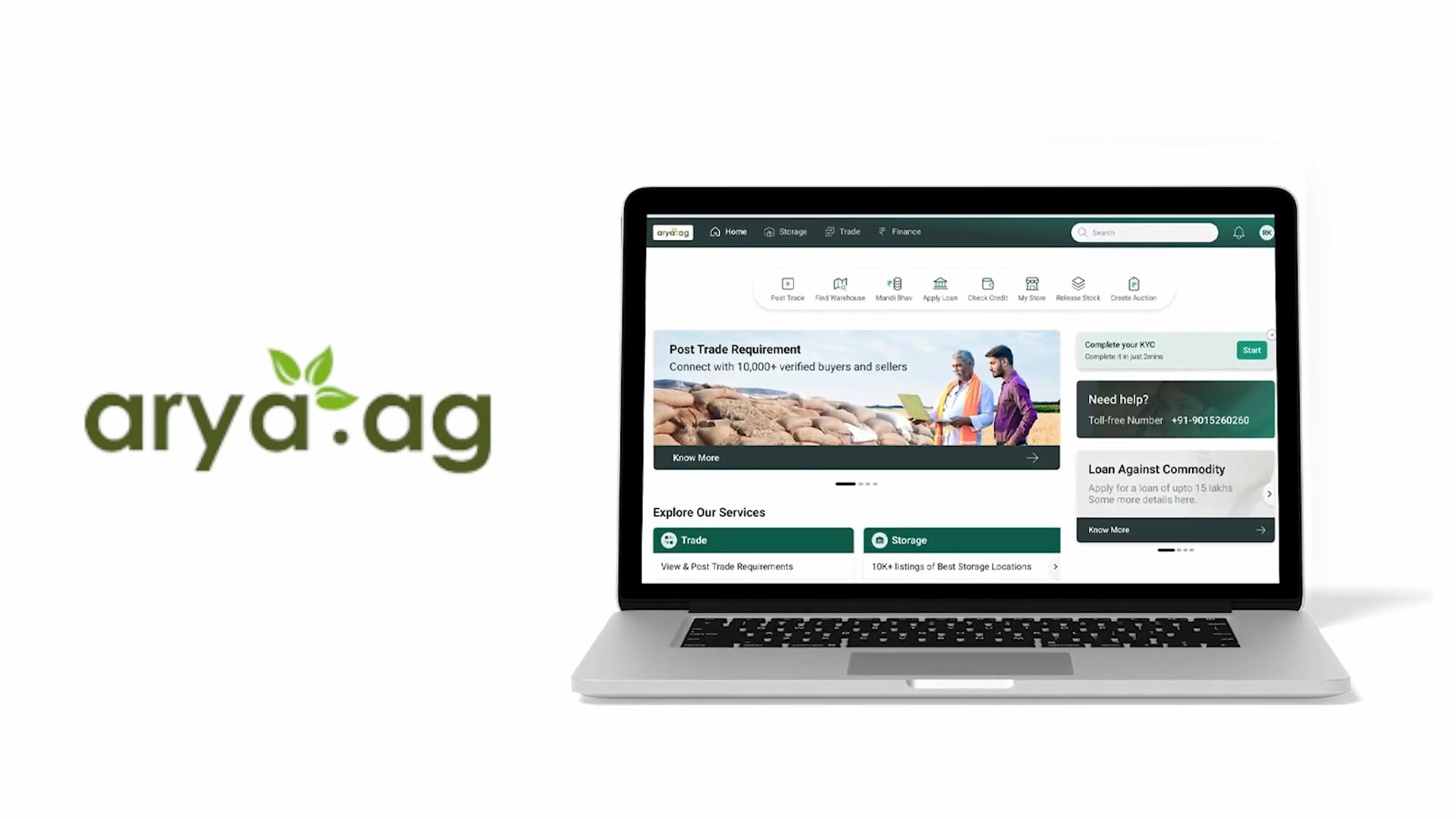
Arya.ag, India’s only profitable agritech startup, has secured $80.58 million in Series D funding from GEF Capital Partners in January 2026. This positions the New Delhi-based company as the leading agricultural technology platform transforming how India’s 850,000+ farmers store grain, access credit, and sell their produce.
Here’s what makes this different from typical startup funding announcements: Arya.ag has been profitable since 2021. While competitors burn cash chasing growth, this platform proves you can serve farmers and make money.
The funding comes despite global crop price volatility and market uncertainty. It demonstrates investor confidence in technology-driven solutions that address real agricultural problems—particularly post-harvest losses that cost Indian farmers billions annually.
At a Glance: Key Takeaways
The Big Numbers:
- Funding Amount: ₹725 crore ($80.58 million) in Series D
- Farmer Reach: 850,000-900,000 farmers across 60% of Indian districts
- Infrastructure: 12,000 agricultural warehouses (all leased)
- Annual Impact: $3 billion in grain stored, $1.5 billion in loans disbursed
- Profitability: 70% profit growth in FY25, profitable since 2021
What’s Happening: GEF Capital Partners led the entire round, with 70% raised as primary capital and 30% from secondary share sales. The company plans to expand climate-smart farming initiatives, strengthen blockchain-based grain tracking, and prepare for an IPO within 18-20 months.
The Founders: From Banking to Farm Gates
Prasanna Rao, Anand Chandra, and Chattanathan Devarajan founded the agritech startup arya.ag in 2013 with a clear mission. They wanted to bridge the trust gap in Indian agriculture while unlocking higher incomes for smallholder farmers.
Their backstory matters because it explains their approach.
Rao and Chandra spent years together at ICICI Bank servicing agricultural markets. They witnessed something troubling: formal financial institutions consistently ignored smallholder farmers while serving larger agricultural enterprises. The gap between what farmers needed and what banks offered was enormous.
Think about it from a banker’s perspective. A farmer wants to borrow ₹50,000 against stored grain. Traditional banks see this as too small, too risky, and too expensive to process. But multiply that farmer by a million, and you’ve got a massive underserved market.
The three co-founders brought decades of combined experience in rural management and farm-based commodities. Their banking background proved invaluable—they understood both agricultural realities and financial mechanics.
The Noida-based startup helps farmers adopt technology for pre- and post-harvest seasons, navigate market fluctuations, and protect against adverse climate events. This integrated approach sets the agritech startup arya.ag apart from competitors focusing on single-point solutions like just inputs or just marketplace connections.
What Problem Are They Really Solving?
Here’s the core issue: Indian farmers face a brutal choice at harvest time.
Sell immediately when prices are lowest, or store grain and risk spoilage, theft, or quality degradation. Most lack access to proper storage facilities. Even fewer can afford to wait for better prices because they need cash immediately for household expenses, loan repayments, or next season’s inputs.
Arya.ag breaks this cycle by combining three services that work together: storage close to farms, instant loans against stored grain, and direct connections to bulk buyers. It’s like giving farmers the same tools that large agricultural corporations have always had.
How the Platform Works: Storage, Finance, and Markets
The agritech startup arya.ag operates through three interconnected pillars that create a complete agricultural supply chain solution.
Storage Solutions: The Foundation
Storage forms the foundation of everything.
The platform uses hermetic storage technology—essentially airtight, sensor-enabled bags that preserve grain quality for extended periods. Farmers can store produce even in villages without formal warehouse infrastructure.
Here’s why this matters: Traditional storage methods lead to 10-15% post-harvest losses from pests, moisture, and spoilage. Hermetic storage reduces these losses to nearly zero while maintaining grain quality that commands premium prices.
The company operates 12,000 agricultural warehouses across 60% of Indian districts. All are leased from third parties rather than owned, which reduces capital intensity and enables rapid geographic expansion.
IoT sensors deployed across this warehouse network provide real-time data on storage conditions, grain quality, and inventory levels. This continuous monitoring prevents spoilage and enables dynamic pricing decisions.
Financial Services: Farmer Financing Solutions
The financial services pillar addresses the immediate cash crunch farmers face after harvest.
Through its NBFC subsidiary Aryadhan, the platform provides warehouse receipt financing. Farmers can borrow against stored grain at interest rates of 12.5-12.8%—significantly lower than the 24-36% charged by traditional commission agents or informal moneylenders.
The numbers speak for themselves: The platform disburses more than ₹110 billion (about $1.2 billion) in loans annually. Between ₹25-30 billion comes from Arya.ag’s own balance sheet, while the rest is originated for partner banks.
What’s remarkable is the risk management. Gross non-performing assets remain below 0.5% despite serving a traditionally “high-risk” segment.
How do they maintain such low default rates?
The company lends only a portion of stored grain value and tracks commodity prices continuously. When prices fall below certain thresholds, automated systems trigger margin calls. Borrowers can respond by repaying part of the loan or adding more grain as collateral—essentially how modern securities lending works, but applied to agriculture.
Revenue Model: Three Streams Working Together
The agritech startup arya.ag generates revenue from multiple sources that balance each other during different market conditions.
Storage fees account for 50-55% of total revenue. Farmers pay for professional warehousing that preserves grain quality and enables price timing.
Finance revenues contribute 25-30% through interest on direct loans and origination fees from partner bank loans. This diversified lending model balances profitability from proprietary lending with fee income from partnerships.
Commerce activities generate the remaining revenue by facilitating crop sales and connecting farmers with buyers. The platform earns transaction fees while providing transparency that benefits all participants.
This three-pillar model creates resilience. When commodity prices fall, storage demand increases as farmers wait for better prices. When prices rise, trading volumes surge. The different revenue streams perform differently under varying market conditions, smoothing overall performance.
Market Connections: Eliminating Middlemen
One fundamental problem has historically plagued Indian agriculture: fragmented market access.
Smallholder farmers typically sell to local intermediaries at disadvantageous prices. They lack connections to larger buyers, visibility into fair market prices, and negotiating power.
The Marketplace Functionality
The agritech startup arya.ag’s marketplace creates transparency that shifts power dynamics.
Sellers gain real-time visibility into current market prices across different regions and buyers. They can compare offers and make informed decisions rather than accepting whatever local traders propose.
Buyers access verified quality and quantity information backed by IoT sensor data and AI-driven quality assessments. This reduces inspection costs and transaction friction.
The platform connects sellers and buyers of agriproducts to streamline commerce and reduce waste. As we’ll see in the financial performance section, this benefits everyone—farmers earn more, buyers source reliably, and the platform captures value from improved market efficiency.
Smart Farm Centres: Technology Meets Physical Access
Smart Farm Centres solve the last-mile challenge that limits rural technology adoption.
These physical locations consolidate multiple services: data-driven farm insights, weather intelligence, decision-support tools, plus storage, finance, and market access services. Farmers can walk in, get advice on optimal planting times based on satellite data and weather forecasts, arrange grain storage, apply for loans, and explore buyer offers—all in one place.
This integrated approach recognizes something important: digital-only solutions often fail in rural areas with limited smartphone penetration and digital literacy. Physical touchpoints combined with digital tools create accessibility that purely virtual platforms can’t match.
Series D Funding: The Details That Matter
Let’s break down what actually happened with this Arya.ag Series D round.
The Investment Structure
GEF Capital Partners led the entire $80.58 million round. This focused conviction from a single lead investor differs from syndicated rounds where risk gets shared among multiple participants.
About 70% came in as primary capital—fresh money going directly into the company for expansion. The remaining 30% came from secondary share sales, providing liquidity to existing stakeholders while demonstrating valuation confidence.
Transaction advisors: Avendus Capital served as the exclusive financial advisor to the agritech startup arya.ag and its shareholders. PwC, law firm JSA, and Aeka provided additional advisory support on various aspects of the deal.
Recent Funding Momentum
This Series D follows sustained fundraising activity across both equity and debt markets.
In July 2024 (not July 2025 as initially reported), the company raised $29 million in a Pre-Series D equity round led by Blue Earth Capital and Quona Capital. This strategic round positioned the company for the larger Series D that followed.
Meanwhile, the agri-commerce arm Aryatech secured a $19.8 million commitment from the US International Development Finance Corporation (DFC) to guarantee a debt facility. DFC’s involvement signals American government confidence in the model’s development impact.
Prior to the latest round, the agritech startup arya.ag had raised $118.93 million from investors including Lightrock, Asia Impact, Quona Capital, and others. The cumulative capital raised exceeds $200 million when including the latest Series D.
What Investors See
What makes this agritech startup funding attractive despite challenging market conditions?
Proven profitability: Unlike most startups requiring years of cash burn before reaching breakeven, Arya.ag has been profitable since 2021. This de-risks the investment significantly.
Market leadership: As India’s only profitable agritech platform at scale, the company occupies a unique competitive position.
Expansion optionality: The asset-light model (leased rather than owned warehouses) enables geographic scaling without proportional capital requirements.
Impact metrics: The platform demonstrably improves farmer incomes while addressing food security and climate resilience—making it attractive to impact investors and development finance institutions.
Financial Performance: The Profitability Story
Here’s where things get particularly interesting for anyone following startup venture capital 2026 trends.
FY25 Results: Revenue and Profit Growth
For the fiscal year ended March 2025, the agritech startup arya.ag posted revenue of ₹447 crore while profits widened 70% year-on-year.
That 70% profit growth deserves emphasis. It demonstrates operating leverage as the platform scales—each additional farmer, warehouse, or transaction generates margin improvement.
H1 FY26 Performance: Sustained Momentum
The company reported net revenue of ₹300 crore in the first half of FY26 (April-September 2025). That’s 28% growth over the same period last year.
Profits rose 39% to ₹31.5 crore during the same period.
Notice something? Revenue growth of 28% with profit growth of 39% means margins are expanding, not just absolute profits. The business is getting more efficient as it scales.
What Makes This Different
Most agritech ventures prioritize growth over profitability. They’re burning cash to acquire customers, build infrastructure, and capture market share.
Arya.ag achieved both growth and profitability simultaneously.
The company has been profitable since 2021—meaning profitability predates recent funding rounds and wasn’t engineered just to attract investors. This is sustainable unit economics, not financial engineering.
Think of it this way: Each farmer served generates positive contribution margin. As the network grows, fixed costs get spread across more transactions. Technology investments made earlier now serve hundreds of thousands of farmers without proportional cost increases.
Risk Management Excellence
Perhaps the most impressive metric: gross non-performing assets below 0.5% despite serving a traditionally high-risk segment.
Traditional banks avoid primary agricultural markets specifically because they perceive default risk as unmanageable. How does Arya.ag maintain such low NPAs?
The answer combines technology and process discipline. AI algorithms assess grain quality for lending decisions. Real-time price tracking triggers automated margin calls. Borrowers maintain skin in the game through collateral requirements.
When prices fall, the system doesn’t just hope borrowers will repay—it actively manages risk by requiring additional collateral or partial repayment. This converts lending from faith-based to data-driven.
Technology: Beyond the Buzzwords
Technology represents the operational backbone enabling scale, not just impressive features for pitch decks.
Artificial Intelligence Applications
The agritech startup arya.ag uses AI across multiple decision points.
Quality assessment algorithms analyze grain samples to determine appropriate lending ratios. A farmer brings wheat for storage and loan application. Within minutes, AI-driven analysis determines quality grade, moisture content, and fair market value—establishing how much the farmer can borrow against that collateral.
Predictive models forecast crop stress using satellite imagery. This enables proactive farmer advisory before problems become visible in fields. “Your satellite data shows moisture stress in the northeast quadrant. Consider irrigation in the next 48 hours to avoid yield loss.”
Price tracking systems monitor commodity markets continuously. When stored grain values decline, automated margin calls protect the platform from lending losses while giving farmers clear options to manage their positions.
Blockchain for Transparency
Part of the Series D investment will strengthen the startup’s blockchain-based system that digitally tracks stored grain.
Here’s the problem blockchain solves: In traditional agriculture, grain might get used as collateral for multiple loans, sold while still pledged, or misrepresented in transactions. Paper-based warehouse receipts can be forged or duplicated.
Blockchain creates an immutable record across lending and trade transactions. When grain enters storage, it gets a digital identity. Any subsequent transaction—loan origination, ownership transfer, quality certification—gets recorded permanently on the distributed ledger.
This isn’t blockchain for blockchain’s sake. It’s using distributed ledger technology to solve real trust problems in agricultural value chains.
IoT Sensors and Real-Time Monitoring
IoT sensors deployed across 12,000 warehouses provide continuous data on storage conditions, grain quality, and inventory levels.
Temperature sensors alert when storage conditions might cause spoilage. Moisture monitors prevent fungal growth. Inventory tracking prevents discrepancies between physical stock and digital records.
This continuous monitoring delivers measurable business value. It prevents losses from spoilage, enables dynamic pricing based on actual quality data, and supports data-driven decision-making at every operational level.
Satellite Data for Crop Intelligence
Satellite imagery provides insights impossible to gather through ground-based observation.
The platform tracks crop health indicators, identifies stress patterns across large geographic areas, and provides early warnings about potential harvest quality issues.
Farmers receive actionable recommendations: optimal harvest timing, quality preservation techniques, market pricing expectations based on regional yield forecasts.
What’s the Hermetic Storage Technology?
Let’s demystify this term that keeps appearing.
Hermetic storage uses airtight containers or bags that prevent oxygen exchange with the environment. Without oxygen, insects and pests can’t survive or reproduce. Moisture levels stay controlled. Grain quality remains stable for months or even years.
In practice: A farmer harvests wheat and stores it in hermetic bags at an Arya.ag-facilitated warehouse. Six months later when prices improve, the grain quality hasn’t degraded—it commands premium prices rather than distressed sale discounts.
Traditional storage methods lose 10-15% of grain value to pests, moisture damage, and quality degradation. Hermetic storage reduces this to near zero while maintaining quality standards that buyers pay premiums for.
Real Impact: Farmer Success Stories
Beyond financial statements, real-world impact manifests in transformed lives.
The Warehouse Receipt Story
A farmer in Maharashtra stored her crop in a nearby Arya.ag-facilitated warehouse. She used Aryadhan to secure a short-term loan against her warehouse receipt at 12.8% interest.
Several weeks later when prices improved by ₹150 per quintal, she sold directly to a bulk buyer through the platform. She earned an extra ₹24,000 compared to what local traders had offered at harvest time.
Here’s what didn’t happen: She didn’t borrow from a local moneylender at 30% monthly interest. She didn’t sell at distressed prices immediately after harvest. She didn’t lose grain to storage pests or quality degradation.
This single case study illustrates multiple benefits working together: storage enabling price timing, credit access without predatory terms, and direct market connections eliminating intermediary margins.
The Women Farmers Story
Close to 40% of Arya.ag clients are first-time borrowers accessing finance from a formal channel. Of those, nearly 10% are women farmers.
This matters because women farmers face even greater barriers to formal credit than their male counterparts. Traditional banks rarely lend to them. Commission agents often exploit their limited market access.
One woman farmer in Uttar Pradesh accessed her first formal loan through the platform. With working capital available, she could purchase quality seeds and inputs rather than relying on lower-quality alternatives. Her yield increased by 18% in one season.
The economic impact multiplies beyond individual farmers. When women control more household income, research consistently shows increased spending on education, nutrition, and healthcare.
Scale Impact: The Big Numbers
The platform reaches 850,000-900,000 farmers across 60% of India’s districts. It operates through approximately 12,000 agricultural warehouses, all leased from third parties to maintain capital efficiency.
According to company leadership, the platform impacts over 650,000 farmers across 500 Farmer Producer Organizations (FPOs). It ensures growth of 15-25% in their value realization.
What does “value realization” mean in practical terms?
A farmer who previously sold wheat at ₹1,800 per quintal to a local trader now sells at ₹2,100 per quintal through the platform’s buyer network—a 16.7% improvement. Multiply this across hundreds of thousands of farmers and multiple crop cycles, and the cumulative economic impact reaches billions of rupees annually.
That money flows into rural economies, creating multiplier effects through increased consumption, better education, improved housing, and enhanced agricultural inputs for future seasons.
The Competitive Landscape: Who Else Is Playing?
The Indian agritech ecosystem has become increasingly crowded. Competition matters because it shapes strategy, validates market size, and determines who survives.
Key Competitors and Their Approaches
The agritech startup arya.ag operates alongside several notable competitors, each pursuing distinct strategies.
NinjaCart focuses on fresh produce supply chains connecting farmers directly with retailers. They’ve raised significant capital but face ongoing profitability challenges inherent in perishable goods logistics.
DeHaat provides end-to-end agricultural services from inputs to market linkages. They’ve scaled rapidly across multiple states but haven’t yet achieved profitability at the platform level.
AgroStar concentrates on agricultural inputs—seeds, fertilizers, pesticides—delivered directly to farmers. They’ve built strong brand recognition in specific crops and regions.
Samunnati targets agricultural value chain financing for FPOs and agri-enterprises. Their model complements rather than directly competes with farmer-level platforms.
WayCool operates in the food supply chain space, focusing on procurement, processing, and distribution of fresh produce.
Competitive Comparison: Key Metrics
| Platform | Focus Area | Profitability Status | Funding Raised | Farmer Reach |
|---|---|---|---|---|
| Arya.ag | Storage + Finance + Markets | ✅ Profitable since 2021 | $200M+ | 850,000-900,000 |
| NinjaCart | Fresh produce logistics | ❌ Not profitable | $300M+ | 100,000+ |
| DeHaat | Full-stack agri services | ❌ Not profitable | $250M+ | 1.5M+ |
| AgroStar | Agricultural inputs | ❌ Not profitable | $100M+ | 5M+ |
Note: Figures approximate based on publicly available data as of January 2026
The Profitability Advantage
What differentiates the agritech startup arya.ag most clearly? It’s India’s only profitable agritech platform at scale.
While competitors burn cash pursuing growth, Arya.ag demonstrates that serving farmers can be both impactful and financially sustainable. This isn’t about being better or worse—it’s about having proven unit economics.
Why does this matter for long-term success?
Sustainable unit economics mean the business can grow without constant capital infusions. It can weather market downturns. It can invest in technology and expansion from operating cash flow rather than perpetually raising money.
The Cautionary Tale: BharatAgri
Another competitor, BharatAgri, shut down operations in November 2025 due to a lack of external funding required to sustain operations.
BharatAgri focused on farmer advisory services delivered through digital channels. They built strong engagement but struggled to monetize at sufficient scale. When funding dried up, operations became unsustainable.
This closure underscores a harsh reality: fundraising ability and sustainable unit economics separate survivors from casualties in competitive markets. Impact and growth matter, but profitability ultimately determines survival.
Competitive Moats: What Protects Arya.ag?
Several factors create switching costs and competitive advantages:
Network effects: Farmers who store grain are more likely to borrow against it and sell through the platform. Buyers who source through the marketplace develop data-driven confidence in quality. Each additional participant makes the network more valuable for existing users.
Technology infrastructure: Years of AI development, blockchain implementation, and IoT deployment create barriers to quick replication. Competitors would need to invest heavily just to match current capabilities.
Asset-light model: Leasing rather than owning warehouses enables rapid geographic expansion without massive capital requirements. This contrasts with competitors pursuing capital-intensive infrastructure buildouts.
Regulatory relationships: As an NBFC through Aryadhan, the company has established regulatory compliance, lending licenses, and banking partnerships that took years to build.
Market Opportunity: How Big Can This Get?
India’s agritech market is expected to grow from $9 billion in 2025 to $28 billion by 2030—a 25% compound annual growth rate.
Even with multiple players, the addressable market can support several successful platforms. Agricultural diversity across crops, regions, and farmer needs creates room for specialized approaches.
Why Investors Remain Bullish on Agritech Investment India
Despite funding declining from $390 million in 2024 to approximately $182 million in 2025, quality platforms continue attracting capital.
Here’s what changed: Investors shifted from funding pure digital plays toward models demonstrating infrastructure, margin quality, and climate performance. The agricultural technology investment thesis evolved from “technology will solve everything” to “technology plus proven economics will transform agriculture.”
Arya.ag fits this evolved thesis perfectly. It combines physical infrastructure (warehouses), sophisticated technology (AI, blockchain, IoT), and proven financial discipline (profitability since 2021).
The Climate Opportunity
Climate change intensifies farming risks through unpredictable weather patterns, shifting growing seasons, and increased pest pressures.
Farmers need tools that help them adapt. The agritech startup arya.ag’s advisory services, storage solutions reducing weather-related losses, and data analytics supporting climate-resilient practices address this urgent need.
This creates sustainable competitive advantages: As climate volatility increases, farmers become more dependent on technology platforms providing predictive intelligence and risk management. The more extreme the weather, the more valuable the platform becomes.
Structural Market Problems Remain Unsolved
Despite India’s agricultural prominence, fundamental problems persist:
Post-harvest losses: 10-15% of grain value gets lost between farm and market through spoilage, quality degradation, and distressed sales. Hermetic storage and price-timing loans directly address this.
Fragmented markets: Most farmers sell to local intermediaries lacking access to competitive buyer networks. Marketplace connectivity eliminates these inefficiencies.
Credit exclusion: More than half of farming households lack access to formal credit sources. They rely on informal moneylenders charging 24-36% interest. Warehouse receipt financing provides affordable alternatives.
Information asymmetry: Farmers make crucial decisions about planting, harvest timing, and sales without real-time market intelligence or weather forecasts. Smart Farm Centres bridge this gap.
These aren’t temporary problems that market maturity will automatically solve. They’re structural challenges requiring sustained technology intervention—exactly what the agritech startup arya.ag provides.
Future Plans: IPO and International Expansion
The company aims to be IPO-ready within 18-20 months. This timeline signals confidence in sustained growth trajectory and operational maturity.
What IPO Readiness Means
Public markets demand proven business models, consistent profitability, and transparent governance. The agritech startup arya.ag appears well-positioned across these dimensions.
Governance infrastructure: The company has professional management, independent board members, and established compliance frameworks from its NBFC operations.
Financial track record: Multiple years of audited profitability with accelerating growth create the narrative public investors seek.
Market opportunity: A clear path to scaling within India plus international expansion optionality provides the growth story IPO roadshows require.
International Expansion Strategy
The company plans selective expansion through a software-led model. Some technology has already been deployed in Southeast Asia and Africa.
Why software-led rather than full infrastructure replication?
Southeast Asia and Africa share similar challenges: smallholder farmers, fragmented markets, post-harvest losses, and limited credit access. However, local contexts differ significantly in crop types, storage requirements, and regulatory frameworks.
A software-led approach allows Arya.ag to leverage intellectual property developed for Indian markets while adapting to local agricultural contexts. Partners in each country can provide physical infrastructure while the platform provides technology, risk management frameworks, and operational expertise.
This creates licensing revenue and equity partnerships without requiring the capital intensity of building 12,000 warehouses in each new market.
Technology Infrastructure Investments
The Series D funding will enhance several technological capabilities:
Blockchain systems for grain tracking will expand to cover more crops and integrate with more lending and trading partners.
Smart Farm Centres will multiply across currently underserved districts, bringing technology to additional farming communities.
AI capabilities will improve for crop yield forecasting, quality assessment, and price prediction across more commodities.
Mobile applications will add features supporting farmer decision-making throughout growing seasons, not just post-harvest.
Climate-Smart Agriculture Focus
Part of the fresh capital will deepen engagement with farmers and Farmer Producer Organizations to promote climate-smart, market-led agriculture practices.
What does this mean practically?
Farmers receive guidance on crop varieties suited to changing weather patterns. They access satellite-based weather intelligence supporting planting and harvest timing decisions. They learn conservation agriculture techniques that improve soil health while maintaining yields.
These advisory services create long-term platform stickiness. As farmers adopt recommendations and see results, they become increasingly dependent on the intelligence the platform provides.
Investment Outlook: What This Means for Agritech Investment India
The startup venture capital 2026 environment rewards companies demonstrating unit economics, market leadership, and expansion optionality.
What Investors Are Looking For
Based on recent funding patterns and investor commentary, capital is flowing toward:
Operational resilience – platforms that maintain performance through market cycles rather than just boom periods
Margin quality – sustainable profitability from core operations, not just financial engineering
Climate performance – solutions addressing climate adaptation and mitigation
Infrastructure investments – physical assets plus technology, not purely digital intermediation
The agricultural technology investment represented by Arya.ag checks all these boxes. It’s profitable through multiple market cycles. It generates margins from storage, lending, and commerce and helps farmers adapt to climate change. It combines 12,000 physical warehouses with sophisticated digital infrastructure.
The Broader Trend: Impact Plus Returns
Development finance institutions like DFC increasingly seek investments delivering both financial returns and measurable development impact.
The agritech startup arya.ag provides exactly this combination. It generates returns for investors while improving farmer incomes, reducing food waste, enhancing food security, and building climate resilience.
This “impact plus returns” positioning will likely become more important as ESG considerations influence more capital allocation decisions.
Risks and Challenges Ahead
No analysis would be complete without acknowledging obstacles:
Market volatility: Commodity price swings affect farmer incomes and borrowing capacity. While the diversified revenue model provides some protection, extreme price movements could impact operations.
Competitive intensity: Well-funded competitors continue entering the market. Maintaining technological and operational advantages requires sustained innovation investment.
Regulatory changes: Agricultural lending, warehouse operations, and food trading face various regulations that could change. The company must maintain compliance while adapting to evolving requirements.
Climate extremes: Ironically, the very climate challenges the platform helps farmers address could impact operations if weather events become so extreme that even hermetic storage and risk management tools prove insufficient.
Execution risk: Rapid expansion to prepare for IPO while simultaneously building international operations creates organizational complexity. Maintaining quality and culture while scaling represents a perpetual challenge.
Why This Matters: The Bigger Picture
This agritech startup funding announcement represents more than capital inflow. It validates that technology-driven solutions can simultaneously improve farmer incomes, reduce waste, enhance food security, and generate attractive returns.
For Indian agriculture, it demonstrates that formal financial inclusion is possible even for smallholder farmers who traditional banks ignore.
For the agritech sector, it proves that profitability and impact aren’t mutually exclusive—you can do well by doing good if your unit economics actually work.
For investors, it shows that agricultural technology investment can deliver both financial returns and measurable development outcomes without requiring decades of cash burn before profitability.
As the platform continues expanding its reach and refining its model, it offers a blueprint for how agritech investment India can drive transformative change at national scale while building sustainable businesses.
The question isn’t whether technology will transform Indian agriculture—it’s which models will successfully combine farmer impact with investor returns. Based on performance to date, the agritech startup arya.ag has positioned itself as the leading example of how to achieve both.
Frequently Asked Questions
What is the agritech startup Arya.ag and what does it do?
Arya.ag is India’s largest integrated grain commerce platform providing farmers with post-harvest services including warehousing, financing against stored grain, and market linkages. Founded in 2013 by Prasanna Rao, Anand Chandra, and Chattanathan Devarajan, the platform operates across 60% of Indian districts with 12,000 warehouses. It helps farmers store produce using hermetic storage technology, access credit at 12.5-12.8% interest rates (versus 24-36% from traditional moneylenders), and connect with buyers through a transparent marketplace. This reduces post-harvest losses, improves farmer incomes by 15-25%, and enables strategic selling rather than distressed sales at harvest time when prices are lowest.
How much funding did Arya.ag raise in its Series D round and what makes this significant?
Arya.ag raised ₹725 crore (approximately $80.58 million) in its Series D funding round from GEF Capital Partners in January 2026. About 70% came as primary capital for expansion, with 30% from secondary share sales. This is significant because it comes during a period when agritech funding in India declined from $390 million in 2024 to $182 million in 2025, demonstrating investor confidence in Arya.ag’s proven model. The company is India’s only profitable agritech platform at scale (profitable since 2021), distinguishing it from competitors still burning cash. Prior to this round, the company had raised $118.93 million, bringing total funding above $200 million. The funding positions Arya.ag for an IPO within 18-20 months and international expansion into Southeast Asia and Africa.
What makes Arya.ag different from other agritech startups in India?
Arya.ag stands out as India’s only profitable agritech platform, having achieved profitability in 2021 and maintaining it through market cycles. While competitors like NinjaCart, DeHaat, and AgroStar continue burning cash pursuing growth, Arya.ag demonstrates sustainable unit economics. The company combines three services—storage, finance, and marketplace—in an integrated model that creates network effects and switching costs. Its asset-light approach (leasing rather than owning warehouses) enables rapid scaling without proportional capital requirements. The platform uses sophisticated technology including AI for quality assessment, blockchain for grain tracking, IoT sensors for storage monitoring, and satellite data for crop intelligence. Most importantly, it maintains gross non-performing assets below 0.5% despite serving a traditionally high-risk segment, demonstrating superior risk management through data-driven lending decisions.
How does Arya.ag help farmers manage financial challenges and what impact does it create?
Arya.ag provides warehouse receipt financing through its NBFC subsidiary Aryadhan, allowing farmers to borrow against stored grain at 12.5-12.8% interest—significantly lower than the 24-36% charged by commission agents and moneylenders. The platform disburses over ₹110 billion annually in loans, enabling farmers to avoid distressed sales immediately after harvest when prices are lowest. Farmers can store grain, borrow for immediate cash needs, and wait for better market prices. The impact is substantial: the platform serves 850,000-900,000 farmers across 60% of Indian districts, improving value realization by 15-25%. Close to 40% of clients are first-time formal credit borrowers, including nearly 10% women farmers who face even greater barriers to financial inclusion. One farmer success story illustrates the impact: a Maharashtra farmer stored her crop, borrowed against it, and when prices improved by ₹150 per quintal, sold directly to bulk buyers, earning an extra ₹24,000 while avoiding expensive moneylender debt.
What is the financial performance of Arya.ag and how has it achieved profitability?
For fiscal year 2025 (ended March 2025), Arya.ag posted revenue of ₹447 crore with profits growing 70% year-on-year, demonstrating strong operating leverage. In H1 FY26 (April-September 2025), the company reported net revenue of ₹300 crore (28% YoY growth) and profits of ₹31.5 crore (39% YoY growth). The company has been profitable since 2021, meaning profitability predates recent funding rounds and reflects sustainable economics rather than financial engineering. The platform achieves profitability through a diversified three-pillar revenue model: storage fees (50-55% of revenue), financial services (25-30%), and commerce activities (15-20%). This diversification creates resilience—when commodity prices fall, storage demand increases; when prices rise, trading volumes surge. The company maintains gross NPAs below 0.5% through sophisticated risk management: lending only against stored grain collateral, AI-driven quality assessment, real-time price tracking, and automated margin calls when commodity values decline.
How does agritech investment in India compare to global trends in 2026?
India’s agritech market is growing from $9 billion in 2025 to a projected $28 billion by 2030 at a 25% CAGR, indicating massive long-term opportunity. However, agritech funding in India declined from approximately $390 million in 2024 to $182 million in 2025, reflecting a global shift toward profitability-focused models. Investors in 2026 prioritize operational resilience, margin quality, climate performance, and infrastructure over pure digital intermediation platforms. This benefits proven models like Arya.ag that demonstrate sustainable unit economics. Development finance institutions like the US DFC increasingly seek investments delivering both financial returns and measurable development impact—exactly what Arya.ag provides. The funding environment favors platforms with demonstrated profitability, technological moats, and expansion optionality rather than startups pursuing growth-at-any-cost strategies. Quality platforms continue attracting capital despite overall funding declines, creating a “flight to quality” dynamic that advantages market leaders.
What are Arya.ag’s future expansion plans and how will the Series D funding be used?
Arya.ag plans to be IPO-ready within 18-20 months, signaling confidence in sustained growth and operational maturity. The company is pursuing selective international expansion through a software-led model in Southeast Asia and Africa, where similar smallholder farmer challenges exist. Rather than replicating physical infrastructure in each market, Arya.ag will license technology and provide operational expertise while local partners handle warehousing. The Series D funding will enhance technological infrastructure including blockchain-based grain tracking systems, expand Smart Farm Centres to currently underserved districts, strengthen AI capabilities for crop forecasting and quality assessment, and deepen engagement with farmers on climate-smart agriculture practices. Investments continue focusing on storage and credit infrastructure while building capabilities that position the company for both deeper domestic penetration and eventual international scaling. The climate-smart agriculture focus addresses the urgent need for adaptation tools as weather volatility increases.
What is hermetic storage technology and why does it matter for farmers?
Hermetic storage uses airtight containers or bags that prevent oxygen exchange with the environment. Without oxygen, insects and pests can’t survive or reproduce, moisture levels stay controlled, and grain quality remains stable for months or years. Traditional storage methods lose 10-15% of grain value to pests, moisture damage, and quality degradation—a massive economic loss for farmers. Hermetic storage reduces this to near zero while maintaining quality standards that command premium prices. For farmers, this transforms the harvest economics: instead of being forced to sell immediately at seasonal low prices to avoid storage losses, they can preserve grain quality, borrow against stored collateral, and wait for better market conditions. A farmer who stores wheat in hermetic bags through Arya.ag can sell six months later when prices improve by ₹150-200 per quintal, with the grain still commanding premium quality prices. This single technology shift—combined with credit access and market connections—fundamentally changes farmer power dynamics within agricultural value chains.