
Apple Acquires MotionVFX to Supercharge Final Cut Pro for Video Creators

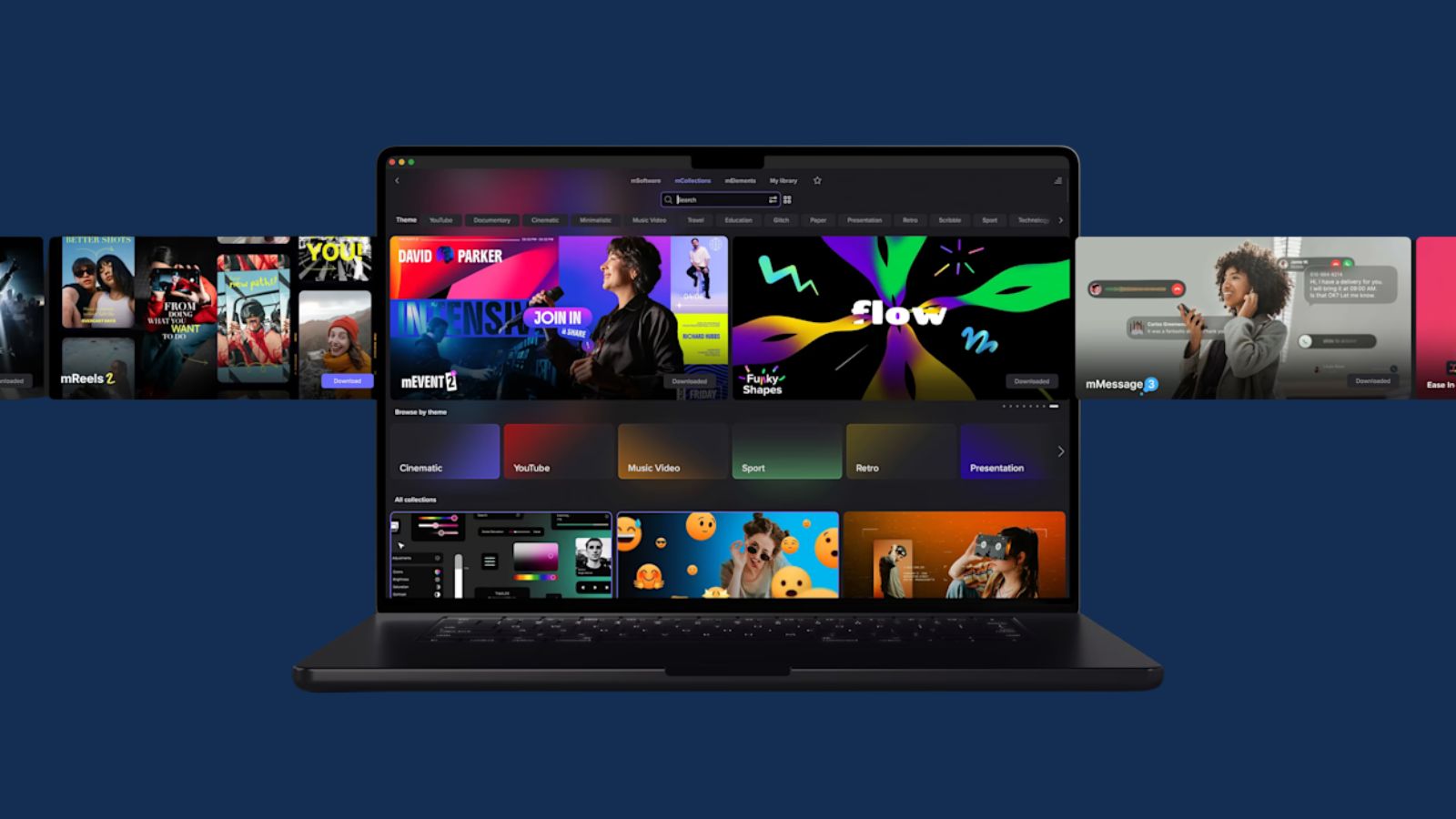
Apple acquires MotionVFX — the Warsaw-based plugin powerhouse behind some of the best final cut pro plugins in the industry — and the video editing world is paying close attention. Announced on March 16, 2026, the deal immediately brings 70 employees into Apple’s ranks. Financial terms were not disclosed. The timing, however, couldn’t be more deliberate: this acquisition arrives just weeks after Apple launched its Creator Studio subscription bundle, and it signals an aggressive push to make Final Cut Pro a far more capable — and competitive — platform for professional creators.
This isn’t a bolt-on purchase. MotionVFX had spent over 15 years building tools that plug critical gaps in Final Cut Pro’s native feature set. Apple didn’t just buy a plugin company. It bought a roadmap.
The Deal: What We Actually Know
Apple acquires MotionVFX was first spotted by MacRumors and confirmed by MotionVFX directly on its own website. The company announced it was “joining the Apple team to continue to empower creators and editors to do their best work.” Apple declined to comment to TechCrunch or publicly confirm the deal through its own channels — a pattern consistent with its acquisition history, including the Pixelmator deal in late 2024.
The MotionVFX plugin catalog, including all its professional video editing assets and subscription plans, remains purchasable through its website and marketplace for the time being. No long-term plan for the catalog has been announced. The company was already a worldwide Apple partner before the acquisition closed.
Who Is MotionVFX? A History Built on the Best Final Cut Pro Plugins
Founded in 2009 by Szymon Masiak in Warsaw, Poland, MotionVFX built its reputation one plugin at a time. YouTubers, broadcast editors, and indie filmmakers all relied on its library of professional video editing assets — spanning cinematic templates, transitions, motion graphics, and AI-powered tools — to elevate productions without dedicated VFX pipelines.
Though it also served users of DaVinci Resolve and Adobe Premiere, Final Cut Pro was always its primary domain. Tight integration with Apple Silicon, native FCP compatibility, and installation via its mExtension app made MotionVFX the default answer whenever someone asked about the best final cut pro plugins available. Its tools sat at the intersection of accessibility and professional quality — a balance few third-party developers had managed to strike.
Flagship Tools: From the motionvfx mFilmLook Tutorial to AI Masking
The two tools that define MotionVFX’s reputation are mFilmLook and mRotoAI. Any motionvfx mfilmlook tutorial makes it clear why this plugin became an industry favorite: it handles color correction, cinematic grading, LUT application, lens distortion, vignette, and AI-powered motion blur all from inside Final Cut Pro, with over 12 adjustable tools for precise fine-tuning. Drone footage and mobile clips transform in minutes rather than hours.
mRotoAI brought serious ai masking in final cut pro to the mainstream. Using intelligent object tracking, it animates and morphs masks as subjects move across a scene — feature-film-level rotoscoping without leaving the FCP timeline. Add to those mO2 for 3D model animation inside Final Cut Pro, mCaptionsAI for automatic subtitles across 90 languages, and mUpscalerAI for one-click 8K upscaling, and you get a picture of just how broad MotionVFX’s professional video editing assets library had become. Apple now owns all of it.
Apple Creator Studio Subscription Features: The Strategy in Sharp Focus
Understanding why apple acquires MotionVFX requires looking at apple creator studio subscription features — specifically, what the bundle still lacked at launch. Introduced on January 28, 2026, Apple Creator Studio packages Final Cut Pro, Logic Pro, Pixelmator Pro, Motion, Compressor, and MainStage into a single subscription for $12.99 per month or $129 per year. Students and educators pay just $2.99 per month.
Apple’s official Creator Studio page now even references MotionVFX directly as a source of third-party motion graphics for subscribers — a detail that underscores how closely the two companies were already aligned before the acquisition closed. Apple Creator Studio subscription features include AI tools like Beat Detection and Visual Search in Final Cut Pro, but native effects and template depth remained a gap compared to Adobe. Macworld noted that buying each app individually would cost nearly $700, while Adobe Creative Cloud’s full suite runs upward of $54.99 per month — making Creator Studio’s price point an obvious competitive weapon.
Bloomberg reported that MotionVFX’s tools have the potential to be folded directly into the Creator Studio package, giving subscribers access to advanced effects libraries and AI-powered plugins that currently require a separate MotionVFX subscription on top of their Apple plan. If that happens, apple creator studio subscription features take a dramatic leap forward overnight.
Final Cut Pro vs Premiere Pro 2026: Does Apple Gain Ground?
The final cut pro vs premiere pro 2026 debate has always centered on three things: ecosystem, platform flexibility, and feature depth. Final Cut Pro’s core advantage is its tight integration with Apple Silicon chips, which delivers background rendering and blazing-fast real-time playback even on 4K and 8K timelines. Premiere Pro runs on both Windows and macOS, offers deeper integration with Adobe’s full suite, and dominates broadcast and film production workflows globally.
The consistent criticism in the final cut pro vs premiere pro 2026 conversation is that FCP’s native effects catalog trails Premiere’s, and its plugin ecosystem — while growing — still requires editors to source tools from third parties. MotionVFX was, ironically, one of the most cited reasons that the gap was manageable. Now that Apple acquires MotionVFX and brings that expertise in-house, the equation changes. AI masking in final cut pro at the mRotoAI level, cinematic grading via motionvfx mfilmlook tutorial workflows, and 3D animation in Final Cut Pro all become features Apple directly controls and can develop further. That’s a meaningful swing in the arms race.
What Happens to Existing MotionVFX Subscribers?
This is the question dominating creator forums since the announcement. As AppleInsider reported, Apple hasn’t immediately shut down MotionVFX’s website, and subscriptions remain active. Users who purchased the best final cut pro plugins MotionVFX offered — particularly ai masking in final cut pro tools like mRotoAI — can still download and use them. The company’s CineStudio subscription plan, which bundles 25+ products covering tracking, masking, animation, and professional video editing assets, has not been discontinued.
The bigger uncertainty concerns iPad users. MotionVFX currently supports iPad only through DaVinci Resolve plugins. Since Apple Creator Studio is available on both Mac and iPad, the acquisition hints at a possible future where MotionVFX effects come to Final Cut Pro for iPad — a platform that currently lacks access to Apple’s Motion 5 companion app.
Apple’s $109 Billion Services Engine
Apple acquires MotionVFX because the numbers behind the strategy are impossible to ignore. Apple’s services segment generated $109.16 billion in fiscal year 2025, representing 26.23% of total revenue and growing at 13.51% year-over-year. Statista data shows that services alone drove nearly half of Apple’s total revenue growth over the past decade — from $20 billion to $109 billion.
Hardware refresh cycles are lengthening. Subscriptions like apple creator studio subscription features carry higher margins and far more predictable cash flows. Each acquisition of a best-in-class tool — Pixelmator, now MotionVFX — strengthens the value proposition of the Creator Studio bundle and reduces a subscriber’s incentive to keep paying for competing platforms. CNBC noted that Apple is targeting more creative professionals as subscribers, reducing its long-standing dependence on hardware revenue.
Conclusion
Apple acquires MotionVFX, and the creative software landscape shifts. Fifteen years of expertise in professional video editing assets, AI-powered workflows, and cinematic effects are now Apple’s to develop and distribute. Whether those capabilities get folded into apple creator studio subscription features, natively baked into Final Cut Pro, or both — the trajectory for the final cut pro vs premiere pro 2026 competition is unmistakably upward for Apple. Editors who live by their motionvfx mfilmlook tutorial workflows and depend on ai masking in final cut pro are about to find those tools even deeper in the Apple ecosystem. The best final cut pro plugins in the industry now have a new home — and a far larger platform.
Frequently Asked Questions
What exactly did Apple acquire from MotionVFX?
Apple acquired the entire company — its software catalog, team of 70 employees, and intellectual property. MotionVFX is known for professional video editing assets including plugins like mFilmLook, mRotoAI, mO2, mCaptionsAI, and mUpscalerAI, all built primarily for Final Cut Pro. The company was founded in Warsaw, Poland in 2009 by Szymon Masiak.
How much did Apple pay for MotionVFX?
Apple has not disclosed the financial terms of the acquisition, and MotionVFX did not release pricing details. Apple rarely comments publicly on acquisitions unless they are high-profile deals.
Can I still buy and use MotionVFX plugins after the acquisition?
As of the acquisition date (March 16, 2026), MotionVFX’s plugin catalog remains available through its website and marketplace. Both individual plugin purchases and subscription plans like CineStudio are still active. No timeline for changes has been announced.
Will MotionVFX tools become part of Apple Creator Studio?
This has not been officially confirmed by Apple. However, Bloomberg and other outlets have reported that MotionVFX’s capabilities could be integrated into the Creator Studio package, potentially giving subscribers access to effects libraries currently requiring a separate MotionVFX subscription.
How does this affect the Final Cut Pro vs Premiere Pro 2026 competition?
It strengthens Final Cut Pro’s native feature set in areas like AI masking, cinematic color grading, and 3D integration — which were previously only available via third-party plugins. Premiere Pro still holds advantages in cross-platform support and Adobe Creative Cloud integration, but Apple is clearly narrowing the gap with this acquisition.
What is Apple Creator Studio and how much does it cost?
Apple Creator Studio is a subscription bundle that includes Final Cut Pro, Logic Pro, Pixelmator Pro, Motion, Compressor, and MainStage. It launched on January 28, 2026, and costs $12.99 per month or $129 per year. Students and educators can subscribe for $2.99 per month. A one-month free trial is also available.
Did Apple acquire MotionVFX to compete with Adobe?
That appears to be a significant motivating factor. Apple’s services business has grown to $109 billion annually, and MotionVFX’s tools directly address the areas where Final Cut Pro has historically trailed Adobe Premiere Pro. By building these capabilities natively into Creator Studio, Apple can offer a more complete alternative to Adobe Creative Cloud at a significantly lower price point.