
Zomato CEO Deepinder Goyal Steps Down: Albinder Dhindsa new Zomato CEO Takes Charge at Eternal Limited

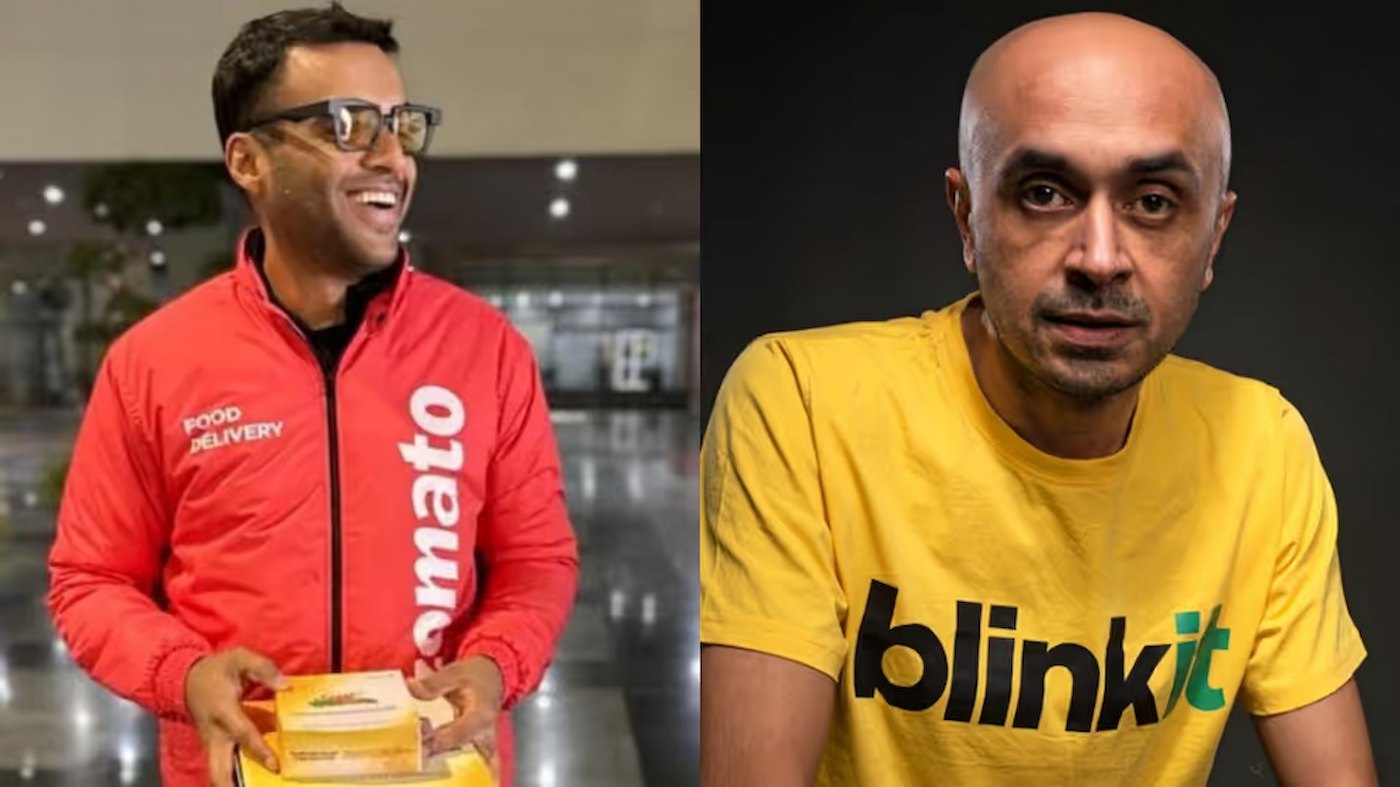
Eternal Ltd, formerly known as Zomato Ltd, announced founder Deepinder Goyal will step away from his role as Group Chief Executive Officer effective 1 February, marking one of India’s most significant leadership transitions in the consumer internet space. The announcement coincided with Eternal reporting a net profit jump of about 73% to ₹1.02 billion from a year earlier, demonstrating the company’s financial strength during this pivotal moment. The Blinkit CEO takes over Zomato operations as part of this Eternal Limited leadership change, signaling the company’s strategic shift toward quick commerce dominance.
This isn’t merely another executive shuffle. It’s a fundamental realignment that reflects where India’s digital commerce landscape is heading—and Albinder Dhindsa new Zomato CEO appointment sits right at the center of that transformation.
The Man Behind the Movement: Understanding Deepinder Goyal Resignation Zomato
After eighteen years building what became India’s most recognizable food delivery brand, why would Goyal walk away now? The answer reveals much about both the man and the evolving nature of publicly traded Indian tech companies.
Goyal explained that “the expectations, legal and otherwise, of a public company CEO in India demand singular focus,” adding that “this transition allows Eternal to remain sharply focused, while giving me the space to explore ideas that do not fit Eternal’s risk profile”. Translation: He wants to pursue riskier experimental ventures without exposing shareholders to uncertainty.
Here’s what makes this different from typical founder exits. As part of this transition, all of Goyal’s unvested employee stock ownership plans will revert to the ESOP pool, eliminating any perception of personal financial maneuvering. Meanwhile, Goyal will remain on the company’s board as Vice Chairman, subject to shareholder approval, maintaining strategic oversight without operational burden.
Outside Eternal, Goyal has been working on projects including a longevity-focused initiative called Continue Research and an experimental brain-health wearable dubbed “Temple,” and he is a co-founder of the aviation startup LAT Aerospace. These aren’t side hustles—they’re fundamentally different businesses requiring risk tolerance incompatible with public company stewardship.
Albinder Dhindsa Vision for Zomato: From Quick Commerce King to Group CEO
Who exactly is inheriting this billion-dollar empire? As of January 2026, Albinder Dhindsa is estimated to be around 43–44 years old, bringing over a decade of startup leadership experience to the table. But age tells you nothing about capability.
Dhindsa has pursued graduation from IIT Delhi in Mechanical Engineering, completed his MBA from Columbia Business School, and after completing his MBA, came back to India and joined Zomato as head of international operations. That educational pedigree matters less than what came next.
In 2013, when startups were the highlight, Dhindsa decided to make his own company and co-founded Grofers with Saurabh Kumar, starting with the aim of being an online grocery and pharmacy service that would provide delivery at home. The company faced brutal challenges—burning cash, struggling with unit economics, competing against well-funded rivals.
Then came the transformation. In June 2022, the company announced the acquisition of quick-commerce company Blinkit for $568 million, bringing Dhindsa’s creation into Eternal’s ecosystem. What followed proved Albinder Dhindsa new Zomato CEO credentials beyond doubt.
Goyal credited Dhindsa with building Blinkit into one of Eternal’s most important growth engines, noting “Blinkit’s journey from acquisition to breakeven happened under his leadership,” adding “He built the team, the culture, the supply chain, the operating rhythm” and “He has the DNA of a battle-hardened founder and his ability to execute far exceeds mine”. That’s not corporate politeness—it’s rare founder-to-founder recognition of superior operational excellence.
Numbers back this up powerfully. Blinkit remained the company’s fastest-growing business, with net order value jumping 121% to ₹133.0 billion in the last quarter. Quick commerce now represents Eternal’s primary growth engine, and the executive running that engine just became Group CEO.
Strategic Implications: What This Zomato Leadership Transition Really Means
Surface-level analysis might suggest this represents Eternal doubling down on quick commerce at food delivery’s expense. Reality’s more nuanced and considerably more strategic.
Blinkit will remain the company’s largest growth opportunity and Dhindsa’s top priority, Goyal added. Yet simultaneously, Goyal will continue to work closely with Dhindsa and co-founder Akshant Goyal on strategy, culture, leadership development, and governance. This creates a dual-leadership structure optimizing for both operational excellence and strategic vision.
Think about the division of labor emerging here. Goyal wrote “The centre of gravity for operating decisions moves to Albi,” and “As Group CEO, he will own day-to-day execution, operating priorities, and business decisions”. Meanwhile, Goyal maintains influence over long-term direction without getting bogged down in quarterly execution pressures.
This addresses a fundamental challenge facing Indian tech companies transitioning from startup mode to mature enterprises. You need founder vision without founder volatility, operational discipline without innovation paralysis. The Deepinder Goyal resignation Zomato creates precisely that balance.
In February 2025, Zomato Limited was renamed as Eternal Limited, reflecting ambitions beyond food delivery alone. Eternal is the parent company of food delivery platform Zomato, quick-commerce company Blinkit, events and ticketing platform District, and food supply business Hyperpure. Placing someone with Dhindsa’s quick-commerce expertise atop this diversified portfolio signals where management sees maximum growth potential.
Industry Context: Blinkit CEO Takes Over Zomato Amid Sector Transformation
This leadership change doesn’t happen in isolation—it reflects seismic shifts reshaping India’s consumer internet landscape entirely.
Quick commerce has exploded from experimental concept to mainstream expectation remarkably fast. Consumers now expect groceries, medicines, electronics delivered within minutes rather than days. That fundamental behavioral shift creates opportunities for companies positioned correctly while threatening those stuck in previous paradigms.
Blinkit’s net order value rose 121% year-on-year to ₹13,300 crore during the quarter, though the company noted the NOV was reduced by about three percentage points due to revised GST rates. That growth rate—despite regulatory headwinds—demonstrates category momentum few sectors match.
Simultaneously, regulatory scrutiny has intensified dramatically. Recent government intervention targeted the controversial “10-minute delivery” model, with authorities expressing concerns about delivery worker safety. Companies must now balance speed promises against compliance requirements and worker welfare considerations.
Albinder Dhindsa new Zomato CEO appointment positions someone intimately familiar with these quick-commerce realities at the helm precisely when navigating them matters most. He’s already demonstrated ability balancing aggressive growth against operational sustainability through Blinkit’s journey from cash-burning startup to profitable growth engine.
Financial Performance: Numbers Driving This Eternal Limited Leadership Change
Leadership transitions often mask underlying performance issues. This one doesn’t.
Eternal reported a 73% surge in consolidated net profit to ₹102 crore in Q3 FY26 from ₹59 crore during the same period last year, with profit increasing 57% quarter-on-quarter from ₹65 crore. Those aren’t survival numbers—they’re acceleration metrics.
Revenue growth proved even more impressive. Eternal’s revenue from operations for the quarter surged 202% year-on-year to ₹16,315 crore from ₹5,405 crore, with sequential revenue up 20% from ₹13,590 crore. Tripling revenue while improving profitability simultaneously represents exceptional execution rarely achieved.
What drove this performance? The spike in performance was largely driven by the company’s quick commerce arm Blinkit and its B2B sourcing platform Hyperpure. The businesses Dhindsa either built directly or understands deeply generated the lion’s share of growth.
This creates a virtuous cycle for the Zomato leadership transition. You’re handing control to the executive whose divisions already drive majority growth, eliminating typical transition risks around unfamiliarity or misaligned incentives.
What Comes Next: Albinder Dhindsa Vision for Zomato’s Future
So where does Albinder Dhindsa new Zomato CEO steer this ship moving forward?
Immediate priorities seem clear based on recent communications. In a company statement, Dhindsa said “Eternal is poised for massive growth across our businesses,” adding “With our strong teams and continued investment in technology and capabilities, I look forward to continuing our success story across food delivery, quick commerce, supply chain and beyond”.
That “and beyond” matters enormously. It signals intention to explore adjacencies rather than defending existing turf exclusively. In November 2024, the company launched its events and ticketing app called “District” after consolidating WEPL and OTPL, demonstrating willingness to enter entirely new categories when strategic rationale exists.
The Blinkit CEO takes over Zomato operations with proven capability scaling complex logistics networks, managing marketplace dynamics, and achieving profitability in capital-intensive businesses. Those competencies transfer directly to other verticals Eternal might pursue—hyperlocal logistics, B2B supply chain, experiential commerce.
Expect continued infrastructure investment supporting rapid delivery capabilities. Goyal said “Blinkit remains our largest growth opportunity and will remain as Albi’s top priority,” while noting “Our decentralised structure, where each business has a CEO with full ownership, continues unchanged and will help Albi execute this well”. That decentralization empowers vertical heads while Dhindsa orchestrates overall strategy—exactly what you want from group-level leadership.
Challenges Ahead: Navigating the Deepinder Goyal Resignation Zomato Aftermath
No transition comes risk-free, regardless how well-planned. Several challenges deserve watching closely.
Founder departure always creates perception risk. Goyal built Zomato from literally nothing into a publicly-traded company worth billions. Goyal noted “I have spent eighteen years, almost half my life, building this company,” and “I will continue doing that”—but markets and employees might interpret “continue” differently than management intends.
Regulatory uncertainty persists significantly. Government scrutiny of quick commerce delivery timelines, worker classification issues, and competitive practices creates ongoing compliance complexity. Dhindsa navigated these previously, but intensity and breadth of oversight continues increasing.
Competition intensifies relentlessly. Swiggy’s Instamart, Zepto, and other well-funded quick commerce players aren’t conceding market share willingly. Maintaining Blinkit’s growth trajectory while managing the broader Eternal portfolio demands exceptional time and attention management.
Cultural integration challenges remain. In February 2025, Zomato Limited was renamed as Eternal Limited, but identity transformation takes longer than legal paperwork. Employees hired to work at a food delivery startup might struggle adapting to a diversified commerce conglomerate.
Yet Dhindsa’s track record suggests capability handling these challenges. Dhindsa’s rise comes after overcoming early post-acquisition integration hurdles at Blinkit, and despite being asked to step down twice by Goyal, he stabilized the business and positioned it as a core growth engine for Eternal. Someone who survived being asked to resign twice, then turned the business around so completely the CEO who asked him to leave now hands him the entire company, clearly possesses exceptional resilience and capability.
Conclusion: Understanding This Historic Zomato Leadership Transition
Step back from immediate details and the bigger picture crystallizes clearly.
The Zomato CEO Deepinder Goyal steps down narrative isn’t about a founder giving up—it’s about institutional maturity. Goyal recognized his highest value creation opportunity lies outside daily operations, while Dhindsa’s strengths align perfectly with execution imperatives facing Eternal currently.
This Eternal Limited leadership change reflects strategic alignment rather than crisis management. The Blinkit CEO takes over Zomato operations at precisely the moment quick commerce drives majority growth, creating seamless continuity rather than disruptive transition.
Deepinder Goyal resignation Zomato demonstrates sophisticated succession planning rare in Indian tech. Rather than clinging to operational control or engineering external CEO hire, Goyal identified internal talent demonstrably superior at execution, then structured transition preserving his strategic contributions while empowering new leadership.
Ultimately, success depends on whether Albinder Dhindsa new Zomato CEO appointment delivers sustained growth across Eternal’s expanding portfolio. Dhindsa’s performance will shape Eternal’s next growth phase, determining whether this becomes a case study in successful founder transition or cautionary tale about premature handoffs.
Early indicators suggest optimism justified. You’ve got proven operational excellence, strong financial momentum, clear strategic direction, and thoughtful transition structure. The Albinder Dhindsa vision for Zomato balances aggressive growth with profitability discipline—exactly what public market investors demand.
India’s consumer internet sector just witnessed one of its most significant leadership transitions. Whether it becomes legendary or forgettable depends entirely on execution over coming quarters. But the foundation built through this carefully orchestrated Zomato leadership transition positions Eternal exceptionally well for whatever challenges and opportunities emerge next.
Frequently Asked Questions
When did Deepinder Goyal step down as Zomato CEO?
Deepinder Goyal stepped down as Group Chief Executive Officer of Eternal Limited (formerly Zomato) effective February 1, 2026, after announcing the decision on January 21, 2026.
Who is Albinder Dhindsa and why was he chosen as the new CEO?
Albinder Dhindsa is the co-founder and CEO of Blinkit who successfully led the quick-commerce platform from acquisition to breakeven. Goyal specifically praised his execution ability as exceeding his own, noting Dhindsa built Blinkit’s team, culture, supply chain, and operating rhythm.
Will Deepinder Goyal remain involved with Eternal after stepping down?
Yes, Deepinder Goyal will remain on Eternal’s board as Vice Chairman (subject to shareholder approval) and will continue working on long-term strategy, culture, leadership development, and governance alongside Dhindsa.
What is Eternal Limited and how does it relate to Zomato?
Eternal Limited is the parent company that was renamed from Zomato Limited in February 2025. It owns multiple businesses including Zomato (food delivery), Blinkit (quick commerce), Hyperpure (B2B supplies), and District (events and ticketing platform).
How did Eternal perform financially in Q3 FY26?
Eternal reported a 73% year-on-year increase in net profit to ₹102 crore and a 202% surge in revenue to ₹16,315 crore for
What happens to Deepinder Goyal’s unvested ESOPs after this transition?
All of Deepinder Goyal’s unvested employee stock ownership plans (ESOPs) will revert to Eternal’s ESOP pool, supporting wealth creation for future leaders without additional shareholder dilution.
What is Blinkit’s role in Eternal’s future growth strategy?
Blinkit remains Eternal’s largest growth opportunity and will continue as Albinder Dhindsa’s top priority, with the quick-commerce platform’s net order value growing 121% year-on-year to ₹13,300 crore in