

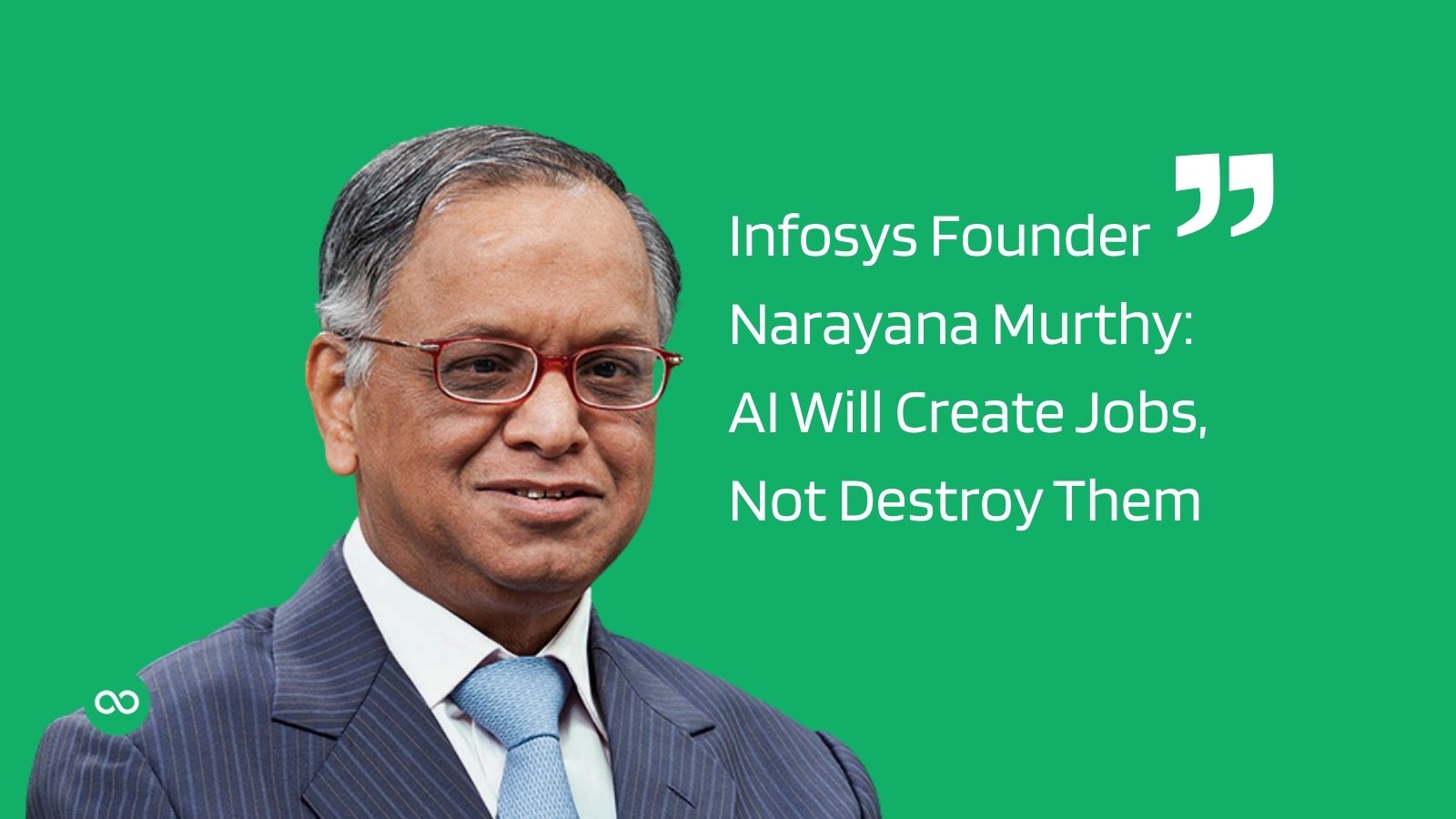
Infosys founder NR Narayana Murthy spoke at an event on February 28, 2026, declaring that technological shifts have historically expanded employment rather than reduced it. His optimistic viewpoint arrives at a pivotal moment. AI hiring in India surged with 290,256 roles posted in 2025, and projections indicate a 32 percent year-on-year growth in 2026, reaching nearly 380,000 roles. This outlook stands in sharp contrast to widespread anxieties about automation displacing millions of workers.
Meanwhile, skeptics point to real job cuts. Yet Murthy’s decades of experience building India’s technology ecosystem offer a compelling counternarrative. His message resonates with a critical question facing professionals worldwide: will artificial intelligence serve as a career destroyer or a catalyst for unprecedented opportunity?
Understanding Narayana Murthy’s Stance on Technology and Employment
Speaking at a fireside chat during the 25th anniversary celebrations of deeptech firm Ittiam Systems, Murthy affirmed his belief that technology will never reduce jobs at the macro level. His conviction stems from observing technological evolution across multiple decades. Technology does not diminish jobs at the macro level but instead alters the nature of work and creates fresh opportunities that demand new capabilities.
Drawing from historical precedent, Murthy compared today’s AI concerns to the 1970s Britain situation when bank workers protested against computer introduction, yet that same industry now has 40 to 50 times more jobs. This pattern repeats throughout technological history. Core banking solutions once sparked similar fears. Database management systems threatened traditional record-keeping roles. Yet each innovation ultimately expanded employment possibilities rather than contracting them.
Technology alters the nature of work and creates fresh opportunities that demand new capabilities, Murthy emphasized. The Infosys founder AI jobs perspective centers on adaptability and continuous learning. Rather than viewing automation as a threat, he advocates embracing it as a productivity multiplier that frees humans to tackle more complex, creative challenges.
How AI Will Create Jobs According to Industry Data
Statistics paint an encouraging picture for AI employment opportunities Murthy champions. Among developing countries, India was the top AI job creator with more than 490,000 jobs in 2025. This explosive growth demonstrates that AI will not destroy jobs in the traditional sectors—instead, it generates entirely new categories of employment.
The future of work AI envisions encompasses diverse roles across industries. In 2025, healthcare added over 640,000 AI-driven roles, financial services created approximately 470,000 new AI-related jobs, manufacturing witnessed 620,000 AI jobs emerge, and retail hired over 360,000 AI specialists. These positions didn’t exist a decade ago.
Demand for generative AI and large language model skills surged nearly 60 percent year-on-year, fueled by enterprises deploying AI copilots, chatbots, and large-scale generative AI platforms. Companies aren’t just automating tasks—they’re building sophisticated systems that require human oversight, ethical guidance, strategic direction, and creative implementation.
AI job growth predictions suggest this expansion will accelerate. Approximately 5 million new jobs will be created by AI in 2025, followed by 6 million in 2026, and hitting somewhere around 7 million in 2027. These projections reflect gradual integration across sectors rather than sudden disruption.
The AI Impact on Workforce India: Real-World Transformations
The AI impact on workforce India manifests in tangible ways across metropolitan centers and emerging hubs. Bengaluru retained leadership with 26 percent of AI roles, Hyderabad recorded the fastest growth among Tier 1 cities, while Jaipur, Indore, and Mysuru emerged as key Tier 2 hotspots. Geographic distribution indicates democratization of opportunities beyond traditional tech corridors.
Industry composition reveals surprising breadth. IT-Software and Services dominated AI hiring with 37 percent of total roles, followed by Banking, Financial Services, and Insurance at 15.8 percent, and Manufacturing at 6 percent, with BFSI alone experiencing 41 percent year-on-year growth in AI-related positions. Traditional sectors undergo transformation rather than elimination.
Corporate adoption drives workforce evolution. India is on track to increase its workforce from 423.73 million in 2023 to 457.62 million by 2028, reflecting a net gain of 33.89 million workers. This expansion coincides with accelerating AI integration, demonstrating complementary rather than competitive dynamics between human labor and artificial intelligence.
Government initiatives amplify employment prospects. Under the IndiaAI Mission, over ₹10,300 crore has been allocated to strengthen AI capabilities, with an additional 20,000 high-end GPUs expanding compute capacity to more than 58,000 GPUs, offered at a subsidised rate of ₹65 per hour. Affordable infrastructure democratizes access for startups, students, researchers, and institutions across tier-2 and tier-3 cities.
Mastering AI for Career Advancement: Skills That Matter
Mastering AI for career success requires strategic skill development rather than comprehensive technical expertise. Today’s students need cognitive, creative, and technical skills that complement AI and help them use it rather than compete with it. This represents a fundamental shift from traditional technical training.
Critical capabilities span multiple dimensions. While technical skills remain important accounting for about 27 percent of in-demand skills, foundational skills such as mathematics and active learning, social skills including social perceptiveness and negotiation, and thinking skills such as complex problem-solving and critical thinking together make up nearly 58 percent of skills needed in growing occupations.
Human strengths become increasingly valuable. While routine tasks may be handled by machines, creative problem-solving, ethical judgement, and innovative thinking remain human strengths. Organizations prioritize professionals who combine technical proficiency with interpersonal acumen and strategic thinking.
AI skill development importance extends beyond specialized roles. About 50% of employees are currently using AI on the job, up from 32% last year, with employees in India at 78% and China at 77% leading in enthusiasm. Widespread adoption transforms AI literacy from specialized knowledge to universal requirement across industries and hierarchies.
Practical application trumps theoretical understanding. Murthy uses ChatGPT to help write his speeches, noting that he used to take about 25-30 hours to prepare a lecture, but in a matter of five hours with AI, he could improve the draft, improving his own productivity by as much as five times. Leaders who leverage AI tools strategically demonstrate efficiency gains that cascade throughout organizations.
Addressing Concerns: What About Job Displacement?
Legitimate concerns about displacement deserve thoughtful examination. In July 2025, Tata Consultancy Services cut about 12,200 jobs as it adjusts to automation, other major IT firms have slowed campus hiring and reduced mid-level roles, with companies freezing recruitment, trimming staff, and retraining workers. These adjustments reflect transition rather than permanent contraction.
Entry-level positions face particular pressure. In the 2024-25 cycle, major software exporters hired only 70,000 to 80,000 fresh engineers—the lowest intake in over two decades, with staffing firms estimating fewer than 1 in 10 engineering graduates will land IT-sector jobs this year. This squeeze demands adaptive strategies from educational institutions and aspiring professionals.
However, disruption patterns reveal nuance. Work is not disappearing but changing, with routine coding and support shrinking while architecture, integration, and decision-making roles expand. Job categories evolve rather than vanish entirely. Professionals who transition from execution-focused tasks toward strategic, design-oriented work maintain relevance.
Net employment impact remains positive despite sectoral turbulence. A recent report warns that by 2031 India’s technology services sector could lose up to 1.5-2 million jobs to automation—even as it could create as many as 4 million new roles, depending on how workforce and policy efforts evolve. Creation outpaces displacement when viewed comprehensively across the economy.
Murthy’s historical analysis provides context. In the 70s, case tools or computer-aided software engineering tools were widely believed to spell death knell for jobs in software development, but it didn’t happen because the human mind found bigger problems to solve, and the code generator couldn’t keep up. Innovation consistently generates complexity that demands human intervention.
Building an AI-Ready Future: Practical Strategies for Professionals
Strategic preparation positions individuals for success amid transformation. The responsibility lies with individuals to master these technologies, deploy them in an assistive manner and combine them with discipline, hard work and continuous learning. Personal agency determines outcomes as much as systemic factors.
Continuous upskilling becomes non-negotiable. Between January 2023 and March 2025, AI-related job postings in South Asia rose from 2.9% to 6.5% of total vacancies, with demand for AI skills growing 75% faster than non-AI roles, signaling a structural shift in the labour market where digital fluency and advanced technical skills are increasingly essential. Market signals clearly indicate where opportunity concentrates.
Employers increasingly support development initiatives. In 2025, at least 58 million workers received AI training or certifications, with LinkedIn Learning experiencing 62% growth and Coursera seeing 14.2 million AI-track enrollments, while governments actively help reskilling with the U.S. funding AI certifications for 120,000 laid-off workers and Europe experiencing a 39% increase in AI retraining enrollments. Resources proliferate for motivated learners.
Practical experience accelerates learning. More than 90 percent professionals in India plan to use artificial intelligence to search for jobs in 2026, with 66 percent believing that AI boosts their interview confidence. Direct engagement builds familiarity and competence faster than passive observation.
Industry partnerships shape educational outcomes. Skill India Digital Hub promotes and provides continuous learning in areas such as AI, machine learning and automation. Collaborative ecosystems between government, academia, and industry create pathways for workforce transformation aligned with market demands.
The Global Perspective: India’s Competitive Advantage
India’s demographic dividend amplifies AI opportunities. With over 65% of India’s population under the age of 35, the country holds one of the world’s largest pools of digitally adaptable young talent. Youth populations coupled with educational infrastructure position India favorably in global AI competition.
Investment flows validate this potential. Minister Vaishnaw expressed strong optimism that India will attract over $200 billion in AI and deep-tech investments over the next 24 months. Capital follows talent and infrastructure, creating virtuous cycles that accelerate ecosystem development.
Sovereign capabilities enhance strategic autonomy. BharatGen announced Param2, a 17-billion-parameter multilingual advanced AI system designed to support multiple Indic languages, while Sarvam AI introduced two indigenous large language models—a 30-billion-parameter model and a larger 105-billion-parameter model—trained specifically for Indian languages. Domestic innovation reduces dependency on foreign technology.
Startup ecosystem demonstrates vibrancy. The summit profiles 110 startups and non-profits deploying artificial intelligence for population-scale social and economic impact, creating solutions specifically designed for Indian challenges with applicability across emerging markets. Entrepreneurial energy channels toward practical applications addressing local contexts.
Global recognition follows performance. OpenAI CEO Sam Altman described India’s adoption of AI as “leading the world,” stating that this will be one of the biggest markets for AI in the world, and India will have a huge amount of influence. International technology leaders acknowledge India’s ascending trajectory in artificial intelligence development and deployment.
Conclusion: Embracing the AI-Driven Employment Revolution
Evidence overwhelmingly supports Narayana Murthy’s thesis that AI will create jobs rather than destroy them. Historical precedent, current data, and forward projections converge on a future characterized by transformation rather than elimination. AI is not ending IT jobs in India, it is redefining them, with routine coding and support work continuing to shrink while demand rises for professionals who can design systems, integrate AI, secure data, and understand business problems, with the future belonging to adaptable engineers who work with AI rather than compete with it.
Success requires intentional preparation. Professionals who cultivate complementary skills, embrace continuous learning, and view AI as a collaborative tool rather than competitive threat will thrive. Organizations that invest in upskilling, create pathways for career evolution, and align talent strategies with technological trajectories will outperform competitors.
India stands at an inflection point. With massive youth demographics, expanding infrastructure, growing investment, and supportive policy frameworks, the nation can establish leadership in the global AI economy. Yet realizing this potential demands coordinated action across government, industry, educational institutions, and individual professionals.
The choice confronting today’s workforce isn’t between accepting or rejecting AI—it’s already embedded in workflows across sectors. The meaningful decision involves how quickly and effectively individuals and organizations adapt to leverage these capabilities. Those who act decisively today position themselves to shape tomorrow’s opportunities rather than scrambling to catch up.
Are you ready to master AI for career advancement and participate in the employment revolution Narayana Murthy envisions? The tools, training, and opportunities exist. The only remaining question is whether you’ll seize them.
Frequently Asked Questions
What did Narayana Murthy say about AI and job creation?
Narayana Murthy stated on February 28, 2026, that he firmly believes technology will never reduce jobs at the macro level. He argued that AI and technological shifts historically expand employment rather than reduce it, drawing parallels to the 1970s when computers were introduced in British banks and the industry eventually grew to have 40-50 times more jobs.
How many AI jobs are being created in India?
In 2025, companies posted 290,256 AI-linked roles in India, with projections showing 32 percent year-on-year growth in 2026, reaching nearly 380,000 roles. India was the top AI job creator among developing countries with more than 490,000 jobs in 2025.
Which industries are creating the most AI jobs in India?
IT-Software and Services leads AI hiring with 37 percent of total roles, followed by Banking, Financial Services, and Insurance (BFSI) at 15.8 percent, and Manufacturing at 6 percent. Healthcare, financial services, manufacturing, and retail sectors globally created over 1.7 million AI-related jobs in 2025.
What skills are most important for mastering AI for career growth?
The most critical skills include cognitive and creative thinking, complex problem-solving, critical thinking, social perceptiveness, negotiation, mathematics, and active learning. Technical skills account for only 27 percent of in-demand skills, while foundational, social, and thinking skills together make up 58 percent.
Are there concerns about AI displacing jobs in India?
Yes, some displacement is occurring. Tata Consultancy Services cut about 12,200 jobs in July 2025, and major software exporters hired only 70,000-80,000 fresh engineers in the 2024-25 cycle—the lowest in two decades. However, reports suggest that while India’s tech sector could lose 1.5-2 million jobs to automation by 2031, it could create as many as 4 million new roles.
How is the Indian government supporting AI job creation?
The Indian government allocated over ₹10,300 crore under the IndiaAI Mission to strengthen AI capabilities. They’re expanding compute capacity to more than 58,000 GPUs offered at a subsidised rate of ₹65 per hour (compared to global rates of ₹210-₹250 per hour), making AI infrastructure accessible to startups, students, researchers, and institutions across tier-2 and tier-3 cities.
What is the future outlook for AI employment opportunities in India?
The outlook is highly positive. AI-related job postings in South Asia rose from 2.9% to 6.5% of total vacancies between January 2023 and March 2025, with demand for AI skills growing 75% faster than non-AI roles. Globally, AI is expected to create 5 million new jobs in 2025, 6 million in 2026, and reach 13 million annual job creation by 2030.