
When Tech Giants Collide With Political Reality: Inside the AI Industry’s Toughest Week
The Anthropic OpenAI Trump ICE Stance:

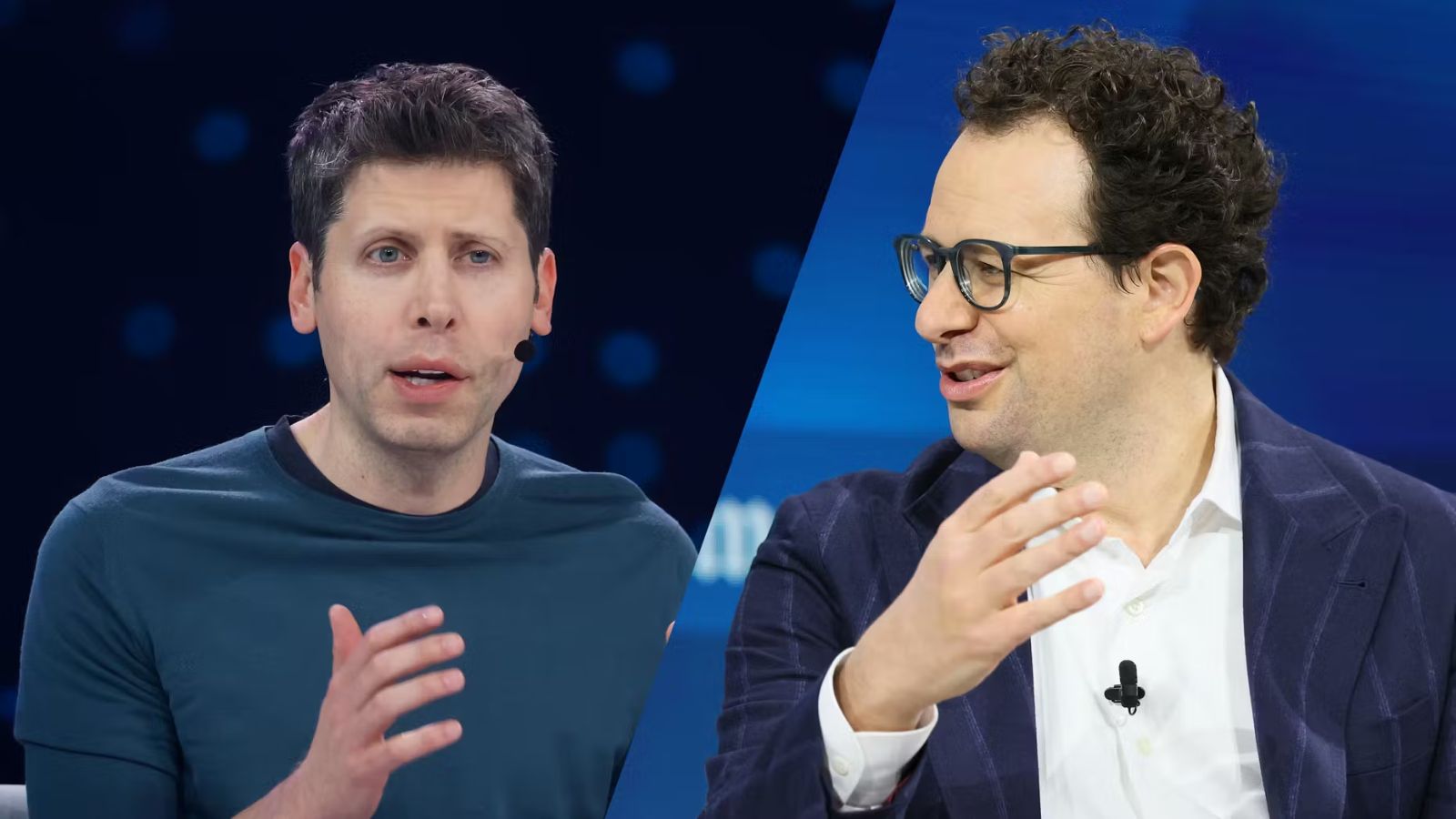
The leaders of two major artificial intelligence companies have broken their silence on the Trump administration’s immigration enforcement tactics, creating one of the most complex political moments in Silicon Valley’s recent history. This week exposed deep tensions between AI chiefs who criticize ICE actions while simultaneously benefiting from pro-business policies emanating from the White House.
The contradiction is stark. OpenAI raised at least $40 billion and is negotiating another $100 billion at an $830 billion valuation, while Anthropic has raised $19 billion and seeks another $25 billion at a $350 billion valuation. These astronomical figures reflect the Trump administration’s AI-forward approach that has accelerated industry growth. Yet now, Anthropic OpenAI leaders find themselves confronting a moral dilemma that money can’t resolve.
The Minneapolis Catalyst That Changed Everything
Anthropic CEO Dario Amodei expressed concern over “some of the things we’ve seen in the last few days,” referring to Border Patrol violence in Minneapolis, and specifically called out “the horror we’re seeing in Minnesota”. His statement wasn’t made in isolation. OpenAI’s Sam Altman told employees in an internal Slack message that “What’s happening with ICE is going too far”, adding that there’s a fundamental difference between deporting violent criminals and current enforcement actions.
The tech leaders political views emerged after immigration agents in Minneapolis shot and killed Alex Pretti, a 37-year-old intensive care nurse. This tragedy became a flashpoint for tech executives immigration views across the industry, with many questioning whether their silence constituted complicity.
Meanwhile, the timing couldn’t have been more awkward. On Saturday evening, top technology executives including Andy Jassy, Tim Cook, and Lisa Su gathered in Washington to attend a screening of Melania, a documentary about the first lady. The juxtaposition between Washington galas and Minneapolis vigils created uncomfortable optics for an industry already struggling with its political identity.
The Anthropic OpenAI Trump ICE Stance: Walking a Tightrope
What makes this situation particularly complex is the delicate balance these AI startup CEOs Trump must maintain. The Biden era saw the White House pitted against Big Tech firms in efforts to rein in misinformation and monopolies, while Trump’s embrace of the AI industry has been a welcome reprieve for Silicon Valley.
The Anthropic CEO Trump relationship illustrates this tension perfectly. Amodei focused on preserving democracy at home and said he believes in arming democracies to defend against autocratic countries. He emphasized that Anthropic has no contracts with Immigration and Customs Enforcement, drawing a clear ethical line.
However, OpenAI CEO ICE criticism came with its own historical baggage. In the lead-up to Trump’s first term in 2016, Altman wrote that Trump “is not merely irresponsible. He is irresponsible in the way dictators are…To anyone familiar with the history of Germany in the 1930s, it’s chilling to watch Trump in action”. That makes his current measured tone particularly noteworthy.
Immigration Policy Tech Leaders Face Their Own Contradictions
The irony runs deeper when you consider the immigration foundations of these very companies. More than half of the top privately held AI companies based in the U.S. have at least one immigrant founder, with 60% of the 42 U.S.-based companies founded or co-founded by immigrants.
The founders of these companies hail from 25 countries, with India leading with nine founders, followed by China with eight founders, then France with three founders. This makes the immigration policy tech leaders navigate especially fraught, as many benefit directly from policies they now feel compelled to critique.
The Silicon Valley political alignment has shifted dramatically over the past decade. When Donald Trump took office in 2017 for his first term, tech workers were outspoken and urged their employers to use their political clout against the administration. That activist energy has largely dissipated as OpenAI Anthropic Trump support became economically beneficial.
Employee Pressure Mounts on AI Industry Political Endorsements
The grassroots response within tech companies tells a different story than executive statements. Some employees at Anthropic, Google, Meta and OpenAI have discussed whether to urge their bosses to review their agreements with military contractors or defense companies such as Palantir. This represents a growing divide between worker values and corporate pragmatism.
A letter known as ICEout.tech amassed more than 500 signatures from engineers, venture capitalists and other tech workers calling for the industry to demand that Immigration and Customs Enforcement officials leave U.S. cities. The letter also urged companies to cancel contracts with the agency and not remain silent, even if politically risky.
Notable voices emerged beyond the usual suspects. Jeff Dean, chief scientist at Google’s DeepMind, wrote in a social media post that “Every person regardless of political affiliation should be denouncing this,” calling the killing “absolutely shameful”. His statement reflects the broader sentiment among technical leadership that transcends partisan politics.
Even within venture capital firms, divisions emerged. Keith Rabois, a partner at Khosla Ventures, defended ICE saying that “no law enforcement has shot an innocent person,” while two other partners at the firm, Vinod Khosla and Ethan Choi, publicly denounced Rabois’ comments. These internal conflicts illustrate how AI chiefs criticize ICE from multiple perspectives within the same organizations.
The Economic Stakes Behind Political Posturing
Understanding the financial context helps explain why Anthropic OpenAI leaders treaded so carefully. Anthropic’s revenue has grown 10x annually for three straight years, with 85% coming from business customers—the inverse of OpenAI’s consumer-heavy model. Both companies depend on favorable regulatory environments to maintain this growth trajectory.
Gary Shapiro, CEO of the Consumer Technology Association, stated that “The Trump administration’s Genesis Mission is the launching pad for an American-led AI future,” and the show was looking to bring more policymakers to CES to discuss public-private partnerships. This represents the kind of government support that AI companies desperately need for infrastructure development.
The administration’s approach has been explicitly pro-AI. The White House views artificial intelligence as essential to economic competitiveness and national security, pursuing American AI “supremacy” through deregulation, federal preemption of state rules, and securing supply chains. This creates enormous incentives for companies to maintain good relations regardless of other policy disagreements.
Historical Context: How We Got Here
The relationship between tech leaders and immigration has always been complicated. Jeremy Neufeld, director of immigration policy at IFP, noted that “we’re able to draw on the best and brightest from around the world,” but also pointed out that China graduates far more STEM grads than the U.S. does.
The U.S. ability to recruit and retain high-skilled workers faces “two major headwinds”: The U.K., Canada, China and other countries are more aggressively recruiting top talent, and the U.S. has created barriers to immigration. This makes the current political moment even more consequential for long-term American competitiveness.
A debate over foreign workers erupted among President Trump’s supporters late last year, with Musk and others speaking out in support of H-1B visas for high-skilled workers in “specialty occupations”. That internal Republican tension mirrors the broader contradictions facing the AI industry.
The Divergent Approaches of Two AI Giants
The responses from Anthropic and OpenAI revealed distinct corporate philosophies. Amodei emphasized that Anthropic has no contracts with Immigration and Customs Enforcement, establishing a clear ethical boundary. This aligns with Anthropic’s founding mission, which emphasized AI safety and responsible development from the start.
OpenAI’s approach appeared more internally focused. Altman’s message to employees stated that “Part of loving the country is the American duty to push back against overreach” and that “There is a big difference between deporting violent criminals and what’s happening now”. This framing acknowledged legitimate immigration enforcement while criticizing excessive force.
The divergence reflects broader strategic differences. Anthropic was founded in 2021 by a group of former OpenAI executives and researchers who disagreed with the company’s direction, specifically around safety protocols and commercial priorities. Those founding disagreements now manifest in how each company navigates political controversies.
What This Means for the Future
The Minneapolis incident represents more than a single flashpoint—it signals a fundamental tension in Silicon Valley’s relationship with political power. Companies can no longer simply optimize for favorable regulations while remaining silent on contentious social issues.
Most tech chiefs have not commented on the killing of Pretti, even as the CEOs of Target, Best Buy, General Mills and Cargill were among more than 60 large Minnesota companies who did speak out. This silence from other tech leaders may become untenable as employee pressure mounts and public scrutiny intensifies.
The path forward requires navigating several competing pressures. Companies need favorable AI policy to compete globally. They also need to attract and retain top talent, much of which comes from immigrant backgrounds. Simultaneously, they face growing demands for ethical leadership from employees and the public.
For now, both Anthropic and OpenAI have taken public stances that acknowledge concerns while stopping short of direct confrontation with the administration. Whether this measured approach satisfies stakeholders on any side remains to be seen. What’s certain is that AI chiefs criticize ICE actions at their own economic peril, while silence carries its own costs to corporate reputation and employee morale.
The situation reveals a broader truth about power and principle in the tech industry. When economic interests and ethical values collide, even the most successful companies struggle to find solid ground. As artificial intelligence reshapes society, the political positions of its most powerful leaders will face increasing scrutiny—and simple answers will remain elusive.
Frequently Asked Questions
Why did Anthropic and OpenAI leaders criticize ICE actions?
Anthropic CEO Dario Amodei and OpenAI CEO Sam Altman spoke out after federal immigration agents shot and killed Alex Pretti, a 37-year-old nurse, in Minneapolis. Both executives expressed concern that enforcement actions had gone too far, with Amodei calling it a “horror” and Altman stating ICE was overreaching beyond deporting violent criminals.
Does Anthropic work with ICE or immigration enforcement agencies?
No. Anthropic CEO Dario Amodei explicitly stated that Anthropic has no contracts with Immigration and Customs Enforcement (ICE), drawing a clear ethical boundary for the company’s work.
How has Trump’s administration supported AI companies like OpenAI and Anthropic?
The Trump administration’s AI-forward policies helped OpenAI raise at least $40 billion with talks for another $100 billion, while Anthropic raised $19 billion with discussions for $25 billion more. The administration has pursued deregulation, federal preemption of state AI rules, and infrastructure support through initiatives like the Genesis Mission.
What is the connection between immigrant founders and AI companies?
Over 60% of leading U.S. AI startups were founded or co-founded by immigrants, with founders from 25 countries. India leads with nine founders, followed by China with eight. This makes immigration policy particularly relevant to AI industry leadership, as many executives benefit directly from skilled immigration programs.
How did tech employees respond to their leaders’ statements on ICE?
Employees at Anthropic, Google, Meta, and OpenAI discussed urging their bosses to review agreements with military contractors and defense companies. Over 500 tech workers signed the ICEout.tech letter calling for the industry to demand ICE leave U.S. cities and cancel contracts with the agency.
What did Sam Altman previously say about Donald Trump?
In 2016, before Trump’s first term, Sam Altman wrote that Trump “is not merely irresponsible. He is irresponsible in the way dictators are” and compared watching Trump to Germany in the 1930s. This makes his current measured criticism of ICE while maintaining business relationships with the Trump administration particularly notable.
What are the economic risks for AI companies that criticize Trump administration policies?
AI companies depend on favorable regulatory environments, infrastructure support, and government partnerships worth billions of dollars. The Trump administration views AI as essential to economic competitiveness and national security, creating strong incentives for companies to maintain positive relationships despite policy disagreements on other issues.