
Talentir Seed Funding 2026: How a Vienna Fintech Is Reinventing Creator Payouts with AI and Stablecoins

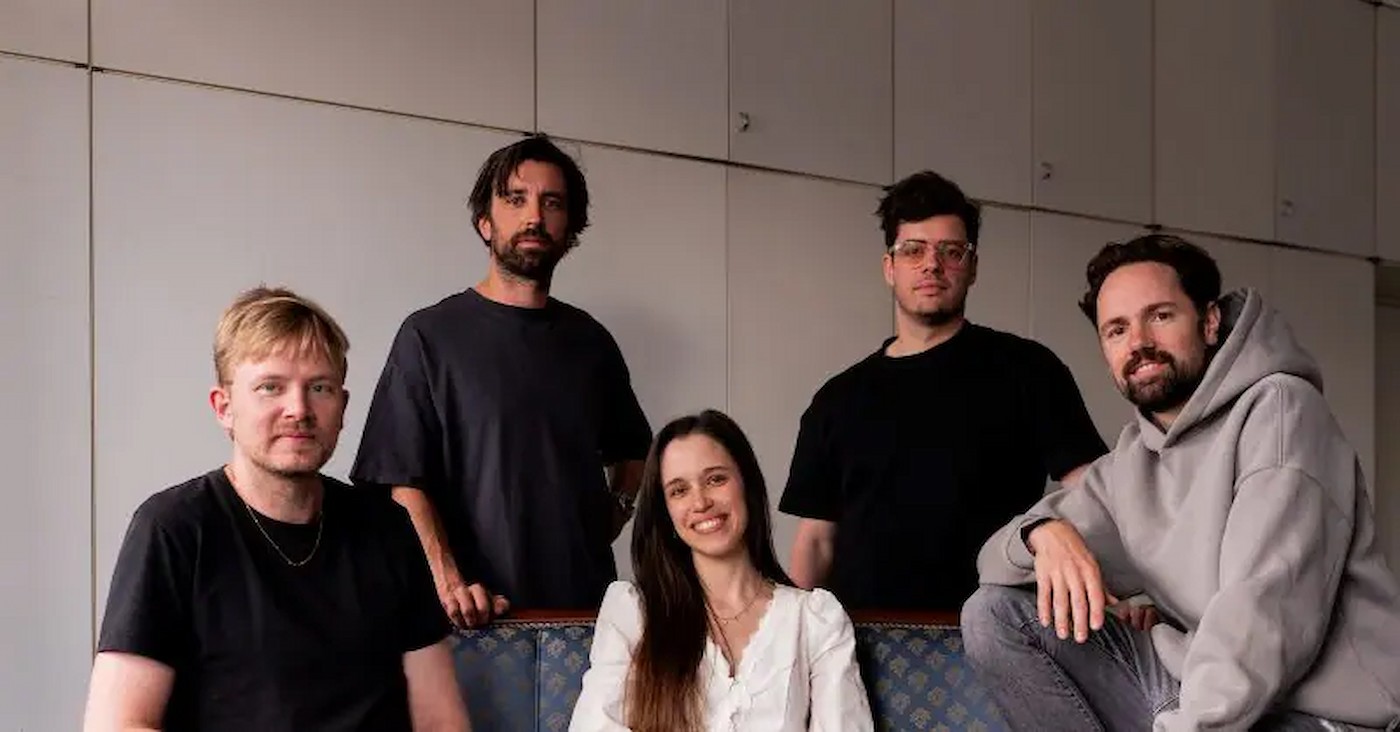
Vienna-based fintech Talentir has raised €4 million in seed funding to develop AI-powered payout systems for platforms that pay creators, freelancers, and contractors worldwide — with the round led by Redstone VC and supported by Inovia Capital, whose partners include Patrick Pichette, the former CFO of Google. The Talentir seed funding 2026 announcement arrives at a moment when the creator payout problem has reached a breaking point, and serious institutional money is finally paying attention.
The creator economy generates over $250 billion in annual revenue across more than 200 million creators worldwide, yet the infrastructure that moves money from audiences to creators remains slow, expensive, and opaque — with platforms taking 20% to 45% of gross revenue while payouts arrive weeks or months after content is published. That is the structural gap Talentir is charging straight into.
What Is Talentir and Why Does Talentir Seed Funding 2026 Matter?
Talentir was founded in 2021 and is headquartered in Vienna, Austria. It didn’t start out as an infrastructure play. Before founding Talentir, Lukas Steiner managed nightclubs and, together with co-founder Johannes Kares, created a marketplace for fractional YouTube video shares. What they discovered along the way changed everything. When they saw that the payout operation itself was the bottleneck — and the driver of high fees in the industry — they leaned into solving bottlenecks for operators rather than chasing the consumer-side marketplace.
Talentir handles the entire outbound payment process within a single system, covering data collection, reconciliation, compliance, tax management, recipient onboarding, and payment issuance. That is a remarkably comprehensive scope for a six-person team. The company started in Vienna and is registered in Switzerland, and instead of using traditional banks, they built their settlement system on stablecoin technology — a bet that initially drew skepticism but now gives them a genuine edge in speed and cost.
The Talentir AI-powered payout platform is built on a foundational conviction: that payouts don’t have to be a cost center. “There are ways to implement yield on money that is in flight,” says Steiner. “The ultimate goal is to make payouts profitable.”
The Ex-Google CFO Who Bet on Payout Infrastructure
The Patrick Pichette Talentir investment carries real weight in the fintech world. Patrick Pichette is a Canadian business executive and venture capitalist who served as the senior vice president and CFO of Google from 2008 until 2015, after which he became a venture capital fund manager and director for several companies. As CFO of Google from 2008 to 2015, Pichette played a key role in driving the company’s growth strategy and supported the creation of the Alphabet structure, overseeing nearly 150 acquisitions including Nest and Motorola.
Pichette joined Inovia Capital in 2018 to help launch Inovia Growth Fund I and spearhead the firm’s European strategy with the opening of the London office. Inovia Capital is a full-stack venture capital firm that partners with founders to build global companies from pre-seed to pre-IPO stages, managing over US$2.5 billion in assets and providing capital, insights, and mentorship to innovators across Canada, the US, Germany, the UK, and France.
The fact that ex-Google CFO backs Talentir through Inovia’s involvement signals more than just financial appetite — it signals conviction that outbound payment infrastructure is a category-defining problem. Redstone VC, the lead investor, supports fintech companies across Europe and counts French B2B banking unicorn Qonto in its portfolio; Redstone principal Richard Würl called payout infrastructure “one of the last major unsolved problems in B2B fintech,” noting Talentir stands out because it combines stablecoin settlement, AI, and full regulatory responsibility.
The Talentir 4 Million Seed Round: Deal Structure and Investors
The Talentir 4 million seed round was led by Redstone VC, with Inovia Capital — whose partners include Patrick Pichette — also participating. Other investors included Shapers, Tenity, NewSchool, Noia Capital, BFC, Cambrena Capital, and angel investor Mark Ransford. The round used a SAFE structure and was oversubscribed within weeks.
That oversubscription detail deserves attention. Nine investor groups backing a six-person company speaks to how urgent this problem actually feels to people who understand fintech infrastructure. The new funding will help Talentir grow its AI platform, improve its Merchant of Record system, and expand internationally. The company now has six employees and plans to double that by end of 2026, with a short-term goal of €100 million in annual payout volume and a long-term aim of €1 billion.
Why Vienna Fintech Talentir Creator Payouts Are Such a Hard Problem
Stripe solved inbound payments. Nobody solved outbound. Stripe has made it easier to handle incoming payments, but sending money out remains a problem for many platforms. Music distributors, influencer agencies, and creator marketplaces still handle outbound payments by hand — tracking payments across different countries, handling taxes, managing currency fluctuations, and remaining compliant. These tasks are manageable at small scale, but they become much harder and more expensive as the business grows.
The scale of this gap is enormous. The B2B payments market is expected to grow from USD $1.42 trillion in 2025 to USD $3.43 trillion by 2031 at a 15.48% CAGR. Meanwhile, cross-border payments could surpass $156 trillion each year, but most international payout systems are still slow and expensive.
On the creator side, the pain is visceral. International creators face a compounding set of costs: FX conversion fees of 3–7% per transaction, correspondent banking fees of $15–50 per wire transfer, and FX spread markups where platforms offer below-market exchange rates — with the average international creator losing 5–12% of earnings to payment inefficiencies. Steiner says the most common complaint in the creator industry is still: “Where’s my money?”
Vienna fintech Talentir creator payouts are designed to answer that question — in seconds, not months.
How the Talentir Stablecoin Payment Infrastructure Actually Works
The Talentir stablecoin payment infrastructure is the company’s biggest technical differentiator. Most fintech companies still route settlements through legacy banking rails — which means correspondent banks, FX desks, and multi-day delays. Talentir took a different route entirely.
Steiner says: “We bet early on stablecoin technologies in our backend, at a time when people still laughed at us for it. Today, we are the only provider that combines settlement in seconds, AI that operates securely within the client’s IT environment, and full legal responsibility as a regulated Merchant of Record.”
The platform can pay out in EUR, USD, GBP, CHF, and stablecoins — all from one account, with everything staying aligned automatically, and with the ability to send and receive payouts globally via bank, card, PayPal, Venmo, or stablecoin rails. Recipients choose how they want to be paid. No one is forced onto a blockchain they don’t understand.
Talentir stands out by using the Merchant of Record model, which means they don’t just process transactions — they also handle compliance, tax filings, and recipient onboarding, so clients don’t have to. For a music distributor splitting royalties across 40 countries, that compliance coverage is worth more than the raw payment speed.
Talentir AI-Powered Payout Platform: The Intelligence Layer
The Talentir AI-powered payout platform goes beyond routing. Their embedded financial layer fully automates splits, rights management, invoicing, accounting, reconciliation, treasury, and global disbursements for agencies, MCNs (Multi-Channel Networks), platforms, labels, distributors, and enterprises at scale.
Consider what this means in practice. One of Talentir’s early B2B clients, Berlin-based influencer agency ENKIME, approached the company because they were processing roughly 2,000 manual invoices per month, which was slowing their ability to scale. They said: “Look, we want to scale, but the accounting and the manual workload are just blocking everything.”
The AI layer automates that entire workflow. Talentir built a direct API integration that allows creators to see revenue updates in real time and withdraw earned AdSense per second rather than waiting for YouTube to pay on the 21st of the month. Behind the scenes, Talentir developed a prediction algorithm that estimates earnings and allows creators to access funds earlier.
The company currently processes daily payouts in the millions with a team of just six people. That ratio — millions in daily volume to six people — is the product of genuine automation, not clever headcount management.
The Market Opportunity Behind the Patrick Pichette Talentir Investment
Why would a former Google CFO and one of Europe’s most active fintech VCs put money into a six-person Vienna startup? Because the numbers justify it. By payment type, cross-border flows are expanding at a 16.52% CAGR through 2031 — the fastest-growing slice of an already massive market. Roughly 78% of content creators are based outside the United States, yet nearly all major platforms denominate payouts in US dollars and route payments through US-centric banking infrastructure.
That mismatch is the market. It’s structural, it’s global, and it isn’t going away. The rise of remote work, freelancing platforms, creator economies, and international hiring has made cross-border payouts essential. And as Talentir’s own team acknowledges, the open question is whether this six-person Vienna startup can set a global standard before a large US company enters the market.
That race is already on.
What Comes Next for Talentir
The roadmap is clear. The new funding will be used to grow the AI platform, improve the Merchant of Record system, and expand internationally. Headcount will double. Payout volume targets are aggressive. And the Talentir stablecoin payment infrastructure will be the competitive moat competitors will struggle to replicate quickly — because you can’t build settlement-in-seconds speed on top of legacy banking rails just by hiring more engineers.
Richard Würl at Redstone put it plainly: Talentir stands out because it combines stablecoin settlement, AI, and full regulatory responsibility — a combination no other provider currently offers.
The Talentir 4 million seed round is, in the grand scheme of fintech raises, a modest number. But the thesis it funds is anything but modest: that the final unsolved mile of global finance — getting money out, correctly, compliantly, and instantly — can be rebuilt from first principles by a lean team with the right architecture. The Talentir seed funding 2026 story is one worth watching closely.
Frequently Asked Questions
What is Talentir and what does it do?
Talentir is a Vienna-based fintech that develops AI-powered payout systems for platforms that pay creators, freelancers, and contractors worldwide. It uses a Merchant of Record model, meaning it doesn’t just process transactions — it also handles compliance, tax filings, and recipient onboarding on behalf of its clients.
How much did Talentir raise in its 2026 seed round?
Talentir raised €4 million in seed funding in 2026.The round used a SAFE structure and was oversubscribed within weeks.
Who led the Talentir seed funding round?
The round was led by Redstone VC, with support from Inovia Capital — whose partners include Patrick Pichette, former CFO of Google — and eight other investors including Shapers, Tenity, NewSchool, Noia Capital, BFC, Cambrena Capital, and angel investor Mark Ransford.
Who is Patrick Pichette and why is his involvement significant?
Patrick Pichette is a seasoned financial and operational expert with over 35 years of experience who served as CFO of Google from 2008 to 2015, playing a key role in driving the company’s growth strategy. He joined Inovia Capital in 2018 to help launch Inovia Growth Fund I and spearhead the firm’s European strategy. His involvement signals strong institutional confidence in the payout infrastructure category.
How does Talentir’s stablecoin infrastructure work?
Talentir utilizes stablecoins — digital currencies pegged to traditional fiat currencies — to simplify cross-border transactions. The platform supports payouts in EUR, USD, GBP, CHF, and stablecoins, allowing recipients to receive funds globally via bank, card, PayPal, Venmo, or stablecoin rails — all from one account.
What is the Merchant of Record model that Talentir uses?
The Merchant of Record model means Talentir doesn’t just process transactions — it takes on legal responsibility for compliance, tax filings, and recipient onboarding, so platform clients don’t have to manage those obligations themselves. This is a significant operational relief for agencies and platforms paying creators across multiple jurisdictions.
What are Talentir’s growth targets after this funding?
The company currently has six employees and plans to double that by the end of 2026. Their short-term goal is €100 million in annual payout volume, with a long-term aim of €1 billion.