
Lamina Labs YCombinator Funding: Nepali MIT Founders Secure $3M After Stunning Demo Day Debut

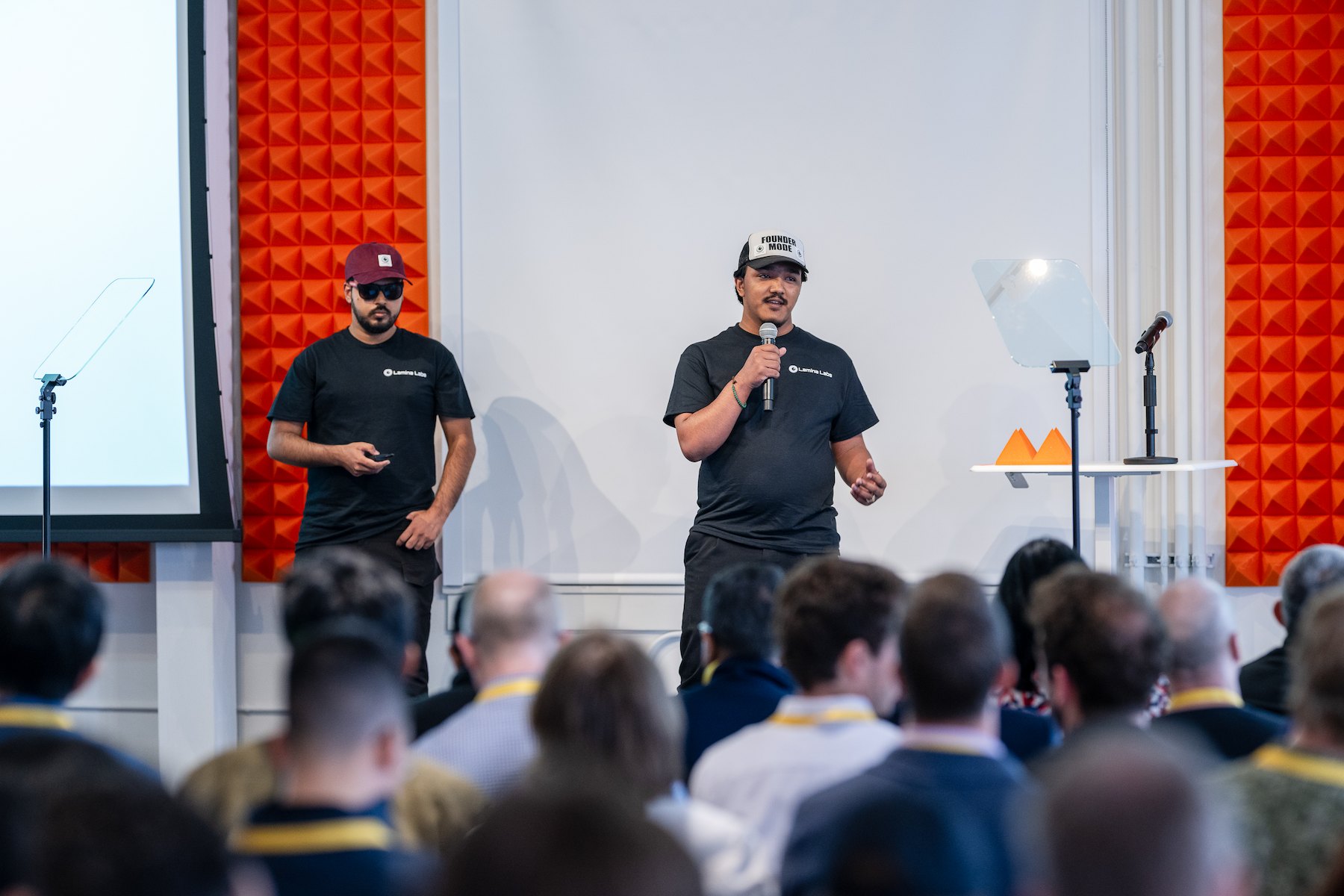
Just twelve days after launch, Lamina Labs had already amassed 4,000 users and 187 paying customers — and the company’s two founders hadn’t even finished pitching at Demo Day yet. That traction tells you almost everything you need to know about why the Lamina Labs YCombinator funding story is one of the most compelling startup narratives of 2026. Sudip Rokaya and Kartikesh Mishra, two Nepali MIT students, founded Lamina Labs in San Francisco, and what they built in stealth is now turning heads across the global EdTech and AI video sectors.
The deal closed fast. Remarkably fast. While each company at YC expects to talk to more than 100 investors before securing funding, the very first investor Lamina Labs spoke to was ready to commit the entire $3 million they were asking for. That’s not how startup fundraising is supposed to work — and yet, here we are.
What Is Lamina Labs and How Did Lamina Labs YCombinator Funding Come About?
Sudip Rokaya and Kartikesh Mishra knew each other back in Nepal but formally reconnected as students at the Massachusetts Institute of Technology (MIT) in Boston. They are now co-founders at Lamina Labs in San Francisco, working on generative video.
Lamina Labs is building infrastructure for near-real-time structured video generation. Most AI video is built for cinematic clips. Lamina is built for useful videos that teach and explain. Their first product, Simi, turns prompts, documents, and AI answers into whiteboard-style teaching videos in seconds.
The inspiration was personal. In high school, Rokaya did a lot of physics and was a visual learner who loved educational videos. He was inspired by YouTuber 3Blue1Brown, known for using animation and visuals to explain mathematics topics. Three months into a biology class at MIT that wasn’t clicking for him, Rokaya went looking for an AI tool that could teach him through video. None of what he found had particularly good products, and they didn’t seem to be improving much either. The problem seemed to be technical and not financial.
That gap became the business. Sensing an opportunity, Rokaya dove into research in late October, skipping classes, and concluded that the video generation process could be sped up 50x while also producing a better end product. He looped in Mishra, who had already worked for two San Francisco startups and needed little convincing.
Simi is a “deep tech” product — one that runs as close as possible to the machine, as opposed to an “LLM wrapper” that merely uses other models under the hood. That architectural choice gave it a structural edge over competitors who were building on top of commodity models.
Lamina Labs YCombinator Demo Day: The $3M Raise That Shocked Observers
Lamina Labs made history by becoming the first all-Nepali startup to receive funding from YCombinator, securing $500,000 from the accelerator — an outfit that accepts less than 1% of applicants. Getting in alone was a statement.
Then came the Lamina Labs YCombinator Demo Day moment that cemented the company’s reputation. On Demo Day, Y Combinator’s latest batch of startups present to an invite-only audience of approximately 1,000 investors and media. Most founders brace for a long road of investor conversations. Lamina Labs’ first investor told them not to raise with anyone else and just get to work. Rokaya said they were “actually having to decline other investors.”
The YCombinator Demo Day 2026 Spring cohort was, by multiple accounts, one of the strongest in the accelerator’s history. Rebel Fund, which has attended every YC Demo Day since 2013 and built a machine learning algorithm to score YC batches, found that 35% of W26 startups scored in the top 20% of all YC companies ever evaluated — a record no previous batch had come close to matching.
Lamina Labs participated in the Spring 2026 batch, giving the Nepali founders Lamina Labs a launchpad that few global startups ever access. YC’s standard investment deal is $500,000, and the portfolio includes 400+ companies above $100 million in valuation and 100+ companies above $1 billion.
How the Lamina Labs Founders MIT Background Shaped the Product
The technical roots of Lamina Labs run deep. Kartikesh Mishra, Lamina Labs’ Chief Technical Officer, studied Electrical Engineering and Computer Science at MIT and completed a Master’s in Engineering before moving to San Francisco. Rokaya, meanwhile, was still on leave from his Math and Computer Science undergraduate program when the company launched.
From the quality standpoint, Rokaya and Mishra followed an intense iterative process that involved making small tweaks to the product, solving what was not working, and continuously evaluating the end product. That discipline — familiar to anyone who’s been through MIT’s engineering culture — shows up in the architecture of Simi itself.
The technology is deterministic, ensuring that every frame is mathematically precise. This is a critical feature for educational content where accuracy is paramount, and it directly addresses a common issue in AI video generation where physical or mathematical concepts can be misrepresented.
The Lamina Labs founders MIT connection also shaped their ambitions for accessibility. Rokaya said: “As we are both from Nepal, we wanted Nepalis to be able to afford the tool, and deploy it through cheap servers which cuts costs.” He believes Simi could help teachers in isolated areas of Nepal like where he grew up.
Lamina Labs AI Video Funding: Why Investors Moved Instantly
The Lamina Labs AI video funding story makes much more sense when you look at the market surrounding it. The AI in education market was valued at $8.3 billion in 2025 and is projected to grow from $11.4 billion in 2026 to $57.2 billion by 2033, at a CAGR of 25.9%. That’s not a niche — that’s a generational infrastructure shift.
Education and e-learning already account for 19% of all AI-generated videos, making it the second-largest category after marketing. And the format Lamina Labs chose — explainer video — happens to be the single most dominant use case. Product demos and explainer videos are the number-one use case in AI video, accounting for 31% of total AI video output.
The investor saw traction that validated the thesis immediately. Twelve days after launch, the company had 4,000 users, 187 of them paying customers — including small and home businesses in Kentucky and Florida, and even pet daycares using the tool to make clients educational videos about dog vaccinations. That kind of spontaneous, cross-industry adoption is rare at that stage.
Simi generates whiteboard-style educational videos from text prompts in 80 languages, including Nepali, offering multiple aspect ratios and voice options. The multilingual capability alone opens up markets that English-only tools can’t reach. Y Combinator itself publicly described Lamina Labs as “building the fastest infra for explainer videos,” noting that Simi turns any prompt or document into a whiteboard-style explainer video in seconds, across 80+ languages.
Lamina Labs 3 Million Funding: What Happens With the Capital
The startup has secured $500,000 from YCombinator and an additional $3 million in funding. The priorities for deploying that Lamina Labs 3 million funding are clear and focused.
With the funding secured, Rokaya and Mishra plan to hire more engineers. Up to now, it has just been the two of them. Two people building and shipping a product with 4,000 users and real paying customers is extraordinary — but it also means the engineering ceiling is very real. Bringing in new technical talent is the immediate unlock.
Here’s what makes their plan credible:
- Deep-tech infrastructure advantage: Lamina Labs is building infrastructure for near-real-time structured video generation. Most AI video is built for cinematic clips. Lamina is built for useful videos that teach and explain.
- API-first scalability: The company positions Simi as a visual layer that EdTech AI applications can call when they need paced explanations, with one-call generation through the lamina-sdk for agents and developer tools.
- Accessibility as a moat: The pricing is intentionally affordable to serve markets like Nepal, which competitors with higher cost structures simply cannot match.
The Bigger Picture: Nepali Founders Lamina Labs and a Growing Wave
This story is bigger than one company. Nepal’s IT exports crossed $1 billion in 2025, and over $200 million in venture capital has been deployed into the ecosystem. The success of the Nepali founders Lamina Labs reflects a broader and accelerating trend of Nepali technologists making a global mark.
Fusemachines, founded by Dr. Sameer Maskey, a computer scientist and Columbia University professor of Nepali origin, grew from a small startup in Kathmandu into a global innovator. In late 2024, Fusemachines achieved a monumental milestone by becoming the first company founded by a Nepali entrepreneur to be listed on the NASDAQ stock exchange.
Lamina Labs could be the next landmark in that trajectory. The shared Nepali background has been a major help for the co-founders. As Rokaya noted, “A lot of startups break down because the founders cannot get along over time.” Cultural compatibility and shared origin story are underrated in startup co-founder dynamics — and for Rokaya and Mishra, it’s clearly an asset.
Rokaya does offer a note of caution for those inspired by their journey. “People say they want to do startups, it sounds cool. But most of the time they are not ready at all,” he says. The implication: the glamour of the story shouldn’t obscure the grind that built it.
What the Lamina Labs Story Means for Founders Watching This Space
The Lamina Labs YCombinator funding trajectory carries lessons that extend well beyond Nepal or EdTech. First, solving a personal, deeply-felt problem beats chasing a trend. Second, deep technical differentiation — building close to the machine rather than wrapping existing APIs — creates defensibility that investors can see and believe in. Third, early traction talks louder than any pitch deck.
The AI video generator market reached $716 million in 2025 and is projected to hit $3.35 billion by 2034 at an 18.8% CAGR. AI video grows 3.6 times faster than the broader video editing category. Lamina Labs is entering that race not as a generalist but as a specialist — infrastructure for educational and explanatory video — and that positioning matters enormously in a crowded field.
If you’re a founder, an investor, or an EdTech builder watching this space: pay attention to Lamina Labs. They built a real product, with real users, in real time — and they did it as a two-person team from Nepal operating out of San Francisco. The funding followed the work, not the other way around. That’s the model.
Conclusion: A Milestone Worth Watching
The Lamina Labs YCombinator funding win is more than a funding announcement. It’s a proof of concept — for immigrant founders, for deep-tech EdTech, and for the idea that a whiteboard-style video tool built by two MIT students from Simikot and Kathmandu can outperform incumbents with far more resources. Lamina Labs is the first all-Nepali startup funded by YCombinator, which has an acceptance rate below 1%. That alone is historic.
The $3.5 million total raised (including the YC standard deal) gives Rokaya and Mishra the runway to scale their infrastructure, hire engineers, and pursue the markets — education, corporate training, small business — where Simi is already generating genuine excitement. Follow Lamina Labs directly and keep an eye on their product roadmap. This is one to watch.
Frequently Asked Questions
What is the Lamina Labs YCombinator funding amount?
Lamina Labs secured $500,000 from YCombinator and an additional $3 million in follow-on funding, bringing total capital raised to $3.5 million.
Who are the founders of Lamina Labs?
Lamina Labs was founded in 2025 by Kartikesh Mishra and Sudip Rokaya. Both are of Nepali origin and met as students at MIT in Boston.
What does Lamina Labs’ product Simi do?
Simi generates whiteboard-style educational videos from text prompts in 80 languages, including Nepali, offering multiple aspect ratios and voice options.
When did Lamina Labs present at YCombinator Demo Day 2026?
YC was holding Demo Day from June 8 to 16, where founders present their product in front of a thousand potential investors. Lamina Labs participated as part of the Spring 2026 batch.
How quickly did Lamina Labs grow after launching Simi?
Twelve days after launch, the company had 4,000 users, 187 of them paying customers. Their user base spanned small businesses across the US and internationally.
Is Lamina Labs the first Nepali startup backed by YCombinator?
Yes. Lamina Labs is the first all-Nepali startup funded by YCombinator, which has an acceptance rate below 1%.
What are the founders planning to do with the $3M in funding?
The founders plan to use the funding to hire additional engineers and scale the platform. Up to the time of the raise, Rokaya and Mishra had been the only two people building the product.