
Italian AI Startup Alomana Secures €4M Seed Round to Automate Enterprise Workflows

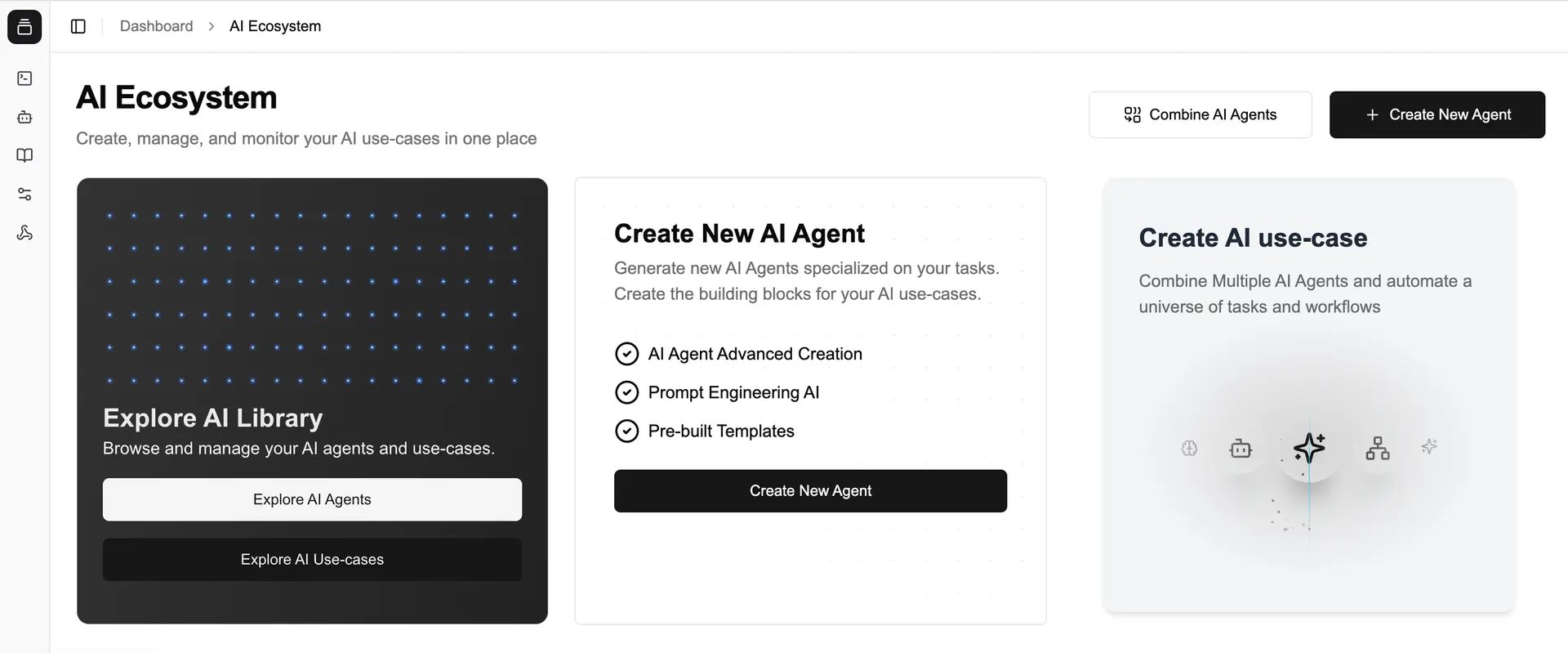
Italian AI startup Alomana has closed a €4 million seed round — and it arrives at precisely the right moment. The global workflow automation market is already valued at nearly $24 billion, with no deceleration in sight. Backed by Italian venture firm Club degli investitori and London-based startup studio Founders Factory, this capital infusion positions Alomana to accelerate its enterprise AI autonomy platform across new industries and markets. Smart money is flowing hard into agentic AI. Italian AI startup Alomana has just made its move.
The €4M Seed Round: What’s Powering Italian AI Startup Alomana
Italian ai startup funding has been building quiet momentum for years, but this round carries genuine strategic weight. While the global AI machine has been consuming tens of billions — AI captured close to 50% of all global venture funding in 2025, up from 34% in 2024 — Europe’s more disciplined seed rounds tell a different story about focused innovation. Alomana’s raise is compact, purposeful, and backed by two investors who bring more than capital to the table.
Club degli investitori is one of Italy’s most active angel and seed-stage investment networks, with deep roots in the country’s growing tech ecosystem. Founders Factory, meanwhile, is a London-based venture studio known for helping operationally strong startups scale beyond their early traction. Together, they blend local Italian market knowledge with international operational firepower — a combination that makes sense for a startup targeting global enterprises from a southern European base.
Seed funding enterprise ai rounds like this one carry outsized strategic significance. At the seed stage, it’s not yet about scale. It’s about signal: does this team understand the problem deeply enough to build something irreplaceable? With just nine employees, Alomana’s operational efficiency is already striking. Earning Fortune 500 adoption with a team this lean suggests the product is doing real, demonstrable work.
Here’s what italian ai startup funding at the seed stage typically covers across rounds like this:
- Product development: Deepening core AI agent capabilities, expanding vertical-specific configurations, and investing in model accuracy improvements that enterprise clients demand before committing to production deployments.
- Commercial expansion: Building enterprise sales infrastructure, channel partnerships, and industry-specific go-to-market strategies to convert early adopters into long-term accounts.
- Talent acquisition: Bringing on senior engineers, enterprise sales specialists, and compliance experts to handle the complexity of scaling into regulated industries.
- Infrastructure scaling: Ensuring that the platform can support growing client workloads with the reliability and security guarantees enterprises require.
Seed funding enterprise ai earmarks like these set the operational foundation that separates promising demos from deployable products. Alomana’s raise is squarely aimed at that transition.
Inside the Alomana AI Platform
The alomana ai platform is built around a deceptively simple idea: enterprises have far too many critical workflows still running on manual labor, and that’s a solvable engineering problem. Rather than deploying generic chatbots or one-size-fits-all automation scripts, Alomana builds what it calls specialized AI agent teams — coordinated systems that combine symbolic logic with generative AI to outperform zero-shot prompting on complex, multi-step enterprise tasks.
Zero-shot prompting is essentially asking a brilliant but context-free system to handle critical business work without institutional knowledge. Alomana’s approach is different. The alomana ai platform trains agents to carry organizational context, adapt to real-time inputs, and operate consistently across thousands of transactions without drifting or hallucinating. That consistency isn’t a luxury in enterprise environments — it’s the baseline requirement.
The platform currently targets five high-impact enterprise functions:
- Operations management: Automating repetitive operational workflows, resource allocation, and real-time process monitoring across departments.
- Risk analysis: Continuous data processing and risk scoring across large enterprise datasets, reducing the lag between data generation and actionable insight.
- Sales automation: AI-driven pipeline management, intelligent lead scoring, and personalized customer engagement at scale.
- KYC compliance: Automated identity verification, document processing, and regulatory compliance workflows — critical for financial services firms operating under strict oversight.
- Marketing intelligence: Campaign performance optimization, behavioral prediction, and multi-channel outreach personalization driven by real-time analytics.
The alomana ai platform’s architectural edge lies in its hybrid design. Pure large language model systems can hallucinate or produce inconsistent outputs in production environments with high-stakes consequences. Symbolic reasoning provides a structurally stable layer that keeps agents auditable, consistent, and compliant — exactly what enterprises in banking, insurance, and healthcare need before trusting AI with mission-critical processes.
The Exploding Market for AI Business Process Automation
The ai business process automation space isn’t just growing. It’s experiencing a structural transformation driven by genuine enterprise pain. The global intelligent process automation market was valued at $14.55 billion in 2024 and is projected to reach $44.74 billion by 2030, registering a 22.6% compound annual growth rate. Those numbers aren’t driven by hype cycles. They reflect real operational inefficiencies that organizations are finally willing to pay to eliminate.
The scale of the problem is staggering. 54% of office workers spend more time searching for files than doing actual work — a statistic that alone justifies the investment case for ai business process automation. Nearly two-thirds of CFOs now list task automation as a strategic priority. Enterprises that hesitate are watching their competitors shorten cycle times, reduce error rates, and reallocate talent toward higher-value work.
Agentic AI startups attracted $2.8 billion in venture funding during H1 2025 alone, and enterprise AI revenue reached $37 billion in 2025 — more than tripling year over year. Institutional capital is voting clearly on which way this market is heading. Alomana’s €4M raise positions it directly inside the ai business process automation wave, with a product architecture built for the specific demands of enterprise deployment rather than consumer applications.
Intelligent Workflow Solutions Built for Real Enterprise Demands
The most important question in the intelligent workflow solutions space isn’t whether AI can automate a task in a controlled demo. Any reasonable platform can do that. The real question is whether it can do so reliably, securely, and in a way that satisfies legal and audit requirements across multiple regulatory regimes simultaneously.
Alomana addresses this reality head-on. Its platform builds security and compliance into every agent’s core design rather than treating them as bolt-on features. Enterprises deploying intelligent workflow solutions at scale need role-based access controls, explainability logs for agent decisions, and seamless integration with existing data governance frameworks. These aren’t differentiators — they’re table stakes. Alomana gets that distinction right.
The intelligent workflow solutions market is also fracturing into two distinct camps: broad horizontal platforms that try to automate everything for everyone, and deep vertical specialists that build for the complexity of a specific industry. Alomana’s move toward vertical-specific agent configurations for banking, KYC, and financial risk puts it firmly in the specialist camp. The banking, financial services, and insurance sector dominated intelligent process automation in 2024, and Alomana’s platform design maps almost precisely to that sector’s compliance-heavy workflow profile.
Italian AI Startup Alomana and the Drive for AI for Enterprise Efficiency
Italy’s technology ecosystem is maturing faster than many international observers have recognized. Milan-based Contents recently secured €5.9 million for its own AI workflow platform, expanding into new markets across the Middle East. Italian AI startup Alomana now joins that growing wave of serious, product-first AI companies emerging from a country long underestimated as a tech hub.
Ai for enterprise efficiency has historically been dominated by US and Northern European players. Alomana’s emergence signals something meaningful: technical depth, combined with proximity to complex, compliance-heavy European enterprise environments, can produce world-class products. The company’s name reflects this philosophy. “Alo” is the Polynesian word for presence; “Mana” refers to the life-force that empowers action. Combined, they describe AI that doesn’t merely respond to commands but genuinely acts with purpose and precision.
The business case for ai for enterprise efficiency has never been stronger or more clearly supported by data. By 2026, 30% of enterprises are expected to have automated more than half of their operational processes. Alomana’s deployment model — fast integration, minimal disruption to existing systems, agent teams tailored to specific business functions — directly tackles the single biggest barrier to enterprise AI adoption: implementation complexity. Most enterprise software projects fail not because the technology is wrong but because deployment cycles are too long and too painful. Alomana built its platform to attack that problem specifically.
The Case for Moving on Enterprise AI Now
Italian AI startup Alomana’s seed round sends a clear, unambiguous signal to enterprise decision-makers: early adoption windows are real, and they close. Companies that begin experimenting now with autonomous AI agent platforms will build internal expertise, develop proprietary use cases, and establish competitive moats well before late-movers scramble to deploy whatever the market consensus eventually decides is standard.
The practical questions to start with are direct. Which of your current workflows consume the most human hours on repetitive, rule-bound tasks? Where are compliance bottlenecks creating operational lag? Can your organization afford a 12-month implementation cycle, or do you need AI that deploys and delivers in weeks? Alomana is specifically designed to answer that last question fast.
Frequently Asked Questions
What does Italian AI startup Alomana actually do?
Alomana builds an enterprise AI autonomy platform that deploys specialized AI agent teams to automate core business functions, including operations, risk analysis, sales, KYC, and marketing. Its agents combine symbolic logic with generative AI to deliver consistent, auditable outputs that meet enterprise security and compliance requirements.
Who invested in Alomana’s €4M seed round?
The round was backed by Club degli investitori, one of Italy’s most active early-stage investment networks, and Founders Factory, a London-based venture studio known for operationally focused startup building. Together, they bring both local Italian ecosystem expertise and international scaling experience.
How does the Alomana AI platform differ from standard chatbots or automation tools?
Unlike generic chatbots or rule-based automation scripts, the Alomana AI platform deploys coordinated teams of AI agents that carry organizational context, adapt in real time, and execute complex multi-step workflows with consistent accuracy. Its hybrid architecture — symbolic logic combined with generative AI — prevents the hallucination and output drift that can compromise pure LLM-based enterprise systems.
Why is AI business process automation attracting so much investment right now?
The market fundamentals are compelling. The intelligent process automation sector is projected to nearly triple in value by 2030, driven by measurable enterprise inefficiencies, rising CFO pressure to automate, and the maturation of AI agent technology that can now reliably handle complex, multi-step enterprise tasks at scale.
What industries does Alomana primarily target?
Alomana’s platform is particularly well-suited for financial services, banking, and insurance — industries with high workflow complexity, strict compliance requirements, and significant volumes of repetitive, data-heavy tasks such as KYC verification, risk analysis, and regulatory reporting.
What role does Founders Factory play beyond the funding?
Founders Factory functions as a venture studio, not just a financial backer. Beyond capital, it typically provides operational support, strategic mentorship, and go-to-market guidance — helping early-stage startups build toward Series A readiness faster than they could with a passive investor relationship.
How significant is this raise in the context of Italian startup ecosystem growth?
It’s a meaningful data point. Italian AI startups have been increasingly attracting serious institutional attention, with several Milan-based companies securing multi-million euro rounds across AI, fintech, and workflow automation sectors in 2024–2025. Alomana’s raise, with international co-investors like Founders Factory alongside a domestic network, reflects the maturation of Italy’s ability to produce globally competitive AI companies.