
AI Medical Testing Gets a $33M Boost: Inside Waiv, the Owkin Spinout Changing Oncology

The global AI diagnostics market, valued at $1.62 billion in 2024, is projected to reach $8.08 billion by 2032 — and one Paris-based startup just placed a very clear $33 million bet on leading that transformation. Waiv, an Owkin spinout formerly known as Owkin Dx, announced its financing round on March 12, 2026, drawing immediate attention across European healthtech. At its core, the company is reinventing ai medical testing for the oncology era: making it faster, cheaper, and deployable in any lab on the planet. Co-led by OTB Ventures and Alpha Intelligence Capital (AIC), with participation from Serena Data Ventures, Karista, and SistaFund, the raise isn’t just about money. It’s a statement of intent.
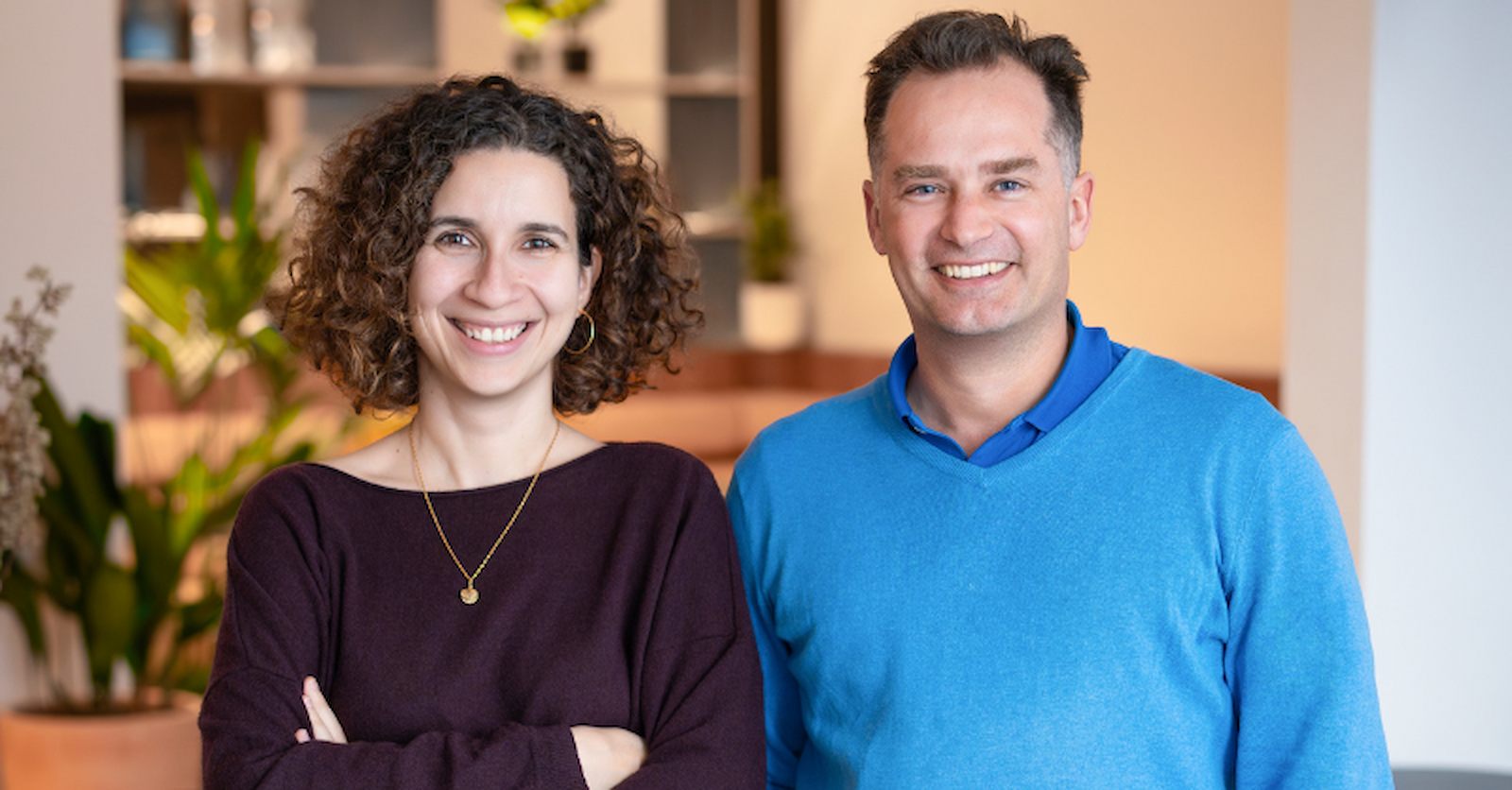
CEO and Co-founder Meriem Sefta, alongside co-founder Lionel Guillou, both come directly from Owkin — inheriting a research pedigree that most startups spend a decade trying to build. The goal Sefta has publicly set? Make ai medical testing the global clinical standard, not an elite privilege.
From a Decade of Owkin Research to Real-World AI Medical Testing
Owkin was founded in Paris in 2016 by clinical research doctor Thomas Clozel and AI professor Gilles Wainrib. The company spent years developing some of Europe’s most rigorous medical AI infrastructure, eventually raising over $255 million and achieving unicorn status in November 2021 through a $180 million Sanofi investment. Waiv inherits the best of that institutional knowledge. Specifically, it draws on proprietary AI models trained on multimodal patient data, deep pharmaceutical partnerships, and a decade of clinical validation workflows.
That foundation alone is worth serious attention. Waiv’s platform plugs directly into the PortrAIt consortium, one of Europe’s largest multi-institutional precision medicine datasets. This data underpins Waiv’s clinical diagnostics automation software — a stack that integrates histopathology analysis, biomarker prediction, and patient outcome modeling under one roof. Very few companies at this stage can claim a research backbone like this.
Thomas Clozel, Owkin’s CEO, has been clear about the philosophy: building AI models isn’t enough. You need real-world clinical feedback to ensure those models actually work across diverse patient populations and healthcare settings. Waiv’s spinout exists precisely to close that loop — taking validated research into full clinical deployment at global scale.
The Technology Stack Powering Waiv’s Clinical Diagnostics Automation Software
Waiv does something elegant. It takes routine digital pathology slides — the kind generated in labs every single day — and extracts biomarker intelligence from them using AI. No expensive next-generation sequencing. No weeks-long processing pipelines. Just standard haematoxylin and eosin (H&E) slides, run through Waiv’s foundation models, producing actionable results in minutes.
This is where ai powered pathology tools are genuinely transforming medicine. Traditional diagnostics require separate molecular testing pipelines that are slow, costly, and inaccessible in many geographies. Waiv’s models detect gBRCA mutations, microsatellite instability (MSI) markers, and prognostic cancer risk signals directly from routine slide data. Three products currently anchor the portfolio:
- RlapsRisk BC — A prognostic tool that predicts breast cancer relapse risk after initial treatment, giving oncologists critical information for treatment planning.
- MSIntuit — Developed in partnership with MSD since 2023, this tool identifies MSI-enriched patient populations who are most likely to benefit from immunotherapy.
- BRCAura — A collaboration with AstraZeneca that uses AI to prescreen patients for gBRCA mutations in breast cancer, directly from H&E slides — no separate genetic test needed.
Each tool reflects the same design principle: ai medical testing must work within what clinicians already do, not create new parallel workflows that drain time and budget. This clinical diagnostics automation software is not a concept — it’s live in hospitals now.
Destra: Solving the Medical Lab Automation Technology Problem
Medical lab automation technology fails, more often than not, because it demands complete IT transformations from hospitals that have neither the budget nor the appetite for that disruption. Waiv’s Destra platform attacks this problem head-on. It’s an interoperable digital pathology deployment system designed to plug directly into whatever lab information or pathology management system a hospital already runs.
Destra allows pathologists and labs to run Waiv’s full suite of tests within their existing workflows — no overhaul required. This is a genuinely significant engineering achievement. It means a hospital in Lyon, a clinic in Seoul, and a cancer center in Houston can all deploy Waiv’s AI tests with the same infrastructure they already have. Scalability doesn’t require uniformity. That’s a competitive advantage competitors will struggle to replicate quickly.
The team at Gustave Roussy, France’s premier oncology research center, has co-developed tools with Waiv and serves as a flagship clinical validation partner — lending real-world credibility to the platform’s clinical diagnostics automation software.
AI Powered Pathology Tools and the Race for Precision Oncology
The competitive landscape for ai powered pathology tools is heating up fast. Tempus and Guardant Health own the genomics-first side of molecular diagnostics. PathAI has carved out strong territory in computational pathology. Sopra Steria brings enterprise IT reach. Yet none of them offer what Waiv does: a single integrated stack of validated AI tests, multimodal analytics, and a plug-and-play deployment layer.
Waiv converts routine pathology slides into high-resolution maps of disease biology, delivering generalizability across different clinical settings without requiring infrastructure overhauls. That combination of depth and accessibility is rare. Karol Szubstarski from OTB Ventures described it as “the level of technological advancement and maturity that oncology has been waiting for” — and that framing matters when positioning Waiv as next generation diagnostic platforms rather than another point solution.
The AI in Precision Medicine market is projected to grow at a 33.18% CAGR, reaching $10.24 billion by 2032. Growth at that scale will concentrate around platforms that demonstrate real clinical impact. Waiv’s track record of live deployments, pharma partnerships, and continuous data feedback loops makes it a strong contender for category leadership.
Scaling AI Healthcare Startups: The Investment Case for Waiv
The broader environment for scaling ai healthcare startups has never been stronger. AI-enabled digital health startups raised 83% more per deal than non-AI companies in 2025, reflecting investor conviction in validated AI platforms. Waiv’s $33 million round aligns perfectly with this premium.
What makes the investor lineup particularly notable is its strategic coherence. OTB Ventures focuses on deep technology in emerging European markets. Alpha Intelligence Capital has a dedicated thesis around enterprise AI platforms. Together, they’re signaling that Waiv sits at the intersection of two of the hottest investment themes in 2026. Over 70% of large hospital systems worldwide now use AI in at least one clinical domain — meaning Waiv’s customers aren’t skeptics. They’re buyers actively searching for scalable, proven solutions.
Biotech spinout funding trends are increasingly rewarding exactly this profile: a company with clinical proof points, revenue-generating pharma partnerships, and an experienced founding team. Waiv checks every box.
Biotech Spinout Funding Trends: A Blueprint That Works
Waiv isn’t the first successful entity to emerge from Owkin’s incubation model. Bioptimus, a foundation model AI company, was launched out of Owkin in February 2024 and has since attracted its own investor attention. This serialized spinout approach is becoming a defining biotech spinout funding trend — allowing parent companies to maintain strategic focus while letting specialist teams run faster as independent entities.
The model works because independence changes incentives. Waiv’s team isn’t competing internally for resources or navigating corporate approval chains for sales decisions. They own the outcome. That accountability accelerates product development, commercial traction, and regulatory filing timelines in ways that internal product divisions rarely achieve. For investors, the spinout also offers cleaner exposure — a focused bet on ai medical testing in oncology, without the diversified noise of a larger parent company.
Next Generation Diagnostic Platforms: What Waiv’s $33M Unlocks
Waiv’s deployment of capital breaks down into three clear priorities: expanding the clinical-grade test portfolio, strengthening pharmaceutical partnerships, and entering new geographies — particularly Asia and North America. On the regulatory front, the FDA approved 223 AI-enabled medical devices in 2023, up from just six in 2015, a trajectory that strongly favors companies with real-world clinical evidence already in hand.
Building next generation diagnostic platforms at global scale requires more than capital, though. Waiv needs to hire clinical scientists, AI engineers, and commercial teams who understand both hospital procurement cycles and pharma drug development timelines. The $33 million gives Sefta and Guillou the runway to do all of this without cutting corners on scientific depth. Medical lab automation technology that works at scale must be built carefully — Waiv appears to understand this better than most.
The New Standard Is Being Set Right Now
Waiv’s emergence as an independent company is a marker of where ai medical testing actually stands in 2026: no longer experimental, no longer optional. Oncologists need faster biomarker data. Drug developers need better patient stratification. And patients — everywhere, not just at elite academic centers — deserve precision medicine that actually reaches them. Waiv’s clinical diagnostics automation software, grounded in a decade of Owkin research and now turbocharged by $33 million, is one of the most credible attempts to deliver all three at once. The funding is the accelerant. The science is the foundation. The ambition to make ai medical testing the global standard is the north star. If early deployments are any indication, oncology’s next standard of care might just be running on a server in Paris.
Frequently Asked Questions
What is Waiv and how is it connected to Owkin?
Waiv is a Paris-based AI precision testing startup that spun out from Owkin, a French-American biotech company, in March 2026. It formerly operated internally as Owkin Dx before becoming an independent company with its own $33 million in funding. Waiv retains a strategic partnership with Owkin and continues to benefit from Owkin’s patient validation ecosystem.
What does Waiv’s AI platform actually do in clinical settings?
Waiv’s platform analyzes routine digital pathology slides using proprietary AI foundation models to detect cancer biomarkers, predict patient outcomes, and identify cancer subtypes — all without requiring expensive next-generation sequencing. Clinicians get actionable results in minutes rather than weeks, directly within their existing pathology workflows via the Destra deployment platform.
Who led the $33 million funding round for Waiv?
The round was co-led by OTB Ventures and Alpha Intelligence Capital (AIC), with additional participation from Serena Data Ventures, Karista, and SistaFund. The investment coincided with Waiv’s formal spinout from Owkin.
What is Destra, and why does it matter?
Destra is Waiv’s interoperable digital pathology deployment platform. It integrates directly into existing hospital and lab IT systems, enabling clinicians to run Waiv’s full suite of AI-powered diagnostic tests without any costly infrastructure overhaul. This compatibility is central to Waiv’s ability to scale globally across diverse healthcare environments.
How does Waiv compare to competitors like PathAI or Tempus?
While competitors tend to specialize in either genomics (Tempus, Guardant) or computational pathology (PathAI), Waiv uniquely combines validated AI tests, multimodal data analytics, clinical pharma partnerships, and an interoperable deployment platform in one integrated stack. This end-to-end approach gives Waiv a broader clinical and commercial footprint.
What is the projected market size for AI medical diagnostics?
The global AI in Diagnostics market was valued at approximately $1.62 billion in 2024 and is forecast to grow at a 22.31% CAGR to reach $8.08 billion by 2032. The adjacent AI in Precision Medicine segment is growing even faster, at a projected 33.18% CAGR, reaching $10.24 billion by 2032.
What will Waiv do with its $33 million in funding?
Waiv plans to expand its portfolio of clinical-grade AI diagnostic tests, deepen its partnerships with global pharmaceutical companies, and accelerate international expansion into North America and Asia — building on its existing validated deployments across European clinical settings.
