
IndiGo CEO Change: Rahul Bhatia Steps In as Interim Chief After Pieter Elbers Resigns

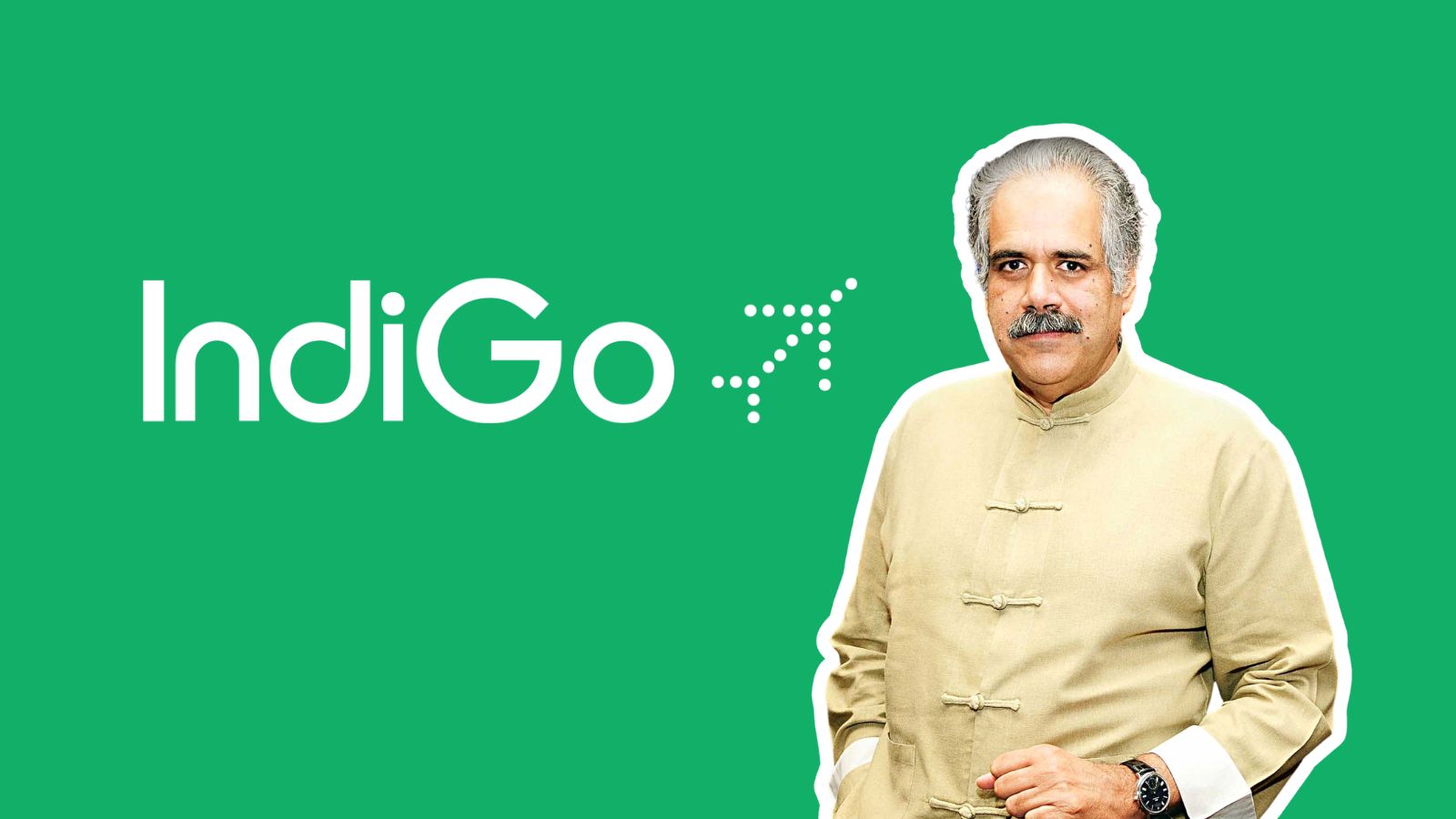
India’s largest airline just experienced its most dramatic leadership shake-up in years. On March 10, 2026, InterGlobe Aviation confirmed that CEO Pieter Elbers resigned with immediate effect, triggering an IndiGo CEO change that sent shockwaves through India’s aviation sector. Elbers cited personal reasons. His notice period was waived the same evening. Managing director and co-founder Rahul Bhatia stepped in as interim chief — and the timing could not have been more loaded, arriving just three months after the worst operational crisis in IndiGo’s two-decade history.
What Sparked the IndiGo CEO Change?
The Pieter Elbers departure reasons are officially documented as “personal” in his resignation letter. But context tells a far more turbulent story. Between December 3 and 5, 2025, IndiGo cancelled more than 2,500 flights and delayed nearly 1,900 others, stranding over 300,000 passengers across the country. The chaos stemmed directly from a botched rollout of India’s new Flight Duty Time Limitation (FDTL) regulations, designed to curb pilot fatigue — but implemented without adequate manpower planning on IndiGo’s part.
The fallout was immediate. India’s civil aviation regulator, the DGCA, slapped a record fine of ₹22.20 crore on the airline and issued show-cause notices directly to Elbers. He survived the initial calls for his resignation, but the pressure never fully lifted. As Skift noted, the December crisis exposed deep weaknesses in crew scheduling and crisis response. Although the Pieter Elbers departure reasons are listed as personal, internal sources indicate Bhatia himself referenced the crisis in a memo to staff, calling what happened something that “should never have taken place.”
The entire board meeting ran a swift fifteen minutes — from 5:30 PM to 5:45 PM IST. Decisive, blunt, and unmistakably final.
Rahul Bhatia IndiGo Founder: The Man Who Built the Blue Airline
Before unpacking the IndiGo management reshuffle implications, it helps to understand who exactly has taken the helm. The Rahul Bhatia IndiGo founder story is rooted in engineering instincts, entrepreneurial grit, and decades of quiet leadership. IndiGo was incorporated in 2005 by Bhatia’s InterGlobe Enterprises and co-founder Rakesh Gangwal, a veteran who had previously led US Airways. The airline took delivery of its first Airbus A320 in July 2006 and launched commercial operations on August 4, 2006, with its maiden flight on the Delhi–Guwahati–Imphal route.
Bhatia graduated with an electrical engineering degree from the University of Waterloo in Canada, then worked briefly with IBM before joining United Airlines in Chicago — where he first crossed paths with Gangwal. He returned to India and founded InterGlobe Enterprises in 1989, eventually parlaying it into the country’s most dominant aviation holding company. His firm holds approximately 35.69% of InterGlobe Aviation’s stock, making him the single largest promoter. Forbes estimates his net worth at $6.5 billion.
This Rahul Bhatia IndiGo founder background matters because it explains the market’s calm response to the leadership switch. He did not parachute in from outside. He built this carrier from scratch, brick by runway brick, and the airline’s institutional memory lives in him.
IndiGo Management Reshuffle Implications: What Does This Really Mean?
Every major IndiGo CEO change carries consequences, and this one reshapes the airline’s trajectory across three critical dimensions. The IndiGo management reshuffle implications span operational credibility, investor confidence, and strategic direction simultaneously.
On operations, Bhatia has signalled clearly where his priorities lie. His official statement stressed culture, service excellence, and stakeholder trust — language that maps directly back to IndiGo’s founding DNA as a low-cost, high-punctuality carrier. IndiGo historically ranked among India’s most on-time airlines, but the December 2025 crisis bruised that reputation. Rebuilding it is Job One.
Strategically, analysts at HSBC believe the airline is unlikely to make dramatic pivots under Bhatia’s interim tenure. The 500-aircraft Airbus order — placed during Elbers’ watch — remains firmly in place. The carrier still operates 400+ aircraft across 2,200+ daily flights, connecting 95+ domestic and 40+ international destinations, having welcomed 124 million customers in calendar year 2025. The IndiGo management reshuffle implications are more cultural than structural: a shift from global-expansion ambition back toward operational precision and cost discipline.
That recalibration, it turns out, is exactly what investors wanted to hear.
Airline Interim CEO Challenges Ahead for Bhatia
Running the world’s sixth-busiest airline in an interim capacity is never straightforward. The airline interim CEO challenges facing Bhatia are significant and varied:
- Operational trust: Tightening crew scheduling, ensuring full FDTL compliance, and restoring IndiGo’s reputation for punctuality after December’s debacle.
- Regulatory pressure: The DGCA directed IndiGo to furnish a ₹50-crore bank guarantee to ensure long-term systemic corrections. Delivery on that commitment is non-negotiable.
- CEO succession: The board has begun the search for a permanent leader and promises an announcement “in short order.” Who takes over will define IndiGo’s next decade.
- Global turbulence: Ongoing Middle East conflict is disrupting Gulf airspace — a near-term risk for IndiGo’s growing international network.
- Financial health: The airline logged a 77.55% year-on-year profit decline in Q3 FY26, with consolidated profit falling to ₹549.8 crore — though revenue rose 6.2% YoY to ₹23,471.9 crore.
These airline interim CEO challenges are formidable. But Bhatia is not walking into the unknown. He built this airline, survived a co-founder fallout, navigated a pandemic, and emerged as the dominant force in Indian aviation. He knows its bones better than anyone.
IndiGo Operational Disruptions 2025: The Crisis That Changed Everything
No honest account of this IndiGo CEO change is complete without revisiting the IndiGo operational disruptions 2025 that set this entire chain of events in motion. India’s new FDTL rules imposed longer mandatory rest periods for pilots and significantly reduced permissible night-flying hours. Sound policy — but IndiGo failed to plan adequately for the transition.
The consequences were catastrophic. Between December 1 and 9, the airline cancelled over 4,200 flights, leaving hundreds of thousands of passengers stranded across airport terminals. Social media erupted. News channels ran live coverage. Passengers slept on airport floors. For an airline with a market share north of 60%, this wasn’t just a corporate stumble — it paralysed significant portions of India’s entire air travel network.
The IndiGo operational disruptions 2025 drew sharp comparisons to crew-shortage crises at other large carriers globally, but IndiGo’s scale amplified the damage. As India’s largest carrier by domestic market share — commanding approximately 64% as of mid-2025 — its failure hurt millions of travelers and exposed a systemic dependency that regulators and passengers alike could not overlook. The DGCA’s record fine and the show-cause notices sent directly to Elbers drew a clear line of accountability straight to the top.
IndiGo Stock Reaction to CEO Change: Markets Say Yes
Here is where the story gets genuinely counterintuitive. Conventional wisdom says a surprise CEO exit spooks markets. Not here. The IndiGo stock reaction CEO change was notably positive. Shares of InterGlobe Aviation rose as much as 3% on March 11, touching ₹4,512.90 on the NSE — a meaningful recovery after the stock had slid 21.4% since December’s cancellation nightmare.
The IndiGo stock reaction CEO change reflected something analysts had quietly been flagging for weeks: the market did not view Elbers’ departure as a loss but as a necessary reset. Brokerage firm Jefferies noted that “historically, leadership transitions have been smooth, with founder oversight ensuring continuity.” HSBC concurred, expecting Bhatia to sharpen focus on reliability rather than aggressive expansion. Market analysts broadly viewed Bhatia’s return as stabilizing — a co-founder stepping back in to right a listing ship. InterGlobe Aviation’s market capitalisation on the day stood at approximately ₹1,72,085 crore.
Investors weren’t celebrating a resignation. They were celebrating accountability.
What’s Next for IndiGo?
The board has confirmed it has launched the search for a permanent CEO successor, with the announcement expected soon. Whoever eventually takes over will inherit an airline that simultaneously holds India’s dominant market position and carries the scar tissue of its worst-ever crisis. The next leader’s to-do list will be demanding.
Their priorities will likely center on restoring IndiGo’s celebrated on-time performance, managing the massive 500-aircraft Airbus order pipeline, expanding international routes without sacrificing operational stability, rebuilding trust with the DGCA and passengers, and steering the airline through the geopolitical uncertainty around Gulf airspace. Elbers, for his part, offered to remain available for any transition support if needed — a gesture that hints at professionalism despite the turbulent exit.
Bhatia, in his first communication as interim chief, made his personal commitment unambiguous. Having co-founded and nurtured IndiGo for over twenty-two years, his return is as much about legacy and duty as it is about corporate governance. This IndiGo CEO change may be temporary by design — but its effects on the airline’s culture and direction could last well beyond the appointment of a permanent successor.
Conclusion
The IndiGo CEO change unfolding this week is more than a corporate reshuffle — it is a reckoning. Pieter Elbers drove genuine ambition, placing historic aircraft orders and pushing hard on international expansion. But ambition without operational discipline has a price, and IndiGo paid that price dearly in December 2025. Now, Rahul Bhatia — the quietly formidable co-founder of India’s most successful airline — is back in the cockpit.
Whether this IndiGo CEO change marks a return to enduring form or a holding pattern before the next chapter hinges on the board’s succession choice. One thing is certain: IndiGo is too large, too vital to India’s aviation ecosystem, and too closely scrutinised to stumble a second time.
Frequently Asked Questions
Why did Pieter Elbers resign as IndiGo CEO?
Elbers officially cited personal reasons in his resignation letter to the board. However, his exit came exactly three months after IndiGo’s worst-ever operational crisis — the December 2025 mass cancellations that stranded 300,000+ passengers. The DGCA imposed a record ₹22.20 crore fine and issued show-cause notices to Elbers personally, making the Pieter Elbers departure reasons a blend of official and circumstantial factors that remain widely debated.
Who is Rahul Bhatia, and why is he taking over as interim CEO?
Rahul Bhatia is the co-founder and managing director of IndiGo, having built the airline from its 2005 incorporation alongside Rakesh Gangwal. As the largest promoter through InterGlobe Enterprises (approximately 35.69% stake), Bhatia was the board’s natural choice for interim leadership. His decades of institutional knowledge and founding role make him uniquely equipped to stabilise operations during the transition.
What exactly happened during IndiGo’s December 2025 crisis?
IndiGo cancelled over 4,200 flights between December 1–9, 2025, following the airline’s failure to plan adequately for India’s new FDTL (Flight Duty Time Limitation) regulations, which imposed stricter rest and duty caps on pilots. It was the largest operational disruption in the airline’s 20-year history, drawing regulatory action, a record fine, and intense public scrutiny — ultimately contributing to the IndiGo CEO change in March 2026.
How did IndiGo’s stock react to the CEO resignation?
Markets reacted positively. Shares of InterGlobe Aviation rose up to 3% on March 11, 2026, reaching ₹4,512.90 on the NSE. Major brokerages, including Jefferies and HSBC, viewed Bhatia’s interim appointment as a stabilising move, and the IndiGo stock reaction CEO change signalled investor confidence in the airline’s long-term fundamentals.
Who will be IndiGo’s next permanent CEO?
IndiGo’s board has confirmed it has begun the permanent CEO search and expects an announcement “in short order.” No candidates have been officially named yet. The successor will face the task of restoring operational credibility, managing a 500-aircraft Airbus order pipeline, and building on IndiGo’s 60%+ domestic market share.
What are the immediate priorities for Bhatia as interim CEO?
Bhatia has emphasised culture, operational excellence, and stakeholder trust as his three pillars. In practice, this translates to tightening crew scheduling and FDTL compliance, delivering the DGCA-mandated ₹50-crore bank guarantee, addressing IndiGo’s declining profitability, and managing international route disruptions caused by the Middle East geopolitical crisis — classic airline interim CEO challenges that require both urgency and calm.
Was Pieter Elbers a successful CEO at IndiGo overall?
His tenure was a genuine mixed bag. Elbers oversaw a historic 500-aircraft Airbus order, significant international route expansion, the introduction of business-class seating, and a loyalty programme — all hallmarks of a forward-thinking leader. However, the December 2025 operational crisis, a 77.55% YoY profit decline in