
Anthropic vs. the Pentagon: How an AI Ethics Clash Could Redefine Military Technology

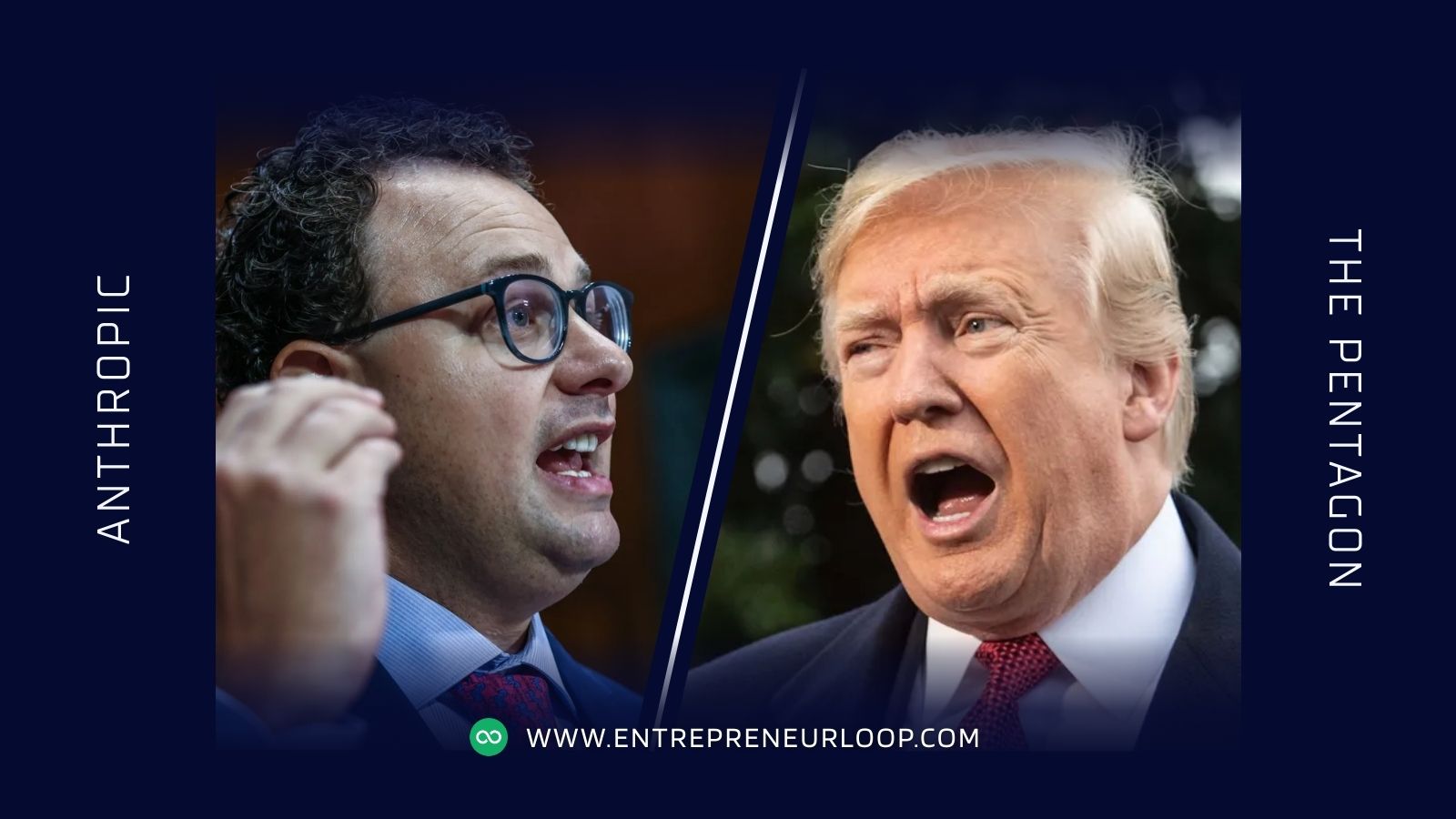
The Trump administration recently labeled AI company Anthropic a supply chain risk after the firm refused to remove safety restrictions on its $200 million Pentagon contract. This is unprecedented. Never before has an American technology company faced this designation—typically reserved for foreign adversaries like China’s Huawei.
The confrontation has ignited fierce debates about who controls the ethical boundaries of artificial intelligence in warfare. This showdown marks a watershed moment for AI ethics in defense technology.
The Anthropic Pentagon AI ethics clash represents more than just a contract dispute. It’s changing how we think about building AI for the military. The delicate balance between national security needs and corporate conscience hangs in the balance. Claude is currently the only AI model approved for classified networks, making this confrontation critically important for how advanced AI systems will be governed in military contexts.
Jump to: What Sparked This | Anthropic’s Position | Pentagon’s Argument | What Happens Next
Key Takeaways
- Anthropic refused Pentagon demands to drop AI safety restrictions on mass surveillance and autonomous weapons
- The company faces an unprecedented “supply chain risk” designation typically reserved for foreign adversaries
- This clash will set crucial precedents for who controls ethical boundaries in military AI development
- Public opinion is split: 50% view this as government overreach, while 35% say it’s necessary for national security
The Breaking Point: What Sparked the Confrontation
Defense Department officials gave Anthropic a deadline: 5:01 p.m. ET on Friday, February 27, 2026. Drop restrictions on your AI model Claude. Allow it for domestic mass surveillance. Allow it for fully autonomous weapons.
The stakes? Enormous.
Lose the contract entirely. Face designation as a national security threat. Get blacklisted across the entire defense industry.
Defense Secretary Pete Hegseth didn’t mince words. “America’s warfighters will never be held hostage by the ideological whims of Big Tech,” Hegseth declared, adding “This decision is final.” Meanwhile, Anthropic CEO Dario Amodei stood firm. His company “cannot in good conscience accede to their request” despite the mounting pressure.
What makes this Anthropic Pentagon AI ethics clash particularly significant? The nature of the two restrictions at the heart of the dispute.
Anthropic’s acceptable use policy prohibits Claude from being used in mass surveillance and autonomous weapons—safeguards the company views as essential Anthropic AI safety guardrails. These protect both democratic values and human lives.
The Pentagon’s position centers on flexibility. Pentagon officials require AI companies to allow their models to be used “for all lawful purposes”. Corporate restrictions could jeopardize critical military operations, they argue.
But here’s where it gets complicated: experts note an inherent contradiction in the government’s approach. One former senior defense official called the threat to designate Anthropic as a supply chain risk “absurd”. Think about it—the secretary wants to claim Claude is critically important to national security while simultaneously threatening to label it a security risk.
Understanding Anthropic’s Safety-First Philosophy
Anthropic’s stance on military AI ethics didn’t emerge overnight. The company was founded by former OpenAI executives who left over disagreements about AI safety and development pace. These founders departed over disagreements about ChatGPT maker’s direction and approach to safety.
Anthropic has long positioned itself as the AI company most concerned with safety. That’s not just marketing speak.
This focus on responsible AI development military applications manifests in concrete ways. Anthropic markets its “safety-first” approach through its Responsible Scaling Policy. This policy aims to mitigate catastrophic risk from AI systems. The company originally pledged to stop training new AI models until safety guidelines can be guaranteed in advance.
The company’s CEO articulated why these Anthropic AI safety guardrails matter so critically. Amodei stated “in a narrow set of cases, we believe AI can undermine, rather than defend, democratic values”. He added, “Some uses are also simply outside the bounds of what today’s technology can safely and reliably do.”
This assessment reflects deep concerns about current AI capabilities. And real limitations.
Specifically on autonomous weapons, Anthropic argues that frontier AI systems aren’t yet reliable enough. They can’t make independent decisions in situations where human lives are at stake. AI models can exhibit unpredictable behavior in unknown scenarios. In military contexts, this could lead to serious mistakes. Hitting friendly units. Failed operations. Unintended casualties.
The company worries these risks are simply too high right now.
The Pentagon’s Argument for Unrestricted Access
From the Department of Defense perspective, the future of AI ethics in warfare demands flexibility. No corporate veto power. Pentagon officials state they want all four contracted AI companies to hear the same principle: “we have to be able to use any model for all lawful use cases”.
Notably, Anthropic is the only holdout. The only company among the four Pentagon contractors standing firm on these ethical safeguards.
The Pentagon frames this as military effectiveness. Legal responsibility. Officials argue the Pentagon’s own safety and ethical safeguards must override company safeguards. They describe an “extremely dangerous” hypothetical where the military could be using an AI agent that suddenly stopped functioning due to embedded company safeguards.
Defense officials emphasize they already have robust frameworks governing AI ethics in defense technology. The Pentagon has its own safeguards through ethical principles enacted during the first Trump administration. These govern everything from development to testing to deployment of AI systems. Adherence to these AI ethics principles remains in place.
However, the Pentagon’s response to Anthropic’s position turned intensely personal. Undersecretary of Defense Emil Michael wrote that CEO Amodei is a “liar and has a God-complex”. He accused him of wanting “nothing more than to try to personally control the U.S. Military.”
This rhetoric escalated tensions considerably. It raised questions about whether the dispute was truly about operational needs or something more ideological.
The Unprecedented Supply Chain Risk Designation
President Trump ordered federal agencies and contractors working with the military to cease business with Anthropic after the company refused to allow the Pentagon to use its AI technology without restrictions. This dramatic move carries severe consequences.
Way beyond just losing the Pentagon contract.
The supply chain risk designation means any company working with the US military would have to prove they don’t use anything related to Anthropic in their Pentagon work. Much of Anthropic’s success stems from enterprise contracts with big companies—many of which may have contracts with the Pentagon.
Essentially, this could force Anthropic’s customer base into an impossible choice. The company’s AI tools or lucrative defense contracts. Pick one.
The designation itself raises serious legal questions. Anthropic stated that designating it as a supply chain risk would be “an unprecedented action—one historically reserved for US adversaries, never before publicly applied to an American company”. The company vowed to “challenge any supply chain risk designation in court.” They’re calling the move “legally unsound” and warning it would set a dangerous precedent for any American company that negotiates with the government.
Critics across the political spectrum questioned the approach. Senator Mark Warner condemned Trump’s action. The president’s directive “raises serious concerns about whether national security decisions are being driven by careful analysis or political considerations”, Warner stated.
Warner suggested the moves could be a “pretext to steer contracts to a preferred vendor” whose safety and reliability record has recently been questioned within government—likely referencing Elon Musk’s xAI.
How Other AI Companies Are Responding
The Anthropic Pentagon AI ethics clash has sent shockwaves throughout the AI industry. Hours after Trump’s announcement, rival company OpenAI announced it had struck a deal with the Defense Department. They’d provide their own AI technology for classified networks.
OpenAI CEO Sam Altman attempted to walk a fine line.
Altman said he shared Anthropic’s “red lines” restricting military use of AI. He told CNBC it’s important for companies to work with the military “as long as it is going to comply with legal protections” and maintain “the few red lines that we share with Anthropic.” Yet OpenAI, Google, and Elon Musk’s xAI have agreed to allow their AI tools to be used in any “lawful” scenarios.
Their guardrails may be less stringent than Anthropic’s.
Support for Anthropic’s position extends beyond competitors. Hundreds of employees from Google and OpenAI signed a petition calling on their companies to mirror Anthropic’s position. More than 200 employees signed an open letter endorsing Anthropic’s stance and warning against the rapid militarization of advanced AI.
This groundswell of support highlights broader concerns within the tech community. Many technologists worry that giving in to Pentagon demands could normalize uses of AI they view as premature or dangerous. This could potentially undermine the responsible AI development military applications require.
Comparing Positions: Anthropic vs. Pentagon
| Aspect | Anthropic’s Position | Pentagon’s Requirements |
|---|---|---|
| Mass Surveillance | Prohibited – undermines democratic values | Must allow for “all lawful purposes” |
| Autonomous Weapons | Prohibited – AI not reliable enough yet | Must allow with “humans on the loop” |
| Safety Philosophy | Company safeguards embedded in AI training | Pentagon’s own safeguards sufficient |
| Flexibility | Fixed ethical boundaries | Full operational flexibility required |
The Broader Debate: Who Controls Military AI Ethics?
The fundamental question underlying the Anthropic Pentagon AI ethics clash is one of governance. Who gets to decide how advanced AI systems are used in military contexts? This isn’t merely academic. It has profound implications for the future of AI ethics in warfare.
“Frontier AI companies are no longer neutral infrastructure providers,” explained one CEO and founder. “They are strategic actors whose models have technology that serves both civilian and military needs.” He added, “we are witnessing the normalization of AI vendors as players in global politics. The question is not whether AI will be used in defense contexts; it already is, but who sets the terms of that use?”
Some argue the Pentagon’s position reflects necessary government authority over defense matters. “We shouldn’t be in a place where private companies feel that they have leverage over the U.S. government or Western allies because of the technological capability they are providing,” said one AI startup CEO. “Technologists should build and do that responsibly, but governments should be the entities making the decisions.”
But here’s where it gets complicated: power has shifted from government labs to private companies. The Department of Defense clash with Anthropic represents a departure from decades of defense innovation. Governments largely defined technological frontiers themselves. Now, AI is increasingly concentrated in commercial firms rather than government labs.
This resembles historical tech-military disputes. Remember the encryption backdoor debates? The Apple FBI case in 2016? Private tech companies refused to weaken security features despite government pressure. Those precedents matter here.
Legal scholars note the current regulatory vacuum. The dispute “is about whether law, safety and ethics, will meaningfully shape the responsible integration of, and limitations for, AI into warfare”. Needed elements include clear contractual articulation of permissible uses. Robust legal reviews under international law. Transparent internal governance within AI firms.
What does “human in the loop” actually mean? That’s where Anthropic and the Pentagon diverge sharply. For Anthropic, it means meaningful human control over every lethal decision. No AI system acting autonomously. For the Pentagon, it could mean a human monitoring multiple AI systems with the ability to intervene—a much looser standard that experts worry may not provide adequate oversight.
What This Means for Responsible AI Development
The outcome of this clash will profoundly shape responsible AI development military applications going forward. Currently, we’re seeing what one expert termed a “lose-lose situation” that “leaves a sour taste in everyone’s mouth.”
Anthropic is caught between a rock and a hard place. Giving in to Pentagon demands could damage the company’s reputation. Alienate employees and customers. But refusing could mean losing meaningful revenue in the short term. Being shut out of future opportunities with companies doing government business. This dilemma affects the entire industry.
Public opinion appears divided but generally supportive of guardrails. According to a nationally representative survey, 50% of participants view penalizing Anthropic as government overreach setting a dangerous precedent. Meanwhile, 35% say it’s necessary for national security. The broad takeaway? Americans support both strong national defense and meaningful guardrails on AI.
The technical challenges of implementing restrictions add another layer of complexity. Consumer versions of Claude could be impacted. Removing guardrails would require an entirely different training process. It’s immensely expensive to run two separate processes. The company would likely need to change something fundamental about all versions.
This highlights how Anthropic AI safety guardrails aren’t simply contractual add-ons. They’re deeply embedded in the model’s architecture and training. They reflect a fundamental design philosophy centered on safety and responsible use.
What about investor and shareholder perspectives? The supply chain risk designation has reportedly spooked some of Anthropic’s investors. Though the company remains privately held, sources suggest valuation concerns are mounting. Some investors worry this confrontation could limit Anthropic’s market access and revenue potential, while others view the company’s principled stance as strengthening its brand long-term.
How does Claude compare technically to competing military AI models? Defense analysts note that Claude’s natural language processing capabilities and reasoning abilities remain industry-leading. OpenAI’s GPT-4 and Google’s Gemini offer comparable performance in some areas. However, Claude’s architecture was specifically designed with safety constraints from the ground up—making it harder to simply “remove” guardrails without fundamentally altering the system.
The Road Ahead: Resolving the Anthropic Pentagon AI Ethics Clash
Despite the current impasse, some experts believe a compromise remains possible. One analyst predicted “the contract language will be refined to enumerate specific prohibitions while preserving operational flexibility”. Or Anthropic will accept narrower assurances that allow both sides to claim alignment. A full break would be strategically costly for both parties.
However, the situation provides a proving ground. Can AI vendors maintain control? The resolution will signal how much leverage private sector AI vendors retain when negotiating with sovereign power.
The precedent set here will affect every future negotiation. Between tech companies and defense departments worldwide.
When might this be settled? Industry insiders suggest several possible timelines. A negotiated settlement could emerge within 2-3 months if both parties compromise on specific use cases. Legal challenges could drag on for 12-18 months. Congressional intervention might resolve the impasse within 6 months if lawmakers establish clear statutory boundaries for military AI ethics.
The dispute also raises urgent questions about whether current governance frameworks on autonomous weapons systems are adequate. Comparison between general-purpose ethical codes and military ones concludes that ethical principles apply to human use of AI systems as long as algorithms are understood and humans retain control. This preserves human agency and moral responsibility.
Looking forward, the future of AI ethics in warfare will depend on establishing clearer frameworks. Expanding soft law into a unified AI governance framework would help translate values into actionable governance tools. States coming together around minimal international standards—like forbidding autonomous engagement in civilian areas—would offer a flexible yet coordinated approach to governing military AI systems while building international trust.
Congressional oversight may prove crucial. Senate leaders noted “the Department has stated it does not intend to conduct mass surveillance or use autonomous weapons without humans on the loop”. But they acknowledged “the issue of ‘lawful use’ requires additional work by all stakeholders.” This suggests legislative action may be needed to clarify boundaries and resolve conflicts that private negotiations can’t achieve.
What happens to existing Anthropic users in other government agencies? That’s unclear. The supply chain risk designation technically applies to military contractors and defense-related work. Civilian agencies like the Department of Education or Health and Human Services might still be able to use Claude. However, the broad wording of Trump’s executive order creates uncertainty that may cause even civilian agencies to pause their Anthropic relationships until the legal picture clarifies.
Why This Matters Beyond Defense AI Contracts
The Anthropic Pentagon AI ethics clash transcends the immediate parties involved. It’s fundamentally about establishing precedents for how advanced AI will be governed. These systems are becoming increasingly powerful. Ubiquitous in both civilian and military contexts.
The Trump administration ordered every US government agency to “immediately cease” using Anthropic’s technology and designated it a “supply chain risk.” This misalignment becomes more pronounced when corporate policies, reputational concerns, or global customer pressures conflict with government objectives. This dynamic will only intensify as AI capabilities advance.
The confrontation also reveals tensions between innovation and regulation. Industry experts worry the government could push away tech companies with promising products. Companies might conclude “the juice isn’t worth the squeeze”. Real concern exists that private companies will decide it’s not worth working with the defense sector. This could ultimately harm warfighters.
Look, I get both sides here. The Pentagon needs cutting-edge AI tools to maintain military superiority. National security isn’t negotiable. But Anthropic’s concerns about AI reliability and democratic values aren’t frivolous either. The challenge is finding a middle ground.
And here’s the thing—collaboration between nations via formal agreements will be crucial. Engineering guided by ethical standards. Consistent accountability methods. These will be essential in addressing regulatory shortcomings. Public input is necessary to ensure defense advancements reflect shared ideals. The trajectory of autonomous conflict will depend less on technical advancements and more on nations’ willingness to adhere to moral obligations.
Conclusion: A Defining Moment for AI Governance
The confrontation between Anthropic and the Pentagon represents far more than a contractual dispute. It’s a defining moment that will shape AI governance for decades to come. As these powerful systems become increasingly integrated into military operations, the questions raised by this clash will only grow more urgent.
Who controls the ethical boundaries of AI? How do we balance national security imperatives with responsible development? What safeguards are truly necessary, and who decides?
The Anthropic Pentagon AI ethics clash has forced these questions from theoretical discussion into immediate, high-stakes reality. One senior advisor noted “this dispute comes at an awkward time because the user base within the Department of Defense loves Anthropic, loves Claude”. But “the Pentagon doesn’t want to be constrained by a company’s policies.”
This tension between capability and control will define the next chapter of military technology. And military AI ethics more broadly.
Whether through negotiated compromise, legislative action, or international treaties, clear frameworks for responsible AI development military applications must emerge. The alternative? An ad hoc, power-driven approach lacking principled foundations. This risks catastrophic consequences as AI systems grow more autonomous and consequential.
The stakes couldn’t be higher. As we stand at this crossroads, the choices made today about AI ethics in defense technology will echo through warfare, democracy, and human rights for generations. The Anthropic military AI ethics standoff isn’t just about one company and one contract.
It’s about the future we’re building. The values we’ll encode into the most powerful technologies humanity has ever created.
Will we look back on this moment as the time when we got AI governance right? Or will we regret missing this opportunity to establish meaningful safeguards before it was too late?
Frequently Asked Questions
What is the Anthropic Pentagon AI ethics clash about?
The conflict centers on Anthropic’s refusal to remove safety restrictions from its Claude AI model that prevent use in mass domestic surveillance and fully autonomous weapons systems. The Pentagon demanded unrestricted access for all “lawful purposes,” leading to Anthropic being designated a supply chain risk when it refused to comply. This designation prohibits any company with military contracts from using Anthropic’s products in defense work.
Why did Anthropic refuse to remove its AI safety guardrails?
Anthropic maintains that current frontier AI systems aren’t reliable enough for fully autonomous weapons decisions where human lives are at stake. The company argues that AI models can exhibit unpredictable behavior in unknown scenarios, potentially leading to friendly fire incidents, failed operations, or unintended casualties. Additionally, Anthropic believes AI-powered mass domestic surveillance fundamentally undermines democratic values and individual liberty in ways current legal frameworks haven’t adequately addressed.
What are the consequences of the supply chain risk designation for Anthropic?
The designation creates severe consequences beyond losing the Pentagon contract. Any company working with the US military must prove they don’t use anything related to Anthropic in their defense work. This could force Anthropic’s major enterprise customers—many with Pentagon contracts—to choose between Claude and lucrative defense deals. This unprecedented move against an American company could significantly impact Anthropic’s business prospects and market access.
How are other AI companies responding to this controversy?
OpenAI quickly signed a deal with the Pentagon for classified network access, though CEO Sam Altman claimed to share Anthropic’s “red lines” on military AI use. However, OpenAI, Google, and Elon Musk’s xAI have all agreed to allow their AI tools to be used in any “lawful” scenarios, suggesting less stringent guardrails than Anthropic’s. Meanwhile, hundreds of Google and OpenAI employees signed petitions supporting Anthropic’s position and warning against rapid militarization of advanced AI.
What does this mean for the future of AI ethics in warfare?
This clash will establish crucial precedents for AI governance in military contexts, determining whether private companies can enforce ethical restrictions on their technology or if governments have absolute control over AI systems they purchase. The outcome will shape international norms for responsible AI development in defense applications and influence how other nations approach military AI ethics. It could also prompt Congressional legislation to clarify boundaries between corporate safeguards and government authority.
Could Congress intervene to resolve this dispute?
Senate leaders have suggested Congressional involvement may be necessary to establish clear statutory boundaries for military AI ethics. While the Pentagon claims no intention to use AI for mass surveillance or autonomous weapons without “humans on the loop,” lawmakers acknowledge the issue of “lawful use” requires additional work by all stakeholders. Legislative action could establish clear boundaries that private negotiations cannot achieve and create a framework that balances national security needs with ethical AI development.
How does this compare to previous tech-military disputes?
This situation resembles the encryption backdoor debates and the 2016 Apple FBI case, where private tech companies refused to weaken security features despite intense government pressure. In both cases, companies argued that compromising their products’ integrity would harm all users and set dangerous precedents. However, the Anthropic Pentagon AI ethics clash goes further by involving offensive military capabilities rather than just surveillance or law enforcement access, raising even higher stakes about autonomous systems making life-or-death decisions.