

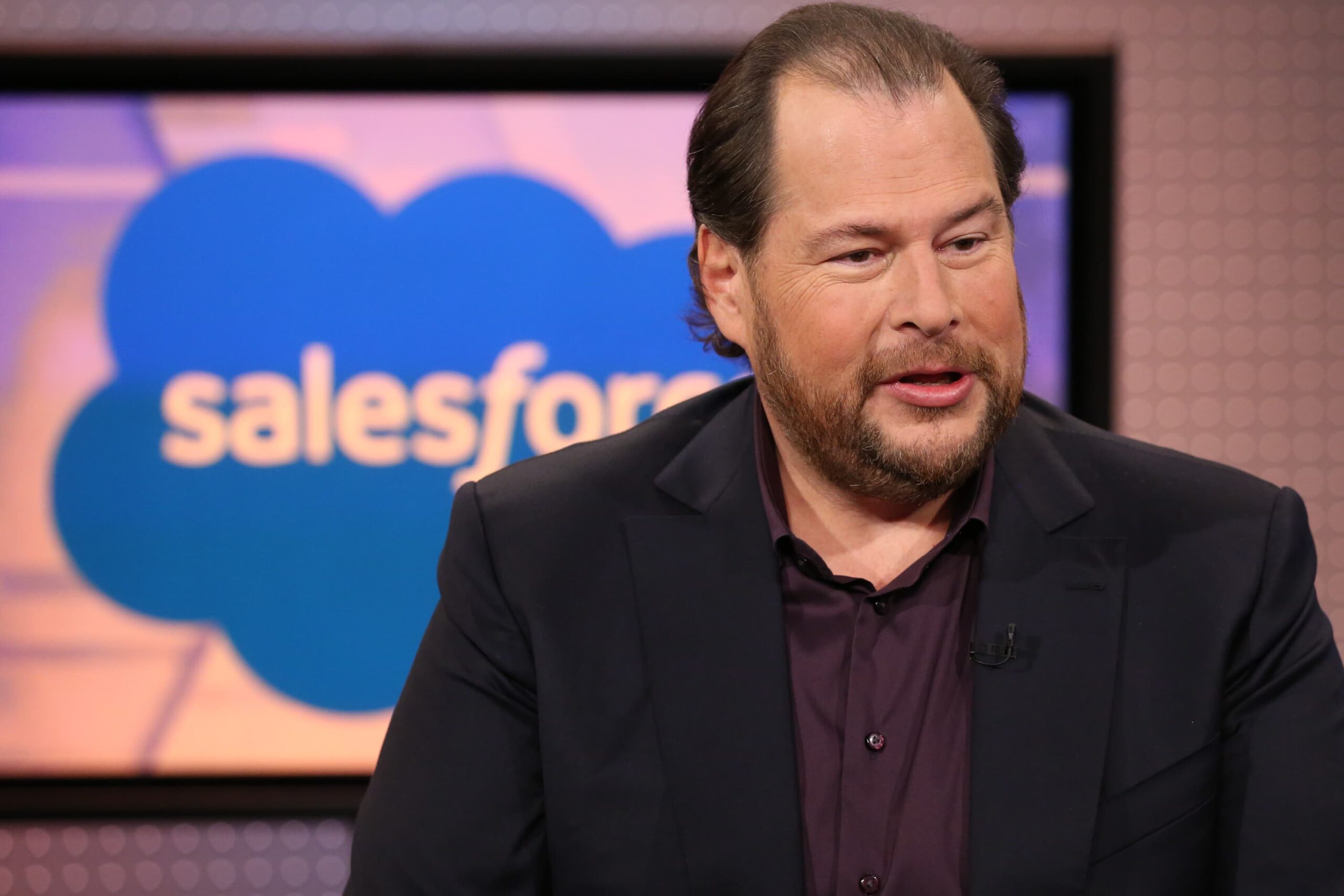
Salesforce CEO Marc Benioff sparked a firestorm at the company’s Las Vegas kickoff event on February 10, 2026, when he made multiple comments about Immigration and Customs Enforcement that left employees reeling. The joke about ICE, which many described as tone-deaf and cruel, has ignited one of the most intense internal revolts in the company’s history.
During his opening keynote address, Benioff thanked international employees for traveling to the United States and asked them to stand, then said ICE agents were in the building to keep tabs on them. The crowd’s reaction was swift. Groans echoed through the room. Employees couldn’t believe what they heard.
This wasn’t a one-time slip. Benioff later doubled down with a callback joke, suggesting employees who hadn’t used a specific Slackbot tool might find themselves targeted by ICE. Furthermore, he made disparaging remarks about Bad Bunny’s Super Bowl performance, compounding the offense for many staff members.
Why the Salesforce Founder ICE Joke Backlash Exploded on Internal Channels
The comments instantly became a major topic on Salesforce’s internal Slack, with shocked employees trying to figure out if they’d misheard the CEO. What started as confusion quickly morphed into anger. Within hours, internal communication channels were ablaze with criticism.
One employee captured the widespread sentiment: “A joke about ICE surveilling employees’ travel, when there are literally employees afraid to travel for work due to current situation”. Another described the comments as completely off-base and unacceptable for a company claiming to value equality.
A Salesforce employee told 404 Media this represented “Silicon Valley CEOs and their inability to divorce ICE and the complete lack of understanding of why that makes them monsters,” adding that “employees are going absolutely apeshit in internal Slack”. The phrase “are we the baddies?” emerged repeatedly in employee discussions, reflecting deep discomfort with their company’s direction.
The joke about ICE hit particularly hard because it wasn’t abstract. Many international workers at Salesforce have genuine fears about immigration enforcement during uncertain times. Making light of those anxieties felt like a betrayal.
Benioff ICE Joke Employee Outrage Leads to Formal Protest
The backlash didn’t remain confined to Slack messages. More than 1,400 employees signed a letter asking Benioff to cut business ties with ICE, marking one of the largest organized employee protests in Salesforce history.
The letter referenced reporting by The New York Times in October that Salesforce had told ICE its AI could help the agency boost its staff in hopes of signing a paid contract. Employees expressed deep trouble over reports that Salesforce pitched AI technology to help ICE hire 10,000 new agents and vet tip-line reports.
The document demanded three specific actions:
- Denounce recent actions by ICE, including fatal incidents in Minneapolis
- Prohibit the use of Salesforce software by immigration agents
- Back federal legislation to reform the agency
The letter stated: “Providing ‘Agentforce’ infrastructure to scale a mass deportation agenda that currently detains 66,000 people—73 percent of whom have no criminal record—represents a fundamental betrayal of our commitment”. This wasn’t just about a joke about ICE anymore. Employees saw systemic issues with corporate ethics.
The letter highlighted Benioff’s “unique weight in Washington” and urged him to use it to issue a public statement condemning ICE’s conduct. Employees wanted their CEO to act as a corporate statesman rather than someone who makes casual jokes about serious matters.
The Salesforce Company Culture Controversy Deepens
The backlash was swift and furious, with employees branding the comments as ‘cruel,’ ‘tone-deaf,’ and a betrayal of the firm’s professed ‘Ohana’ family values. Salesforce has long marketed itself as a company committed to equality, diversity, and social responsibility. These jokes about ICE seemed to contradict those stated values.
Slack general manager Rob Seaman, whose platform is owned by Salesforce, felt compelled to address the situation. “I want to acknowledge the jokes that happened this morning at CKO,” Seaman wrote. “I cannot defend or explain them”. His message continued that they didn’t align with his personal values or those of many employees.
The controversy exposed deeper tensions about Salesforce’s relationships with government agencies. Salesforce’s contracts with ICE have been controversial within the company, which is part of why employees weren’t happy with Benioff’s joke. Historical context matters here—the company’s earlier work in 2018 with U.S. Customs and Border Protection during the first Trump administration sparked a protest in San Francisco.
The joke about ICE wasn’t happening in a vacuum. It happened against a backdrop of existing employee concerns about ethical technology use and corporate complicity.
Marc Benioff Immigration Comments Controversy and Political Whiplash
This isn’t Benioff’s first rodeo with controversial political statements. In October 2025, Benioff expressed ‘full’ support for President Donald Trump and suggested the National Guard should be deployed to San Francisco. He later apologized for those comments.
His political donations have spanned the spectrum: supporting Hillary Clinton in 2016, backing Democratic candidates in 2020, but more recently signaling support for some Republican leaders. This political shape-shifting has left employees uncertain about their leader’s core values.
Yet there’s irony here. Benioff provoked backlash last October when he said he supported sending the National Guard to San Francisco, but he later helped persuade President Trump to call off an immigration enforcement “surge” in the Bay Area. His influence with political leaders is real, which makes his joke about ICE all the more confusing to employees who witnessed his behind-the-scenes advocacy.
The pattern emerging is one of inconsistency. Employees expect their leaders to demonstrate steadfast values, especially at companies that publicly champion social causes. When those values appear to shift with political winds, trust erodes rapidly.
How the Joke About ICE Reveals Corporate Leadership Failures
This is far from the first time Benioff has faced internal backlash for his comments. After announcing layoffs in 2023, Benioff delivered a two-hour talk employees described as “tone-deaf,” joking about layoffs ruining an executive’s birthday. The pattern of insensitive remarks during critical moments suggests a disconnect between leadership and workforce realities.
The timing couldn’t have been worse. The company laid off less than 1,000 employees earlier this month, according to Business Insider. Making a joke about ICE while simultaneously cutting jobs sent a message that leadership was out of touch with employee anxiety and economic insecurity.
Making matters more complicated, Salesforce uploaded a recording of Benioff’s address to its internal platform, but the segment containing his ICE jokes was conspicuously absent. Employees took to Slack channels, with one stating: “Anyone going to watch it to see the ICE ‘jokes’ will discover they have been edited out”. This editing decision raised questions about transparency and corporate willingness to confront mistakes.
The cover-up often becomes worse than the crime. Removing the joke about ICE from the official recording suggested leadership knew they’d made an error but weren’t willing to address it openly.
Salesforce CEO Jokes About ICE International Employees: The Human Impact
The joke about ICE wasn’t just offensive in abstract terms. It had real human consequences. The letter highlights the fear and anxiety that ICE represents for many immigrant communities, including Salesforce employees and their families.
The letter noted that ICE agents killed U.S. citizens Renee Nicole Good and Alex Pretti in Minnesota in January, making light of immigration enforcement particularly insensitive given recent fatal incidents. Employees connected these broader events to corporate policy, framing the situation as an ethical alignment issue rather than simply a cultural one.
The letter stated: “Employees face real personal and professional risk when Salesforce is perceived as enabling ICE, including reputational harm, social targeting or being misidentified as complicit in activities they oppose”. For many workers, their association with Salesforce could potentially put them at social or professional risk if the company is seen as supporting controversial immigration enforcement practices.
International employees who stood up at Benioff’s request experienced a particularly painful moment. They were singled out, recognized for their contribution, then immediately made the target of a joke about ICE. That whiplash—from appreciation to threat, even in jest—felt cruel to many observers.
The Benioff ICE Controversy and Tech Industry Accountability
There has been a growing trend of tech employees to take a stand against their companies’ ties with government agencies. Last week, over a thousand Google employees urged the company to end its contracts with federal immigration enforcement agencies. The Salesforce situation fits into a broader pattern of tech worker activism.
Salesforce is not just a tech vendor; it is a foundational cloud provider for the U.S. government, authorized to provide cloud services to 52 U.S. federal agencies. This deep entanglement with government operations makes employee concerns about ethical technology use particularly acute.
Investor concerns about artificial intelligence’s impact on software growth have weighed on the company, with its stock down about 27% so far in 2026. The joke about ICE and subsequent employee revolt came at a financially vulnerable moment, amplifying market anxieties about the company’s direction.
Salesforce shares fell 6.3% in the afternoon session on the day of the event. The joke and employee letter acted as a catalyst, amplifying existing fears and creating a near-term trading opportunity. Markets don’t just respond to financial metrics—they respond to leadership stability and employee morale.
What Happens Next: Employee Demands and Company Silence
Organizers plan to send Benioff the letter on Friday, according to multiple reports. The question now is whether Benioff will respond substantively or whether the joke about ICE will be quietly buried like the edited keynote recording.
Benioff has not addressed the budding controversy. A representative for the billionaire did not respond to a request for comment. This silence speaks volumes. Employees are demanding accountability, transparency, and clear ethical boundaries for how Salesforce technology is deployed.
The events reflect deeper anxieties about the company’s direction, its relationship with powerful government agencies, and the gap between its public values and internal reality. Whether Benioff will address the uproar directly remains to be seen. For now, the company’s leadership faces a moment of reckoning, with employees demanding not just words, but action.
The path forward requires more than an apology. Employees want structural changes: termination of ICE contracts, public condemnation of problematic enforcement practices, and clear policies preventing technology misuse. Whether Salesforce leadership will meet those demands or weather the storm remains uncertain.
Understanding the Broader Implications of the Marc Benioff Immigration Comments Controversy
This controversy illuminates fundamental questions about corporate responsibility in the tech sector. Should companies that champion progressive values engage in contracts with agencies that many employees view as harmful? Can CEOs make politically charged jokes without alienating their workforce?
The joke about ICE revealed fault lines that extend beyond one comment. They expose tensions between profit motives and ethical commitments, between executive privilege and employee values, between public brand positioning and private business relationships.
The company has recently gone through high-profile executive departures and layoffs, and its contracts and technology pitches to ICE have long been a source of internal debate. Salesforce has pitched its AI technology to help ICE “expeditiously” hire 10,000 new agents, a move many employees see as a fundamental betrayal of the company’s stated commitment to ethical technology use.
For Salesforce employees watching from afar, the lesson is clear: leadership accountability matters. When executives make insensitive jokes about serious topics affecting vulnerable populations, employees won’t stay silent. The 1,400 signatures on the protest letter represent a significant portion of the workforce willing to risk professional relationships to defend their values.
The Salesforce Company Culture Controversy as a Case Study
The Salesforce founder ICE joke backlash offers valuable lessons for other companies navigating similar tensions. First, humor has limits. Jokes that trivialize serious fears or hardships rarely land well, especially when delivered by powerful executives to vulnerable populations.
Second, consistency matters. When companies market themselves as progressive, socially conscious organizations, employees hold them to those standards. Any perceived deviation—whether through controversial contracts or insensitive comments—generates immediate pushback.
Third, transparency is essential. Editing problematic content from official recordings without acknowledgment breeds cynicism. Employees prefer authentic accountability over sanitized narratives.
Fourth, employee activism is increasingly effective. The letter-writing campaign, internal Slack discussions, and media leaks demonstrate that workers have multiple channels to express dissent and pressure leadership for change.
The Benioff ICE joke employee outrage shows that tech workers won’t accept ethical compromises silently. They’re willing to organize, demand action, and hold leadership accountable through formal protests and public pressure.
Final Thoughts on the Joke About ICE That Sparked a Movement
What started as a joke about ICE at a company kickoff event has evolved into a referendum on corporate values, leadership accountability, and ethical technology deployment. The controversy has exposed gaps between Salesforce’s public image and internal realities, between executive perspectives and employee concerns.
The 1,400 employees who signed the protest letter aren’t asking for the impossible. They want their company to live up to its stated values. They want leadership that recognizes the real-world impact of flippant comments about immigration enforcement. They want assurance that their technology won’t be weaponized against vulnerable communities.
Whether Benioff responds meaningfully to these demands will determine more than just employee morale. It will signal whether Salesforce can navigate the tension between government contracts and progressive values, between profit and principle, between executive humor and employee humanity.
The joke about ICE wasn’t just a bad moment at a company event. It was a crystallizing incident that forced uncomfortable questions into the open. Now the hard work begins: responding to employee concerns, reevaluating business relationships, and rebuilding trust with a workforce that expects better from their leadership.
Frequently Asked Questions
What joke about ICE did Marc Benioff make at the Salesforce event?
At Salesforce’s February 10, 2026 kickoff event in Las Vegas, Marc Benioff asked international employees to stand for recognition, then joked that ICE agents were in the building monitoring them. He made a second joke about ICE later in his keynote, referencing ICE agents again in the context of a Slackbot tool discussion.
How many Salesforce employees protested the Benioff ICE joke employee outrage?
More than 1,400 Salesforce employees signed an internal letter demanding that CEO Marc Benioff cut business ties with ICE, denounce the agency’s actions, and prohibit the use of Salesforce software by immigration agents. This represents one of the largest organized employee protests in company history.
Why is the Salesforce founder ICE joke backlash so intense?
The backlash intensified because Salesforce has been pitching AI technology to ICE to help hire 10,000 new agents, many employees have legitimate fears about immigration enforcement, the comments contradicted the company’s stated values around equality and diversity, and it came during a period of layoffs and executive departures that already had morale low.
What did employees demand after the Marc Benioff immigration comments controversy?
Employees demanded that Benioff publicly denounce ICE actions, terminate all active pitches or opportunities for ICE enforcement and hiring, prohibit the use of Salesforce cloud and AI products for immigration enforcement purposes, and support federal legislation to reform ICE. They also requested a formal apology and reaffirmation of commitment to protecting diverse workforce members.
How did Salesforce leadership respond to the joke about ICE?
Salesforce has not officially responded to the controversy. However, Slack general manager Rob Seaman wrote an internal message stating he could not defend or explain the jokes and that they didn’t align with his personal values. Notably, when Salesforce uploaded the keynote recording to its internal platform, the ICE jokes were edited out of the video.
What is the Salesforce company culture controversy about beyond the joke?
Beyond the joke itself, the controversy involves Salesforce’s business relationships with ICE, including reported pitches to provide AI technology that would help ICE rapidly hire new agents. Employees view this as conflicting with the company’s public commitment to ethical technology use and its “Ohana” family values, creating a gap between stated principles and business practices.
How has the Benioff ICE controversy affected Salesforce’s stock price?
Salesforce shares fell 6.3% on the day of the event, compounding an already difficult year where the stock has declined approximately 27% in 2026. The controversy acted as a catalyst that amplified existing investor concerns about artificial intelligence’s impact on software growth and added reputational risk concerns to market anxieties about the company’s direction.