
Musk Proposes Space-Based AI Data Centers Powered by Solar

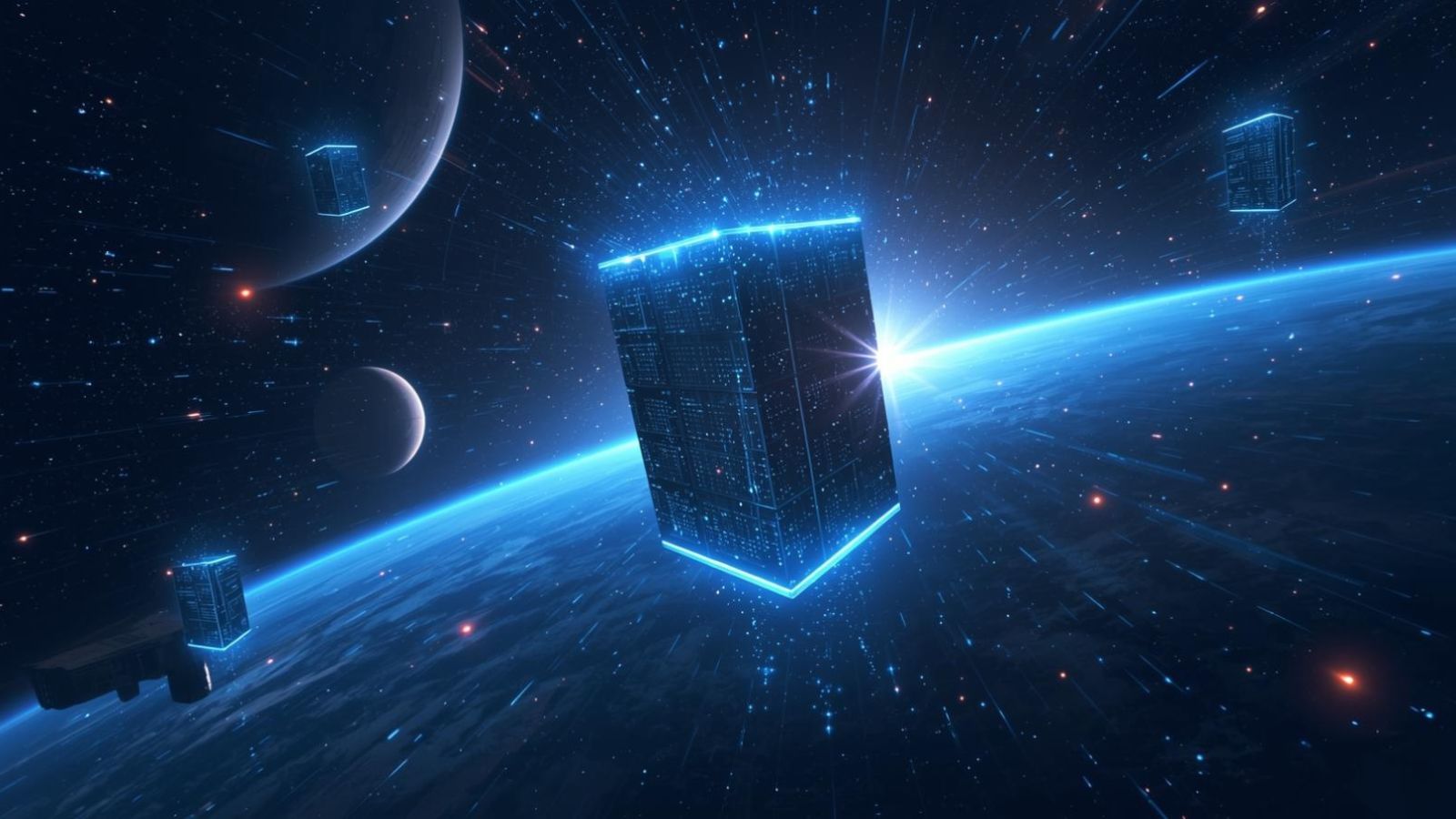
SpaceX filed a request with the Federal Communications Commission to launch up to 1 million solar powered satellites in late January 2026, marking one of the boldest visions yet for artificial intelligence infrastructure. Musk wrote on SpaceX’s website that “Space-based AI is obviously the only way to scale”, claiming it’s always sunny in space. This audacious proposal represents far more than just another tech moonshot—it signals a fundamental shift in how we might power humanity’s rapidly expanding AI demands.
The timing couldn’t be more critical. Data centers consumed around 415 terawatt hours of electricity in 2024, representing about 1.5% of global electricity consumption, and that figure is growing at an alarming rate. Meanwhile, projections show U.S. data center consumption could grow by 133% to 426 TWh by 2030. Traditional facilities face mounting pressure from local communities concerned about land use, water consumption, and grid strain. Enter Musk’s orbital solution.
Why Space AI Makes Sense (and Why It Doesn’t)
Space-based AI data centers offer compelling advantages that terrestrial facilities simply can’t match. The benefits of space-based AI data centers start with energy. In the right orbit, a solar panel can be up to 8 times more productive than on earth, producing power nearly continuously without weather disruptions or nighttime darkness. This makes solar powered space data centers remarkably efficient.
Cooling presents another major win for orbital AI computing. The deep vacuum of space serves as a gigantic, cold heatsink with an effective ambient temperature of around -270 Celsius. Traditional data centers gulp millions of gallons of water annually for cooling. Space eliminates that burden entirely through passive radiative cooling.
However, experts warn that Musk orbital AI data centers face formidable obstacles. An uncooled computer chip in space would overheat and melt much faster than one on Earth, requiring massive radiator panels. GPUs in space could get damaged due to their exposure to high-energy particles from the sun, necessitating expensive shielding and redundancy.
Repair represents perhaps the thorniest challenge. On Earth, you send a technician. In orbit? There’s no repair crew available. Current Starlink satellites only have a lifespan of about five years, and replacing failed components means launching entirely new hardware.
The Race to Orbit Accelerates
Musk isn’t alone in pursuing AI infrastructure in orbit. Google announced plans in November to test orbital AI data centers by launching two test satellites as early as next year through Project Suncatcher. Jeff Bezos’ Blue Origin announced plans in January for a constellation of more than 5,000 satellites, though focused more on communications initially.
Smaller players are making progress too. Starcloud deployed an NVIDIA H100-class system and became the first company to train an LLM in space in 2025. These early demonstrations prove that space AI isn’t pure science fiction—it’s edging toward reality.
The competition highlights just how serious major tech companies are about securing future computing capacity. Each recognizes that whoever controls orbital computing infrastructure could dominate the next era of artificial intelligence development.
Energy Economics: The Trillion-Dollar Question
Cost analysis reveals why space-based data centers captivate entrepreneurs despite the challenges. Starcloud estimates an equivalent energy cost of approximately $0.005, up to 15 times lower than today’s wholesale electricity prices. Over a decade, those savings could be substantial.
Yet upfront expenses remain astronomical. Launching millions of satellites requires solving the “cost of access to space” problem. Musk said Starship’s full reusability could drop the cost of access to space by a factor of 100. Without such breakthroughs, orbital data centers remain economically unviable.
The infrastructure demands are staggering. Launching a constellation of a million satellites that operate as orbital data centers is a first step towards becoming a Kardashev II-level civilization, according to SpaceX’s FCC filing. We’re talking about fundamentally reshaping humanity’s relationship with energy and computation.
Terrestrial alternatives continue improving rapidly. Renewable energy production for data centers is growing at an average rate of 22% per year. Clean ground-based power might narrow the competitive advantage that space AI offers.
Technical Realities of Orbital Computing
Building AI infrastructure in orbit requires solving unprecedented engineering puzzles. Space AI systems must withstand launch forces, operate in microgravity, survive radiation exposure, and function reliably without human intervention.
Communication poses another critical hurdle. Future Starlink space to ground laser links will exceed 6Tbps, according to Musk’s claims. Moving massive datasets between orbit and Earth demands bandwidth that current systems can’t provide. Initial data uploads might require physical “data shuttles” launched from the ground.
Power distribution across satellite constellations adds complexity. Each orbital AI computing node needs solar arrays, batteries for eclipse periods, power management systems, and interconnections with neighboring satellites. Scale this across thousands of units and coordination becomes nightmarish.
Maintenance strategies remain largely theoretical. On-Orbit Servicing (OOS) are emerging solutions and still a challenge. Without practical repair options, operators must overprovision components and accept higher failure rates than terrestrial facilities tolerate.
Environmental Trade-offs: Not as Clean as Advertised?
Proponents tout space AI as environmentally superior, but the full picture is murkier. Researchers at Saarland University calculated that an orbital data center powered by solar energy could still create an order of magnitude greater emissions than a data center on Earth, when accounting for launch emissions and reentry pollution.
Rocket launches themselves create significant environmental impacts. Most extra emissions come from burning rocket stages and hardware on reentry, forming pollutants that deplete Earth’s protective ozone layer.
Space debris presents yet another sustainability concern. A single malfunctioning satellite breaking down or losing orbit could trigger a cascade of collisions, potentially disrupting emergency communications and weather forecasting. Adding millions of satellites dramatically increases collision risks.
Astronomers raise additional objections. Large satellite constellations interfere with ground-based telescopes, complicating efforts to track near-Earth asteroids and conduct deep-space research. Light pollution from orbital facilities affects twilight observations used for planetary defense.
Timeline: When Will Orbital Data Centers Become Reality?
Musk said that in 36 months, probably closer to 30 months, the most economically compelling place to put AI will be space. Industry experts are far more cautious about these aggressive timelines.
Deutsche Bank estimates it will be well into the 2030s before orbital data centers reach close to parity with ground-based facilities economically. Multiple technical breakthroughs must align—reusable launch vehicles, radiation-hardened processors, efficient thermal management, and high-bandwidth communications.
Gutierrez predicts small demos by 2027, tens to hundreds of megawatts by the mid-2030s if launch costs plummet, and gigawatt-scale only in the 2040s or beyond. Even optimistic scenarios suggest mainstream adoption is decades away.
Regulatory approvals present another wildcard. The orbital data center proposal has no guarantee of being approved, and would mark a dramatic increase over the roughly 14,000 active satellites in orbit today. International space treaties and spectrum allocation could delay or limit deployment.
The Business Strategy Behind the Merger
Musk’s SpaceX acquired his AI company xAI as part of an ambitious scheme to build space-based data centers, with plans for a major IPO. This vertical integration gives Musk enormous competitive advantages.
Musk routinely charges rivals far more than he charges himself—as much as $20,000 per kilo of payload versus $2,000 internally. Competitors must pay SpaceX’s full commercial rates while Musk subsidizes his own launches. This creates a massive cost moat around Musk orbital AI data centers.
The merged entity controls every layer of the technology stack—rockets, satellites, AI training infrastructure, and eventually the trained models themselves. Funds from the IPO are expected to help cover its orbital data center ambitions. Wall Street clearly believes in the vision, with valuations exceeding a trillion dollars.
Critics worry about concentration of power. One company controlling both launch capabilities and orbital computing infrastructure could dominate global AI development for decades. Data sovereignty concerns multiply when computing happens beyond any nation’s direct jurisdiction.
What This Means for the Future of AI
Regardless of whether Musk’s specific vision succeeds, the conversation about space-based AI data centers reveals deeper truths about AI’s trajectory. Current growth rates are fundamentally unsustainable with terrestrial infrastructure alone.
Electricity demand from data centres worldwide is set to more than double by 2030 to around 945 terawatt-hours, slightly more than Japan’s entire electricity consumption. Meeting that demand requires either revolutionary efficiency improvements or entirely new infrastructure paradigms.
Space AI offers one potential path forward. Other approaches include nuclear-powered data centers, underwater facilities, or distributed edge computing networks. The coming decade will determine which solutions prove viable at scale.
For businesses and governments, the strategic implications are profound. Companies that secure orbital computing capacity early could gain decisive advantages in AI development. Nations that facilitate or block orbital infrastructure will shape the geopolitical landscape of artificial intelligence.
Key Takeaways for Industry Watchers
Solar powered space data centers represent an audacious bet on solving AI’s energy crisis. The physics are favorable—abundant solar power, natural cooling, no land constraints. Yet engineering realities and economic uncertainties loom large.
Near-term developments to watch include Google’s Project Suncatcher launch, SpaceX’s Starship achieving full reusability, and regulatory decisions on satellite constellation approvals. These milestones will indicate whether the 2030s bring gigawatt-scale orbital AI or if the concept remains experimental.
Traditional data center operators shouldn’t panic yet. Terrestrial facilities will handle the vast majority of computing workloads for at least the next decade. However, forward-thinking organizations should monitor orbital computing developments and consider how space-based resources might complement ground infrastructure.
The race to orbit is accelerating. Whether Musk’s million-satellite vision materializes or not, AI infrastructure in orbit is transitioning from science fiction to serious engineering. The next chapter in artificial intelligence may well be written among the stars.
Frequently Asked Questions
What are space-based AI data centers and how do they work?
Space-based AI data centers are computing facilities placed in orbit around Earth, typically in low-Earth orbit, that process AI workloads using solar power. These orbital facilities consist of satellites equipped with processors, solar arrays for continuous power, and radiators for passive cooling. They communicate with Earth through high-speed laser links and can operate without interruption from weather or nighttime, offering significantly more efficient solar energy collection than ground-based facilities.
Why does Elon Musk want to build AI data centers in space?
Musk believes space-based data centers can solve AI’s growing energy crisis more efficiently than terrestrial options. Space offers continuous solar power up to 8 times more productive than Earth-based panels, natural cooling through radiative heat dissipation, and unlimited room for expansion without land, water, or permitting constraints. Musk claims that within 2-3 years, space will become the most economically compelling location for AI computing infrastructure.
How much would it cost to launch AI data centers into space?
Upfront costs are enormous, requiring hundreds of billions of dollars to launch thousands or millions of satellites. However, operational costs could be dramatically lower—Starcloud estimates energy costs of approximately $0.005 per kWh compared to $0.045-0.17 per kWh on Earth. The economic viability depends heavily on achieving full reusability for rockets like SpaceX’s Starship, which could reduce launch costs by a factor of 100.
What are the main challenges facing orbital AI data centers?
Major challenges include thermal management in space’s vacuum environment, protection from high-energy solar radiation that damages electronics, inability to perform physical repairs or maintenance, communication bandwidth limitations for massive data transfers, space debris collision risks, and environmental concerns from rocket launches and satellite reentry. Additionally, current Starlink satellites only last about five years, requiring frequent costly replacements.
When will space-based data centers become operational?
Timelines vary dramatically depending on who you ask. Musk predicts economic viability within 2-3 years, but independent experts are more cautious. Google plans test satellites by 2027, while Deutsche Bank estimates commercial parity won’t arrive until well into the 2030s. Industry analysts project small demonstrations by 2027, hundreds of megawatts by the mid-2030s if launch costs drop significantly, and gigawatt-scale facilities only in the 2040s or beyond.
Are space-based data centers actually better for the environment?
The environmental impact is debated. While orbital facilities eliminate water consumption and can run on clean solar power, researchers at Saarland University found they could create an order of magnitude greater emissions than Earth-based data centers when accounting for rocket launch emissions and hardware reentry pollution. Space debris and astronomical interference present additional environmental concerns. The net benefit depends on launch technology improvements and operational lifespans.
Who else besides Musk is developing space-based data centers?
Google announced Project Suncatcher with planned satellite launches by 2027, Jeff Bezos’s Blue Origin is developing a 5,000+ satellite constellation, and startup Starcloud successfully trained the first language model in space in 2025 using an NVIDIA H100 GPU. Companies like Axiom Space, NTT, Ramon.Space, and Aetherflux are also pursuing orbital computing infrastructure, making this a competitive race among multiple tech giants and startups.