
Toyota CEO Leadership Transition: Kenta Kon Appointed Toyota CEO in Strategic Management Reshuffle

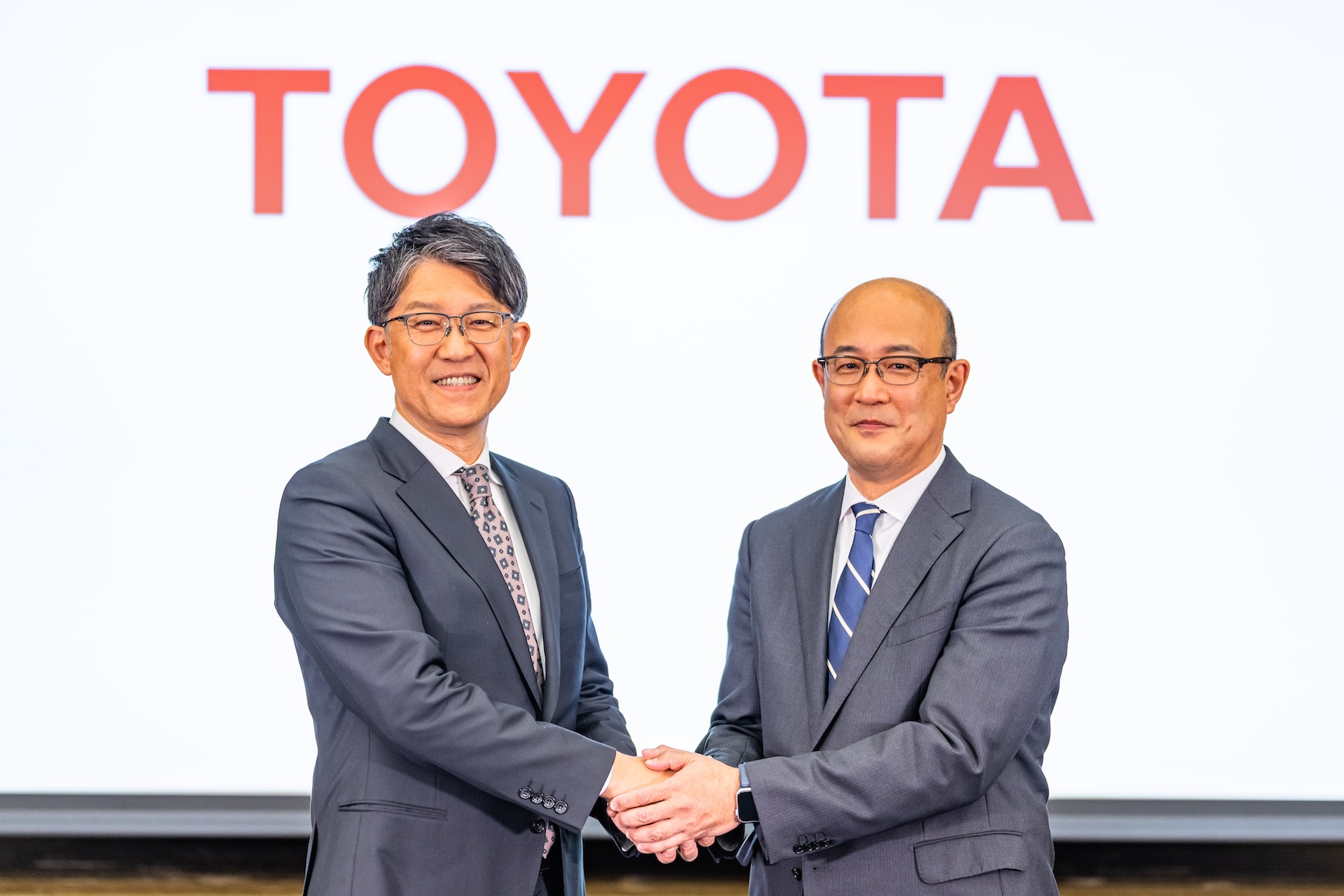
Toyota Motor announced that Chief Executive Officer Koji Sato will step down and be replaced by its Chief Financial Officer, Kenta Kon, marking the automaker’s second CEO transition in three years. This surprising move positions the world’s largest automaker with a finance-focused executive at the helm. The transition takes effect April 1, 2026.
Many analysts didn’t see this coming. The management change was not widely expected, yet it signals a clear strategic pivot for Toyota management changes 2026. Why would Toyota’s board choose this moment for such a dramatic shift? The answer lies in mounting pressures from multiple fronts.
Why Koji Sato Steps Down Toyota After Just Three Years
Chief Executive Koji Sato will step down after just three years at the helm of the world’s largest automaker, replacing the typical decade-long tenures Japanese executives usually enjoy. That’s two CEO changes in three years for a company historically known for glacial, deliberate succession planning.
Sato’s brief leadership wasn’t unsuccessful. Far from it. During Sato’s tenure, Toyota’s shares advanced 111%, including dividends, and the company delivered record-breaking sales of 10.5 million vehicles in 2025. However, market dominance doesn’t always translate to operational agility.
The real reason? Workload management and strategic restructuring. In October of last year, JAMA requested that Sato, who had been addressing industry issues as Vice Chairman of JAMA, assume the position of the next Chairman and continue to serve as the industry’s coordinator. The Board of Directors determined that contributing to the industry is Toyota’s responsibility and approved Sato’s appointment as Chairman of JAMA effective January 2026.
This created an impossible juggling act. Koji Sato steps down Toyota as CEO but doesn’t disappear. The leadership shakeup will take effect on April 1, with Sato assuming the position of vice chairman and a newly created role as chief industry officer. “Under this new leadership structure, Sato will focus on the broader industry, including Toyota, as Vice Chairman and CIO, while Kon will focus on internal company management as President and CEO,” the company said in a statement.
Kenta Kon Toyota CFO Background: From Secretary to CEO
Understanding the Kenta Kon Toyota CFO background reveals why he’s uniquely positioned for this role. Kon, who joined Toyota 35 years ago fresh out of Tohoku University with a bachelor’s degree in economics, became Toyoda’s personal secretary in 2008, serving him for about eight years. That proximity to power matters immensely in Japanese corporate culture.
Kenta Kon Operating Officer · Executive Bio Operating Officers · PDF · As of July 1, 2025 · Woven by Toyota, Inc. Mobility 3.0 Office · Chief Financial Officer · Date of birth · August 2, 1968 · Nationality · Japan · Education · Bachelor’s degree in economics, Tohoku University, 1991 · Career · Apr. 1991 · Joined Toyota Motor Corporation (TMC) Jan. 2017 · General Manager, Accounting Div.
His career trajectory accelerated quickly. He built his career in the finance department before being appointed Executive Vice President for Research and Development in 2019. A year later, he became Chief Financial Officer and subsequently joined the board of directors.
The new Toyota president brings something different to the table. Kenta Kon, often described as a numbers-focused executive, has been with Toyota since 1991. Unlike his predecessors who were “car guys,” Kenta Kon appointed Toyota CEO represents the first finance chief to lead the company since 2009.
Understanding the Toyota CEO Succession 2026 Strategy
The Toyota CEO succession 2026 process reflects careful strategic planning rather than reactive crisis management. In response, the Executive Appointment Meeting discussed the management impact of concurrently holding the roles of Toyota’s top executive, Chairman of JAMA, and Vice Chair of Keidanren, and considered the optimal new leadership structure in light of the current environmental changes and the individual strengths of each executive. Based on these discussions, the Executive Appointment Meeting proposed the new personnel structure at the board meeting held on February 6, and the proposal was approved.
What drove this thinking? Several converging pressures. Within Toyota, improving the company’s earning power, which forms the foundation for continuing to make ever-better cars, and lowering the break-even volume are immediate priorities. Concrete actions on these issues are urgently required. To achieve this, it is necessary to lead reforms across the entire company, not through functional segmentation but by addressing the value chain as a whole.
The Toyota executive reshuffle addresses these needs directly. As Toyota’s CFO, Kon has been at the forefront of efforts to improve the earnings structure and has also gained cross-functional management experience at Woven by Toyota, Inc. His dual expertise positions him perfectly for this moment.
The Impact of Toyota CEO Change on Automotive Industry Leadership
This Toyota leadership change sends ripples far beyond one company. Recognizing the threat the Japanese car industry faces from Chinese rivals, Toyota added, “As the automotive industry faces a challenging business environment, there is a growing need to accelerate practical initiatives for industry collaboration to strengthen international competitiveness.”
The automotive industry leadership landscape is shifting dramatically. The Japanese auto industry is heavily dependent on Toyota; it holds stakes in Subaru, Mazda, Isuzu and Suzuki, and its vast network of subsidiary companies supplies parts to the entire sector. As goes Toyota, so goes Japan’s car business as a whole, and this move could be seen as a way of shoring up defenses against BYD and China’s other automakers.
The impact of Toyota CEO change extends to how the company will compete globally. Yet Toyota also lost some market share during that time to more nimble Chinese rivals such as BYD, particularly in critical Southeast Asian markets. Kenta Kon’s financial acumen could help Toyota respond faster to these competitive threats.
What makes Kenta Kon different? His mindset. “Since I handle accounting … I’m extremely particular about profits and numbers that enable solid investments to develop cars.” This contrasts sharply with engineering-focused predecessors. Kon’s focus will be on improving Toyota’s profits. “My role will be establishing this good profit structure, this foundation, so that the people can take on courageous challenges,” he said at a Tokyo news conference, quoted by Automotive News. “I want to use that money for the future of Toyota.”
Toyota Financial Strategy Under New Leadership
The Toyota financial strategy is about to get significantly sharper. Among his top priorities is reducing break-even production volumes and enforcing fiscal discipline. Kon played a key role in recent cost-cutting strategies that helped the company manage fallout from supply chain breakdowns and rising US tariffs.
The timing matters. Toyota notably warned in August 2025 that it projects Trump’s tariffs will cost it roughly $9.5 billion in its fiscal year ending in March, creating massive pressure on margins. The company stuck to its earlier projection of a ¥1.45 trillion ($9.2 billion) hit to operating income for the fiscal year ending March 31, 2026. Despite pressure from US import tariffs, Toyota raised its full-year net profit forecast by 22%, bringing it to ¥3.57 trillion ($22.7 billion).
How did Toyota manage this? Cost discipline. The upward revision was driven in part by a weaker yen and continued cost-cutting efforts, though third-quarter net profit still dropped 43% year-on-year to ¥1.3 billion. Even so, the market responded positively, with shares closing 2% higher on the day.
Kon acknowledges the road ahead won’t be easy. “We must be realistic about the headwinds we face, including potential changes in global trade policies. We are bracing for a significant impact on our operating income, and our response must be a relentless focus on cost-efficiency and internal restructuring.”
New Toyota President’s Vision for Technology and Innovation
Despite his financial background, the new Toyota president isn’t abandoning innovation. Quite the opposite. Kon told a Friday press conference that Toyota had engineers leading the charge in technological development. “My role is to create a robust investment environment where they can freely experiment with various ideas,” he said.
Kenta Kon brings unique technology credentials. At present, Kon is also in charge of finances at mobility technology subsidiary, Woven by Toyota, a background that is likely to prove helpful as Toyota tries to close the software gap with Chinese rivals. This dual role gives him intimate knowledge of where Toyota needs to invest for the future.
What’s Toyota’s competitive advantage? Data at scale. He acknowledged that some rivals may have an early lead in EV development, but pointed to Toyota’s unique advantage: a global fleet of 150 million vehicles already on the road. The vast amount of data generated by that fleet, he said, will be a key asset in the development of future software-defined vehicles.
The EV strategy remains measured. Toyota sold fewer than 200,000 fully electric vehicles last year, dwarfed by the 4.4 million hybrids it delivered globally. The company is reviewing its previously ambitious target of 1.5 million annual EV sales, scaling expectations back to roughly 1 million by 2026 amid sluggish demand and trade friction.
Yet the commitment continues. And yet — ten new electric models are planned globally by 2027, including a three-row electric SUV headed for production in Kentucky and Indiana. Battery shipments from its North Carolina facility began last year, marking Toyota’s first in-house battery production site outside Japan.
What This Toyota Leadership Change Means for Employees and Stakeholders
The Toyota management changes 2026 create both opportunities and challenges internally. Toyota added that the leadership changes will help speed up decision-making amid industry challenges and accelerate its transformation into a more diversified mobility company.
Cultural change may be the biggest hurdle. He acknowledged the need for greater agility within the organisation, saying employees were “responsible but sometimes reluctant to change.” That’s diplomatic code for significant internal resistance.
For shareholders, the news has been positive. Shares were trading up 1.5% on Friday following the news. Markets appreciate Kon’s reputation for fiscal discipline and his close relationship with Chairman Akio Toyoda.
The board changes continue beyond April. Meanwhile, Toyota plans to make further board changes in June 2026, with Kon joining as a director and Sato resigning from the board. Additional leadership shifts will accompany these moves. Executive Vice President Yoichi Miyazaki will assume Kon’s former position as CFO.
Comparing Toyota’s Leadership Structure to Global Competitors
How does Kenta Kon appointed Toyota CEO compare to leadership trends elsewhere? Many global automakers have struggled with CEO transitions recently. Ford, Volkswagen, and Stellantis have all experienced significant leadership turbulence.
Toyota’s approach differs fundamentally. The reshuffle is being presented as a way to separate roles more clearly. According to a statement from Toyota, Sato will become Vice Chairman and Chief Industry Officer, a new position. He will oversee broader industry engagement and strategic positioning. Kon, on the other hand, will focus on internal management and company structure.
This dual-leadership model represents innovation within traditional Japanese corporate structure. This dual-leadership model hints at a desire to streamline decision-making, especially as the company adapts to faster product cycles and external pressures. It’s a structure already common in tech firms but less so in Japan’s traditionally conservative corporate world.
The timing aligns with broader industry pressures. “This change in roles is intended to accelerate management decision-making in response to changes in the internal and external environment,” the company said in a statement. Toyota has “considered the optimal new leadership structure in light of the current environmental changes and the individual strengths of each executive,” it said.
The Road Ahead: Challenges Facing the New Toyota CEO
What challenges await Kenta Kon? The list is daunting. Trade tensions top the concerns. Operating income fell 2% to 1.19 trillion yen, reflecting continued pressure from U.S. tariffs. The result still topped LSEG’s mean estimate of 1.09 trillion yen.
Competition from China intensifies daily. In their new roles, Kon will focus on internal company management while Sato will focus on the broader industry – changes intended to accelerate decision-making at a time when Chinese rivals are disrupting the auto business with alarming speed.
Governance issues also demand attention. The shakeup coincides with a high-profile deal for the Toyota group, which is pushing to take Toyota Industries Corp. private in a tender offer that closes next week. The effort is facing strong pushback from activist investor Elliott Investment Management, which has argued that the proposal undervalues the company, and turned the potential buyout into a test of Japan’s corporate governance reforms.
Despite these headwinds, the outlook remains optimistic. Sales revenue for the December quarter rose 8.6% from a year earlier to 13.46 trillion yen ($85.8 billion), beating LSEG SmartEstimates by about 10%. Strong fundamentals provide Kon with a solid foundation from which to lead.
The automotive industry leadership transition at Toyota reflects deeper transformations sweeping the global auto sector. Financial discipline, software expertise, and strategic agility now matter as much as engineering excellence. Kenta Kon appointed Toyota CEO embodies this evolution, bringing the financial rigor needed to navigate unprecedented industry disruption while maintaining Toyota’s legendary operational excellence.
Whether this Toyota CEO succession 2026 strategy succeeds depends on Kon’s ability to balance competing demands: maintaining profitability while investing in future technologies, preserving Toyota culture while accelerating change, and competing globally while strengthening Japan’s broader automotive ecosystem. The stakes couldn’t be higher—for Toyota, for Japan, and for the future of mobility itself.
Frequently Asked Questions
Why did Koji Sato step down as Toyota CEO after only three years?
Koji Sato steps down Toyota CEO to assume the role of Vice Chairman and Chief Industry Officer. The transition allows him to focus on broader automotive industry initiatives through his roles as Chairman of JAMA and Vice Chair of Keidanren, while Kenta Kon handles internal company management. This strategic restructuring aims to accelerate decision-making during a critical period of industry transformation.
What is Kenta Kon’s background and why was he chosen as the new Toyota CEO?
The Kenta Kon Toyota CFO background includes 35 years at Toyota, starting in 1991 after graduating from Tohoku University with an economics degree. He served as Chairman Akio Toyoda’s personal secretary for eight years before becoming CFO in 2020. His financial expertise, cost-cutting strategies, and experience at Woven by Toyota make him uniquely qualified to improve earnings structure and lead comprehensive company-wide reforms.
How will the Toyota leadership change affect the company’s electric vehicle strategy?
The Toyota leadership change maintains the company’s multi-pathway approach to electrification. While Toyota sold fewer than 200,000 EVs last year compared to 4.4 million hybrids, Kenta Kon appointed Toyota CEO signals commitment to ten new electric models by 2027. Kon’s role is creating a robust financial foundation that allows engineers to innovate across battery technology, software-defined vehicles, and autonomous driving systems.
What are the biggest challenges facing the new Toyota CEO?
The impact of Toyota CEO change centers on addressing multiple pressures: US tariffs projected to cost $9.2 billion in operating income, intensifying competition from Chinese automakers like BYD, governance criticism over the Toyota Industries buyout, and the need to reduce break-even production volumes. Additionally, Kon must balance cost discipline with investments in software and electrification while maintaining Toyota’s market leadership position.
When does Kenta Kon officially become Toyota’s CEO?
The Toyota CEO succession 2026 takes effect April 1, 2026, when Kenta Kon appointed Toyota CEO officially assumes the roles of President and Chief Executive Officer. Further board changes will occur in June 2026, when Kon joins as a director and Koji Sato resigns from the board while maintaining his Vice Chairman and Chief Industry Officer positions.
How does this Toyota executive reshuffle compare to past leadership transitions?
The Toyota executive reshuffle marks the second CEO change in three years for a company historically known for decade-long leadership tenures. This represents Toyota’s first finance chief leading the company since 2009, shifting from “car guy” CEOs with engineering backgrounds. The new dual-leadership structure, where Sato focuses externally and Kon internally, resembles tech company models more than traditional Japanese corporate structures.
What does Toyota’s financial strategy look like under Kenta Kon’s leadership?
The Toyota financial strategy under Kon emphasizes reducing break-even production volumes, enforcing fiscal discipline, and maintaining profitability despite tariff pressures. Toyota raised its full-year net profit forecast to ¥3.57 trillion ($22.7 billion) through cost-cutting and currency advantages. Kon’s approach focuses on establishing a solid profit structure that funds future technological investments while navigating trade uncertainties and competitive pressures.