

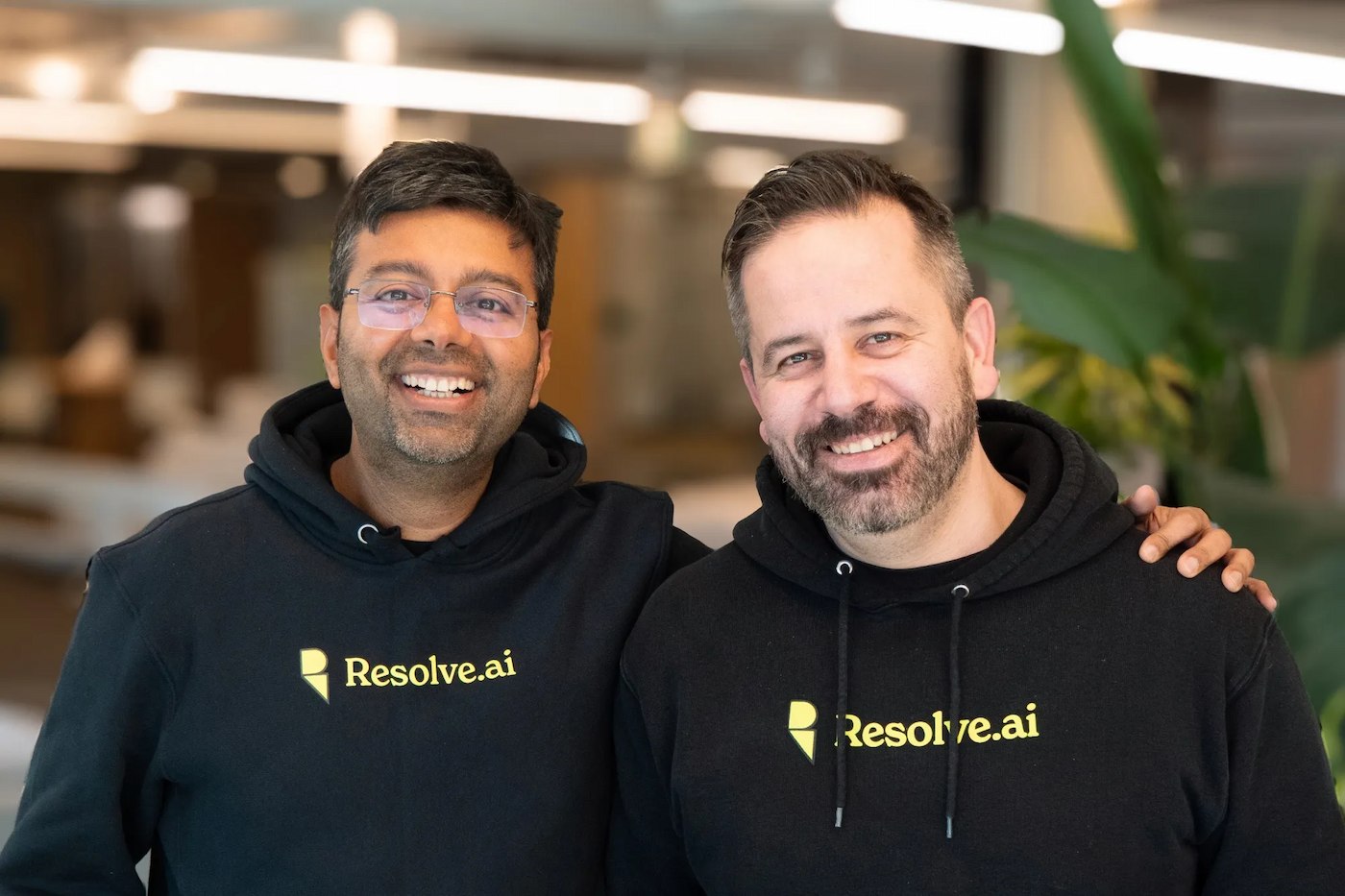
Resolve AI has raised $125 million in a non-blended Series A funding at a $1 billion valuation, led by Lightspeed Venture Partners. This milestone instantly catapults the San Francisco-based AI SRE startup into unicorn territory, marking one of the fastest ascents to billion-dollar status in the AI infrastructure space. Just 16 months after emerging from stealth, the company is reshaping how enterprises manage production software operations with autonomous AI agents.
The Resolve AI funding round signals a fundamental shift in enterprise technology priorities. While companies pour billions into AI models for code generation, a critical bottleneck remains: keeping that code running reliably in production. Downtime costs escalate rapidly—more than half of significant outages now exceed $100,000 in total cost—making production operations a strategic imperative rather than an afterthought.
Why Resolve AI Funding Matters for Enterprise Operations
Engineers already spend roughly 70% of their time keeping production systems running – not building new features. Complexity compounds the problem. Modern cloud-native architectures spread across microservices, Kubernetes clusters, and multi-cloud environments create sprawling failure surfaces that overwhelm human operators.
The co-founders have two prior exits to Splunk and VMware, co-created OpenTelemetry, the global open-source standard for managing telemetry data, and most recently led Splunk’s observability business. Spiros Xanthos and Mayank Agarwal bring deep observability DNA to the challenge, having witnessed firsthand how traditional monitoring tools generate noise rather than actionable insights.
The Lightspeed Resolve AI investment recognizes this massive market gap. Today, Resolve AI is owning production – delivering real impact for enterprises and commanding high six- and seven-figure ACVs. This pricing power reflects genuine value creation, not speculative hype.
How the Resolve AI Funding Round Positions the AI SRE Startup
Existing investors Unusual Ventures, Artisanal Ventures and A* also participated, along with Greylock Partners, which led the startup’s $35 million seed round in late 2024. The investor syndicate brings strategic advantages beyond capital. Greylock’s track record with developer infrastructure companies and Lightspeed’s aggressive AI portfolio—including Anthropic, xAI, Databricks, Mistral, Glean, Abridge, and Skild AI—position Resolve AI within powerful networks.
Sebastian Duesterhoeft, Partner at Lightspeed Venture Partners, emphasized the timing. “While software development has been one of the fastest-growing applications of AI, Spiros and Mayank recognized early that the real value, and the harder problem, is in production.” This insight drives the firm’s conviction in AI for production operations as a category-defining opportunity.
The Resolve AI unicorn status arrives amid broader enterprise AI maturation. Only 8.6% of companies report having AI agents deployed in production, while 14% are still developing agents in pilot form and 63.7% report no formalized AI initiative. Resolve AI’s production deployments with marquee customers demonstrate real traction where most companies remain stuck in pilot purgatory.
Enterprise AI SRE Platforms Transform Production Operations
Traditional automation failed because it lacked contextual awareness. Scripts break when systems change. Runbooks become outdated. Alert storms bury critical signals beneath false positives. The undocumented operational knowledge required to run these systems is impossible to codify or scale. Resolve AI solves this by combining foundation and custom models, and training specialized agents that learn each organization’s specific stack, business logic, and operational patterns.
The platform operates across code, infrastructure, and telemetry simultaneously. Resolve AI’s multi-agent system operates across code, infrastructure, and telemetry to triage alerts, investigate incidents, and help with production debugging. Rather than just correlating signals or summarizing logs, Resolve AI conducts structured investigations that are designed to mirror how expert production engineers think.
Customer results validate the approach. Coinbase has reported a 72% reduction in time spent investigating critical incidents, while Zscaler has reduced the number of engineers required per incident by 30%. These aren’t marginal improvements—they represent fundamental shifts in operational efficiency.
The company has already attracted enterprise customers, including Coinbase, DoorDash, MongoDB, MSCI, Salesforce, and Zscaler, positioning its platform to reduce operational overhead, speed recovery during incidents, and improve reliability metrics such as mean time to resolution. This customer roster spans fintech, logistics, databases, and cybersecurity, demonstrating horizontal applicability.
AI for Production Operations Addresses Critical Market Need
The timing of Resolve AI funding aligns with enterprise infrastructure evolution. AI adoption is both widespread and increasingly focused on operational performance. 73% of respondents said they believe they are “on par” or “ahead” of peers in AI maturity. Yet most AI investments target development workflows rather than production reliability.
Global investment in generative AI solutions more than tripled from 2024 to 2025, reaching roughly $37 billion in 2025. This makes enterprise AI one of the fastest-growing software segments ever. Within this explosive growth, infrastructure layers remain underbuilt relative to model and application layers.
Site reliability engineering faces unprecedented strain. The 2025 Stack Overflow Developer Survey found that 84 percent of developers are using or plan to use AI tools, up from 76 percent the year before. Adoption is widespread, but trust is uneven. Engineers won’t hand production operations to AI without transparency and reliability.
The enterprise AI SRE platforms category is crystallizing around autonomous incident response. The emerging category is known as AI SRE. Competitors include Traversal, an AI SRE startup that raised a $48 million Series A led by Kleiner Perkins, with participation from Sequoia. The race to define this category is accelerating.
What Makes the Lightspeed Resolve AI Investment Strategic
Lightspeed is a global, multi-stage, venture capital firm managing over $40B in assets. The firm made its first investment in the space in 2012, a decade prior to much of the industry. This AI-native positioning gives them pattern recognition around which infrastructure layers will capture value.
We’re thrilled to partner with Resolve AI, the company helping engineering teams put the management of production code on autopilot. Lightspeed’s blog post announcing the investment details their thesis around production bottlenecks. As AI generates more code faster, the operational burden increases proportionally. As AI generates more code faster, this problem isn’t going away. It’s getting dramatically bigger.
The investment structure merits attention. However, the company’s actual blended valuation was lower because of a multi-tranched structure. In this setup, investors purchased some equity at a $1 billion valuation but acquired the remainder — likely a larger percentage of the round — at a lower price. This approach, recently become popular for the most sought-after AI startups, balances headline credibility with downside protection.
The startup’s annual recurring revenue (ARR) is approximately $4 million, according to sources. This implies a valuation multiple exceeding 250x ARR—aggressive even by AI standards. However, Resolve’s unicorn valuation suggests that AI infrastructure spending is shifting from model training to operational resilience.
The Resolve AI Funding Round Accelerates Product Development
The new funding will accelerate product development, expand the engineering and go-to-market teams, and support growing enterprise adoption as Resolve AI scales AI for prod. The capital enables simultaneous investments across multiple fronts that startups typically sequence.
Engineering expansion proves critical for infrastructure plays. When an incident begins, Resolve’s planner agent orchestrates specialized sub agents – each trained on different tools and skills – to systematically triage issues, form hypotheses, and then prove or disprove each hypothesis by gathering evidence across integrated systems. The system constructs a knowledge graph mapping how services, pods, and components interact, capturing the tribal knowledge that previously lived only in senior engineers’ heads.
This multi-agent architecture requires deep systems expertise. Resolve AI positions itself as an “AI SRE” platform that sits atop existing observability and incident management stacks. It ingests telemetry from tools like Splunk, Datadog, Grafana, and cloud provider services, correlates signals with configuration and deployment data, and then proposes or executes runbooks via integrations with Kubernetes, Terraform, and ticketing systems.
The go-to-market investment targets enterprise buyers navigating production complexity. If Resolve AI can interoperate cleanly with the monitoring stacks companies already own—and demonstrate measurable reductions in false positives, ticket volume, and MTTR—it can land quickly without forcing rip-and-replace. Early go-to-market efforts are likely to target regulated industries and large cloud-native engineering teams that run 24×7 on-call rotations.
How Resolve AI Unicorn Status Validates the AI SRE Market
Unicorn valuations in infrastructure categories signal market inflection points. San Francisco–based Resolve AI has raised $125 million in a Series A round, pushing the company’s valuation to $1 billion and placing it among the latest AI unicorns focused on enterprise software reliability. This milestone attracts talent, customers, and ecosystem partners who view billion-dollar validation as risk mitigation.
The speed matters equally. Resolve AI has raised more than $150 million in total funding just 16 months after emerging from stealth. This velocity reflects both founder credibility and market urgency. Enterprises can’t wait years for production operations solutions—they need them now.
Enterprise AI startup Resolve AI has confirmed it has raised $125 million in new funding, pushing the company to unicorn valuation status as demand accelerates for AI-driven site reliability engineering (SRE). The funding highlights a growing shift among large enterprises: reliability, not experimentation, is becoming the defining challenge of AI adoption.
The competitive dynamics favor early movers. The financing underscores accelerating investor appetite for AI systems that can prevent and remediate outages across modern, cloud-native infrastructure. As enterprises standardize on AI SRE platforms, switching costs increase through knowledge graph accumulation and workflow integration.
The Broader Context for Resolve AI Funding in 2026
Enterprise AI infrastructure spending is bifurcating. The AI market will bifurcate as the bubble pops either in 2026 or 2027. Concerns about AI infrastructure capital expenses and debt will be what really scales in 2026. While training infrastructure faces saturation, operational infrastructure remains underbuilt.
Therefore, in 2026 we expect a concerted push to break out of “pilot purgatory” and deploy AI at production scale. CIOs will prioritize moving from isolated proof-of-concepts to integrated, enterprise-wide AI solutions that drive real business outcomes. Resolve AI directly addresses this deployment bottleneck.
The market opportunity expands beyond incident response. Resolve AI’s vision extends far beyond incident response. The production context that its system learns, and the ability to reason and act across code, infrastructure, and telemetry, creates a foundation for managing a much broader set of production workflows. Adjacent use cases include cost optimization, capacity planning, and production-aware coding assistance.
Organizations that embed agentic AI in logistics report 61% higher revenue growth than peers, while manufacturers such as Unilever lifted overall equipment effectiveness by 85% through AI-driven optimisation. Decision cycles that once took days now shrink to minutes. Similar productivity unlocks await software operations.
What the Resolve AI Funding Means for Engineering Teams
For practitioners, the Resolve AI funding round validates production operations as a strategic investment area. The hardest part of software engineering isn’t writing code. It’s running production. We started Resolve AI a little over a year ago to help engineers debug and operate production systems. Today, our agents are already running in production at some of the world’s largest technology and financial services companies.
The human element remains central. Human-in-the-loop remains the default for high-risk steps, with execution paths captured for audit trails required by SOC 2 and ISO 27001 programs. AI SRE augments rather than replaces engineering judgment.
Because it captures and codifies knowledge across systems, AI SRE also shortens onboarding time for new engineers, reduces the ad-hoc ‘shoulder taps’ that consume peacetime hours, and automates large parts of postmortem creation. This means faster ramp, fewer interruptions, and less fatigue for teams already stretched thin.
The organizational impact extends beyond technical metrics. Incidents don’t just impact systems, they impact people. You, the human in the loop, juggling priorities, fielding alerts with one hand while texting “I’ll be late” with the other. Maybe you’re driving carpool to your kid’s soccer game. Reducing operational toil improves engineer quality of life alongside system reliability.
Conclusion: The Future of Production Operations is Autonomous
The Resolve AI funding represents more than capital deployment—it marks enterprise acceptance of autonomous production operations as viable and necessary. They’re not just adding features; they’re building a full-stack AI company from the ground up with custom models and agents purpose-built for managing complex software in production. We believe Resolve AI is defining an entirely new category.
The transition from reactive to proactive operations accelerates. The future of SRE is autonomous operations, where systems self-monitor, self-heal, and self-scale. By combining DevOps automation with AI-driven intelligence, SREs can transition from firefighting to foresight. While fully autonomous systems remain distant, progressive delegation to AI agents reshapes engineering workflows today.
For enterprises evaluating AI investments, the message crystallizes: infrastructure layers that keep AI-generated code running reliably matter as much as the code generation itself. The Resolve AI unicorn status validates this thesis with capital, customers, and competitive positioning that will shape production operations for years to come.
Frequently Asked Questions
How much funding did Resolve AI raise and at what valuation?
Resolve AI raised $125 million in a non-blended Series A funding round at a $1 billion valuation, led by Lightspeed Venture Partners. The round included participation from existing investors Greylock Partners, Unusual Ventures, Artisanal Ventures, and A*, bringing the company’s total funding to over $150 million just 16 months after emerging from stealth.
What does Resolve AI’s AI SRE platform do?
Resolve AI provides an autonomous site reliability engineering platform that uses AI agents to monitor, investigate, and remediate production incidents. The platform operates across code, infrastructure, and telemetry to triage alerts, diagnose root causes, and suggest or execute fixes—reducing mean time to resolution while keeping engineers in control of critical decisions.
Who are the founders of Resolve AI and what is their background?
Resolve AI was founded by Spiros Xanthos and Mayank Agarwal, observability pioneers with over 20 years of experience building production systems at scale. They co-created OpenTelemetry, the global open-source standard for telemetry data, had two prior exits to Splunk and VMware, and most recently led Splunk’s observability business.
Which companies use Resolve AI and what results have they achieved?
Resolve AI’s enterprise customers include Coinbase, DoorDash, MongoDB, MSCI, Salesforce, and Zscaler. Coinbase reported a 72% reduction in time spent investigating critical incidents, while Zscaler reduced the number of engineers required per incident by 30%, demonstrating significant operational efficiency gains.
Why is Lightspeed Venture Partners investing in Resolve AI?
Lightspeed recognizes that while AI has transformed code generation, the critical bottleneck is running software reliably in production. Engineers spend roughly 70% of their time on operational work rather than building features. As AI generates more code faster, production operations become exponentially more complex, making autonomous AI SRE a strategic infrastructure category.
What is the AI SRE market and who are Resolve AI’s competitors?
AI SRE (Site Reliability Engineering) is an emerging category where autonomous AI agents handle production operations, incident response, and system reliability tasks. Resolve AI competes with startups like Traversal, which raised a $48 million Series A from Kleiner Perkins and Sequoia. The category is rapidly gaining traction as enterprises seek to automate operational complexity.
How will Resolve AI use the $125 million in funding?
The funding will accelerate product development to expand the platform’s AI capabilities, grow the engineering team to handle the technical complexity of multi-agent systems, build out go-to-market teams for enterprise sales, and support growing customer adoption as Resolve AI scales its “AI for prod” offering across more industries and use cases.