
Mukesh Ambani’s Bold Vision: India’s Startup Ecosystem Poised to Generate 100 New Reliances

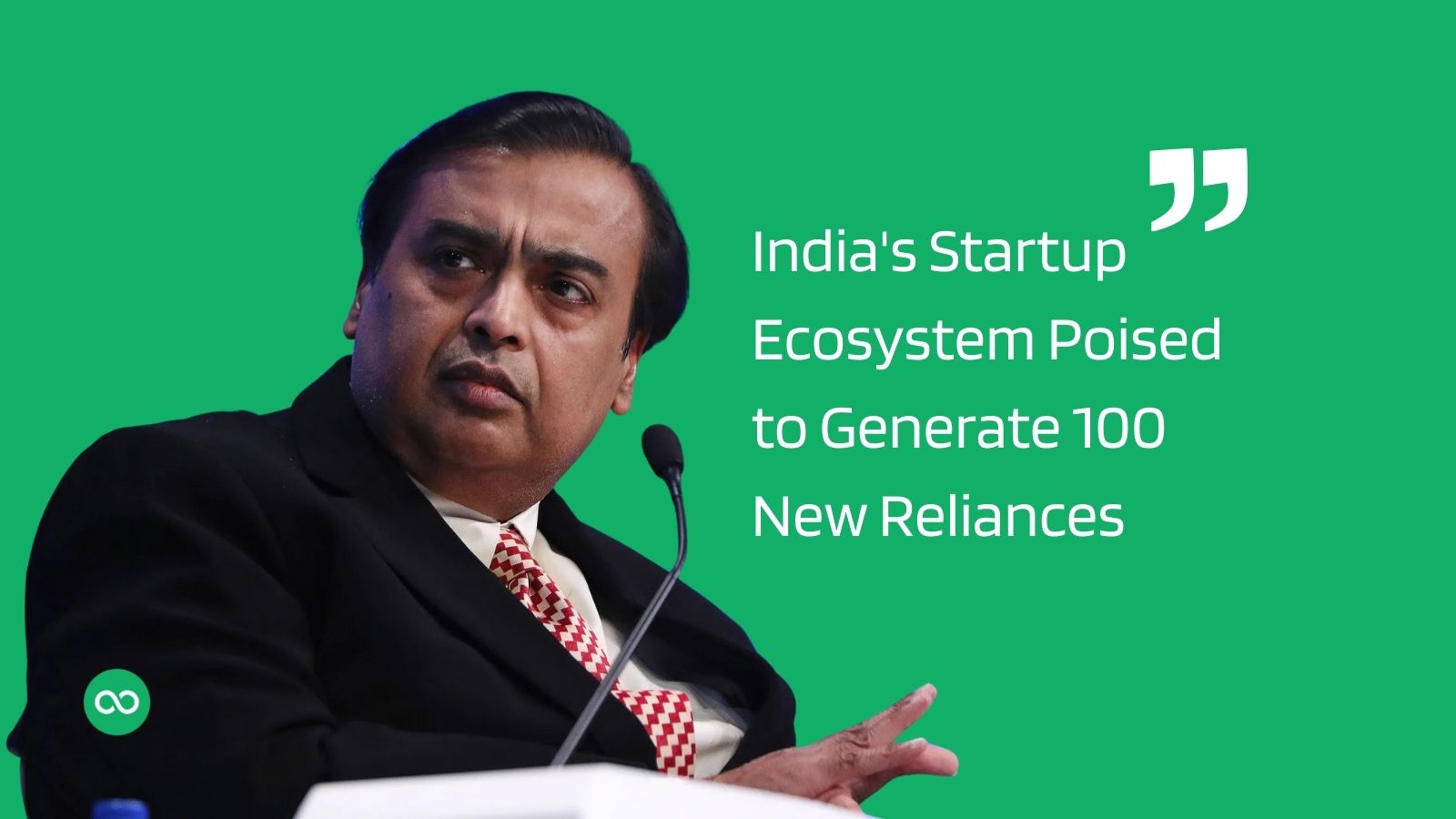
Mukesh Ambani, Asia’s richest person, declared at a recent JioBlackRock event that India’s burgeoning entrepreneurial landscape holds the potential to create 100 companies matching Reliance Industries’ scale and impact. This statement isn’t mere corporate optimism. It reflects a seismic shift in how Indian business leaders view the country’s economic trajectory. With India’s startup valuation crossing $340 billion and the ecosystem ranking third globally, Ambani’s prediction carries substantial weight in shaping investment patterns and entrepreneurial ambitions.
Understanding Ambani’s ‘100 New Reliances’ Statement
The Mukesh Ambani Indian startups prediction stems from concrete observations about India’s evolving business environment. When he speaks about 100 new Reliances, he’s referencing companies that mirror his conglomerate’s characteristics: massive scale, technological innovation, and societal impact. Reliance Industries currently operates across telecom, retail, energy, and digital services with revenues exceeding $100 billion annually.
What makes this vision realistic? Several factors converge to support this ambitious forecast. India now boasts over 100 unicorns—startups valued above $1 billion. Compare that to just 10 unicorns in 2016. The acceleration is undeniable.
Government initiatives like Startup India have catalyzed this growth, providing tax benefits, simplified compliance, and funding access. The Digital India program has created infrastructure enabling startups to reach 800 million internet users. These aren’t abstract policies. They translate into tangible entrepreneurial opportunities.
The JioBlackRock Event Highlights and Strategic Context
The timing of Ambani’s statement at the JioBlackRock event highlights carries strategic significance. This wasn’t a casual remark at a social gathering. He addressed an audience of investors, entrepreneurs, and policymakers specifically assembled to discuss India’s financial future. The event showcased the newly formed JioBlackRock joint venture, combining Reliance’s market understanding with BlackRock’s $10 trillion asset management expertise.
Why does this venue matter? Because it signals capital availability. When the world’s largest asset manager partners with India’s most influential conglomerate, it creates a financial runway for ambitious ventures. BlackRock’s commitment to India suggests institutional investors see the same potential Ambani articulates.
His speech emphasized youth entrepreneurship, noting that India’s median age of 28 creates a demographic dividend. Young founders bring technological fluency, global perspectives, and risk appetite. They’re building companies without legacy constraints.
India Startup Ecosystem Growth: Current Momentum
The India startup ecosystem growth trajectory reveals impressive metrics. Funding in Indian startups reached $42 billion in 2021, though it normalized to $25 billion in 2023 amid global corrections. Yet this “correction” still represents robust investment compared to pre-2020 levels.
Several sectors drive this expansion:
Fintech Revolution: India processes 10 billion UPI transactions monthly, dwarfing global competitors. Companies like Paytm, PhonePe, and Razorpay built infrastructure serving hundreds of millions. The government’s recent ₹2,000 crore UPI incentive announcement further accelerates adoption.
E-commerce and D2C Brands: Nykaa’s recent Q3 results showed 157% profit growth, demonstrating that Indian consumer brands can achieve profitability while scaling. Direct-to-consumer models bypass traditional retail inefficiencies, reaching tier-2 and tier-3 cities directly.
Deeptech and Defense: EyeROV’s ₹13 crore funding for underwater robotics shows capital flowing into high-barrier, high-value segments. The government’s Production Linked Incentive schemes encourage hardware innovation.
Health and Wellness: Good Monk raised ₹33 crore for preventive nutrition, tapping into India’s wellness market projected to reach $30 billion by 2027. Consumers increasingly prioritize health investments over discretionary spending.
Reliance Industries Future Vision as a Blueprint
Understanding the Reliance Industries future vision helps contextualize what 100 new Reliances might look like. Reliance didn’t become India’s most valuable company through incremental improvements. It disrupted entire industries through aggressive capital deployment and technological adoption.
Consider Jio’s telecom entry in 2016. The company offered free voice calls and data at unprecedented prices, forcing competitors to adapt or exit. Within four years, Jio captured 400 million subscribers. That’s the scale and speed Ambani envisions for future startups.
His vision emphasizes three pillars:
- Technology Integration: Future giants will embed AI, blockchain, and IoT into their core operations, not treat them as add-ons.
- Mass Market Focus: Success comes from serving hundreds of millions of Indians, not niche segments. Affordable pricing with high volumes creates sustainable businesses.
- Ecosystem Thinking: Winners will build platforms where multiple stakeholders thrive—customers, partners, and complementary businesses.
The semiconductor success under India’s Design-Linked Incentive scheme, where seven startup-designed chips reached fabrication, demonstrates this ecosystem approach. Government support, global partnerships, and domestic talent converge.
Ambani Prediction India 2026: What Needs to Change
The Ambani prediction India 2026 acknowledges current strengths while implicitly highlighting gaps. Creating 100 new Reliances requires more than optimism. Specific structural changes must occur.
Capital Market Maturity: India needs deeper public markets that support high-growth companies through volatility. The number of IPOs increased, but retail investors often panic during corrections. Patient capital distinguishes mature markets.
Regulatory Agility: Paytm’s regulatory challenges with the Reserve Bank of India demonstrate that even successful companies face sudden compliance hurdles. Predictable regulation helps entrepreneurs plan long-term.
Talent Retention: Many skilled professionals still prefer US opportunities. Creating 100 new Reliances demands retaining top engineering, product, and business talent domestically. Stock options and career growth must compete with Silicon Valley packages.
Infrastructure Expansion: While metros offer world-class facilities, tier-2 cities need improved logistics, internet connectivity, and business services. Real growth lies in Jaipur, Coimbatore, and Indore—not just Bangalore and Mumbai.
Failure Acceptance: Indian society traditionally stigmatizes business failure. The startup success India narrative must celebrate learning from failed ventures. Most successful founders previously attempted unsuccessful businesses.
Indian Economy Startup Potential Across Sectors
The Indian economy startup potential spans industries ripe for disruption. Let’s examine sectors where 100 new Reliances might emerge:
Clean Energy: India targets 500 GW renewable capacity by 2030. Solar installation, battery storage, and green hydrogen present massive opportunities. Startups combining technology with manufacturing could dominate.
Education Technology: Despite recent corrections, India’s edtech market addresses fundamental needs. With 260 million students, personalized learning, skill development, and vernacular content offer huge scope.
Agriculture Technology: Agriculture employs 42% of India’s workforce yet contributes only 18% to GDP. This efficiency gap screams for innovation. Precision farming, supply chain optimization, and farmer financing create billion-dollar opportunities.
Healthcare Delivery: India has 0.7 doctors per 1,000 people versus the WHO recommendation of 1 per 1,000. Telemedicine, diagnostic networks, and affordable insurance models can bridge this gap profitably.
Manufacturing and Exports: The China+1 strategy creates openings for Indian manufacturers. Electronics, textiles, and pharmaceuticals represent sectors where Indian companies can capture global market share.
Social Media for India: Treefe Technology crossing 1 million downloads shows appetite for indigenous platforms. Regional language content, cultural specificity, and data sovereignty drive adoption.
Building 100 New Reliances: Practical Requirements
Translating the vision of 100 new Reliances from aspiration to reality demands specific actions by founders, investors, and policymakers.
For Entrepreneurs:
- Think multi-decade timelines rather than quick exits. Reliance spent decades building refineries before entering telecom.
- Build for India first, then export the model. Solving Indian problems at Indian price points creates massive businesses.
- Focus on fundamentals—unit economics, customer retention, and operational excellence matter more than vanity metrics.
- Embrace manufacturing and physical infrastructure, not just software. India needs businesses creating tangible products.
For Investors:
- Deploy patient capital with 10-15 year horizons. Institutional investors should structure funds supporting long-term building.
- Look beyond Bangalore and Gurgaon. Tier-2 cities offer lower costs and untapped talent pools.
- Support technically complex businesses requiring substantial R&D. Software-only models face intense competition.
- Help portfolio companies navigate regulations proactively rather than reacting to crises.
For Policymakers:
- Simplify land acquisition for manufacturing facilities. Complex processes delay projects by years.
- Create more SEZs with streamlined approvals. Reducing bureaucracy directly impacts startup success rates.
- Strengthen intellectual property protection. Companies investing in R&D need confidence their innovations receive protection.
- Facilitate easier hiring and restructuring. Current labor laws discourage employment growth.
Challenges in Realizing the 100 New Reliances Vision
Despite optimism surrounding the 100 new Reliances concept, significant obstacles exist. Acknowledging them ensures realistic planning.
Capital Concentration: Funding still concentrates in few metros and familiar sectors. Hardware startups struggle finding investors compared to consumer internet companies. Geographic and sector diversity needs improvement.
Exit Challenges: India lacks sufficient acquirers for mid-sized startups. Few Indian companies pursue $500 million acquisitions. This forces founders toward IPOs or indefinite private operations.
Competition from Giants: Reliance, Tata, Adani, and other conglomerates enter promising sectors with massive resources. Startups competing against these behemoths face uphill battles unless they find defensible niches.
Global Headwinds: Rising interest rates globally reduced risk appetite. Geopolitical tensions affect supply chains and market access. Indian startups operate within these constraints.
Talent Wars: Tech giants like Google and Microsoft aggressively hire Indian talent. Startups must offer compelling equity packages and mission-driven cultures to compete.
The Role of Technology in Creating 100 New Reliances
Technology serves as the great equalizer enabling startups to challenge incumbents. The Mukesh Ambani Indian startups prediction fundamentally relies on technological adoption.
Artificial Intelligence: AI democratizes capabilities previously requiring massive teams. Small companies can now offer personalized experiences, predictive analytics, and automated operations.
Cloud Infrastructure: Startups access enterprise-grade computing without upfront capex. AWS, Azure, and Google Cloud enable global-scale operations from day one.
Open Source: Free access to frameworks, tools, and libraries accelerates development. Indian developers contribute significantly to global open-source projects.
5G Connectivity: Faster networks enable new use cases—AR/VR applications, real-time analytics, and IoT deployments become practical.
Blockchain and Web3: Decentralized systems offer transparency and disintermediation opportunities in finance, supply chain, and governance.
Technology alone doesn’t guarantee success. Execution, market understanding, and persistent iteration distinguish winners. But technology provides the foundation making audacious visions achievable.
Conclusion: From Vision to Reality
Ambani’s statement about 100 new Reliances transcends corporate cheerleading. It represents a calculated assessment of India’s entrepreneurial trajectory backed by demographic advantages, improving infrastructure, and increasing capital availability. The vision challenges us to think beyond incremental progress toward transformational ambition.
Will India actually produce 100 companies matching Reliance’s scale? Perhaps not literally. But the directional bet on Indian entrepreneurship appears sound. The startup success India has achieved already—over 100 unicorns, millions employed, and global recognition—validates the ecosystem’s potential.
For aspiring entrepreneurs, this moment offers unprecedented opportunity. The infrastructure exists. Capital flows, though selective, remains available. Markets await solutions to persistent problems. The question isn’t whether India can build great companies. It’s whether you’ll be among those building them.
Start today. Identify problems affecting millions. Build solutions leveraging technology. Execute relentlessly. The next Reliance might not emerge from Mumbai’s skyscrapers but from your garage, co-working space, or college dorm. Ambani’s prediction is an invitation—will you accept it?
Frequently Asked Questions
What did Mukesh Ambani mean by 100 new Reliances?
Mukesh Ambani predicts that India’s startup ecosystem will produce 100 companies matching Reliance Industries’ scale, technological innovation, and societal impact. This reflects his confidence in Indian entrepreneurship, favorable demographics, improving infrastructure, and increasing capital availability supporting ambitious ventures across multiple sectors.
When did Mukesh Ambani make the 100 new Reliances statement?
Mukesh Ambani made the statement about 100 new Reliances at a JioBlackRock event in early February 2026. The event focused on India’s financial future and featured discussions among investors, entrepreneurs, and policymakers about the country’s economic trajectory and startup potential.
Which sectors will likely produce the 100 new Reliances?
Sectors with potential to produce companies at the scale of 100 new Reliances include clean energy, fintech, e-commerce, healthcare delivery, education technology, agriculture technology, manufacturing for exports, deeptech, and indigenous social media platforms. These areas combine large addressable markets with technological innovation opportunities.
What challenges exist in achieving the 100 new Reliances vision?
Key challenges include capital concentration in few metros and sectors, limited acquisition opportunities for mid-sized startups, competition from established conglomerates, global economic headwinds affecting funding, talent wars with tech giants, regulatory unpredictability, and infrastructure gaps in tier-2 and tier-3 cities.
How does India’s current startup ecosystem support the 100 new Reliances prediction?
India’s startup ecosystem now includes over 100 unicorns, ranks third globally, and has received billions in investment. Government initiatives like Startup India, Digital India infrastructure reaching 800 million users, improving capital markets, and demographic advantages with a median age of 28 provide foundational support.
What role does technology play in creating 100 new Reliances?
Technology serves as the fundamental enabler through AI democratizing advanced capabilities, cloud infrastructure eliminating upfront capital requirements, open-source tools accelerating development, 5G connectivity enabling new use cases, and blockchain offering decentralization opportunities. These technologies allow startups to compete with established players.
What should entrepreneurs do to build one of the 100 new Reliances?
Entrepreneurs should think in multi-decade timelines, build for India’s specific needs and price points first, focus on strong unit economics rather than vanity metrics, embrace manufacturing and physical infrastructure beyond just software, solve problems affecting millions of people, and execute relentlessly while navigating regulatory environments proactively.