

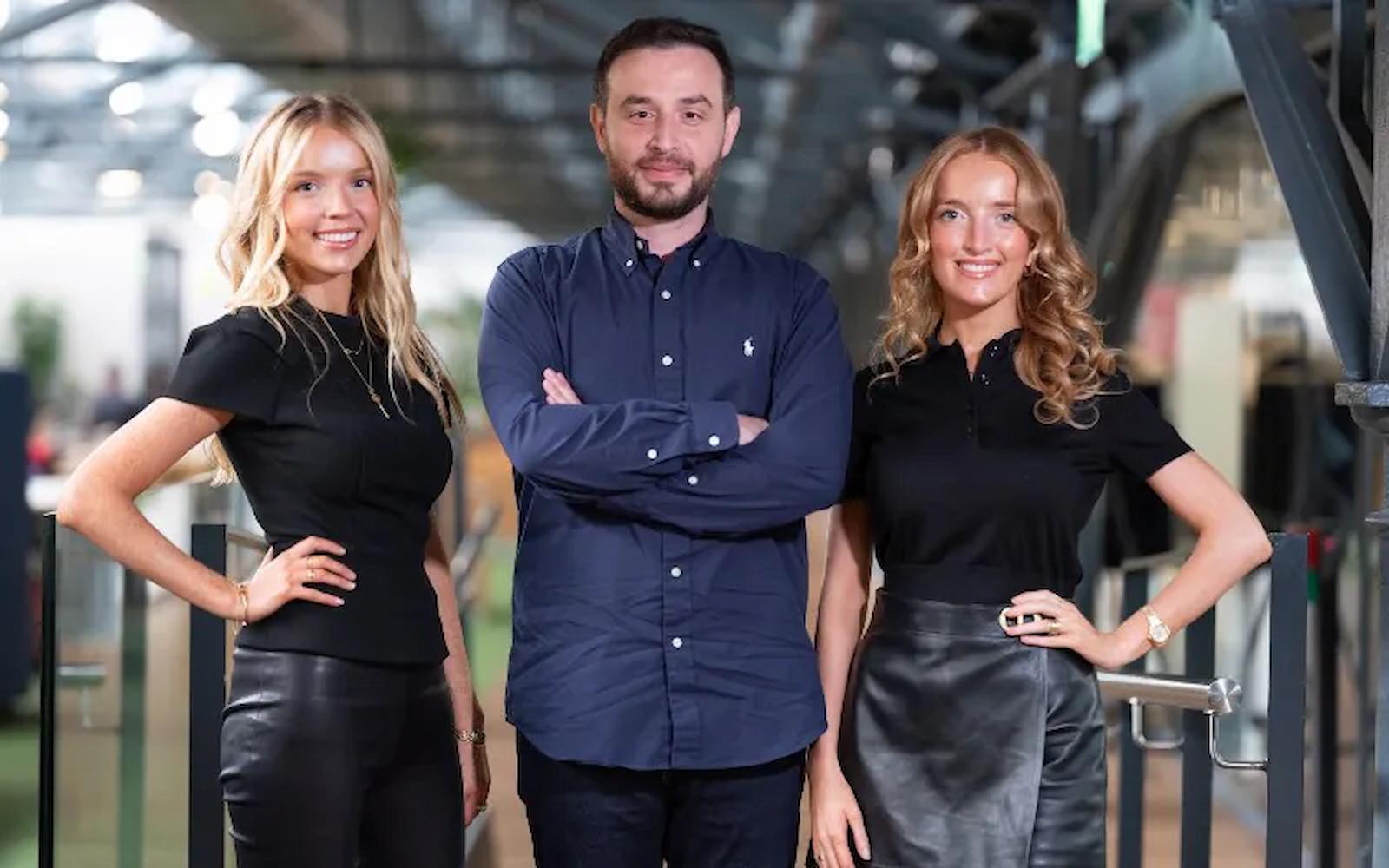
The dental technology sector witnessed a groundbreaking moment as two former Goldman Sachs professionals secured £2.25 million in pre-seed funding for their latest venture. This marks their third entrepreneurial journey, and this time, they’re revolutionizing dentistry with artificial intelligence. The Linda AI startup represents a fresh wave of innovation where finance meets healthcare technology.
You might wonder what drives successful bankers to repeatedly dive into the startup world. The answer lies in identifying untapped opportunities where technology can transform traditional industries. These sisters spotted a massive gap in dental care efficiency, and they’re filling it with cutting-edge AI solutions.
The Visionaries Behind Linda AI Startup
The Ex-Goldman Sachs sisters Linda AI founders bring impressive credentials to their new venture. Their banking background equipped them with financial acumen and risk assessment skills that prove invaluable in startup environments. However, they’ve moved beyond spreadsheets into the realm of healthcare innovation.
Their previous two startups provided essential lessons about scaling businesses and navigating market challenges. Each venture taught them something new about customer needs, product development, and team building. Now, they’re applying those hard-won insights to dental technology.
What sets these female founders AI tech entrepreneurs apart is their willingness to tackle complex problems in traditional industries. Dentistry hasn’t seen the same technological disruption as other healthcare sectors. They recognized this gap and seized the opportunity.
Understanding Linda AI Agentic Dentistry Technology
The Linda AI startup operates on agentic AI principles, which means the system can make autonomous decisions within defined parameters. This technology goes beyond simple automation or basic machine learning. It actively analyzes dental data, suggests treatment plans, and streamlines administrative workflows.
Traditional dental practices struggle with efficiency bottlenecks that frustrate both practitioners and patients. Appointment scheduling, insurance verification, treatment planning, and follow-up care all consume valuable time. The Linda AI agentic dentistry platform addresses these pain points systematically.
Here’s what makes their approach revolutionary:
- Autonomous scheduling that optimizes appointment slots based on procedure complexity and patient history
- Intelligent treatment planning that analyzes X-rays and suggests evidence-based interventions
- Automated insurance processing that reduces claim denials and speeds up reimbursements
- Patient communication systems that send personalized reminders and educational content
- Practice analytics that identify revenue opportunities and operational inefficiencies
The system learns from each interaction, continuously improving its recommendations and predictions. Dentists maintain full control while benefiting from AI-powered insights that enhance their decision-making capabilities.
Goldman Sachs Alumni Dental AI Venture: A Strategic Advantage
The Goldman Sachs alumni dental AI venture benefits tremendously from the founders’ financial expertise. Building a healthcare technology company requires sophisticated fundraising strategies and fiscal discipline. Their banking background provided exactly these skills.
Investment negotiations demand understanding of valuation metrics, cap tables, and investor expectations. Most healthcare professionals lack this knowledge, but these founders possess it naturally. They speak the language of venture capitalists fluently.
Moreover, their network from Goldman Sachs opened doors that might remain closed to typical first-time entrepreneurs. Warm introductions to investors, strategic advisors, and potential customers accelerated their growth trajectory. Relationships matter enormously in the startup ecosystem.
Financial modeling skills also help them project growth accurately and manage cash flow prudently. Many promising startups fail because founders don’t grasp basic financial management. These sisters won’t make those mistakes.
Linda AI Pre-Seed Funding Round: Breaking Down the Numbers
The Linda AI pre-seed funding round raised £2.25 million, which translates to approximately $2.8 million in US currency. This represents a substantial pre-seed investment, significantly above the typical range for this stage. Most pre-seed rounds fall between $500,000 and $1.5 million.
Why did investors commit such a large amount so early? Several factors contributed to this impressive raise:
Founder credibility played a massive role. Investors bet on jockeys as much as horses. The sisters’ Goldman Sachs pedigree and prior startup experience made them attractive investment candidates. They’ve proven they can execute.
Market opportunity in dental technology remains largely untapped compared to other healthcare segments. The global dental AI market is projected to reach $1.48 billion by 2030, growing at a compound annual rate exceeding 20%. Smart investors recognize early movers in expanding markets.
Technology differentiation sets Linda AI apart from competitors. Agentic AI represents the next evolution beyond basic automation. This technical sophistication impressed investors who understand emerging AI trends.
Traction indicators likely demonstrated early product-market fit. Successful pre-seed rounds typically require some evidence that customers want the solution. Beta testing feedback or pilot program results probably validated their approach.
The funding will accelerate product development, expand the team, and support initial go-to-market activities. Building robust AI systems requires significant engineering resources. This capital provides runway to achieve critical milestones before Series A fundraising.
Female Founders AI Tech: Breaking Barriers in a Male-Dominated Space
The female founders AI tech landscape remains frustratingly homogeneous, with women receiving only 2.1% of global venture capital funding in 2024. This stark disparity makes the Linda AI funding achievement even more significant. They’re proving that exceptional founders transcend gender biases.
However, challenges persist for women entrepreneurs in technology sectors. They face tougher questions during investor pitches and often need stronger credentials than male counterparts. The sisters’ Goldman Sachs background likely helped overcome some of these barriers.
Research shows that female-founded companies deliver higher returns on investment than those founded by men. Yet, they receive dramatically less funding. This paradox reveals systemic biases in venture capital decision-making rather than performance differences.
The Linda AI startup serves as an inspiration for aspiring female entrepreneurs. Visibility matters tremendously. When women see others succeeding in tech entrepreneurship, they’re more likely to pursue their own ventures. Role models create pathways.
The Dental Industry’s Digital Transformation Opportunity
Dental practices lag behind other medical specialties in adopting advanced technologies. Only 35% of dental offices use comprehensive digital systems, compared to over 80% of general medical practices. This gap represents a massive opportunity for innovators.
Why has dentistry been slow to digitize? Several factors contribute:
Cost concerns make dentists hesitant to invest in new systems. Practice owners worry about return on investment and implementation complexity. They need solutions that clearly demonstrate value.
Training requirements create adoption barriers. Busy practitioners don’t have time for lengthy learning curves. Technologies must integrate seamlessly into existing workflows without disrupting patient care.
Regulatory considerations add complexity to healthcare technology deployment. HIPAA compliance, data security, and liability issues require careful navigation. Startups need expertise in both technology and healthcare regulations.
The Linda AI agentic dentistry platform addresses these concerns by delivering clear value propositions, intuitive interfaces, and built-in compliance features. Their approach makes digital transformation accessible rather than intimidating.
Competitive Landscape: How Linda AI Stands Out
The dental technology market includes established players and emerging startups. Companies like Dentrix, Open Dental, and Eaglesoft dominate practice management software. However, most legacy systems lack sophisticated AI capabilities.
Newer AI-focused competitors include Pearl AI for diagnostic imaging and Overjet for insurance verification. These companies target specific pain points rather than offering comprehensive solutions. Linda AI’s agentic approach provides broader functionality.
What differentiates the Linda AI startup from alternatives?
Holistic integration connects multiple practice functions rather than addressing isolated problems. Dentists prefer unified platforms over fragmented tools that don’t communicate with each other.
Autonomous decision-making capabilities go beyond basic automation. The system doesn’t just follow rules—it adapts to unique practice patterns and patient populations.
User experience design prioritizes dentist and staff workflows. Many healthcare technologies are built by engineers who don’t understand clinical environments. These founders spent extensive time shadowing dental practices.
Scalability architecture supports everything from solo practitioners to large group practices. Flexible pricing and feature sets accommodate diverse customer segments.
Implementation Strategy: From Funding to Market Launch
Converting £2.25 million in funding into market success requires disciplined execution. The Ex-Goldman Sachs sisters Linda AI team likely developed detailed roadmaps before closing their investment round. Strategic planning skills from banking translate directly to startup operations.
Immediate priorities probably include:
Engineering talent acquisition to build out the core platform. AI expertise remains scarce and expensive. Competitive compensation packages and compelling mission statements help attract top developers.
Pilot program expansion with select dental practices willing to test early versions. Beta customers provide invaluable feedback that shapes product development. Their testimonials also support future sales efforts.
Regulatory compliance verification to ensure all features meet healthcare data protection standards. Legal and compliance expertise prevents costly mistakes that could derail the business.
Go-to-market strategy refinement based on pilot results and customer feedback. Initial hypotheses about ideal customer profiles and sales channels need validation through real-world testing.
The Goldman Sachs alumni dental AI venture benefits from the founders’ project management skills. Investment banking teaches meticulous attention to detail and deadline management—exactly what startups need.
The Agentic AI Revolution in Healthcare
Agentic AI represents a fundamental shift in how we think about artificial intelligence applications. Traditional AI systems respond to inputs with predefined outputs. Agentic systems possess goal-oriented autonomy within established boundaries.
In healthcare contexts, this distinction matters enormously. A basic AI might flag suspicious areas in an X-ray. An agentic AI analyzes the image, reviews patient history, compares against treatment databases, and suggests specific interventions ranked by evidence strength.
The agentic AI market is expected to grow from $2.3 billion in 2025 to $28.5 billion by 2032, reflecting rapidly increasing enterprise adoption. Healthcare applications lead this growth because autonomous decision support directly improves outcomes.
The Linda AI agentic dentistry approach positions the company at the intersection of two explosive trends: healthcare AI and autonomous systems. This strategic positioning could drive exponential growth as both markets mature.
Lessons from Serial Entrepreneurship
This marks the third startup for the Ex-Goldman Sachs sisters Linda AI founders. Serial entrepreneurship offers distinct advantages over first-time ventures. They’ve already learned painful lessons that novices must discover through experience.
What do successful serial entrepreneurs do differently?
Network leverage from previous ventures accelerates new launches. They know investors, advisors, potential employees, and strategic partners. These relationships provide shortcuts around common obstacles.
Pattern recognition helps identify winning opportunities versus dead ends. Experience teaches which customer objections signal real barriers versus negotiable concerns.
Resource efficiency improves with each venture. They know where to spend aggressively versus where to bootstrap creatively. This wisdom optimizes runway and maximizes funding impact.
Emotional resilience grows through repeated challenges. Startup journeys involve constant setbacks and pivots. Veterans maintain perspective during difficult periods that might crush first-time founders.
The Linda AI startup benefits immensely from this accumulated wisdom. The sisters won’t make rookie mistakes that sink many promising companies.
Investment Implications and Future Funding Prospects
The successful Linda AI pre-seed funding round sets up favorable conditions for future capital raises. Strong early investors signal market validation to subsequent funders. Momentum matters tremendously in venture capital ecosystems.
Series A fundraising typically occurs 12-18 months after pre-seed rounds, once companies demonstrate meaningful traction metrics. For healthcare AI startups, relevant milestones include:
- Deployed customers using the platform in production environments
- Revenue generation proving willingness to pay
- User engagement metrics showing regular usage and value delivery
- Clinical outcome improvements demonstrating measurable impact
- Customer retention rates indicating satisfaction and stickiness
The female founders AI tech team will need to hit aggressive targets to justify Series A valuations. However, their Goldman Sachs training prepared them for performance pressure and metric-driven management.
Healthcare investors particularly value evidence of regulatory progress and reimbursement pathways. Technologies that insurance companies will pay for command premium valuations compared to cash-pay solutions.
The Broader Impact on Healthcare Innovation
The Linda AI startup represents more than just another dental technology company. It symbolizes several important trends reshaping healthcare innovation ecosystems.
Finance-to-healthcare career transitions are becoming increasingly common. Former bankers, consultants, and tech executives recognize that healthcare combines massive markets with technological inefficiencies. Their business skills complement clinical expertise.
Female entrepreneurship normalization in traditionally male sectors creates healthier innovation ecosystems. Diverse founding teams build products that serve broader populations more effectively than homogeneous groups.
Agentic AI adoption in conservative industries proves that even risk-averse sectors will embrace advanced technologies when value propositions are clear and implementation is smooth.
Pre-seed funding scale increases reflect investor appetite for ambitious healthcare AI ventures. More capital flowing into earlier stages accelerates innovation cycles and enables bigger initial swings.
The Goldman Sachs alumni dental AI venture could inspire similar crossover entrepreneurship in other overlooked healthcare segments. Optometry, podiatry, audiology, and physical therapy all face similar digitization gaps.
Conclusion: The Future of Linda AI and Dental Technology
The Ex-Goldman Sachs sisters Linda AI journey represents an inspiring case study in leveraging transferable skills across industries. Their banking expertise, serial entrepreneur experience, and vision for dental transformation positioned them to secure impressive pre-seed funding.
The Linda AI startup tackles a real problem in a large market with innovative technology. This combination—strong team, significant opportunity, differentiated product—forms the foundation for venture success. Their agentic AI approach could genuinely transform how dental practices operate.
Looking ahead, several key factors will determine their trajectory. Customer adoption rates, product development velocity, competitive responses, and subsequent funding rounds all matter enormously. However, they’ve already overcome the first major hurdle: convincing sophisticated investors to back their vision.
For aspiring entrepreneurs, especially women in technology, this story offers valuable lessons. Domain expertise helps, but isn’t always necessary. Transferable skills matter enormously. Networks open doors. Persistence through multiple ventures builds crucial capabilities.
The dental industry desperately needs the innovation that Linda AI promises to deliver. Practitioners want efficiency, patients want better experiences, and insurers want improved outcomes. Technologies that serve all stakeholders simultaneously possess enormous potential.
Watch this space. The Linda AI agentic dentistry platform could become the standard across dental practices within a few years. If it does, those £2.25 million investors will realize spectacular returns, and the sisters will have achieved their third entrepreneurial success.
Ready to transform your dental practice with cutting-edge AI technology? Follow Linda AI’s journey as they revolutionize dental care delivery through intelligent automation and autonomous decision support systems.
Frequently Asked Questions
What is the Linda AI startup and what does it do?
Linda AI is an agentic AI platform for dental practices founded by two former Goldman Sachs professionals. It automates scheduling, treatment planning, insurance processing, and patient communications using autonomous decision-making technology that learns and adapts to each practice’s unique needs.
How much funding did Linda AI raise in their pre-seed round?
The Linda AI pre-seed funding round raised £2.25 million (approximately $2.8 million USD), which is substantially above the typical pre-seed range of $500,000 to $1.5 million, reflecting strong investor confidence in the founders and opportunity.
What is agentic AI and how does it differ from traditional AI?
Agentic AI systems can make autonomous decisions within defined parameters rather than simply following programmed rules. In dentistry, this means the system analyzes data, reviews patient history, and suggests evidence-based treatment plans while continuously learning from each interaction.
Why did the founders leave Goldman Sachs to start Linda AI?
The Ex-Goldman Sachs sisters identified a massive efficiency gap in dental care delivery and recognized that their financial expertise, combined with previous entrepreneurial experience from two prior startups, positioned them uniquely to build and scale a healthcare technology venture.
What makes Linda AI different from existing dental practice management software?
Unlike legacy systems that primarily handle administrative tasks or single-function AI tools, Linda AI offers holistic integration with autonomous decision-making capabilities across scheduling, diagnostics, treatment planning, and patient engagement—all while learning and adapting to specific practice patterns.
What percentage of venture capital funding goes to female founders?
Female founders receive only 2.1% of global venture capital funding, making Linda AI’s successful £2.25 million raise particularly significant and demonstrating that exceptional female founders can overcome systemic gender biases in venture funding.
What is the market opportunity for AI in dentistry?
The global dental AI market is projected to reach $1.48 billion by 2030, growing at over 20% annually. Only 35% of dental offices currently use comprehensive digital systems compared to 80% of general medical practices, representing a massive untapped opportunity for innovation.