
Waabi Robotaxi Expansion: Toronto’s AI Pioneer Secures Billion-Dollar Bet on Autonomous Future

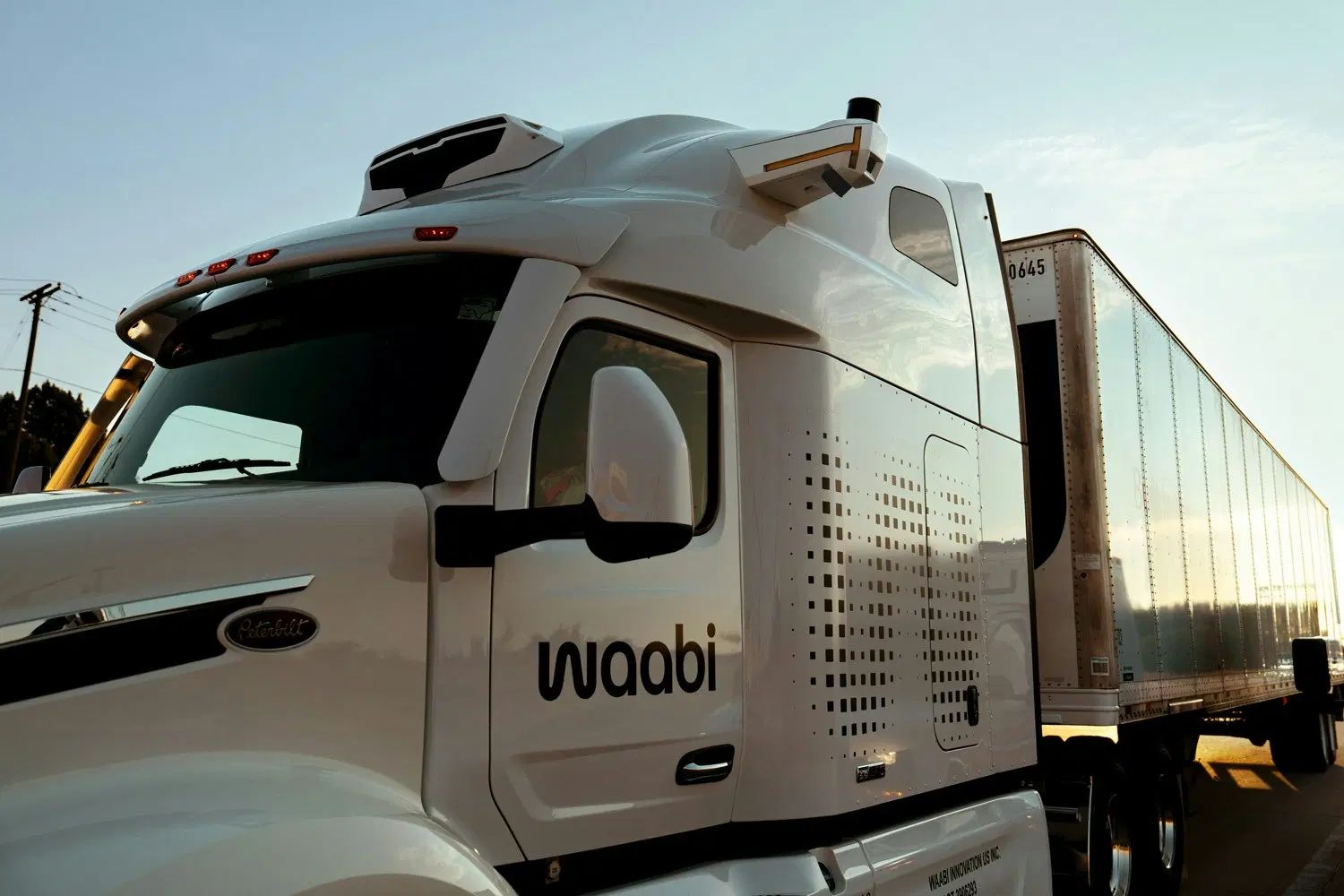
Toronto-based AI company Waabi has raised $1 billion in new funding and struck a major partnership with Uber to deploy at least 25,000 robotaxis. The announcement landed Tuesday morning, marking the largest fundraise in Canadian history while positioning the self-driving startup at the forefront of autonomous transportation’s next chapter. We’re witnessing a watershed moment in self-driving technology. The funding consists of a $750 million Series C round led by Khosla Ventures and G2 Venture Partners, plus an additional $250 million milestone-based investment from Uber tied to the robotaxi deployment.
Waabi robotaxi expansion represents a bold pivot for a company that spent the past three years perfecting autonomous trucking technology. Founded in 2021 by Raquel Urtasun, a computer scientist who previously led Uber’s autonomous vehicle research lab, Waabi has rapidly ascended from industry upstart to Physical AI leader. This isn’t just another funding round—it’s a declaration that simulation-first development strategies can actually work at scale.
The Financial Architecture Behind Waabi’s $1 Billion Investment
The numbers tell a compelling story. The company says it is the largest fundraise in Canadian history, with other investors in the Series C including Uber, NVentures (Nvidia’s venture capital arm), Volvo Group Venture Capital, Porsche Automobil Holding, BlackRock, Radical Ventures, and a subsidiary of the Abu Dhabi Investment Authority. However, Waabi declined to disclose its valuation following the funding round.
This massive self-driving startup funding 2026 injection arrives at a critical inflection point. Robotaxi Market size was valued at USD 4.84 Billion in 2025 and is poised to grow from USD 5.76 Billion in 2026 to USD 693.84 Billion by 2033, growing at a CAGR of 86% during the forecast period. The timing couldn’t be sharper for Waabi to stake its claim in this exploding market.
The Waabi Series C round was oversubscribed by hundreds of millions, signaling deep investor conviction. Strategic investors span the entire autonomous vehicle value chain—from chip makers like Nvidia to automotive giants like Volvo to financial powerhouses like BlackRock. This diverse backing provides Waabi with technological partnerships, manufacturing relationships, and capital markets access simultaneously.
Vinod Khosla, founder of Khosla Ventures and cofounder of computer hardware firm Sun Microsystems, told CNBC his fund is backing Waabi because it has taken a “capital efficient” approach to “physical AI,” and has a late mover’s advantage. What predecessors in the autonomous vehicle industry achieved with thousands of engineers and billions of dollars spent on research, development and safety testing, Waabi can do for a fraction.
Understanding Waabi Physical AI Technology: The Competitive Edge
What makes Waabi’s approach fundamentally different? The answer lies in Waabi Physical AI technology. Waabi’s Platform combines a verifiable end-to-end AI model capable of reasoning alongside the worlds most advanced neural simulator. This approach enables — for the first time in the industry — a shared brain across both autonomous trucks and robotaxis, in which the same AI model powers both applications.
Traditional autonomous vehicle companies followed what industry insiders call the “AV 1.0” playbook. Waabi represents a new breed of autonomous vehicle company—part of what some in the industry call “AV 2.0.” These companies use end-to-end AI models that learn to drive from vast amounts of data. Often a single AI model handles perception, navigation, and action. This contrasts with earlier self-driving technology, such as that originally deployed by Alphabet company Waymo.
The secret sauce involves two complementary systems working in tandem. Waabi World functions as the “teacher”—an advanced neural simulator that creates realistic driving scenarios. Meanwhile, Waabi Driver acts as the “student”—a single end-to-end AI system capable of human-like reasoning. This teacher-student dynamic reduces the need for extensive on-road testing while accelerating development timelines dramatically.
Founder and CEO Raquel Urtasun told CNBC the new funding will enable the company to adapt its “physical AI” to develop driverless systems that can be made to work in new locations, conditions and form factors with a high level of safety relatively quickly. That generalizability across vehicle types represents Waabi’s killer advantage.
The Waabi Uber Robotaxi Partnership: A Strategic Alliance
The Waabi Uber robotaxi partnership carries profound implications for both companies. With Waabi’s expansion into robotaxis, the company is exclusively partnering with Uber to deploy robotaxis powered by the Waabi Driver on the Uber platform. As part of this strategic partnership, Uber will invest additional milestone-based capital to support the development of Waabi’s robotaxis and the deployment of 25,000 or more Waabi Driver-powered robotaxis over time.
The relationship runs deeper than a simple commercial agreement. Raquel Urtasun, the computer scientist who founded Waabi in 2021 and serves as its CEO, previously led Uber’s autonomous vehicle research lab. Uber has been involved with Waabi since its Series A venture funding round and already holds a seat on the startup’s board. This isn’t a marriage of convenience—it’s a reunion.
Uber autonomous ride-hailing strategy has evolved significantly. The ride-hailing giant abandoned its own self-driving development efforts after selling Uber ATG to Aurora Innovation in 2020. Now Uber’s betting on a portfolio approach, partnering with multiple autonomous vehicle providers rather than building proprietary technology. Uber has recently announced a slew of robotaxi deals with vehicle manufacturers and AV 2.0 startups. In many of those deals, Uber is providing the startups with funding, as it’s doing with Waabi.
For the Waabi Uber robotaxi partnership specifically, deployment details remain scarce. Neither company disclosed launch cities or precise timelines. However, Urtasun emphasized that Waabi is moving quickly. “We’re going to enter and deploy in robotaxi markets much faster than you’ve seen to date”.
Analyzing Autonomous Vehicle Market Growth and Competitive Landscape
The autonomous vehicle market growth trajectory looks staggering on paper, though actual deployment faces considerable headwinds. Multiple research firms project explosive expansion. The global robotaxi market size was estimated at USD 1.95 billion in 2024 and is projected to reach USD 43.76 billion by 2030, growing at a CAGR of 73.5% from 2025 to 2030.
Yet BCG analysis provides more grounded estimates. Going by recent developments, we expect that the US and China will dominate initial growth, due to supportive regulations, infrastructure investments, and market conditions. In our base scenario, we estimate that the US robotaxi fleet will grow to about 350,000 vehicles by 2035, while China will have about 850,000 vehicles.
Competition in robotaxi deployment strategies has intensified dramatically. The competition is even more fierce in the nascent robotaxi market. Competitors already operating or developing driverless, light duty passenger vehicles include other Uber partners such as Alphabet-owned Waymo, Nuro and WeRide as well as automakers developing their own driverless systems including Tesla and Rivian in the U.S., and Xiamoi and BYD in China.
Waymo leads with operational scale. The company has raised $11.15 billion in funding and boasts a valuation exceeding $45 billion. Operationally, Waymo shines with over 250,000 weekly rides across major markets. However, Waabi’s capital-efficient model offers a contrasting path—spending less while moving faster.
Canadian Self-Driving Startups: Waabi’s National Significance
Among Canadian self-driving startups, Waabi stands in a category of its own. The company says that the funding is the largest in Canadian history. This milestone carries implications beyond corporate bragging rights—it signals Canada’s emergence as a legitimate player in autonomous transportation.
Toronto has cultivated a robust AI ecosystem, anchored by world-class research institutions and government support. Urtasun herself holds a full professorship in computer science at the University of Toronto. The city’s Vector Institute, which Urtasun co-founded, has become a global center for machine learning research.
The future of robotaxis Uber envisions depends heavily on innovation coming from markets like Toronto. Waabi’s success validates the Canadian government’s multi-decade investment in AI research infrastructure. At Toronto Tech Week last summer, Urtasun told BetaKit the Canadian government needs to “wake up” and realize the physical AI revolution is here as it develops its next AI strategy.
Canadian self-driving startups face unique challenges compared to American and Chinese counterparts—smaller domestic markets, harsher winter conditions, and less venture capital availability. Yet Waabi’s fundraising triumph demonstrates that exceptional technology paired with strategic partnerships can transcend geographic limitations.
Robotaxi Deployment Strategies: From Trucks to Passenger Vehicles
Waabi’s robotaxi deployment strategies build directly on its trucking foundation. Previously, Waabi had been working on software that could operate autonomous trucks. In October, it announced the integration of its AI software into Volvo’s fleet of autonomous trucks, which provide autonomous freight delivery services on highways in Texas and at some mining and quarrying sites in Norway and Sweden.
The trucking-to-robotaxi progression makes strategic sense. Highways present simpler driving scenarios than dense urban environments. By mastering long-haul trucking first, Waabi validated its core technology on more forgiving roads before tackling city streets. Urtasun said “Today, we already have the core capabilities for robotaxis as we already drive across highways and generalized surface streets with our autonomous trucks. Our physical AI platform enables us to have a single AI model that drives both vehicle types. As a consequence, any advancement in robotaxi will improve trucks, and vice versa”.
This bidirectional learning loop represents Waabi’s most underappreciated advantage. Every mile driven by Waabi’s trucks improves the robotaxi system. Every challenging urban scenario conquered by robotaxis strengthens trucking performance. The shared brain architecture means progress compounds across both verticals simultaneously.
Waabi hasn’t revealed which automaker will manufacture its robotaxis. Ms. Urtasun also declined to identify the manufacturer that will build the vehicles powered by Waabi’s artificial intelligence system. However, she indicated the company would follow its trucking playbook—building sensors and technology directly into vehicles from the factory floor rather than retrofitting existing cars.
The Future of Robotaxis Uber and Market Implications
The future of robotaxis Uber imagines extends far beyond simply replacing human drivers with autonomous vehicles. Uber’s strategy revolves around becoming the orchestration layer connecting multiple autonomous vehicle providers with riders. Waabi is one of several AV companies that Uber has brought on to deploy self-driving vehicles on its platform globally. Other companies include Waymo, Nuro, Avride, Wayve, WeRide, Momenta, and more. The tie-up and funding round come as Uber launches a new division called Uber AV Labs that will use its vehicles to collect data for AV partners.
This portfolio approach hedges Uber’s bets while potentially accelerating industry-wide progress. Different autonomous vehicle companies excel in different operational domains, geographies, and weather conditions. By partnering with multiple providers, Uber can offer broader geographic coverage more quickly than any single technology partner could deliver alone.
Consumer adoption remains the wild card. Consumer adoption is uneven. Around 60% of Chinese consumers express openness to robotaxis, but only 30% to 35% of US and European consumers say they are willing to use them today. Overcoming this hesitation requires not just technological capability but sustained operational excellence and safety records.
The Waabi robotaxi expansion timeline remains deliberately vague. Neither Waabi nor Uber specified launch markets, deployment dates, or the milestones required to unlock Uber’s additional $250 million investment. This ambiguity likely reflects the complexity of obtaining regulatory approvals, completing vehicle integration, and conducting safety validation testing across multiple jurisdictions.
However, momentum is building. Urtasun said “For me, it’s been 16 years in self-driving. But this is — it’s finally here, scale is here. And the next couple of years, it’s going to be amazing”.
Investment Landscape: Self-Driving Startup Funding 2026 Trends
The self-driving startup funding 2026 landscape reflects growing maturity and selectivity. For an industry that has seen timelines slip and expectations reset, Waabi’s funding round sends a clear signal. Capital is still flowing to teams that can show real-world progress, disciplined engineering, and a credible path from research to deployment.
Contrast Waabi’s trajectory with cautionary tales like Cruise. By March 2025, Cruise had raised a staggering $16.05 billion in total funding, driven by key investments. In a significant shift, GM decided in December 2024 to halt funding for Cruise’s robotaxi development, redirecting focus toward incorporating autonomous technology into advanced driver assistance systems. Despite massive capital deployment, Cruise stumbled on safety incidents and regulatory scrutiny.
Waabi’s comparatively lean $1 billion raise—bringing total funding to approximately $1.28 billion—reflects a dramatically different philosophy. The approach has allowed Waabi to build faster and cheaper than competitors, Urtasun claims. “We don’t need the gazillion humans to develop the technology and the large fleets that AV 1.0 needs. We don’t need the massive data centers, energy consumption, or a gazillion latest chips”.
This capital efficiency thesis resonates strongly with investors burned by previous autonomous vehicle hype cycles. Investor confidence now demands not just technological sophistication but viable paths to profitability within reasonable timeframes.
What This Means for Transportation’s Autonomous Future
Waabi robotaxi expansion crystallizes several broader industry trends. First, the “winner-take-all” narrative that dominated early autonomous vehicle discussions has evolved into “winner-take-most-if-you-can-actually-deploy-at-scale.” Technology alone doesn’t guarantee success—operational excellence, regulatory navigation, and manufacturing partnerships matter equally.
Second, simulation-first development strategies have proven their worth. Waabi’s approach of extensive virtual testing before real-world deployment reduces both costs and risks while accelerating iteration cycles. This methodology contrasts sharply with competitors who relied primarily on accumulating real-world miles through extensive test fleets.
Third, the Waabi Uber robotaxi partnership validates the platform model. Uber’s strategy of partnering with multiple autonomous vehicle providers rather than building proprietary technology creates an ecosystem where multiple companies can succeed simultaneously. This approach likely accelerates industry-wide progress compared to closed, proprietary alternatives.
Fourth, geographical diversification of innovation continues. Canadian self-driving startups can compete globally when they combine world-class AI research talent, strategic partnerships, and capital-efficient development methodologies. Waabi’s success challenges assumptions that autonomous vehicle leadership must concentrate exclusively in Silicon Valley or China.
The autonomous vehicle market growth projections remain breathtaking—potentially reaching hundreds of billions within the next decade. Yet actual deployment will likely follow a more evolutionary path than revolutionary transformation. Yet it remains the case that robotaxi adoption will be evolutionary rather than revolutionary. That’s not because the technology lacks potential, but because the practical conditions for large-scale deployment develop only gradually.
Waabi’s billion-dollar bet represents genuine progress toward making autonomous transportation commercially viable. The company’s Physical AI technology offers a credible technical foundation. Its partnership with Uber provides distribution and operational expertise. Its capital-efficient methodology addresses investor concerns about profitability timelines.
Whether Waabi ultimately delivers on its ambitious vision depends on execution across technological, regulatory, and commercial dimensions. The company must still prove its system performs safely across diverse weather conditions, urban environments, and edge cases. It must secure regulatory approvals across multiple jurisdictions. It must manufacture or partner to produce vehicles at scale. And it must deliver compelling customer experiences that overcome public skepticism about driverless vehicles.
Yet the fundamentals look promising. With $1 billion in fresh capital, proven trucking technology, and exclusive access to Uber’s massive rider network, Waabi has positioned itself at the forefront of autonomous transportation’s next chapter. The future of robotaxis Uber and Waabi are building together could reshape urban mobility within this decade.
As Vinod Khosla said “We invest in the companies that are leading the AI era. Waabi has developed a truly groundbreaking Physical AI platform that represents a fundamental leap forward in how next generation driverless technology is being developed. Their remarkable progress in autonomous trucking and rapid expansion into robotaxis demonstrates how their technology unlocks for the first time true scale in the real world. This breakthrough will define AI for decades to come”.
The road ahead remains long and uncertain. But Waabi’s Waabi robotaxi expansion has positioned the Toronto startup as a serious contender in the race toward autonomous transportation at scale.
Frequently Asked Questions
What is Waabi’s $1 billion funding announcement about?
Waabi announced a $1 billion funding round consisting of a $750 million Series C led by Khosla Ventures and G2 Venture Partners, plus $250 million in milestone-based investment from Uber. This represents the largest fundraise in Canadian history and will support Waabi’s expansion from autonomous trucking into the robotaxi market through an exclusive partnership with Uber to deploy at least 25,000 autonomous vehicles.
How does Waabi Physical AI technology differ from competitors?
Waabi uses a simulation-first approach with two complementary systems: Waabi World (a neural simulator) and Waabi Driver (an end-to-end AI system). This “AV 2.0” approach enables a single AI model to power both autonomous trucks and robotaxis, allowing bidirectional learning where progress in one application improves the other. This contrasts with traditional “AV 1.0” systems that used multiple hand-coded software modules for different driving tasks.
When will Waabi robotaxis start operating on Uber’s platform?
Neither Waabi nor Uber disclosed specific launch cities or deployment timelines. However, CEO Raquel Urtasun stated that Waabi would “enter and deploy in robotaxi markets much faster than you’ve seen to date.” The $250 million additional investment from Uber is milestone-based, suggesting phased deployment as the company achieves specific technical and operational targets.
How large is the robotaxi market expected to grow?
Market projections vary significantly. The robotaxi market was valued at $4.84 billion in 2025 and some forecasts project growth to $693.84 billion by 2033, representing a CAGR of 86%. However, more conservative estimates from BCG suggest the US robotaxi fleet will reach approximately 350,000 vehicles by 2035, with China deploying around 850,000 vehicles in the same timeframe.
Who are Waabi’s main competitors in the autonomous vehicle space?
Waabi faces competition from multiple fronts. In robotaxis, competitors include Alphabet’s Waymo (the current market leader with 250,000+ weekly rides), Tesla, Nuro, WeRide, Avride, and Chinese companies like BYD and Xiaomi. In autonomous trucking, competitors include Aurora, Kodiak AI, and Bot Auto. However, Waabi differentiates itself through capital efficiency and its shared AI brain architecture across vehicle types.
What makes this funding significant for Canadian technology?
The $1 billion raise represents the largest fundraise in Canadian history, validating Canada’s investment in AI research infrastructure and demonstrating that Canadian startups can compete globally in advanced technology sectors. Founded by University of Toronto professor Raquel Urtasun and based in Toronto, Waabi exemplifies how Canadian AI research excellence can translate into commercial success when combined with strategic partnerships and capital-efficient development approaches.
What is Uber’s strategy for autonomous vehicles?
After selling its own autonomous vehicle division (Uber ATG) to Aurora in 2020, Uber adopted a portfolio strategy, partnering with multiple autonomous vehicle providers including Waabi, Waymo, Nuro, Avride, Wayve, WeRide, and others. Uber also launched Uber AV Labs to collect driving data for its partners. This platform approach allows Uber to offer broader geographic coverage and hedge technological risks across different autonomous vehicle companies and technologies.