

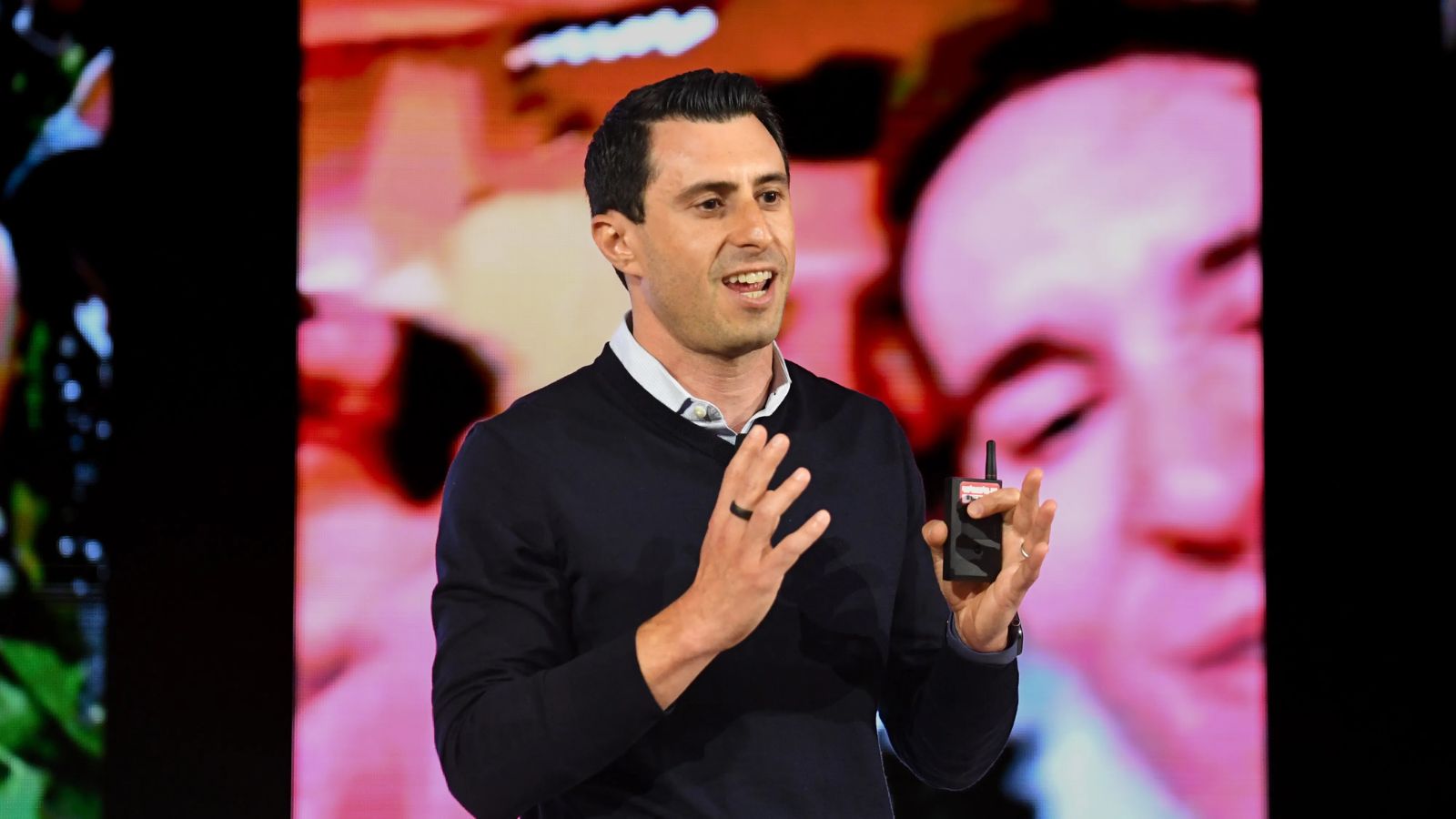
TikTok officially formed a joint venture that will keep the video-sharing app operating in the U.S. with Adam Presser, who has been serving as TikTok’s head of operations and trust and safety, as the CEO on January 23, 2026. The appointment marks a critical turning point for the world’s most scrutinized social media platform as it navigates intense regulatory pressure and transforms its American operations under new ownership.
This leadership transition arrives after years of uncertainty about whether TikTok would survive in its largest and most lucrative market outside China. Now, with Adam Presser TikTok US entity CEO taking charge, the platform’s more than 200 million American users and 7.5 million businesses can continue accessing the app they’ve woven into their daily lives.
Who Is Adam Presser? Background of the TikTok Independent US Entity Leader
Understanding Adam Presser’s new TikTok US role requires examining his journey from entertainment executive to tech leader. Presser previously served as TikTok CEO Shou Zi Chew’s chief of staff between April 2022 and July 2023 before working his way up to head of operations and finally to TikTok’s head of operations and trust & safety, according to his professional profile.
His educational background demonstrates impressive credentials. Adam Presser has a Master of Arts in East Asian Studies from Yale University in 2007 and a Master of Business Administration from Harvard Business School in 2015. He attended Harvard-Westlake, one of Los Angeles’ most prestigious preparatory schools.
Before joining TikTok, Presser built substantial experience in entertainment and international business. Early in his corporate career, Presser used his Chinese language skills as a senior director for Ticketmaster in China. Later, he served in senior roles, first at Warner Bros. Entertainment and then WarnerMedia. This combination of media expertise and Chinese market knowledge proved invaluable when he joined TikTok nearly four years ago.
The top job puts Presser at the helm of a social media phenomenon worth at least $14 billion and used by more than half of the US—a market where it holds immense cultural relevance. His appointment wasn’t surprising to industry insiders. While Presser is a relative unknown in many tech circles, he’s been near the pinnacle of the company leading operations for several years, and was widely seen as the most influential US-based leader at TikTok. He’s long been viewed as a key contender for the top job, according to people familiar with the company.
Understanding the TikTok USDS Joint Venture Structure
The entity Adam Presser appointed TikTok US chief now leads represents a complex ownership arrangement designed to satisfy American national security requirements. The joint-venture agreement with new investors creates an independent US arm of TikTok – TikTok USDS Joint Venture LLC. USDS stands for US Data Security Inc.
The ownership breakdown reflects careful negotiation between multiple stakeholders. A group of three firms — U.S.-based Oracle and Silver Lake and Abu Dhabi-based MGX — will serve as the venture’s managing investors and own a combined 45% of the company. Another 35% will be owned by eight other investors, including Dell CEO Michael Dell’s personal investment office and the quantitative trading firm Susquehanna International Group. ByteDance will continue to own 19.9% of the company, just below the 20% cap allowed under the law.
This structure allows ByteDance to maintain a financial interest while ceding operational control. The TikTok independent US entity will operate under strict safeguards. The majority American owned Joint Venture will operate under defined safeguards that protect national security through comprehensive data protections, algorithm security, content moderation, and software assurances for US users. The entity will safeguard US content through robust trust and safety policies and content moderation while ensuring continuous accountability through transparency reporting and third-party certifications, the company stated.
Leadership extends beyond just Adam Presser TikTok US entity CEO. TikTok USDS Joint Venture LLC will operate as an independent entity overseen by a seven-member board of directors that includes TikTok CEO Shou Chew, Silver Lake co-CEO Egon Durban, Oracle executive vice president Kenneth Glueck, and other prominent investors. This board composition ensures both continuity with TikTok’s global operations and accountability to American stakeholders.
The Journey to This Historic Deal: Why TikTok US Leadership Changed
The appointment of Adam Presser TikTok US entity CEO culminates years of political and legal battles. ByteDance was subject to a national security law, originally signed by former President Joe Biden, that required the Chinese tech giant to sell TikTok’s U.S. operations or face a ban in the country.
The legislative pressure stemmed from longstanding concerns. For years, lawmakers on both sides of the aisle argued TikTok posed national security risks, claiming the Chinese government could potentially spy on Americans, collect vast data, or conduct influence operations through the platform. TikTok consistently denied these allegations.
The situation reached crisis point in early 2025. The law was upheld by the Supreme Court in January 2025. Trump has extended the deadline multiple times since then to let the negotiations play out. The app briefly went dark for American users before President Trump intervened with executive orders delaying enforcement.
A plan has been presented to me to undergo a qualified divestiture of TikTok’s United States operations, as outlined in a framework agreement. Under this Framework Agreement, TikTok’s United States application will be operated by a newly established joint venture based in the United States. It will be majority-owned and controlled by United States persons and will no longer be controlled by any foreign adversary, since ByteDance Ltd. and its affiliates will own less than 20 percent of the entity, President Trump stated in his September 2025 executive order.
The deal President Trump championed finally closed on January 22, 2026. Trump celebrated the outcome on Truth Social, writing he was “so happy to have helped in saving TikTok” and thanking Chinese President Xi Jinping for approving the arrangement.
How the Future of TikTok US Operations Will Change
With Adam Presser’s new TikTok US role established, significant operational changes lie ahead. The most consequential involves the platform’s algorithm—the secret sauce that made TikTok addictive to hundreds of millions of users.
TikTok’s prized content-recommendation algorithm will now be hosted within Oracle’s American data centers, and it will be retrained, tested and updated on U.S. user data, the company announced. This represents a fundamental shift in how American users experience TikTok. The algorithm will learn exclusively from domestic user behavior rather than global patterns.
Oracle’s role extends beyond just hosting. The newly formed entity, “TikTok USDS Joint Venture LLC,” will handle US-specific operations, including content moderation, data governance, and algorithmic oversight. Oracle will lead as the designated security partner, managing data audits, replicating and retraining a new algorithm under US jurisdiction, and ensuring compliance with national security regulations.
Despite the structural separation, TikTok US won’t become a walled garden. Interoperability enables the Joint Venture to provide U.S. users with a global TikTok experience, ensuring U.S. creators can be discovered and businesses can operate on a global scale. TikTok global’s U.S. entities will manage global product interoperability and certain commercial activities, including e-commerce, advertising, and marketing.
This arrangement preserves what makes TikTok valuable while theoretically addressing security concerns. American creators won’t lose their international audiences, and businesses can still leverage TikTok’s global reach for commerce and marketing. However, ByteDance retains control over the most profitable segments—advertising and e-commerce operations.
The new structure also helps keep sibling apps like CapCut, Lemon8 and other unspecified services and websites operational in America, ensuring ByteDance’s broader app ecosystem continues functioning under the joint venture’s oversight.
What This Means for TikTok US Leadership and Corporate Governance
Adam Presser appointed TikTok US chief faces unique challenges that few tech executives have encountered. Based in Los Angeles, Presser now has to tackle one of the most politically fraught jobs in tech: running TikTok’s newly created U.S. entity as it tries to reassure Washington and retain users.
His experience positions him well for this complex role. Presser has also been front and center in dealing with TikTok’s content moderation issues over the years. When a group of high profile influencers and celebrities confronted TikTok in 2023 to demand the company to do more to combat antisemitism, Presser led the call for TikTok and fielded their complaints. “We can do better,” he told them at the time.
Industry analysts view Presser as a logical choice for navigating regulatory scrutiny. One expert noted that Presser “understands the intricacies of U.S. regulatory scrutiny” thanks to his previous work as head of trust and safety at TikTok. His institutional knowledge, media connections, and direct relationship with TikTok’s global CEO Shou Chew provide crucial continuity during this transition.
The corporate structure creates an interesting dynamic. Presser has been reporting directly to Chew, who in turn reports to ByteDance co-founder and chief executive, Liang Rubo, according to people familiar with the arrangement. Now Presser leads an entity designed to operate independently from ByteDance, though Chew sits on its board.
The new US TikTok entity that Presser will lead is responsible for protecting US user data, moderating content and securing a content recommendation algorithm that will be leased from ByteDance and eventually retrained on American TikTokers’ data. He is also charged with driving business growth for TikTok and other ByteDance-owned apps in the US, including its AI-powered editing platform CapCut and social lifestyle platform Lemon8.
Congressional Scrutiny and Ongoing Questions About the TikTok USDS Joint Venture
Despite the deal’s finalization, significant questions remain about whether it truly satisfies the law’s intent. The arrangement is likely to raise concerns about whether it reaches the threshold of separation from ByteDance that lawmakers intended when they wrote the law. The law says that there cannot be any operational relationship between the new owners and ByteDance, including any cooperation with respect to TikTok’s algorithm and data sharing.
Congressional oversight continues. GOP Rep. John Moolenaar of Michigan, chairman of the House Select Committee on the Chinese Communist Party, told CBS News on Thursday that the panel will have a public hearing “in the coming months” focused on two questions about the TikTok deal. “One is: Does it make sure that the CCP does not have influence over the algorithm? And the other is: Can we assure Americans that their data is secure? Those are the two questions that need to be answered as we go forward,” the lawmaker said.
The algorithm arrangement particularly raises eyebrows. ByteDance will lease a copy of its algorithm to the TikTok independent US entity, where Oracle will retrain it on American user data. Critics question whether this constitutes true separation or merely creates the appearance of independence while maintaining ByteDance’s fundamental control over the technology.
ByteDance’s continued ownership of advertising and e-commerce operations also complicates the picture. These revenue-generating activities mean ByteDance retains significant financial incentives tied to TikTok US performance, potentially creating ongoing operational relationships that the law sought to eliminate.
The valuation itself sparked debate. The venture’s valuation remains unclear, but US Vice President JD Vance has cited a price tag of about $14 billion. Some analysts considered this surprisingly low given TikTok’s reported $16 billion in US revenues for 2023 alone. The discounted price may reflect reserved rights ByteDance maintained over lucrative business segments or political pressure to accept terms allowing continued US operations.
Impact on Users, Creators, and Businesses Under New TikTok US Leadership
For ordinary Americans, the immediate impact appears minimal. The app continues functioning, and most users probably won’t notice operational changes initially. However, the algorithm retraining could gradually shift content discovery patterns as the system learns from exclusively American behavioral data.
Creators face uncertainties about how the future of TikTok US operations affects their livelihoods. The platform has become an economic engine for millions, with many building entire careers around TikTok content creation. The deal preserves global discoverability, which matters enormously for creators whose audiences span multiple countries.
Small businesses and major brands that invested heavily in TikTok marketing can breathe easier. The resolution, years after a potential ban was first discussed, is a win for small businesses, big brands and content creators whose livelihoods depend on TikTok, and for the roughly 200 million US users who frequent the app each month for news and entertainment.
However, questions linger about future changes. Will the US-specific algorithm surface different content than international versions? How will advertising targeting evolve under Oracle’s data governance? What new terms of service or privacy policies accompany the ownership change?
Some reports suggested potential platform discontinuation. Bloomberg report suggests that once the deal is finalized, TikTok may be discontinued in its current US form and replaced by a rebranded platform. The specifics remain unclear, adding uncertainty for users and marketers navigating this transition.
Broader Implications for Technology, National Security, and US-China Relations
The appointment of Adam Presser TikTok US entity CEO represents more than corporate reshuffling—it establishes precedent for how democracies handle foreign-controlled technology platforms deemed national security risks.
Other countries watched America’s TikTok saga closely. Some, like India, banned the app outright years ago. Albania recently banned TikTok for a year, blaming it for stoking violence. The US chose forced divestiture instead, creating a middle path between complete prohibition and unrestricted operation.
This approach raises complex questions about information sovereignty in an interconnected world. If American platforms dominate globally, should other nations demand similar local ownership structures? Could this fracture the internet into nationally-controlled segments rather than the borderless network it promised to be?
The deal also reveals tensions between security imperatives and economic interests. TikTok generates enormous advertising revenue, supports millions of American jobs indirectly, and provides marketing platforms for countless businesses. Banning it would have imposed real economic costs, explaining the political pressure to find workable compromise.
President Trump’s personal involvement adds another dimension. President Donald Trump has credited TikTok with helping him reclaim the White House in 2024. Trump is a fan of the app, and believes it helped him reach young voters and was key in his election to a second term. This raises questions about whether policy decisions around major platforms might increasingly reflect their perceived political utility to incumbent leaders.
What’s Next for the TikTok Independent US Entity?
Adam Presser’s new TikTok US role begins amid ongoing scrutiny and adaptation. The coming months will test whether this arrangement truly satisfies American security concerns or merely postpones inevitable conflicts.
Congressional hearings loom, where lawmakers will probe the operational details and press Presser and other leaders about data protection, algorithm independence, and ByteDance’s continuing influence. These sessions will shape public perception about whether the deal represents genuine reform or cosmetic changes.
The algorithm retraining process itself presents technical and strategic challenges. Can Oracle successfully replicate and then retrain TikTok’s sophisticated recommendation system? How long before the US version noticeably diverges from international counterparts? Will users appreciate or resent these differences?
Competition dynamics may shift as well. Instagram Reels, YouTube Shorts, and emerging platforms positioned themselves as TikTok alternatives during the uncertainty. Now that TikTok US stabilized under new leadership, will creators and users who migrated away return, or has the competitive landscape permanently changed?
For Adam Presser appointed TikTok US chief, success means proving TikTok can operate transparently, protect American data rigorously, and maintain the engaging experience users love—all while navigating intense political scrutiny and satisfying multiple stakeholders with competing interests.
The precedent established here will influence how democracies worldwide handle foreign technology platforms. If this model works, expect similar forced divestitures elsewhere. If it fails or proves politically untenable, countries may resort to outright bans or accept foreign platform dominance with minimal restrictions.
Conclusion: A New Chapter for TikTok US Leadership
The appointment of Adam Presser TikTok US entity CEO marks a watershed moment in technology regulation, international relations, and social media evolution. After years of uncertainty, legal battles, and political maneuvering, TikTok has reorganized its American operations under a complex joint venture structure designed to balance national security, business interests, and user access.
Adam Presser’s new TikTok US role places him at the intersection of technology, politics, and culture. His background in entertainment, Chinese markets, and TikTok operations provides relevant experience, while his relative anonymity outside tech circles means he’ll face intense scrutiny as he becomes a public face for this transformed entity.
The TikTok USDS Joint Venture represents an experiment in managing foreign technology platforms through forced ownership restructuring rather than outright prohibition. Whether this model succeeds depends on multiple factors: technical feasibility of separating algorithm operations, Congressional satisfaction with security measures, user acceptance of potential platform changes, and the delicate dance between ByteDance’s residual interests and the independent US entity’s operations.
For the future of TikTok US operations, challenges and opportunities abound. The platform retains its massive user base, cultural influence, and economic importance while theoretically addressing the security concerns that nearly ended its American presence. Oracle’s involvement as security partner, the majority-American ownership structure, and algorithm retraining efforts aim to satisfy national security requirements.
Yet significant questions persist. Can operational independence truly exist when ByteDance leases the core algorithm technology and controls lucrative advertising and commerce segments? Will Congressional oversight committees accept this arrangement as compliant with the law’s intent? How will users and creators respond if the US TikTok experience meaningfully diverges from international versions?
Adam Presser appointed TikTok US chief now shoulders responsibility for answering these questions through execution rather than promises. His success or failure will determine not just TikTok’s American future but potentially shape how democracies worldwide navigate the complex intersection of technology sovereignty, economic interests, and national security in our interconnected age.
The TikTok independent US entity begins operations with cautious optimism from some quarters and deep skepticism from others. Time will reveal whether this represents a sustainable model for managing cross-border technology platforms or merely postpones inevitable conflicts between national security imperatives and the borderless nature of digital services.
For now, TikTok survives in America under new leadership, transformed but recognizable, independent yet connected, American-controlled while maintaining Chinese financial interest—a complex compromise reflecting our complicated technological and geopolitical reality.
Frequently Asked Questions
Who is Adam Presser and why was he appointed TikTok US CEO?
Adam Presser is a former Warner Bros. executive who joined TikTok in 2022 and served as head of operations and trust & safety. He was appointed CEO of the TikTok USDS Joint Venture LLC on January 23, 2026, to lead the newly independent US entity formed to comply with American national security laws requiring separation from Chinese parent company ByteDance.
What is the TikTok USDS Joint Venture and how does it differ from regular TikTok?
TikTok USDS Joint Venture LLC is the new American entity operating TikTok in the United States. It’s 80.1% owned by US and international investors (including Oracle, Silver Lake, and MGX as managing investors), with ByteDance retaining only 19.9%. The entity operates independently with its own algorithm hosted in Oracle’s US data centers and focuses on protecting American user data and content moderation.
Will TikTok work differently for US users after this ownership change?
Initially, users likely won’t notice major differences. However, the TikTok algorithm will be retrained exclusively on US user data, which may gradually change content recommendations over time. Oracle will manage data security, and the platform will maintain global interoperability, allowing US creators to reach international audiences and vice versa.
Does ByteDance still have control over TikTok in the United States?
ByteDance’s control is significantly reduced but not completely eliminated. It retains a 19.9% ownership stake and continues controlling TikTok’s US advertising and e-commerce operations. ByteDance also leases algorithm technology to the US entity, though Oracle will retrain and manage it. Congressional oversight committees continue questioning whether this arrangement provides sufficient separation.
What happens to TikTok creators and businesses under the new structure?
Creators and businesses can continue using TikTok as before, with the deal ensuring over 200 million US users and 7.5 million businesses maintain access. The platform promises global interoperability, meaning US creators remain discoverable internationally and can operate on a global scale. However, algorithm changes may eventually affect content discovery and engagement patterns.
Why did the US government require TikTok to change its ownership structure?
The US government passed legislation requiring TikTok’s divestiture due to national security concerns about potential Chinese government access to American user data and the possibility of using the platform for influence operations. The law, signed by President Biden and upheld by the Supreme Court, required ByteDance to sell TikTok’s US operations or face a nationwide ban.
What role does Oracle play in the new TikTok US entity?
Oracle serves as the security partner for TikTok USDS Joint Venture, holding a 15% managing investor stake. It hosts the US algorithm in its American data centers, conducts ongoing source code reviews, manages data audits, and ensures compliance with national security regulations. It already provided cloud services for TikTok and will now have expanded oversight responsibilities.