

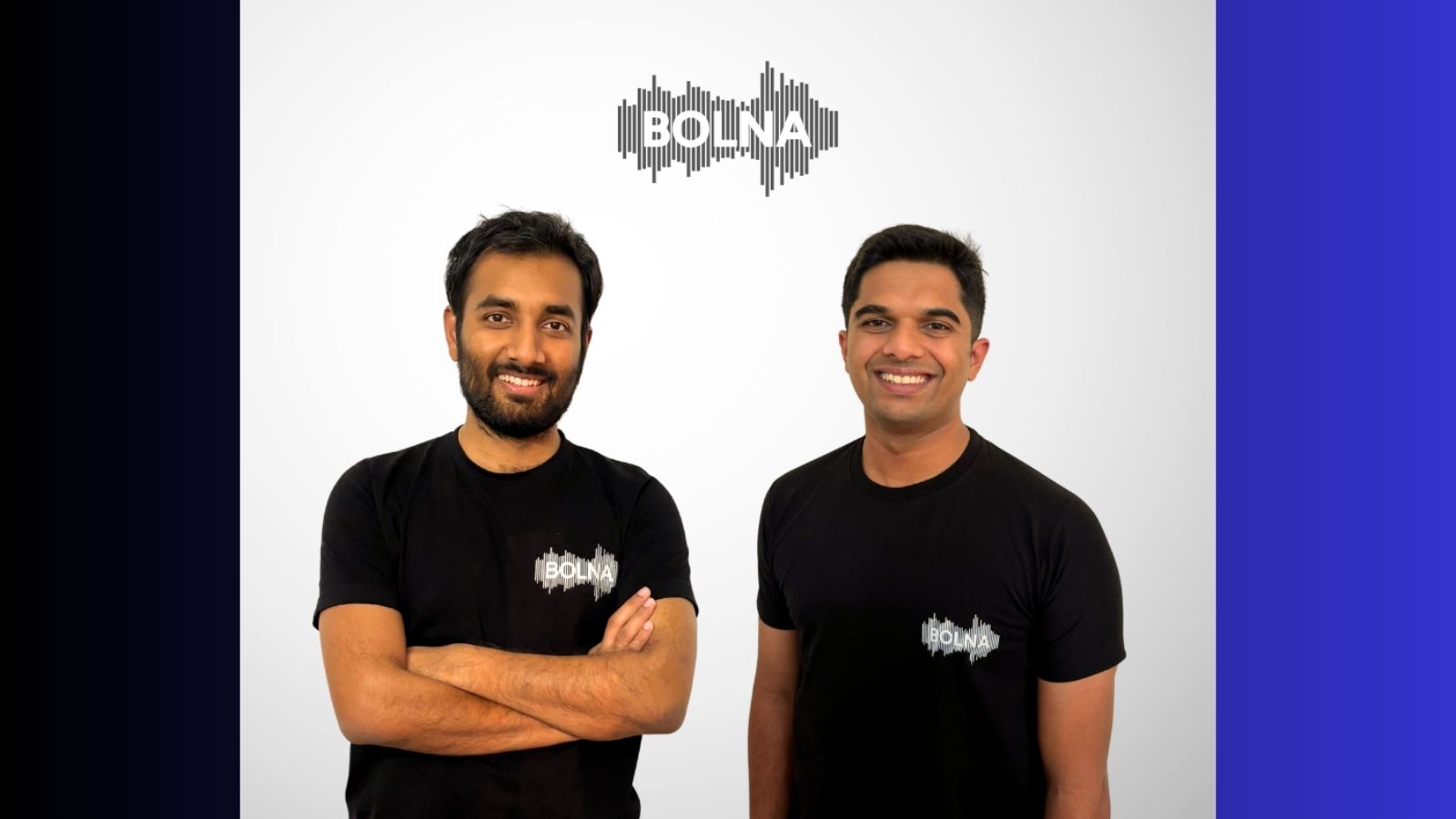
The Indian deep-tech ecosystem witnessed a significant capital injection this week as Bengaluru-based Bolna secured $6.3 million in a strategic seed round led by General Catalyst. This financial milestone highlights a growing appetite among global investors for specialized, region-specific artificial intelligence solutions rather than generic wrappers. The Bolna AI funding round serves as a critical validation for the “build for Bharat” thesis, emphasizing that the next wave of digital transformation in India will be voice-led and vernacular.
With participation from heavyweights like Y Combinator, Blume Ventures, and Orange Collective, the Bolna AI funding round has positioned the startup to tackle one of the most complex challenges in the subcontinent: linguistic diversity. While global Large Language Models (LLMs) excel at English, they often falter with the nuances of Indian dialects, code-switching, and mixed-language speech patterns known as “Hinglish.” The capital raised in this Bolna AI funding round will be directly channeled into solving these friction points, enabling enterprises to automate high-volume voice interactions with unprecedented accuracy.
Breaking Down the Bolna AI Funding Round
The significance of the Bolna AI funding round extends beyond the dollar amount; it represents a convergence of top-tier venture capital focusing on infrastructure-layer AI. General Catalyst, a firm known for backing category-defining companies, led the round, signaling strong confidence in the founders, Maitreya Wagh and Prateek Sachan. This Bolna AI funding round also saw participation from Pioneer Fund, Transpose Capital, and Eight Capital, creating a robust coalition of backers.
Industry analysts tracking the Bolna AI funding round note that the startup’s journey wasn’t overnight. Founders Wagh and Sachan faced rejection from Y Combinator five times before finally being accepted into the Fall 2025 cohort. Their persistence paid off when they demonstrated that Indian enterprises were not just ready but eager to pay for effective voice automation. By the time the Bolna AI funding round closed, the company had already scaled to processing over 200,000 calls daily, proving that their technology could handle the rigors of real-world deployment.
The proceeds from the Bolna AI funding round are earmarked for aggressive expansion. The company plans to scale its engineering capabilities, specifically hiring forward-deployed engineers who can integrate complex voice stacks into legacy enterprise systems. Furthermore, the Bolna AI funding round will support the development of proprietary datasets for under-represented Indian languages, creating a competitive moat that global tech giants may find difficult to bridge.
The Rise of Multilingual AI Agents in India
The success of the Bolna AI funding round underscores a massive shift in how businesses interact with the “next billion” users. In a country with 22 official languages and thousands of dialects, text-based interfaces often fail to capture the mass market. Multilingual AI agents are no longer a luxury but a necessity for sectors like banking, logistics, and healthcare. The Bolna AI funding round validates the market need for agents that can seamlessly switch between languages mid-sentence, mirroring human conversation patterns in India.
Traditional IVR systems are notorious for poor user experience, often forcing customers to navigate complex keypads. The capital from the Bolna AI funding round will help accelerate the deployment of agents that listen, understand, and respond in real-time. These multilingual AI agents are designed to handle the “cocktail party problem”—understanding speech in noisy backgrounds—which is crucial for users calling from busy streets or crowded homes.
Investors participating in the Bolna AI funding round recognized that generic speech-to-text models struggle with Indian accents. By focusing on multilingual AI agents, Bolna is building an orchestration layer that selects the best underlying model for a specific dialect or use case. This nuance is a key reason why the Bolna AI funding round attracted such high-profile attention; it solves a last-mile delivery problem that larger, generalized models often overlook.
Bolna Vernacular AI Platform Features and Capabilities
At the heart of this investment is the technology itself. The Bolna vernacular AI platform features a unique orchestration engine that decouples the application layer from the underlying model. This allows enterprises to switch between different ASR (Automatic Speech Recognition) and TTS (Text-to-Speech) providers without rewriting their code. The Bolna AI funding round will further enhance this capability, reducing vendor lock-in for their clients.
One of the standout Bolna vernacular AI platform features is its low latency. In voice conversations, delays of even a second can break the flow and feel robotic. Bolna has optimized its stack to deliver responses in under 300 milliseconds, creating a natural, human-like interaction. The resources from the Bolna AI funding round will be used to maintain this performance even as call volumes skyrocket.
Another critical aspect of the Bolna vernacular AI platform features is its ability to handle interruptions. Human conversation is rarely linear; people interrupt, correct themselves, and talk over each other. The Bolna AI funding round enables the team to refine their “barge-in” capabilities, allowing the AI to stop speaking immediately when the user interrupts, just as a human agent would. This level of sophistication is what differentiates Bolna AI from basic chatbots.
Impact on Indian AI Startups Investment
The Indian AI startups investment landscape is currently undergoing a maturation phase. Previously, capital flowed largely into SaaS applications or consumer internet plays. However, the Bolna AI funding round indicates a pivot toward deep tech and infrastructure. Investors are now looking for companies that are building fundamental rails for the AI economy rather than just applications on top of OpenAI.
This surge in Indian AI startups investment is driven by the realization that India offers a unique data advantage. The diversity of languages and user behaviors provides a training ground for robust AI models that can eventually be exported to other emerging markets. The Bolna AI funding round is a bellwether for this trend, suggesting that we will see more deals focused on “vertical AI” that solves specific regional problems.
Furthermore, the Indian AI startups investment climate is benefiting from a reverse brain drain. Founders like Wagh and Sachan, who have global exposure, are returning or staying in India to build for the local market. The Bolna AI funding round demonstrates that domestic startups can command valuations and check sizes comparable to their Silicon Valley peers when they address large enough Total Addressable Markets (TAMs).
Strategic Use of Bolna Seed Funding
The Bolna seed funding is not merely for operational runway; it is a war chest for talent acquisition. Building high-fidelity voice agents requires a rare blend of skills in linguistics, machine learning, and telephony infrastructure. The Bolna AI funding round allows the company to compete for top-tier talent against global tech giants who are also establishing AI labs in Bengaluru and Hyderabad.
A significant portion of the Bolna seed funding will go toward expanding their “forward-deployed” engineering team. Unlike typical SaaS products that are plug-and-play, enterprise voice AI often requires custom integration with legacy CRM and telephony systems. The Bolna AI funding round ensures the startup has the manpower to handhold large enterprise clients through this transition, ensuring successful deployments that stick.
Additionally, the Bolna seed funding will support the expansion of their self-serve platform. Currently, 75% of Bolna’s revenue comes from self-serve customers, indicating a strong product-led growth motion. The Bolna AI funding round will enable them to double down on this channel, making it easier for smaller businesses and developers to spin up voice agents without talking to a sales representative.
Why the Bolna Voice AI Startup Funding Matters
The Bolna voice AI startup funding event is a signal to the broader market that voice is the next frontier for customer experience (CX). For decades, BPOs (Business Process Outsourcing) have been a cornerstone of the Indian economy. The Bolna AI funding round suggests that this industry is ripe for disruption via automation. However, instead of replacing humans entirely, Bolna AI aims to augment them by handling routine queries, allowing human agents to focus on complex issues.
This Bolna voice AI startup funding also highlights the importance of data residency and security. Financial institutions and healthcare providers in India are subject to strict data privacy regulations. By building a local stack, Bolna AI offers a compliant alternative to global APIs that might route data through servers outside the country. The Bolna AI funding round provides the capital necessary to maintain enterprise-grade security certifications.
Moreover, the Bolna voice AI startup funding comes at a time when internet penetration in rural India is deepening. New internet users are often “voice-first,” preferring to speak rather than type. The Bolna AI funding round positions the company to be the primary interface for these users, whether they are booking a gas cylinder, checking a bank balance, or scheduling a doctor’s appointment.
Deep Dive into the Bolna AI Funding Round Metrics
Analyzing the metrics revealed during the Bolna AI funding round provides insight into their rapid ascent. The startup is approaching $700,000 in Annual Recurring Revenue (ARR), a figure that impressed investors given the company’s young age. The Bolna AI funding round was catalyzed by this traction, moving the conversation from theoretical potential to proven unit economics.
The Bolna AI funding round also shed light on their customer retention. With over 1,050 paying customers, Bolna AI has proven it can service a wide range of industries, from e-commerce to education. The diversity of their client base was a key factor in closing the Bolna AI funding round, as it mitigates sector-specific risks.
Investors in the Bolna AI funding round were particularly interested in the volume of calls processed. Scaling from 1,500 to 200,000 daily calls in under a year demonstrates robust infrastructure. The capital from the Bolna AI funding round is essential to ensure that this infrastructure holds up as they aim for millions of daily interactions.
Future Outlook Post-Bolna AI Funding Round
Looking ahead, the Bolna AI funding round is just the beginning of a longer journey. The company aims to achieve $5 million in ARR by mid-2026. To reach this goal, the momentum from the Bolna AI funding round must be translated into aggressive sales and marketing execution. The founders have stated that the Bolna AI funding round gives them the runway to experiment with new pricing models and enter new verticals.
The success of the Bolna AI funding round may also trigger a consolidation wave in the Indian AI startups investment space. As Bolna AI establishes itself as a leader, smaller players may struggle to compete with its well-capitalized R&D engine. The Bolna AI funding round has effectively raised the bar for what is expected from seed-stage voice AI companies in terms of traction and technology.
Ultimately, the Bolna AI funding round is a win for the Indian consumer. As enterprises deploy these multilingual AI agents, the friction of getting support in one’s native language will decrease. The Bolna AI funding round accelerates a future where technology adapts to the user, rather than the user adapting to the technology.
Conclusion
The successful closure of the Bolna AI funding round marks a pivotal moment for the Indian deep-tech landscape. By securing $6.3 million from top-tier investors, Bolna AI has validated the immense potential of vernacular voice interfaces. The Bolna AI funding round provides the necessary fuel to build multilingual AI agents that truly understand the complexity of Indian communication.
As the company utilizes the Bolna seed funding to enhance the Bolna vernacular AI platform features, the broader Indian AI startups investment ecosystem watches closely. The Bolna voice AI startup funding is not just about one company; it is about the maturation of an entire industry ready to serve the next billion users. With the resources from the Bolna AI funding round, the startup is well-positioned to redefine how businesses talk to Bharat.
Frequently Asked Questions
Who led the Bolna AI funding round?
The Bolna AI funding round was led by General Catalyst, with participation from Y Combinator, Blume Ventures, and others.
What is the primary purpose of the Bolna seed funding?
The Bolna seed funding will be used to expand engineering teams, enhance vernacular AI capabilities, and scale the platform’s infrastructure.
What are the key Bolna vernacular AI platform features?
Key features include a model-agnostic orchestration layer, low latency (<300ms), handling of interruptions, and support for multiple Indian languages and dialects.
How does the Bolna AI funding round impact the Indian AI startups investment landscape?
The Bolna AI funding round signals a shift in investor focus toward deep-tech infrastructure and region-specific AI solutions, validating the “build for Bharat” thesis.
What makes Bolna AI different from other voice AI startups?
Bolna AI differentiates itself with an orchestration layer that routes calls to the best-fit model for specific languages and use cases, ensuring higher accuracy for Indian dialects.
How many daily calls was Bolna processing at the time of the funding?
At the time of the Bolna AI funding round, the startup was processing over 200,000 calls daily.
Who are the founders of Bolna AI?
Bolna AI was founded by Maitreya Wagh and Prateek Sachan.