
Indian Aerospace Startup Misochain Secures $2 Million to Revolutionize Space Supply Chain Technology

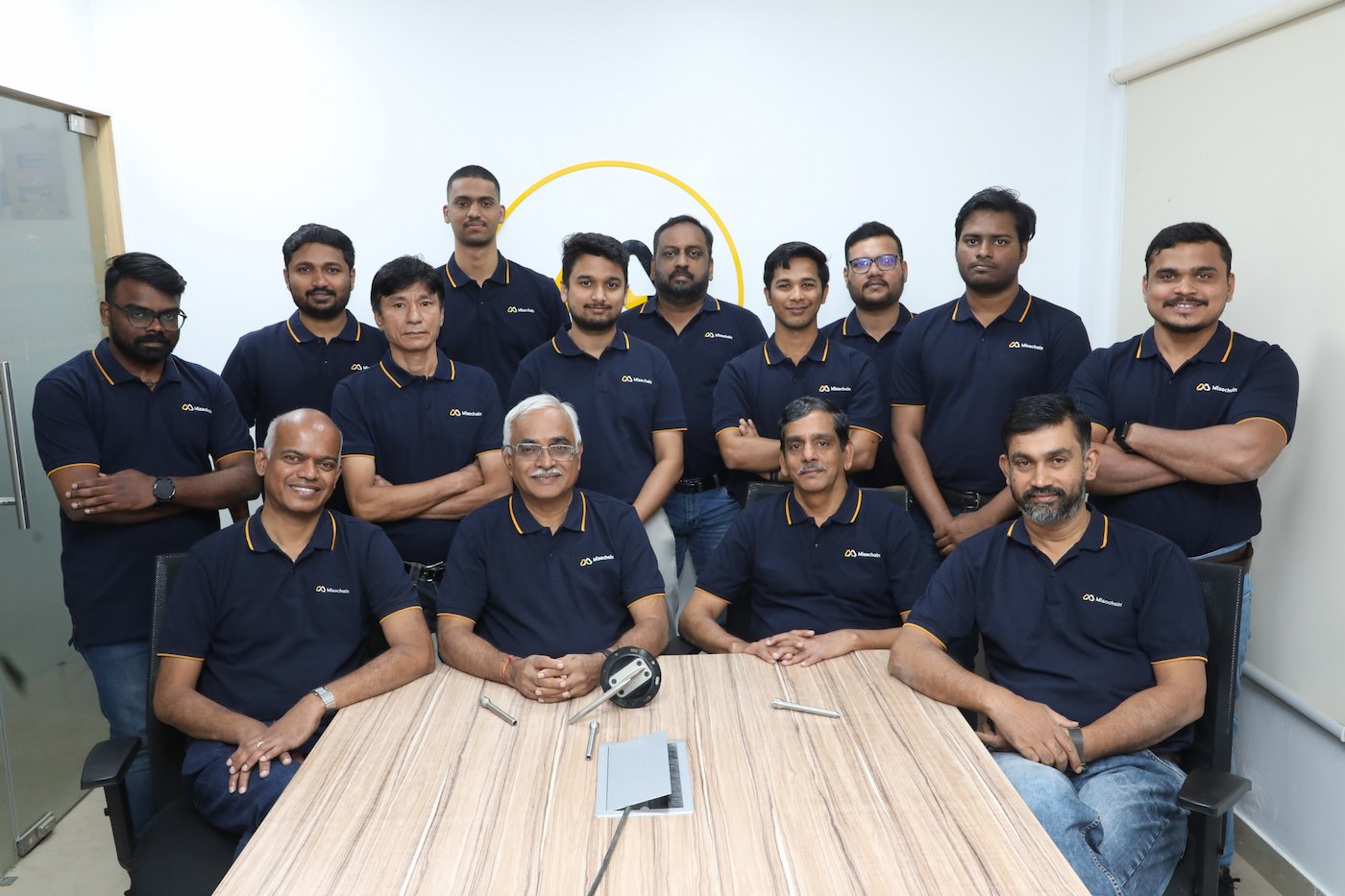
India’s deeptech aerospace sector just gained fresh momentum. Misochain Technologies, a Bengaluru-based aerospace startup, announced it raised ₹180 million (approximately $2 million) in seed funding led by Capital-A—a venture capital firm specializing in manufacturing and deeptech. This Misochain seed funding arrives at a pivotal moment for Indian aerospace startup funding, as the nation’s deeptech sector clocked 87 funding deals during 2025, collectively raising $500 million.
Founded in 2019 by Rama Kandula and Murali Krishnan, Misochain develops indigenous flight-critical aircraft components that address a crucial gap. Many of India’s defense platforms still depend heavily on overseas suppliers for critical subsystems. The Misochain $2M investment targets exactly this vulnerability—building manufacturing independence while positioning the startup among elite suppliers serving India’s aerospace ecosystem.
What Makes This Aerospace Seed Round India Significant
The Misochain venture capital deal represents more than just numbers on a term sheet. It signals shifting investor confidence toward indigenous aerospace manufacturing at a time when defense self-reliance has become national priority.
The company’s portfolio includes air data probes, vibration isolation systems, actuators and solenoid valves—all components critical for aircraft operation. Unlike software startups that scale quickly with minimal capital, aerospace ventures require substantial upfront investment in certification, testing infrastructure, and precision manufacturing capabilities. That’s what makes this Indian aerospace startup funding particularly noteworthy.
Capital-A’s lead role brings both financial muscle and strategic expertise. Ankit Kedia, Founder and Lead Investor at Capital-A, emphasized that “aerospace manufacturing is defined by certification depth, execution discipline, and long product lifecycles,” highlighting the sector’s unique demands. His firm’s focus on manufacturing and deeptech aligns perfectly with Misochain’s trajectory.
The timing couldn’t be better. India’s deeptech sector raised cumulative funding of $500 million across 87 deals during 2025, demonstrating robust appetite for technology ventures solving hard engineering problems. Yet aerospace remains underserved compared to consumer internet or fintech, creating opportunity for specialized players.
How Misochain Plans to Deploy the Capital
The Misochain $2M investment comes with clear deployment strategy targeting three critical areas that will determine the startup’s scalability and market position.
First, the funding will be deployed in a manufacturing facility to produce aerospace components, boost product certification programmes and scale engineering and testing capabilities (MRO) for UAV manufacturers and global aerospace customers. Building a dedicated facility represents significant milestone—it enables Misochain to control quality, reduce dependence on contract manufacturers, and accelerate production cycles.
Product certification forms the second pillar. Aerospace components face stringent qualification requirements that can take years to complete. Every part must demonstrate reliability under extreme conditions—temperature fluctuations, vibration, pressure differentials. The certification process isn’t just bureaucratic hurdle; it’s what separates hobby projects from mission-critical systems. Investing in accelerated certification programs shortens time-to-market while building credibility with defense customers.
Third, scaling engineering and maintenance, repair, and overhaul (MRO) capabilities for unmanned aerial vehicle (UAV) manufacturers addresses booming demand. Drones are transforming defense operations, surveillance, and logistics. As UAV adoption accelerates, so does need for reliable component suppliers who understand the sector’s unique requirements.
Misochain is part of MaXcel, a hardware and industrial tech accelerator jointly run by Capital-A and SanchiConnect, providing access to mentorship, manufacturing expertise, and potential customer networks that extend beyond what capital alone provides.
The Broader Context of Indian Aerospace Startup Funding
Understanding the Aerospace seed round India requires examining the ecosystem’s rapid evolution from government-dominated to increasingly privatized landscape.
India’s space economy has been valued at about $9 billion in recent years, and government projections place it at $44 billion by 2033, driven largely by private participation. While those figures primarily address space sector, the ripple effects benefit adjacent aerospace manufacturing as technologies and supply chains overlap.
Government policy shifts have unlocked opportunities. The 2023 Space Policy and subsequent reforms opened previously restricted domains to private enterprises. Recent policy reforms, particularly the Indian Space Policy 2023 and institutional mechanisms like IN-SPACe, have catalysed a surge in private participation, creating environment where aerospace startups can secure contracts, access testing facilities, and compete for government tenders.
Capital availability varies by subsector. Arctus Aerospace recently closed its pre-seed round, raising $2.6 million to provide unmanned aerial vehicles (UAVs) for defence forces, while drone manufacturer Garuda Aerospace secured ₹100 crore to further scale up its production facilities and fuel its research and development strategy. These deals demonstrate that investors are writing checks across the aerospace value chain—not just for flashy satellite constellation plays but for component manufacturers and systems integrators.
The Misochain venture capital success shows that companies solving unglamorous but essential problems can attract sophisticated capital. Component manufacturing lacks the narrative appeal of rocket launches, yet forms foundation upon which entire industry rests.
Competitive Landscape and Strategic Positioning
Misochain enters crowded but fragmented market where differentiation comes from technical capability rather than marketing prowess.
The company “has crossed a key inflection point by achieving technical qualification for flight-critical systems, placing it among a small group of suppliers with durable relevance to India’s defence ecosystem and global aerospace supply chains,” according to Capital-A’s assessment. This qualification barrier protects Misochain from casual competitors while opening doors to long-term contracts.
Indian aerospace sector includes established players like Hindustan Aeronautics Limited (HAL) and Larsen & Toubro, alongside emerging startups. Each occupies different niche. HAL manufactures complete aircraft and helicopters. L&T focuses on large structural components and system integration. Misochain targets precision subsystems that larger players often procure from specialized vendors.
The startup’s positioning as indigenous manufacturer carries strategic value. “India has built strong aircraft and defence platforms, yet many flight-critical subsystems still depend on overseas suppliers,” said Rama Kandula, Co-Founder and CEO of Misochain Technologies. Import substitution isn’t merely economic—it’s strategic imperative for defense applications where supply chain security matters as much as cost.
Global aerospace supply chains are consolidating around trusted vendors who can demonstrate consistent quality across product lifecycles measured in decades. Once a component supplier gets designed into an aircraft platform, switching becomes expensive and risky. This creates natural moats for qualified vendors.
Technical Challenges and Operational Hurdles
Despite positive funding announcement, Misochain faces substantial challenges characteristic of aerospace manufacturing that investors must understand.
Certification timelines extend far beyond typical startup milestones. A new aerospace component might require 18-24 months of testing before receiving certification for use in critical systems. During this period, the company burns cash without generating revenue from that specific product line. Managing this J-curve while maintaining investor confidence requires sophisticated financial planning.
Manufacturing precision demands investment in specialized equipment and skilled workforce. Tolerances for aerospace components often measure in microns—thousandths of millimeters. Standard machining equipment won’t suffice. The startup must acquire precision CNC machines, testing apparatus, and quality control systems that cost millions while training operators capable of working to these exacting standards.
Supply chain complexity adds another layer. Even focused component manufacturer like Misochain must source raw materials, subcomponents, and specialized alloys that meet aerospace-grade specifications. Building reliable vendor relationships takes time, and quality variations can derail entire production runs.
Early-stage funding for very costly R&D projects continues to be a major hurdle across India’s aerospace sector. While Misochain secured seed round, subsequent funding requirements could dwarf this initial investment as the company scales manufacturing and certification efforts.
Talent acquisition presents ongoing challenge. Aerospace engineers with skills either get attracted to foreign lands or big companies, making it tough for startups to retain these talents. Competing with established players for specialized engineers while offering startup compensation packages requires creative approaches to equity, culture, and career development.
Market Opportunity and Growth Potential
The addressable market for indigenous aerospace components extends well beyond India’s borders, though domestic demand alone justifies substantial investment.
The Indian aerospace market is expected to reach $54.4 billion by 2033, driven by defense modernization, civil aviation expansion, and emerging space sector. This growth creates sustained demand for every component category Misochain serves.
Defense spending provides stable foundation. India ranks among world’s top defense spenders, with significant portion allocated to aircraft acquisition and maintenance. Each fighter jet, helicopter, and transport aircraft requires thousands of components throughout its operational life. MRO services alone represent multi-billion dollar annual market.
Commercial aviation’s recovery post-pandemic drives additional demand. Airlines are expanding fleets, and aging aircraft require component replacements. Misochain’s vibration isolation systems, actuators, and solenoid valves serve both defense and commercial customers, reducing concentration risk.
UAV proliferation creates entirely new market segment. Agnikul Technologies is targeting further missions with its Agnibaan rocket, while GalaxEye plans to deploy its multi-sensor Drishti satellite, and Dhruva Space’s LEAP-2 satellite is slated to fly aboard a PSLV. As these platforms deploy, they’ll need component suppliers capable of meeting aerospace standards at startup-friendly price points.
Export potential shouldn’t be overlooked. India’s cost advantage in high-precision manufacturing positions companies like Misochain to compete globally. Once domestic certifications are secured, pursuing international aerospace certifications opens access to established OEMs worldwide.
Financial Metrics and Valuation Considerations
While specific valuation terms weren’t disclosed, the Misochain seed funding structure provides insights into investor expectations and startup’s financial positioning.
Seed rounds in aerospace typically value companies based on technical milestones rather than revenue multiples. Key valuation drivers include:
- Certification progress: How many components have completed or are approaching certification
- Customer pipeline: Signed contracts, letters of intent, or active procurement discussions
- Manufacturing capability: Existing facilities, equipment, and production capacity
- Team expertise: Combined experience in aerospace engineering, manufacturing, and business development
- Intellectual property: Patents, proprietary processes, or exclusive licensing agreements
Capital efficiency matters enormously in capital-intensive sectors. Investors evaluate burn rate against milestone achievement. Can Misochain complete facility buildout and certification programs within 18-24 months using current funding? Or will they need bridge financing before reaching revenue inflection point?
Comparable deals offer context. Arctus Aerospace raised $2.6 million in pre-seed funding for UAV development, suggesting investors price early-stage aerospace ventures in similar range based on technology readiness and market positioning. The Misochain $2M investment aligns with these benchmarks.
Revenue projections in aerospace extend over longer timelines than software ventures. A typical enterprise SaaS company might target profitability within 3-5 years. Aerospace manufacturers often require 5-7 years to achieve sustainable profitability due to certification delays, manufacturing scale requirements, and long sales cycles for high-value components.
Strategic Implications for India’s Defense Ecosystem
The Misochain venture capital success carries strategic importance beyond single company trajectory, reflecting India’s broader push toward defense manufacturing self-reliance.
The “Make in India” initiative explicitly targets defense sector indigenization. Misochain “has crossed a key inflection point by achieving technical qualification for flight-critical systems, placing it among a small group of suppliers with durable relevance to India’s defence ecosystem”. Each qualified domestic supplier reduces import dependence and strengthens supply chain resilience.
Technology transfer from foreign OEMs often comes with restrictions, lifecycle costs, and maintenance dependencies. Indigenous development, while initially more expensive and time-consuming, delivers long-term strategic autonomy. When geopolitical tensions disrupt supply chains, countries with domestic manufacturing capabilities maintain operational readiness.
Dual-use technologies blur lines between defense and commercial applications. Components developed for military aircraft often find applications in civil aviation, space systems, and industrial equipment. This cross-pollination amplifies return on R&D investment while creating multiple revenue streams.
Government procurement policies increasingly favor domestic manufacturers through offset requirements and preferential bidding. Startups like Misochain benefit from these frameworks while competing on technical merit against established players. The certification inflection point mentioned by investors suggests Misochain has cleared critical hurdle in becoming preferred vendor.
Next Steps and Milestones to Watch
Success for Misochain will be measured through concrete achievements over the next 18-36 months as the company deploys its funding.
Manufacturing facility completion represents first major milestone. The timeline from groundbreaking to operational production typically spans 12-18 months for aerospace facilities due to specialized infrastructure requirements. Investors will watch for facility inauguration announcements and initial production runs.
Additional certification achievements signal technical progress and market expansion potential. Each certified component opens new customer conversations and revenue opportunities. The company should target certification pipeline that balances near-term revenue generation with long-term strategic positioning.
Customer contracts and partnerships provide validation and revenue visibility. Announced supply agreements with defense OEMs, UAV manufacturers, or commercial aircraft MRO providers demonstrate market traction beyond pilot programs. Watch for press releases mentioning multi-year supply contracts or strategic partnerships.
Follow-on funding will likely become necessary within 24-30 months. An Aerospace seed round India of this magnitude funds initial buildout but typically requires Series A capital to scale production and expand product portfolio. The timing and terms of subsequent raises will indicate whether the company is hitting milestones and gaining investor confidence.
Team expansion in critical areas like manufacturing engineering, quality assurance, and sales will signal growth execution. Key hires from established aerospace companies or research institutions strengthen capabilities and credibility.
Lessons for Other Indian Aerospace Startups
Misochain’s funding success offers roadmap for other Indian aerospace startup funding aspirants navigating this challenging sector.
Focus on certification as competitive moat. The lengthy, expensive certification process deters competitors while creating sustainable advantages for companies that invest early. Rather than viewing certification as regulatory burden, treat it as strategic asset.
Target specific technical problems rather than broad capabilities. Misochain succeeds by specializing in particular component categories where it can achieve technical leadership. Generalist approaches dilute focus and slow progress in capital-constrained environments.
Align with government initiatives without becoming dependent on them. The “Make in India” and defense indigenization programs create favorable conditions, but sustainable businesses must also compete in commercial markets and potentially export.
Build relationships with accelerators and specialized investors who understand sector dynamics. Participation in MaXcel, the hardware and industrial tech accelerator jointly run by Capital-A and SanchiConnect, provided Misochain with more than capital—it delivered access to manufacturing expertise, potential customers, and credibility with other investors.
Demonstrate technical milestones before broad commercialization. Investors in aerospace startups want to see working prototypes, test data, and progress toward certification before betting on large-scale revenue growth. The technical risk must be substantially retired before scaling risk becomes focus.
Plan for longer timeframes than consumer internet or SaaS ventures. Patience from founders, employees, and investors makes difference between premature shutdown and breakthrough success. The Aerospace seed round India for Misochain reflects investors who understand these extended timelines.
Conclusion: A Milestone for Indigenous Aerospace Manufacturing
The Misochain seed funding represents more than routine venture capital transaction. It demonstrates growing sophistication of India’s deeptech investment ecosystem and validates indigenous aerospace manufacturing as viable commercial opportunity.
For Misochain, the real work begins now. Capital provides runway, but execution determines whether the company joins elite ranks of globally competitive aerospace suppliers. The technical challenges are substantial, timelines are long, and margin for error is minimal in an industry where component failures can have catastrophic consequences.
For the broader Indian aerospace startup funding landscape, this deal sends encouraging signal. Investors are willing to back companies solving hard engineering problems in capital-intensive sectors when they demonstrate technical capability, strategic positioning, and realistic growth plans. The Misochain $2M investment may seem modest compared to billion-dollar SaaS unicorns, but in aerospace manufacturing, it represents serious commitment to building foundational industrial capability.
As India pursues the ambitious goal of expanding its aerospace market to $54.4 billion by 2033, companies like Misochain will determine whether that vision becomes reality. The country needs dozens of specialized manufacturers, each mastering particular technologies and components, to build truly independent aerospace ecosystem.
The Misochain venture capital success proves the model can work. Indigenous aerospace manufacturing isn’t aspirational policy goal—it’s emerging commercial reality backed by sophisticated investors and executed by technically capable teams. Watch this space closely, because the Aerospace seed round India trend is just beginning.
Frequently Asked Questions
What is Misochain and what does the company do?
Misochain Technologies is a Bengaluru-based aerospace deeptech startup founded in 2019 that develops indigenous flight-critical aircraft components including air data probes, vibration isolation systems, actuators, and solenoid valves for defense and commercial aviation platforms.
How much funding did Misochain raise and who led the round?
Misochain raised ₹180 million (approximately $2 million) in seed funding led by Capital-A, a venture capital firm specializing in manufacturing and deeptech investments.
How will Misochain use the funding?
The company will deploy the capital to establish a manufacturing facility for aerospace components, accelerate product certification programs, and scale engineering and maintenance, repair, and overhaul (MRO) capabilities for UAV manufacturers and global aerospace customers.
Why is this funding significant for Indian aerospace industry?
This investment validates indigenous aerospace component manufacturing as a viable commercial opportunity and addresses India’s dependence on overseas suppliers for flight-critical subsystems, supporting the nation’s defense self-reliance goals.
What are the main challenges Misochain faces?
Key challenges include lengthy aerospace certification timelines (18-24 months), high capital requirements for precision manufacturing equipment, complex supply chain management, and competition for specialized aerospace engineering talent.
What is the market opportunity for aerospace startups in India?
The Indian aerospace market is projected to reach $54.4 billion by 2033, driven by defense modernization, civil aviation expansion, UAV proliferation, and growing space sector activities.
What makes Misochain’s business model defensible?
The company has achieved technical qualification for flight-critical systems, creating certification barriers that deter competitors while establishing long-term relationships with defense and aerospace customers who prioritize supply chain reliability and quality over price alone.