
OYO Founder Ritesh Agarwal Invests in Beauty Startup Dazzl’s $3.2 Million Seed Round

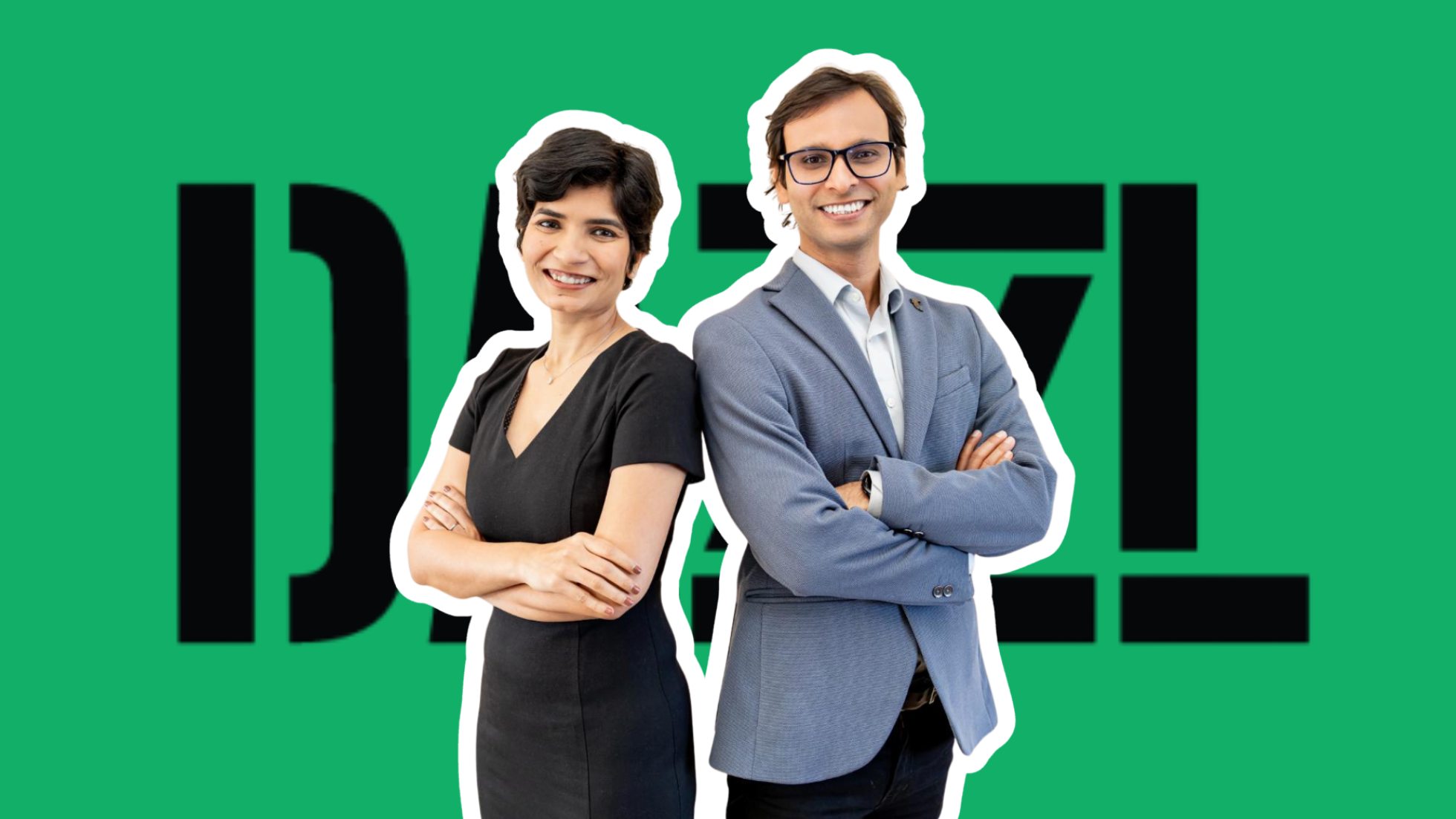
Bengaluru-based beauty services startup Dazzl has bagged $3.2 Mn (about INR 29 Cr) in a seed funding round led by Stellaris Venture Partners, marking a significant milestone for India’s quick-commerce beauty sector. What makes this particularly noteworthy isn’t just the funding amount—it’s the heavyweight investor lineup featuring OYO founder Ritesh Agarwal alongside other industry veterans betting on rapid beauty services delivery.
The Ritesh Agarwal Dazzl investment signals growing confidence in hyperlocal beauty services. Quick commerce value was pegged at $6 Bn in 2025 and projected to surge to $40 Bn by 2030, creating massive opportunities for specialized players like Dazzl.
What Makes the Ritesh Agarwal Dazzl Investment Strategic?
Angel investors Ritesh Agarwal, founder and CEO of Prism (formerly Oyo); Maninder Gulati, former Oyo CXO; Abhinav Sinha, founder of Kluisz AI; Sameer Brij Verma, founder of Northpoint Capital; and Abhishek Bansal, CEO and cofounder of Shadowfax, also participated in the round. This constellation of investors brings more than capital—they bring operational expertise in scaling consumer businesses across India’s challenging markets.
Ritesh Agarwal’s investment track record speaks volumes. Ritesh Agarwal has invested in 45 companies, spanning sectors from consumer tech to enterprise applications. His portfolio includes unicorns like Unacademy and Cars24. The OYO founder investments typically focus on companies solving fundamental consumer problems through technology—exactly what Dazzl promises with its 10-minute beauty service delivery model.
Founded by ex-Nexus Venture Partners’ VP Komal Solanki and ex-OYO executive Ashish Bajpai, Dazzl offers on-demand beauty and wellness services at home. The ex-OYO connection likely influenced the Ritesh Agarwal venture capital decision, as Bajpai understands the operational DNA that scaled OYO globally.
How Dazzl Beauty Startup Funding Will Accelerate Growth
Dazzl plans to use the fresh capital to pilot its services across select micro-markets in Bengaluru, build repeatable local operations, and invest in tech and training systems. Execution speed matters tremendously in quick commerce. Companies must establish market dominance before competitors replicate their model.
The startup focuses on quick, beauty services such as blow-dries, head massages and pedicures, with professionals reaching customers within 10 minutes. This 10-minute promise differentiates Dazzl from appointment-based competitors who typically require 2-4 hours advance booking.
The startup launched operations last month and is currently live in one micro-market in Bengaluru, starting with Bellandur. Operating in just one neighborhood might seem conservative, but it’s strategically smart. Proving unit economics in a controlled environment before scaling prevents the cash burn that killed many quick-commerce predecessors.
The Dazzl beauty startup funding comes at the perfect moment. India hosts over 2,046 active beauty tech companies as of mid-2025, collectively raising over three billion dollars in funding. Competition is fierce, but specialization in rapid service delivery creates defensibility.
Indian Beauty Tech Funding Trends Powering Dazzl’s Strategy
The broader Indian beauty tech funding landscape shows remarkable momentum. The sector represents a massive market opportunity valued at approximately thirty-three billion dollars, with projections suggesting significant growth in the coming years. Within this massive market, several distinct trends are reshaping how beauty services reach consumers.
Quick commerce has fundamentally changed consumer expectations. What started with groceries and restaurant delivery has expanded into beauty, wellness, and personal care. Consumers increasingly expect professional services on-demand, not just products. Dazzl capitalizes on this behavioral shift by bringing salon professionals directly to customers’ doorsteps within minutes.
The Indian beauty industry closed 2024 at $33.08 billion, signalling not just growth, but momentum. This expansion creates space for niche players who serve specific needs better than horizontal platforms.
Technology infrastructure improvements make rapid service delivery feasible. GPS tracking, real-time dispatch systems, and mobile payment integration—technologies that didn’t exist reliably five years ago—now enable startups like Dazzl to coordinate beauty professionals across micro-markets efficiently.
The Indian beauty tech funding environment also benefits from increased investor sophistication. Early-stage investors now understand beauty business unit economics better than they did during the first e-commerce wave. They’re willing to back companies with clear paths to profitability, even if those paths require 18-24 months of market development.
Why OYO Founder Investments Focus on Consumer Services
Understanding Ritesh Agarwal’s investment philosophy helps explain why Dazzl caught his attention. Under his leadership with an eye for innovation and strong belief in India’s potential for entrepreneurship, Agarwal has over the years helped early-stage ventures across a variety of industries including tech, e-commerce, food, fashion, and fintech.
The pattern in Ritesh Agarwal venture capital decisions reveals consistent themes. He backs founders who understand operational complexity in Indian markets, invests in businesses solving high-frequency consumer problems and supports companies leveraging technology to improve service delivery efficiency.
Dazzl checks all these boxes. Beauty services represent a high-frequency need—women typically visit salons 2-4 times monthly. The operational challenges of coordinating beauty professionals across neighborhoods mirror challenges OYO faced standardizing hotel experiences. Technology becomes the differentiator enabling reliable 10-minute delivery.
His inputs are not restricted to monetary funding; very often, beyond the funding, Ritesh adds his valuable mentorship and advice with business insights gleaned during his own journey of the establishment of a global hospitality empire. For Dazzl, access to Agarwal’s mentorship might prove more valuable than the capital itself. Scaling hyperlocal services across India’s fragmented cities requires navigating regulatory complexity, hiring challenges, and intense competition—all areas where Agarwal has hard-won expertise.
The timing of OYO founder investments in Dazzl aligns with broader trends in his portfolio. In June 2024, OYO raised an additional $100–125 million in a new funding round, further increasing its valuation and strengthening its position in the global hospitality market. With OYO’s core business stabilizing and reaching profitability, Agarwal can focus investment bandwidth on emerging sectors like on-demand beauty.
Competitive Landscape for Dazzl Beauty Startup Funding
Dazzl enters a crowded but fragmented market. Traditional appointment-based beauty platforms like Urban Company dominate the organized sector, but they typically require 2-4 hours advance booking. Neighborhood salons serve walk-in customers but lack quality standardization and digital booking convenience.
Quick commerce in beauty services remains nascent. Most quick-commerce platforms focus on product delivery—cosmetics, skincare products, wellness items—rather than service delivery. The few players attempting rapid beauty services haven’t achieved meaningful scale yet, creating a window for well-funded startups to establish market leadership.
The rise of beauty tech startups in India reflects broader shifts in consumer behavior, driven by increased internet penetration, affordable mobile data, rising disposable incomes, and a young demographic that values personalization, transparency, and convenience. These macro trends favor Dazzl’s model, especially among urban millennials and Gen Z consumers who expect instant gratification.
The Indian beauty tech funding environment increasingly rewards specialization. Horizontal platforms struggle to deliver excellent experiences across categories. Vertical specialists who nail one category—like Dazzl with rapid beauty services—can capture disproportionate value.
However, competitive threats loom. Well-funded competitors could replicate Dazzl’s model within 6-12 months. Established platforms like Urban Company could launch rapid service options leveraging their existing professional networks. Success depends on Dazzl establishing operational excellence and brand recognition before deep-pocketed competitors enter.
Unit Economics: The Real Challenge for Rapid Beauty Services
Behind the glamorous funding announcement lies the hard reality of unit economics. Can Dazzl actually make money delivering beauty services within 10 minutes?
The math gets tricky. Rapid delivery requires density—enough professionals stationed across micro-markets to guarantee 10-minute response times. Low utilization kills profitability. If beauty professionals sit idle 40-50% of the time waiting for service requests, labor costs become unsustainable.
Dazzl’s micro-market strategy addresses this challenge. By concentrating operations in high-density neighborhoods like Bellandur before expanding, they can optimize professional-to-customer ratios and minimize idle time. This approach mirrors how food delivery companies achieved profitability—starting hyperlocal before scaling citywide.
Service pricing presents another puzzle. Professional blow-dries, head massages, and pedicures typically cost ₹500-1,500 at salons. Consumers won’t pay massive premiums for home delivery, yet Dazzl bears additional costs for travel time and logistics. The startup must find the pricing sweet spot that attracts customers while covering costs and generating margins.
Technology investments funded by the Dazzl beauty startup funding round could improve unit economics significantly. Predictive algorithms that position professionals near anticipated demand, dynamic pricing that smooths demand peaks, and retention programs that increase customer lifetime value all impact profitability.
The beauty service market structure also favors eventual profitability. Unlike product delivery with thin margins, services generate better gross margins—potentially 30-40% after professional compensation. If Dazzl solves the density and utilization challenges, profitable unit economics become achievable.
Scaling Beyond Bengaluru: The Real Test for Dazzl
The startup plans to expand into nearby micro-markets within the city over the coming months, depending on consumer demand and density. This measured expansion approach reduces risk but raises questions about how quickly Dazzl can capture market share before competitors arrive.
Scaling hyperlocal services across Indian cities presents unique challenges. What works in Bengaluru’s Bellandur neighborhood might fail in Delhi’s Dwarka or Mumbai’s Andheri. Consumer preferences, willingness to pay, and service quality expectations vary dramatically across cities.
Professional supply chain complexity multiplies during expansion. Recruiting, training, and retaining beauty professionals requires localized strategies. Compensation expectations differ across cities. Quality control becomes exponentially harder managing hundreds of professionals across multiple cities versus dozens in one neighborhood.
The Ritesh Agarwal Dazzl investment provides strategic advantages for scaling. Agarwal’s experience expanding OYO from one city to 800+ cities across 80 countries offers a roadmap for Dazzl’s founders. His network includes operational leaders, city managers, and logistics experts who’ve solved similar challenges.
Funding runway matters tremendously. $3.2 million might seem substantial, but scaling hyperlocal services burns cash quickly. Dazzl will likely need Series A funding within 12-18 months to sustain expansion velocity. The quality of their seed investors—led by Stellaris Venture Partners with participation from Ritesh Agarwal and other operators—improves Series A fundraising prospects significantly.
What This Means for Indian Beauty Tech Funding in 2026
The Ritesh Agarwal venture capital move into Dazzl signals broader investor confidence in specialized beauty services. After years of horizontal platforms dominating investment attention, capital is flowing toward vertical specialists solving specific consumer problems exceptionally well.
What marks this moment is structural change, and the beauty and wellness industry trends for 2026 reflect how decisively the market is being reshaped. Quick commerce for services—not just products—represents one of these structural changes reshaping the industry.
Several factors make Indian beauty tech funding particularly attractive in 2026. Rising disposable incomes expand the addressable market beyond metro cities into Tier 2 and Tier 3 locations. Digital infrastructure improvements—from payments to logistics to GPS tracking—enable business models that weren’t feasible three years ago. Consumer behavior shifts toward convenience and instant gratification create willingness to pay premiums for rapid service delivery.
Investor interest in profitability rather than just growth also benefits specialized players like Dazzl. The era of burning billions chasing market share has ended. Today’s investors want clear paths to unit economics and defensible competitive moats. Dazzl’s focused approach—mastering rapid beauty services rather than attempting to be everything to everyone—aligns with this investment philosophy.
The OYO founder investments in Dazzl will likely inspire other successful entrepreneurs to back beauty tech startups. When recognizable names like Ritesh Agarwal, Maninder Gulati, and Abhishek Bansal invest, they validate both the company and the sector. This validation often triggers follow-on investments from other angels and institutional funds.
Risks and Challenges Ahead for Dazzl
Despite the promising Dazzl beauty startup funding announcement, significant risks could derail the company’s trajectory. Regulatory challenges around gig worker classification could increase labor costs dramatically if beauty professionals must be treated as employees rather than contractors. Similar issues plagued ride-sharing and food delivery companies.
Customer acquisition costs might prove unsustainably high. Quick commerce businesses often spend ₹500-1,000 acquiring each customer through discounts and marketing. If average order values hover around ₹800-1,200 for beauty services, achieving payback requires multiple repeat purchases—not guaranteed in a nascent category.
Quality control presents perpetual challenges. One bad experience—a beauty professional arriving late, delivering subpar service, or behaving inappropriately—can destroy customer trust instantly. Social media amplifies negative experiences, making reputation management critical and difficult.
Competitive responses from well-funded incumbents pose existential threats. Urban Company, with substantial capital and established professional networks, could launch rapid services in response to Dazzl’s traction. Nykaa or other beauty platforms might acquire smaller rapid-service startups to enter the space. Dazzl must establish brand recognition and operational excellence before these competitive responses materialize.
Economic downturns impact discretionary spending categories like beauty services disproportionately. If India enters a recession or experiences significant inflation, consumers might reduce salon visits and home beauty services to save money. Startups dependent on frequent consumer spending become vulnerable during economic contractions.
Future Outlook: Will the Ritesh Agarwal Dazzl Investment Pay Off?
Predicting startup success remains difficult, but several factors suggest Dazzl has above-average odds of building a sustainable business. The founding team combines deep venture capital expertise through Komal Solanki’s Nexus background with operational know-how from Ashish Bajpai’s OYO experience. This combination—understanding both investor expectations and execution challenges—matters enormously.
The investor group provides more than capital. Stellaris Venture Partners brings portfolio support and follow-on funding capacity. Ritesh Agarwal offers scaling expertise and operational mentorship. Maninder Gulati knows OYO’s playbook intimately. Abhishek Bansal from Shadowfax understands logistics complexity in Indian markets. This investor roster creates competitive advantages beyond money.
Market timing appears favorable. Quick commerce adoption accelerated dramatically in 2025, and consumer expectations around rapid delivery continue rising. Beauty services represent the logical next category for quick commerce expansion after groceries, food, and products. Dazzl enters at the right moment to capture this behavioral shift.
The micro-market strategy reduces execution risk. Rather than attempting citywide launch or multi-city expansion prematurely, Dazzl can perfect operations in controlled environments, iterate based on feedback, and scale what works. This patient approach contrasts with the “blitzscaling” mentality that destroyed many well-funded startups.
However, success requires near-flawless execution over 24-36 months. Dazzl must prove unit economics in Bellandur, expand across Bengaluru successfully, demonstrate the model works in 2-3 additional cities, and raise Series A before cash runs out. Any significant misstep—quality problems, regulatory issues, competitive responses—could derail progress.
The Indian beauty tech funding environment will closely watch Dazzl’s progress. Success validates rapid beauty services as an investable category, likely triggering competitive funding and new entrants. Failure reinforces skepticism about quick commerce profitability and might chill investment in similar models.
For Ritesh Agarwal, the Dazzl investment represents a relatively small bet with asymmetric upside. If Dazzl succeeds, his early backing and mentorship position him as kingmaker in India’s beauty tech sector. If Dazzl fails, the financial impact is minimal given his diversified portfolio. This risk-reward profile explains why successful entrepreneurs like Agarwal make numerous angel investments—a few big wins offset many small losses.
The Ritesh Agarwal Dazzl investment ultimately signals confidence that rapid beauty services can become a category-defining business in India’s evolving consumer landscape. Whether that confidence proves justified depends on execution, market development, and competitive dynamics over the next few years. For now, Dazzl has capital, expertise, and investor validation to pursue the opportunity aggressively.
Frequently Asked Questions
What is Dazzl and how does it differ from other beauty service platforms?
Dazzl is a Bengaluru-based beauty services startup that delivers on-demand beauty and wellness services at home within 10 minutes. Founded by ex-Nexus Venture Partners VP Komal Solanki and ex-OYO executive Ashish Bajpai, Dazzl focuses on quick services like blow-dries, head massages, and pedicures. Unlike appointment-based platforms like Urban Company that typically require 2-4 hours advance booking, Dazzl promises professionals reaching customers within 10 minutes by positioning beauty professionals strategically across micro-markets. The startup currently operates in Bellandur, Bengaluru, and plans to expand to nearby micro-markets based on consumer demand and density.
Who invested in Dazzl’s $3.2 million seed funding round?
Dazzl’s $3.2 million seed round was led by Stellaris Venture Partners, with participation from prominent angel investors including Ritesh Agarwal (founder and CEO of Prism, formerly OYO), Maninder Gulati (former OYO CXO), Abhinav Sinha (founder of Kluisz AI), Sameer Brij Verma (founder of Northpoint Capital), and Abhishek Bansal (CEO and cofounder of Shadowfax). This investor lineup brings not just capital but operational expertise in scaling consumer businesses across India’s challenging markets, with particular strengths in hospitality, logistics, and technology sectors.
What is Ritesh Agarwal’s investment track record and focus areas?
Ritesh Agarwal has invested in 45 companies across various sectors including consumer tech, enterprise applications, e-commerce, food, fashion, and fintech. His portfolio includes unicorns like Unacademy and Cars24, demonstrating his ability to identify high-potential startups. According to industry sources, Agarwal’s investment philosophy focuses on backing founders who understand operational complexity in Indian markets, businesses solving high-frequency consumer problems, and companies leveraging technology to improve service delivery efficiency. Beyond monetary funding, Agarwal provides valuable mentorship and business insights from his experience building OYO into a global hospitality empire.
How large is the Indian beauty tech market and what are the growth projections?
India’s beauty and personal care industry is valued at approximately $33 billion as of 2025, with the sector hosting over 2,046 active beauty tech companies that have collectively raised over $3 billion in funding. The market closed 2024 at $33.08 billion, signaling strong momentum beyond just growth. Industry projections suggest the beauty and personal care market will surpass ₹1.5 lakh crore by 2026, riding a 10-12% annual growth rate. Quick commerce specifically was valued at $6 billion in 2025 and is projected to surge to $40 billion by 2030, creating massive opportunities for specialized players like Dazzl in the rapid beauty services segment.
What are the main challenges Dazzl faces in scaling its 10-minute beauty service model?
Dazzl faces several critical challenges in scaling its rapid beauty service model. First, achieving profitable unit economics requires high density of beauty professionals across micro-markets to minimize idle time, while keeping labor costs sustainable. Second, quality control becomes exponentially harder when managing hundreds of professionals across multiple cities—one bad experience can destroy customer trust instantly. Third, customer acquisition costs for quick commerce businesses often run ₹500-1,000 per customer, requiring multiple repeat purchases to achieve payback. Fourth, competitive threats from well-funded incumbents like Urban Company could replicate Dazzl’s model leveraging existing professional networks. Finally, regulatory challenges around gig worker classification could dramatically increase labor costs if professionals must be treated as employees rather than contractors.
How will Dazzl use the $3.2 million funding?
Dazzl plans to use the fresh capital to pilot its services across select micro-markets in Bengaluru, build repeatable local operations, and invest in technology and training systems. The startup launched operations last month and is currently live in one micro-market in Bellandur. Rather than attempting aggressive multi-city expansion, Dazzl is taking a measured approach to prove unit economics in controlled environments before scaling. The funding will support recruiting and training beauty professionals, developing predictive algorithms for demand forecasting, implementing dynamic pricing systems, and creating retention programs to increase customer lifetime value.
What trends in Indian beauty tech funding make Dazzl’s model attractive to investors?
Several key trends make Indian beauty tech funding particularly attractive in 2026. First, the shift from horizontal platforms to vertical specialists solving specific consumer problems exceptionally well aligns with Dazzl’s focused approach. Second, rising disposable incomes are expanding the addressable market beyond metro cities into Tier 2 and Tier 3 locations. Third, digital infrastructure improvements in payments, logistics, and GPS tracking enable business models that weren’t feasible three years ago. Fourth, consumer behavior shifts toward convenience and instant gratification create willingness to pay premiums for rapid service delivery. Finally, investor focus on profitability paths and defensible competitive moats rather than just growth favors specialized players like Dazzl over cash-burning horizontal platforms.