

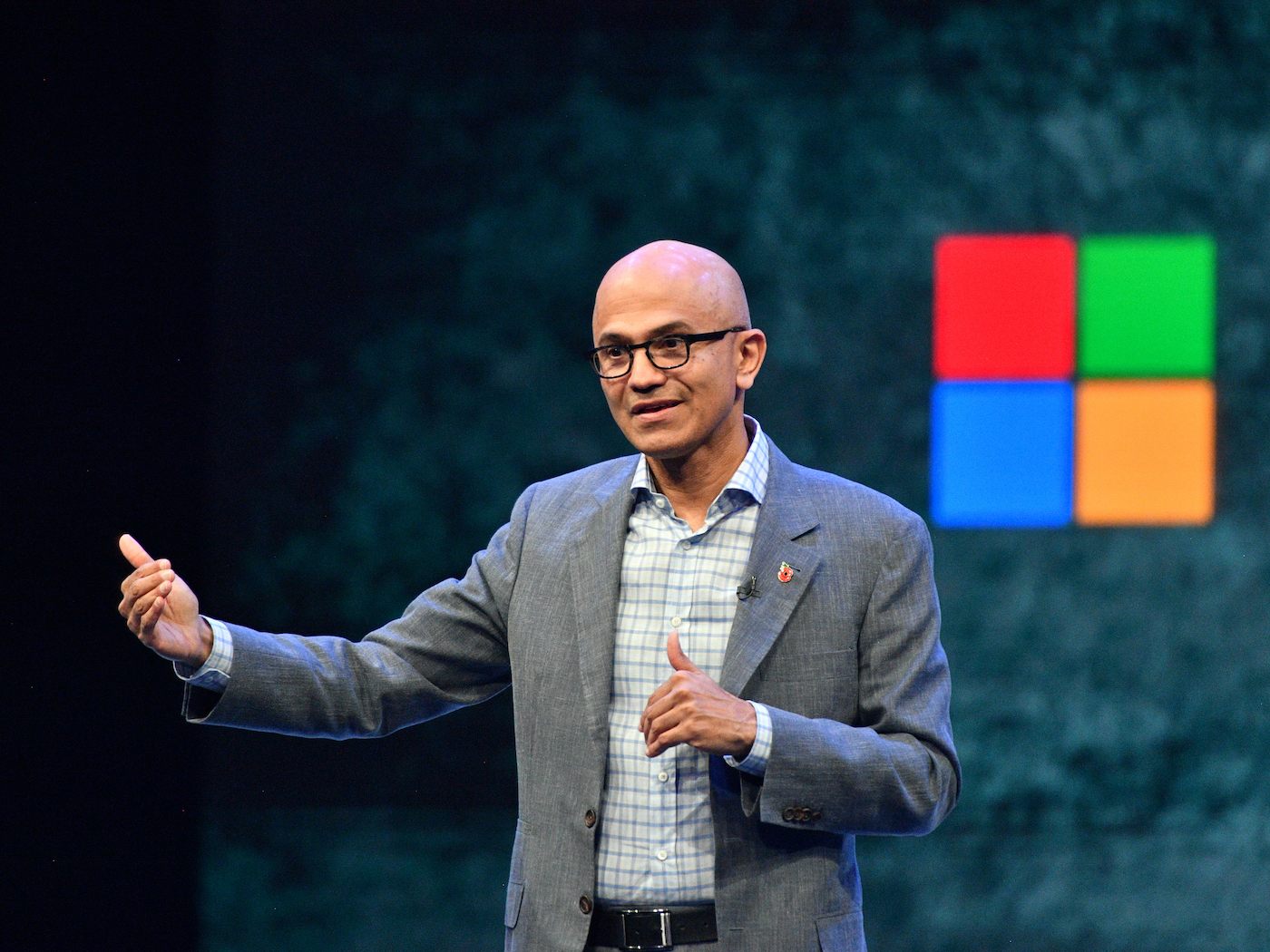
Microsoft CEO Satya Nadella has reportedly entered “founder mode,” shaking up management to keep pace with Amazon, Google, and startups like Anthropic. This dramatic shift signals a new chapter for the tech giant. The pressure is real, and Nadella isn’t backing down from the fight.
The AI race has intensified beyond anyone’s expectations. Microsoft Copilot reaches 150 million monthly users, trailing Google’s Gemini at 650 million and ChatGPT’s 800 million. These numbers tell a harsh story—despite early advantages, Microsoft AI development efforts face stiff headwinds from competitors who’ve caught up quickly.
Understanding Nadella Founder Mode Strategy
Silicon Valley investor Paul Graham coined the term “founder mode” to describe hands-on management similar to startup founders. This mindset aims to bypass bureaucratic layers at the $3.5 trillion firm. For a company of Microsoft’s size, adopting this approach represents a bold bet on agility over tradition.
Dee Templeton, a senior Microsoft technology leader, describes the shift precisely. Nadella introduced weekly cross-team meetings addressing competitive threats directly, with sessions connecting him to mid-level staff for unfiltered ideas, streamlining communication. The goal? Remove obstacles between employees and executive decision-making.
One Microsoft insider reveals the urgency: “Satya is trying to demonstrate a sense of urgency. The goal is to get out of some of the structures that exist and make the route to him easier.”
This isn’t just organizational theater. The Nadella founder mode strategy reflects genuine concern about losing ground in the AI wars. Traditional corporate hierarchies slow down innovation. Nadella recognizes this fundamental truth and acts accordingly.
How Microsoft Challenges Google AI Dominance
Google’s AI resurgence caught many by surprise. Google is stealing the show while OpenAI CEO Sam Altman has declared a “code red” emergency to match Google’s latest Gemini 3 AI models—an interesting twist given Google declared its own code red after ChatGPT hit the market in 2022.
The competitive landscape shifted dramatically. Microsoft faces intensifying rivalry from Amazon and Google, who have rapidly advanced their AI infrastructure and models after lagging initially, while Microsoft’s $14 billion investment in OpenAI provided early advantages. However, those advantages are eroding fast.
What’s driving Nadella’s aggressive response? Multiple factors converge simultaneously. First, Microsoft challenges Google AI supremacy through leadership restructuring. Nadella recruited high-profile executives like Jay Parikh, previously Meta’s engineering leader, to head the CoreAI unit, while elevating internal figures with expanded responsibilities to speed up AI tool development.
Second, the company diversifies its AI partnerships beyond OpenAI. Microsoft sees a need to reduce reliance on any single partner as competition heats up, embracing multiple AI models and frameworks including work with Anthropic, Meta, and other collaborators while building its own systems—reflecting rising pressure from rivals like Google and Amazon.
Third, Microsoft invests heavily in infrastructure. Reports indicate the company operates over 400 data centers across 70 regions worldwide. This massive computing backbone provides the foundation for competing at scale.
The stakes couldn’t be higher. Losing the AI race means losing relevance in the next computing paradigm. Nadella understands this existential threat intimately.
Satya Nadella AI Leadership in Action
What does Satya Nadella AI leadership look like practically? It combines several elements that distinguish his approach from traditional tech CEOs.
Nadella has brought in several new executives, with Mustafa Suleyman, co-founder of Google Deepmind, now leading Microsoft’s in-house AI development with his own budget and salary structure—creating internal friction, but Microsoft is accepting that to stay competitive for AI talent.
This willingness to disrupt internal politics demonstrates Nadella’s seriousness. He’s protecting new recruits against Microsoft’s established culture, even when it creates jealousy among longtime employees earning less than the new AI division hires.
The weekly meetings deserve special attention. Unlike typical corporate gatherings, these sessions cut through hierarchy. Nadella has reorganized leadership and started weekly meetings where employees discuss competitive challenges, allowing him to connect with staff beyond his top team and gather fresh ideas.
Additionally, Nadella engages directly with startups to understand market dynamics. Nadella has engaged startups like Applied Compute—founded by ex-OpenAI staff developing autonomous AI agents—and Mercor, a hiring platform, to gauge real-world AI demands. This hands-on approach keeps him grounded in actual customer needs rather than corporate abstractions.
His philosophy emphasizes empathy alongside technical excellence. In recent interviews, he stressed that emotional intelligence matters as much as IQ when building AI products. Understanding user context drives better product decisions.
The results speak volumes. While Microsoft faces challenges, the company maintains strong positions through Azure cloud services and enterprise relationships. The transformation isn’t complete, but the direction is clear.
The Changing Microsoft-OpenAI Partnership
The relationship between Microsoft and OpenAI has evolved significantly. The partnership changed in October 2025, with Microsoft losing exclusive rights to OpenAI’s data centers, and by the early 2030s, the company will no longer have exclusive access to OpenAI’s research and models.
This shift forced Microsoft to accelerate independent AI capabilities. Relying on a single partner became too risky when that partner could restrict access or pivot strategy without warning.
Satya Nadella’s latest leadership shake-up at Microsoft is a strategic reorientation: a concentrated push to build an autonomous, enterprise-grade AI engine inside Microsoft that can compete on multiple fronts, while insulating the company from single-partner dependency and ballooning costs of frontier-model development, with three clear objectives: accelerate internal AI product development; streamline decision-making and remove organizational friction; and diversify strategic partnerships and compute supply lines.
The newly created CoreAI division embodies this independence strategy. The Core AI division’s mission is to create tools and systems that can power agentic applications that can follow instructions, remember details, and act without constant human direction, marking a shift from simple AI features toward AI as an assistant that gets work done.
Building proprietary AI infrastructure gives Microsoft more control over its destiny. They can optimize costs, customize models for enterprise customers, and move faster without external dependencies slowing decisions.
Competitive Pressures Reshaping Microsoft’s Strategy
The competitive threats come from multiple directions simultaneously. Google’s Gemini models gained impressive traction. According to TD Cowen’s survey of roughly 2,500 US consumers, Gemini’s monthly active user penetration ramped faster than ChatGPT’s from July to October, climbing from 24% to 26%, while ChatGPT saw its penetration decline from 36% to 35% in the same period.
Meanwhile, newer competitors chip away at specific markets. Copilot’s 150 million monthly active users lag behind competitors’ larger bases, while startups like Anthropic, Anysphere, and Replit erode market share in AI coding tools.
Amazon also poses serious threats through AWS infrastructure and proprietary AI services. The cloud giant plans massive capital expenditures—$75 billion in 2025 alone—to enhance AI capabilities.
Sources close to Nadella say he’s watching Amazon and Google more closely now. Both companies made significant strides after initially lagging in generative AI. Their catch-up speed surprised industry observers.
The talent war adds another dimension. Earlier this year, Microsoft hired around two dozen employees from Google’s DeepMind AI research lab, while OpenAI has opened its wallet wide, along with Meta, with OpenAI CEO Sam Altman telling employees in June that Meta had been offering $100 million signing bonuses and that he was aggressively trying to retain staffers.
Competing for top AI researchers requires financial firepower. The AI race will demand investment worth hundreds of billions of dollars over the next five to ten years, with this massive scale of investment becoming crucial to developing AI models at an advanced level.
Microsoft must match these investments while delivering returns to shareholders. The balancing act grows more precarious as costs escalate.
Internal Transformation and Cultural Shifts
Beyond external battles, Nadella drives profound internal changes. Nadella and his team emphasize that AI should touch every role and become part of daily workflows, with tools like Microsoft 365 Copilot and GitHub Copilot not optional but essential to how employees plan, collaborate, and execute.
This cultural mandate extends to hiring practices. Microsoft intends to grow its workforce in 2025 with a focus on AI skills and integration, meaning teams will use AI tools deeply to improve productivity rather than just add headcount.
The emphasis on a growth mindset—a concept Nadella championed throughout his tenure—becomes even more critical during this transition. Employees must embrace continuous learning and adaptation as AI reshapes job functions.
The “founder mode” approach—hands-on involvement, rapid iteration, and reduced hierarchy—is designed to mimic startup speed while retaining Microsoft’s scale, though this operating style can accelerate decisions, it also concentrates directional authority at the top and relies on Nadella’s bandwidth and judgment.
Critics worry about concentration of power and decision bottlenecks. When everything flows through one person, even someone as capable as Nadella, scalability becomes questionable.
However, supporters argue the situation demands decisive action. Bureaucratic consensus-building would paralyze Microsoft at precisely the moment when speed matters most.
Strategic Investments and Infrastructure Buildout
Microsoft’s infrastructure investments reflect long-term AI ambitions. The company recently opened the Fairwater 2 datacenter, described as the world’s most powerful AI datacenter. These facilities cost billions but provide essential computing capacity for training advanced models.
According to IoT Analytics, Microsoft is emerging as a cloud AI leader, particularly in generative AI, passing both AWS and Google, accounting for 45% of new cloud AI case studies, including 62% of genAI-focused projects.
This leadership position in enterprise AI deployments provides Microsoft advantages in understanding real-world use cases. Enterprise customers have different requirements than consumer applications—they need reliability, security, compliance, and integration with existing systems.
Microsoft leverages its existing relationships and distribution channels. Office 365’s massive user base offers immediate market access for Copilot features. GitHub’s developer community provides testing grounds for coding assistants. Azure’s enterprise footprint creates natural upsell opportunities.
Microsoft’s competitive advantages—distribution through Office, GitHub’s developer reach, Azure’s scale, and enterprise relationships—give it a formidable starting point, with success now depending on execution: turning internal momentum into robust, trustworthy products that deliver measurable productivity gains for paying customers.
The challenge lies in converting potential into actual revenue growth. Enterprise sales cycles move slowly. Customers demand proof of ROI before committing to expensive AI implementations.
The Road Ahead for Microsoft AI Development
Where does Microsoft go from here? Several scenarios seem plausible based on current trajectories.
First, the company continues building proprietary AI capabilities while maintaining strategic partnerships. This hybrid approach balances independence with access to cutting-edge external research.
Second, Microsoft might pursue aggressive acquisitions of AI startups to quickly acquire talent and technology. The company has resources to outbid most competitors for strategic targets.
Third, increased focus on vertical-specific AI solutions could differentiate Microsoft from horizontal platform providers. Healthcare, finance, manufacturing, and government sectors each have unique requirements where specialized models might win.
These moves signal a Microsoft that wants to be less reliant on any single external model partner, more capable of building its own frontier systems and developer stack, and nimbler in responding to rapid competitive and technological change.
The Nadella founder mode strategy enables this flexibility. By reducing bureaucratic friction and empowering AI leaders with independent authority, Microsoft can experiment with multiple approaches simultaneously.
Risks remain substantial. Over-indexing on speed without proper governance could create compliance exposures, especially in regulated industries. Product quality might suffer if teams rush releases to match competitor timelines. Internal culture could fracture if pay disparities and organizational changes alienate veteran employees.
Yet doing nothing guarantees obsolescence. The technology industry shows zero mercy to companies that fail to adapt during paradigm shifts. Nadella recognizes this harsh reality and chooses action over paralysis.
What This Means for the Broader Tech Industry
Microsoft’s transformation under Satya Nadella AI leadership carries implications beyond one company. It demonstrates that even massive organizations can pivot when existential threats emerge.
The founder mode concept might spread to other large tech companies facing similar competitive pressures. CEOs may increasingly bypass traditional hierarchies to accelerate decision-making and innovation.
The talent wars will intensify as companies compete for limited AI expertise. Compensation packages will continue rising, potentially creating unsustainable cost structures unless productivity gains materialize.
Infrastructure investments will reshape regional economies. Datacenters require massive electricity supplies, cooling systems, and network connectivity. Communities hosting these facilities face both opportunities and challenges.
The partnership dynamics between large platforms and AI labs will continue evolving. Exclusive arrangements seem increasingly unstable as both sides recognize mutual dependency risks.
Regulatory scrutiny will increase as AI capabilities advance. Governments worldwide are developing frameworks to govern AI development and deployment. Companies must navigate this evolving landscape while maintaining innovation velocity.
For Microsoft specifically, the next 12-18 months prove critical. Can the company successfully execute on its independent AI vision? Will enterprise customers embrace Copilot at scale? Can Microsoft challenges Google AI successfully while maintaining profitability?
The answers to these questions will shape not just Microsoft’s future but the broader competitive dynamics of the AI era. Satya Nadella has placed enormous bets on this strategic direction. The Nadella founder mode strategy represents his most aggressive gamble yet—one that could either cement Microsoft’s position as an AI leader or expose vulnerabilities that competitors exploit ruthlessly.
The stakes are extraordinarily high. The execution must be flawless. And the entire industry watches closely to see whether Microsoft’s transformation succeeds or stumbles under the weight of its own ambitions.
Frequently Asked Questions
What is founder mode in Satya Nadella’s leadership approach?
Founder mode refers to Satya Nadella’s hands-on, startup-like leadership style at Microsoft, inspired by Paul Graham’s concept. It emphasizes direct involvement, breaking organizational silos, rapid execution, and bypassing bureaucratic layers to accelerate decision-making. Nadella uses weekly cross-team meetings, direct engagement with mid-level staff, and reduced hierarchy to demonstrate urgency and compete more effectively in the AI race against rivals like Google and Amazon.
How is Microsoft challenging Google’s AI dominance?
Microsoft challenges Google AI through multiple strategies: recruiting top executives like Jay Parikh from Meta to lead the CoreAI division, diversifying AI partnerships beyond OpenAI to include Anthropic and Meta, investing heavily in infrastructure with over 400 data centers globally, and building proprietary AI capabilities. The company also restructured leadership to accelerate AI development while leveraging existing advantages like Azure cloud services, Office 365 distribution, and enterprise relationships.
Why did the Microsoft-OpenAI partnership change?
The Microsoft-OpenAI partnership changed in October 2025, with Microsoft losing exclusive rights to OpenAI’s data centers and future access to research and models by the early 2030s. This shift forced Microsoft to accelerate independent AI capabilities, reduce single-partner dependency, and build an autonomous enterprise-grade AI engine. The change reflects both companies’ evolving strategies and Microsoft’s need to control its AI destiny without external dependencies.
How many users does Microsoft Copilot have compared to competitors?
Microsoft Copilot has reached 150 million monthly active users as reported to investors. However, this significantly trails Google’s Gemini at 650 million users and OpenAI’s ChatGPT at 800 million users. This user gap demonstrates the competitive pressure Microsoft faces despite early AI investments and partnerships, driving Nadella’s aggressive founder mode strategy to catch up with rivals.
Who are the key executives leading Microsoft’s AI transformation?
Key executives include Jay Parikh, former Meta engineering chief, who heads the newly formed CoreAI unit focused on platform and tools; Mustafa Suleyman, Google DeepMind co-founder, who leads Microsoft AI with independent budget and hiring authority; Judson Althoff, who handles business sales; and Ryan Roslansky, LinkedIn’s CEO, all with expanded responsibilities. These leaders receive autonomy and resources to attract top talent and accelerate AI innovation.
What competitive threats does Microsoft face in AI?
Microsoft faces intensifying competition from Google, whose Gemini 3 models gained rapid user adoption; Amazon, planning $75 billion in 2025 capital expenditures for AI infrastructure; and startups like Anthropic, Anysphere, and Replit eroding market share in AI coding tools. Google’s monthly active user penetration ramped faster than ChatGPT from July to October 2025, while Microsoft’s advantages from its $14 billion OpenAI investment continue eroding.
How much will AI competition cost companies according to Microsoft?
According to Microsoft AI division chief Mustafa Suleyman, the AI race will demand investment worth hundreds of billions of dollars over the next five to ten years. This massive scale of investment includes AI research, supporting infrastructure, and computing power needed to train and run AI models at advanced levels. The high costs reflect the strategic long-term nature of AI competition and the need for enormous resources to stay competitive.