

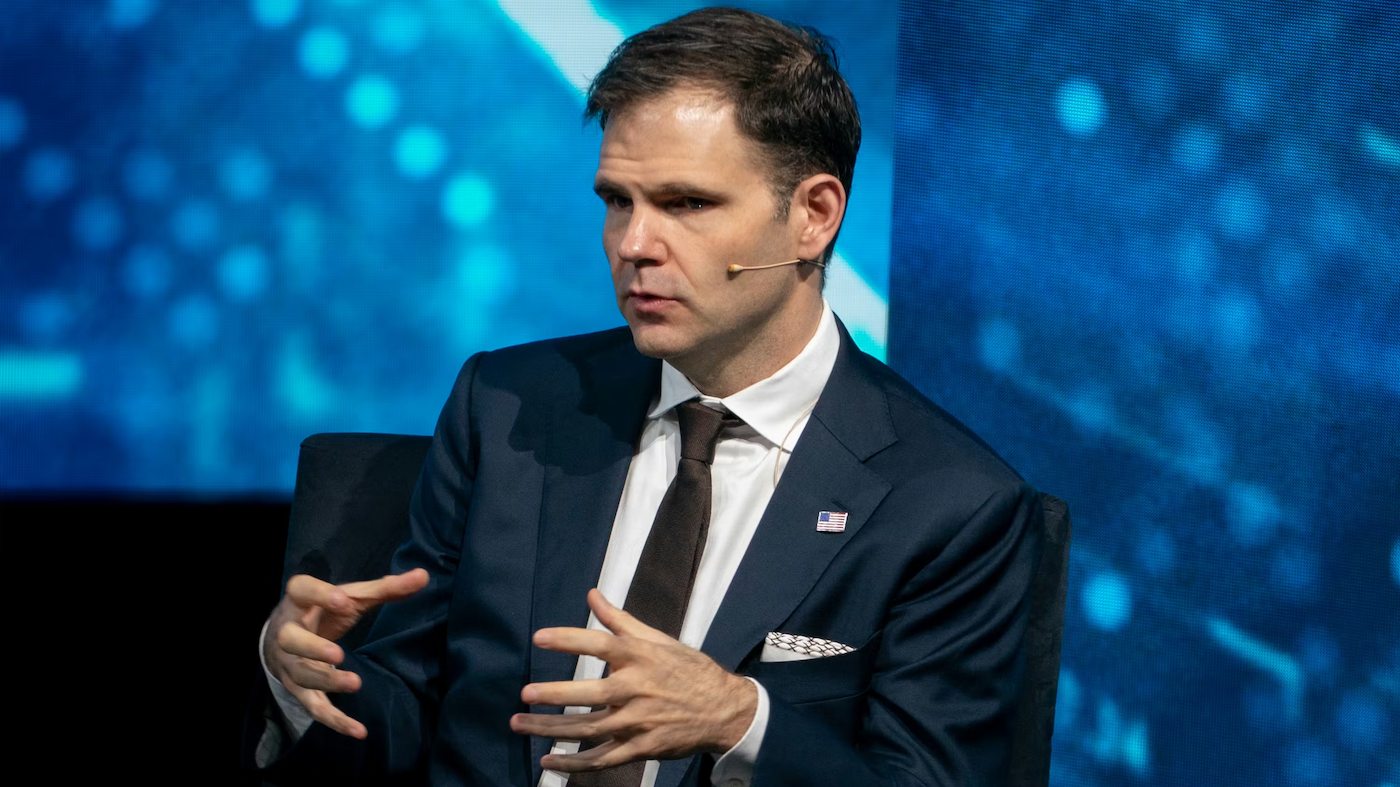
The artificial intelligence chip market reached a staggering $20 billion milestone this week with Nvidia’s acquisition of Groq assets. This deal represents the largest transaction in Nvidia’s corporate history. The acquisition dramatically surpasses their previous record – the $7 billion Mellanox purchase in 2019.
Jonathan Ross joins Nvidia as part of this groundbreaking arrangement. The Groq founder brings exceptional credentials to his new role. Ross previously worked at Google, where he helped develop the Tensor Processing Unit (TPU). His expertise in AI accelerator design makes him invaluable for Nvidia’s expanding ecosystem.
The Strategic Architecture Behind the Nvidia Groq Deal
This transaction follows a new pattern emerging across Silicon Valley. Major technology companies are pursuing talent and intellectual property without traditional acquisitions. Groq framed the deal as a “non-exclusive licensing agreement” while confirming that founder and CEO Jonathan Ross, along with president Sunny Madra and other senior leaders, will join Nvidia.
The AI chip startup acquisition differs significantly from conventional mergers. Nvidia CEO Jensen Huang clarified that “while we are adding talented employees to our ranks and licensing Groq’s IP, we are not acquiring Groq as a company”. Groq continues operating independently under new leadership.
Recent market data reveals the explosive growth driving these massive investments. US-based AI chip startups raised over $5.1 billion in venture capital in the first half of 2025 alone, while the AI chip market is projected to nearly double to $52 billion by 2025. This growth creates unprecedented opportunities for strategic partnerships.
Why Groq Founder Jonathan Ross Matters for Nvidia’s Future
The technical brilliance behind Groq’s innovations lies in its unique architectural approach. Groq’s Language Processing Units (LPUs) are ASICs that excel in inference, having positioned this as a high-volume, low-margin market. Their custom design offers significant advantages for large-scale AI inference tasks.
Jonathan Ross joins Nvidia with proven expertise in revolutionary chip design. Ross, who studied under AI pioneer Yann LeCun and helped create Google’s Tensor Processing Unit, represents one of the architects of modern AI accelerators. His move to Nvidia reunites cutting-edge talent with the market’s dominant platform.
The startup’s technological edge stems from innovative memory management. Groq’s approach uses a form of on-chip memory called SRAM, which helps speed up interactions with chatbots and other AI models. However, this design also limits the size of models that can be served, creating complementary value for Nvidia’s broader ecosystem.
Market analysts project continued consolidation in the AI chip sector. The AI chip market is rapidly expanding, reaching $39 billion in 2025 and predicted to be worth $39 billion in 2025 and $51 billion in 2026. This growth trajectory drives strategic moves like the Nvidia Groq deal.
The $20 Billion AI Chip Startup Acquisition Landscape
This acquisition reflects broader industry patterns where tech giants pursue strategic talent through licensing deals. Similar recent arrangements include Microsoft’s $650 million deal with a startup billed as a licensing fee, Meta’s $15 billion investment to hire Scale AI’s CEO without acquiring the entire firm, and Amazon hiring founders from Adept AI.
The valuation metrics reveal the premium companies pay for AI expertise. Groq raised $750 million at a valuation of about $6.9 billion just three months ago, yet Nvidia acqui-hires Groq leadership for nearly three times that amount. This premium reflects the strategic value of proven AI chip innovation.
Financial resources enable these aggressive moves. Nvidia ended October with more than $60 billion in cash and short-term investments, providing substantial firepower for strategic acquisitions. The company’s dominant market position generates resources that fuel continued expansion.
Current market conditions favor these hybrid acquisition models. The AI race is so intense, and the fight for an advantage so critical, that companies cannot afford the time-consuming regulatory processes required for major acquisitions. Licensing agreements with talent transfers offer faster execution paths.
Competitive Dynamics: How Nvidia Acqui-hires Groq Changes the Game
The deal positions Nvidia strategically within the inference market. Groq specializes in inference, where artificial intelligence models respond to user requests, and while Nvidia dominates AI model training, it faces much more competition in inference. Adding Groq’s capabilities strengthens Nvidia’s position in this competitive segment.
Integration plans demonstrate Nvidia’s architectural vision. Jensen Huang stated they plan to “integrate Groq’s low-latency processors into the NVIDIA AI factory architecture, extending the platform to serve an even broader range of AI inference and real-time workloads”. This integration creates synergies between complementary technologies.
The competitive landscape continues evolving rapidly. Groq’s primary rival Cerebras Systems plans to go public as soon as next year, and both Groq and Cerebras have signed large deals in the Middle East. These developments highlight the global nature of AI chip competition.
Investment trends support continued market consolidation. AI captured close to 50% of all global funding in 2025, up from 34% in 2024, with a total of $202.3 billion invested in the AI sector in 2025. This massive capital flow creates opportunities for strategic combinations.
Technical Innovation: What Makes Groq’s Technology Valuable
Groq’s architecture addresses critical industry bottlenecks. The company is one of several upstarts that avoid external high-bandwidth memory chips, freeing them from the memory crunch affecting the global chip industry through SRAM-based on-chip memory. This approach offers significant advantages for specific AI workloads.
The technical differentiation creates immediate value for Nvidia. Groq’s chip design relies on embedded memory, allowing processors to be produced and deployed faster while using less energy than traditional GPUs, which has resonated with customers and investors. These efficiency gains complement Nvidia’s existing offerings.
Recent performance metrics validate the technology’s potential. Groq’s growth has been quick and significant, with the company saying it powers the AI apps of more than 2 million developers, up from about 356,000 last year. This rapid adoption demonstrates market validation for their approach.
Manufacturing advantages provide additional strategic value. Revenue from AI chip packaging reached $4.7 billion, primarily due to 2.5D/3D stacking technology, with substrate shortages resolved by mid-2025 and delivery periods reduced to 12 weeks. Groq’s efficient manufacturing complements these industry improvements.
Market Impact: Understanding the Broader Industry Transformation
The transaction signals fundamental shifts in how technology companies pursue growth. Meta notably led a $14.3 billion investment into Scale AI, with around 10 key team members leaving the startup to join Meta, including CEO Alexandr Wang. These talent-focused deals represent a new acquisition strategy.
Global investment patterns reflect the AI revolution’s scope. The U.S. has dominated AI funding, with $159 billion or 79% of sector funding going to U.S.-based companies in 2025, while the San Francisco Bay Area alone raised $122 billion. This concentration drives continued innovation and competition.
Market projections support aggressive strategic investments. The global AI chip market was valued at $123.16 billion in 2024 and is projected to grow from $166.9 billion in 2025 to $311.58 billion by 2029. These growth rates justify premium valuations for proven technologies.
Regional competition adds complexity to strategic planning. South Korean AI chip startup FuriosaAI recently secured approximately $130 million in Series C funding supported by more than 40 institutional and private investors, including Korea Development Bank. International competition drives innovation across multiple markets.
Future Implications: What Jonathan Ross Joins Nvidia Means Long-term
The integration process will determine ultimate success. Ross confirmed on LinkedIn that he’ll be joining Nvidia to help integrate the licensed technology while GroqCloud continues operating without interruption. This dual approach preserves value while capturing synergies.
Operational continuity ensures ongoing market presence. Groq will continue as an independent company led by finance chief Simon Edwards as CEO, while GroqCloud continues operating without interruption. This structure maintains competitive positioning while enabling collaboration.
Industry expertise guides future development priorities. Nvidia’s Jensen Huang spent much of his biggest keynote speech of 2025 arguing that Nvidia would maintain its lead as AI markets shift from training to inference. The Groq acquisition supports this strategic direction.
Long-term market dynamics favor continued consolidation. Demand for inference hardware continues rising as companies deploy large language models at scale, spurring interest in alternatives that promise lower latency and energy consumption. These trends support the strategic rationale behind the acquisition.
Strategic Outlook for AI Chip Market Evolution
The deal establishes new precedents for industry transactions. For Nvidia, the deal marks its largest transaction on record by dollar value, while the Groq agreement fits a broader pattern taking shape across Big Tech. This approach may define future acquisition strategies.
Competitive responses will shape market dynamics. Groq’s trajectory mirrors several AI chip startups gaining attention during the AI boom, while Cerebras Systems filed for an IPO before pulling back amid shifting market conditions. Market evolution continues accelerating across multiple fronts.
Innovation priorities reflect shifting technical requirements. The future of AI chips lies in hybrid designs combining CPUs, GPUs, and AI accelerators on single packages, enabling workload-specific optimization and drastically improving efficiency. The Nvidia Groq deal advances these architectural goals.
The partnership between these industry leaders represents a transformative moment in artificial intelligence hardware development. Jonathan Ross joins Nvidia at a critical inflection point where inference capabilities determine competitive advantage. Their combined expertise positions both companies for the next phase of AI innovation, while the $20 billion valuation sets new benchmarks for strategic technology investments.
This acquisition demonstrates how leading technology companies balance immediate competitive needs with long-term architectural vision. The success of integrating Groq’s innovations into Nvidia’s ecosystem will influence how future AI chip startup acquisitions unfold across the industry.
Frequently Asked Questions
Who is Jonathan Ross and why is his move to Nvidia significant?
Jonathan Ross is Groq’s founder and former CEO who helped create Google’s Tensor Processing Unit (TPU). His move to Nvidia as part of the $20 billion deal brings proven AI chip expertise to accelerate Nvidia’s inference capabilities development.
What makes the Nvidia Groq deal worth $20 billion?
The deal represents Nvidia’s largest acquisition ever, securing Groq’s innovative inference technology, key talent including founder Jonathan Ross, and non-exclusive licensing rights to Language Processing Units that excel in low-latency AI inference tasks.
How does this AI chip startup acquisition differ from traditional mergers?
This is a talent and technology licensing deal rather than a full company acquisition. Groq continues operating independently under new CEO Simon Edwards while key personnel like Jonathan Ross join Nvidia to integrate the licensed technology.
What technology does Groq bring to Nvidia’s AI ecosystem?
Groq offers Language Processing Units (LPUs) that use embedded SRAM memory for faster, more energy-efficient AI inference compared to traditional GPUs. This technology complements Nvidia’s training-focused hardware with specialized inference capabilities.
Why are tech companies pursuing these hybrid acquisition deals?
Companies avoid lengthy regulatory approval processes while quickly securing critical talent and technology. Similar deals include Meta’s $15 billion Scale AI arrangement and Microsoft’s $650 million Inflection AI licensing agreement.
What does this mean for the future of AI chip competition?
The deal strengthens Nvidia’s position in the inference market where it faces more competition than in training. It signals continued consolidation as the AI chip market grows toward projected $311 billion valuation by 2029.
How will Groq continue operating after the Nvidia deal?
Groq maintains independent operations under new CEO Simon Edwards, with GroqCloud continuing to serve customers without interruption. The company retains its startup identity while benefiting from Nvidia’s expanded ecosystem partnerships.