

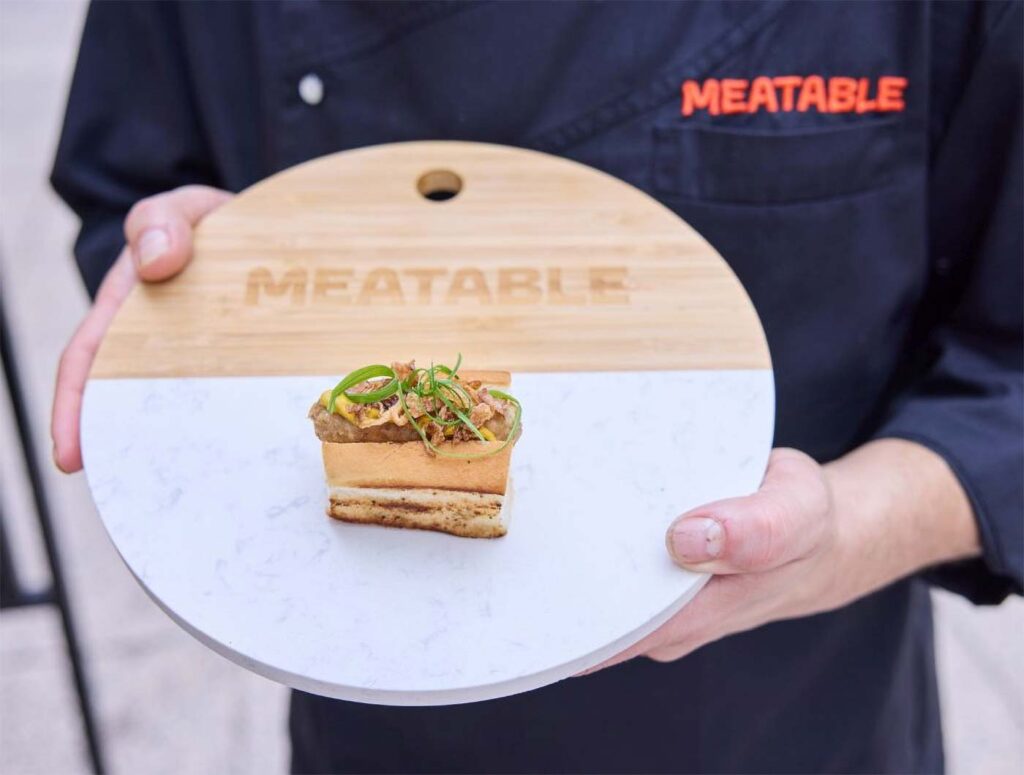
The cultivated meat sector just witnessed another devastating blow as Dutch startup Meatable announced its dissolution on December 19, 2025. This Meatable shutdown represents more than just another company failure. It signals a deepening crisis in an industry that once promised to revolutionize food production.
Agronomics, Meatable’s key investor, confirmed the company’s inability to secure continued funding from existing or new shareholders. The investment firm wrote off its £11.9 million stake to zero, representing 8.1% of its net asset value. This brutal reality check comes just days after another major player, Believer Meats, also ceased operations despite having full FDA approval and the world’s largest cultivated meat factory.
The Funding Crisis Devastating Cultivated Meat Companies
The Meatable shutdown exemplifies the broader cultivated meat funding challenges plaguing the industry. Investment has plummeted from a peak of $989 million in 2021 to just $65 million in 2025. This represents a staggering 93% decline in just four years, creating what industry experts describe as an “investment winter.”
The numbers tell a devastating story. Startups in this segment received only $36 million in the first nine months of 2025, compared to $139 million for all of 2024. This funding drought has created impossible conditions for companies requiring substantial capital to overcome technical and scaling challenges.
Meatable had raised approximately $105 million throughout its lifetime, including backing from prominent investors like BlueYard Capital, DSM Venturing, and Thai food giant Betagro. Despite this substantial war chest, the company ultimately couldn’t bridge the gap to profitability or secure additional rounds needed for commercialization.
Why Did Meatable Fail? Examining the Perfect Storm
The Meatable shutdown resulted from multiple interconnected factors that have become increasingly common across the cultivated meat industry. CEO Jeff Tripician, who joined in June 2024, had positioned the company as a “raw material supplier” to established meat companies, focusing on partnerships rather than direct consumer sales.
Meatable had secured several promising developments in 2025, including a partnership with Pelagen for cultivated leather, a joint venture with TruMeat for Singapore production facilities, and acquisition of Uncommon Bio’s platform. However, these strategic moves failed to generate sufficient investor confidence during the critical funding crunch.
The company’s proprietary technology, using pluripotent stem cells to produce muscle and fat cells in just four days, was considered among the fastest in the industry. Named one of Time magazine’s best inventions of 2024, Meatable had also participated in the UK’s regulatory sandbox and hosted the first public tasting of cultivated proteins in the EU.
Yet technological innovation alone proved insufficient. Regulatory delays compounded the challenges, as Meatable was still awaiting approval in Singapore after expecting clearance in Q1 2025. Without regulatory approval, companies cannot generate revenue, creating an unsustainable burn rate that eventually exhausts even well-funded startups.
The Broader Lab-Grown Meat Investment Risk Reality
The Meatable shutdown reflects systemic lab-grown meat investment risk that extends far beyond individual company failures. The sector peaked in investment confidence during 2021-2022, when low interest rates and pandemic-driven interest in food security created ideal conditions for alternative protein funding.
However, the economic landscape shifted dramatically. Rising interest rates, inflation concerns, and general venture capital pullback from non-AI sectors created particularly challenging conditions for capital-intensive biotechnology companies. AgriFood tech funding overall dropped to $5.1 billion in H1 2025, a 37% decline from 2024, marking the lowest total since 2015.
Investors have become increasingly selective, demanding clearer paths to profitability and shorter timelines to market. Unfortunately, cultivated meat companies typically require substantial upfront investment for research, regulatory approval, and manufacturing infrastructure before generating any revenue. This mismatch between investor expectations and industry realities has created what many describe as a “valley of death” for startups.
The risk extends beyond funding scarcity. Consumer acceptance remains uncertain, with many surveys showing mixed reactions to lab-grown proteins. Regulatory pathways remain complex and lengthy, with only Singapore and the United States currently allowing commercial sales under specific conditions.
Dutch Food Tech Startup News: A National Innovation Setback
The Meatable shutdown represents significant Dutch food tech startup news, as the Netherlands had positioned itself as a European leader in alternative protein innovation. The country hosts several major cultivated meat companies, including Mosa Meat, which successfully raised €40 million in 2024 – the largest single funding round in the sector that year.
The Netherlands and Israel stand out as innovation hotspots in the global cultivated meat landscape, with Dutch companies benefiting from strong government support, world-class research institutions, and proximity to major food manufacturers. The loss of Meatable diminishes this ecosystem’s momentum and may impact investor confidence in other Dutch food tech ventures.
This setback occurs while the European Union maintains a cautious regulatory stance, with no approvals for human consumption as of 2025. This regulatory uncertainty dampens investor enthusiasm across Europe, creating additional headwinds for surviving companies.
The Dutch government has provided substantial support through organizations like Invest-NL, which backed Meatable. However, government funding alone cannot sustain companies through the extended development periods required for cultivated meat commercialization.
Industry Consolidation and the “Second Phase” Reality
Industry observers describe the current period as the “second phase” of cultivated meat development, characterized by consolidation, realistic timelines, and focus on fundamentals rather than hype. The Association for Meat Poultry and Seafood Innovation (AMPS) emphasizes that individual company failures should not be interpreted as sector-wide weakness.
Several companies have ceased operations in 2025, including Believer Meats, CellRev, Upstream Foods, and now Meatable. This wave of shutdowns follows a pattern typical of emerging industries, where initial enthusiasm and abundant capital give way to more realistic assessments of technical and commercial challenges.
Surviving companies are adapting strategies accordingly. Mosa Meat’s leadership emphasizes a “rational, deep-biotech approach that prioritizes fundamentals over speed,” focusing on unit economics and sustainable scaling rather than rushing to market.
Major players like GOOD Meat continue making progress, launching retail products in Singapore that blend 3% cultivated chicken with conventional meat. This hybrid approach may represent a more viable near-term commercialization strategy than pure cultivated products.
Regulatory Challenges Compounding Financial Pressures
Regulatory uncertainty significantly contributed to the Meatable shutdown and broader industry struggles. Only Singapore and the United States currently allow commercial sales of cultivated meat products, severely limiting potential markets for companies seeking revenue generation.
European regulatory agencies maintain cautious approaches, requiring extensive safety data and environmental assessments before approval. This creates extended development timelines that strain company resources and investor patience. The EU’s regulatory review process can take several years, during which companies must continue burning capital without revenue generation.
Meatable had pursued a Singapore-first strategy, expecting approval by Q1 2025. The continued delays in regulatory clearance eliminated the company’s ability to demonstrate commercial viability to potential investors. This regulatory bottleneck has become a critical vulnerability for cultivated meat startups worldwide.
Government support varies significantly by region, with countries like Singapore, Japan, and South Korea actively funding research and establishing clear regulatory pathways. However, inconsistent global policies create additional complexity for companies attempting international expansion.
Technology Advances Insufficient Without Commercial Viability
Despite impressive technological achievements, the Meatable shutdown demonstrates that innovation alone cannot guarantee startup survival in the current market environment. Meatable’s pluripotent stem cell technology could produce differentiated muscle and fat cells in four days, significantly faster than competitors using traditional cell lines.
The company had also diversified beyond food applications, partnering with Pelagen for cell-based leather development and acquiring Uncommon Bio’s platform to strengthen its intellectual property portfolio. These technological advantages and strategic acquisitions ultimately proved insufficient to secure continued funding.
Industry experts emphasize that successful companies require the “best science” combined with partnerships with established meat companies. However, forming these partnerships has proven challenging as traditional meat companies remain cautious about investing in unproven technologies during uncertain economic conditions.
Cost reduction remains the fundamental challenge. While companies have achieved dramatic cost reductions over the past two years, production costs must decrease significantly further to achieve price parity with conventional meat.
Market Projections vs. Reality: A Sobering Assessment
Despite recent setbacks, market research continues projecting substantial growth for cultivated meat. The global market size reached $292.6 million in 2025 and could expand to $416.7 million by 2035 at a 33.6% compound annual growth rate.
However, these projections assume successful technology scaling, favorable regulatory developments, and consumer acceptance – all assumptions challenged by recent industry events. The gap between optimistic market forecasts and current industry realities highlights the speculative nature of many investment decisions during the sector’s peak years.
North America is predicted to account for 38.7% of the market by 2035, driven by its pioneering regulatory framework. However, even in approved markets, consumer adoption remains limited, with products primarily available in specialized restaurants and limited retail channels.
The Meatable shutdown and similar company failures suggest that market development may proceed more slowly than projected, with several years of additional technological development and cost reduction required before achieving meaningful commercial scale.
Lessons for Surviving Companies and Investors
The Meatable shutdown provides critical lessons for surviving cultivated meat companies and their investors. Companies must focus on extending cash runways through operational efficiency rather than relying solely on continued fundraising. Strategic partnerships with established food companies become essential for accessing both funding and commercial expertise.
Realistic timeline setting proves crucial for managing investor expectations. The industry’s initial optimism about rapid commercialization has given way to acknowledgment that significant technical and regulatory hurdles remain. Companies that communicate transparent development roadmaps and achievable milestones may have better success securing patient capital.
Diversification strategies, such as Meatable’s cell-based leather partnership, can potentially provide alternative revenue streams while core food applications develop. However, these diversification efforts require additional resources and may dilute focus from primary objectives.
The importance of regulatory strategy cannot be overstated. Companies must carefully select initial target markets based on regulatory readiness rather than market size alone. Building strong relationships with regulatory agencies and maintaining transparent communication throughout approval processes has become essential for long-term viability.
The Road Ahead: Cautious Optimism or Continued Contraction?
While the Meatable shutdown represents another significant setback, industry advocates maintain cautious optimism about long-term prospects. Investment data suggests the sector may be stabilizing after hitting bottom in 2023, with 2025 showing early signs of renewed but selective investor interest.
Key factors supporting future growth include continued technological advancement, expanding regulatory approvals, and increasing consumer awareness of environmental and ethical benefits. Several cultivated meat innovation hubs opened in 2024, providing shared infrastructure to help companies reduce scale-up costs.
However, the industry must demonstrate concrete progress toward commercial viability to restore investor confidence. This requires achieving significant cost reductions, securing additional regulatory approvals, and proving consumer acceptance at scale. The next 18-24 months will likely determine whether the sector can recover from its current challenges or faces further consolidation.
The Meatable shutdown serves as a sobering reminder that even well-funded, technologically advanced companies remain vulnerable in the current environment. Success will require not just innovation, but also strategic execution, patient capital, and favorable regulatory development. For an industry that once promised to transform food production, the reality check could not be more stark.
Frequently Asked Questions
Why did Meatable shut down?
Meatable shutdown occurred due to inability to secure continued funding from existing shareholders or new investors, combined with regulatory delays and the broader cultivated meat industry funding crisis.
How much funding did Meatable raise before shutting down?
Meatable raised approximately $105 million throughout its lifetime from investors including BlueYard Capital, DSM Venturing, and Thai food giant Betagro before the shutdown.
What were Meatable’s main technological advantages?
Meatable used proprietary pluripotent stem cell technology that could produce differentiated muscle and fat cells in just four days, significantly faster than competitors using traditional cell lines.
How has cultivated meat industry funding changed recently?
Cultivated meat funding plummeted from $989 million in 2021 to just $65 million in 2025, representing a 93% decline that has created severe challenges for startups across the sector.
Which other cultivated meat companies have shut down recently?
Recent cultivated meat company closures include Believer Meats (December 2025), CellRev, and Upstream Foods, indicating broader industry consolidation and funding difficulties.
What does the Meatable shutdown mean for the Dutch food tech ecosystem?
The Meatable shutdown represents a significant setback for Dutch food tech innovation, as the Netherlands had positioned itself as a European leader in alternative protein development alongside companies like Mosa Meat.
Are there still opportunities in the cultivated meat industry?
Despite recent setbacks, industry experts suggest the sector may be stabilizing with selective investor interest returning, though companies must demonstrate clear paths to commercial viability and cost-effective production.