
Nuclear Startup Last Energy Secures Transformative $100M Series C Amid AI Power Boom

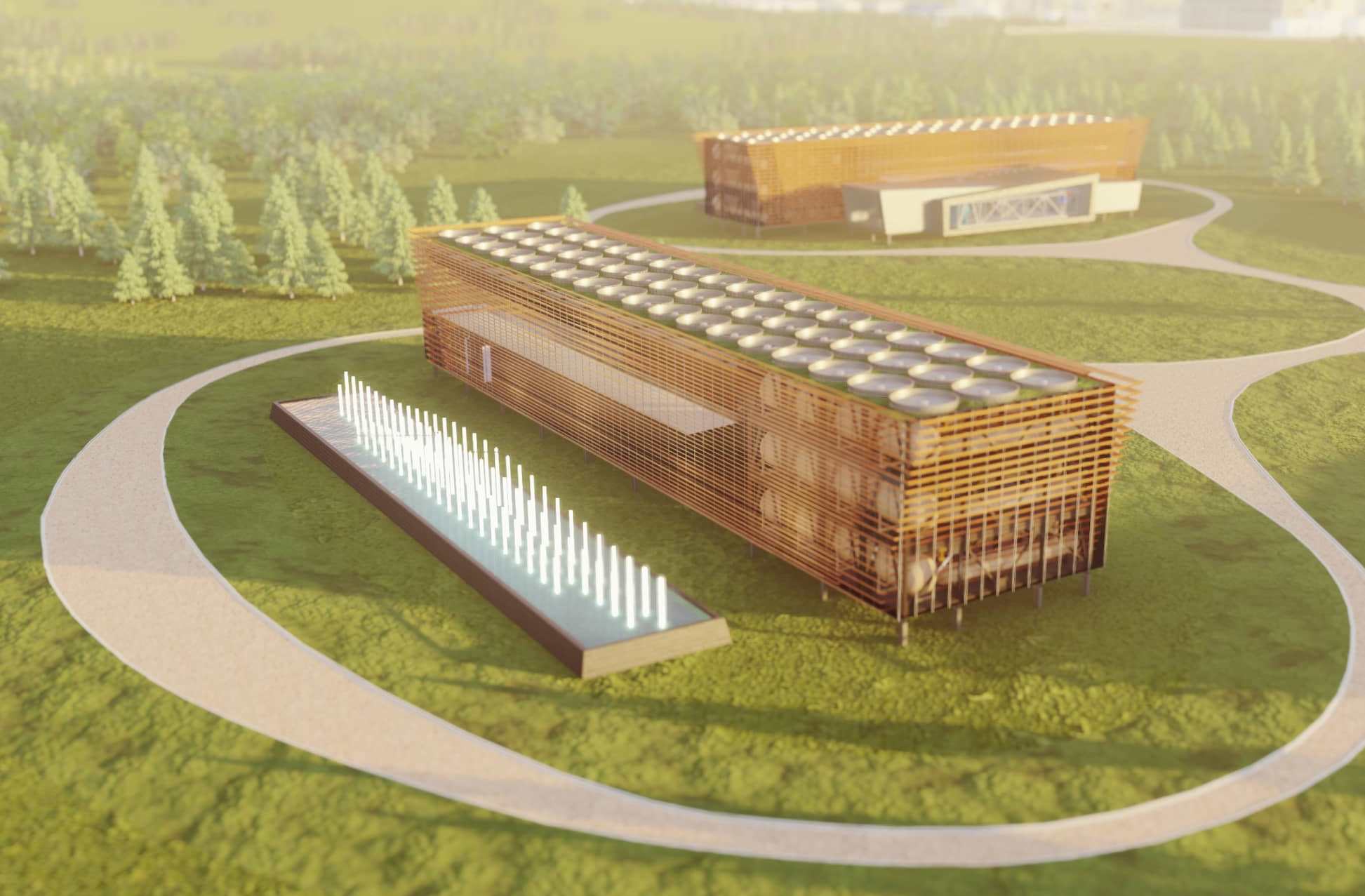
Last Energy Inc. secured $100 million in Series C funding to commercialize its small nuclear reactor technology, as demand for power to run artificial intelligence systems drives renewed interest in nuclear energy. This watershed moment arrives as data centers scramble to secure reliable, carbon-free power sources that can handle the explosive growth in AI computing requirements.
The Austin-based nuclear technology company announced the oversubscribed funding round on Monday, marking a significant milestone in the race to deploy next-generation nuclear reactors for industrial applications. “We believe this financing will fully capitalize us through our DOE pilot project and position us to transition into commercialization of our production power plants,” said Bret Kugelmass, Founder and CEO of Last Energy.
Investor Coalition Signals Confidence in Nuclear Revival
The Series C round was led by the Astera Institute, with participation from JAM Fund, Gigafund, The Haskell Company, AE Ventures, Ultranative, Galaxy Interactive, and Woori Technology Co., Ltd. The diverse investor group reflects growing institutional confidence in advanced nuclear technologies as solutions to mounting energy demands.
“Last Energy is applying a product mindset to nuclear energy that could reshape power generation,” said Jed McCaleb, Co-Founder of the Astera Institute. The backing from prominent investors demonstrates how Last Energy funding is becoming a strategic priority for organizations recognizing nuclear power’s potential in meeting 24/7 energy needs.
Last Energy has now raised $314 million total. Astera Institute, Dysruptek, Western Technology Investment, DuContra Ventures, and Impact Assets are 5 of 14 investors who have invested in Last Energy. This substantial capital accumulation positions the company as a frontrunner in the competitive microreactor space.
Revolutionary Steel-Encased Design Drives Efficiency
Last Energy’s approach centers on factory-manufactured microreactors that challenge traditional nuclear construction paradigms. The startup is pursuing a steel-encased microreactor design that has raised $100 million to further its power-trajectory tech and refocus fresh attention on small modular reactors. The Series C funding will allow Last Energy to finalize its first pilot and progress toward initial commercial deployments.
Each core is encased in around 1,000 tons of steel housed in a monolith the size of thousands of subway cars, permanently sealed as the reactor’s containment and then as its waste cask at end of life. This innovative design eliminates the need for complex penetrations typical in conventional nuclear plants.
The steel vessel approach offers compelling economic advantages. Last Energy estimates the steel alone at around $1 million per unit — a number that is less than that required for specialized, nuclear-grade concrete and complex penetrations typically found in conventional plants. This cost reduction strategy could make nuclear power more accessible for smaller-scale applications.
Targeting Critical 2026 Demonstration
Last Energy funding will immediately accelerate the company’s pilot reactor development timeline. In August 2025, the company was selected for the U.S. Department of Energy’s (DOE) Reactor Pilot Program and secured a lease at the Texas A&M–RELLIS Campus and signed the first known Other Transaction Agreement (OTA) between the DOE and a reactor developer, in preparation for an anticipated 2026 criticality demonstration.
With a full core load of fuel already procured, Last Energy is targeting a 2026 criticality demonstration—a critical proof point for its technology. Successfully achieving criticality would validate the company’s technical approach and position it for commercial deployment.
The pilot project represents more than just technical validation. The $100 million raise exceeds the $35 million required to complete Last Energy’s PWR-5 pilot reactor, a scaled-down version of its flagship PWR-20 design capable of powering about 15,000 homes. CEO Bret Kugelmass stated, “This financing fully capitalizes our DOE pilot project and positions us to transition swiftly into commercialization of our production power plants.”
AI Data Centers Drive Nuclear Renaissance
The timing of Last Energy funding aligns perfectly with unprecedented energy demands from artificial intelligence infrastructure. Goldman Sachs Research forecasts 85-90 gigawatts (GW) of new nuclear capacity would be needed to meet all of the data center power demand growth expected by 2030. This massive requirement creates enormous market opportunities for proven nuclear technologies.
Global electricity generation to supply data centres is projected to grow from 460 TWh in 2024 to over 1 000 TWh in 2030 and 1 300 TWh in 2035. This exponential growth trajectory underscores why companies like Last Energy are attracting significant investor attention.
Nuclear power offers unique advantages for AI applications. “Our conversations with renewable developers indicate that wind and solar could serve roughly 80% of a data center’s power demand if paired with storage, but some sort of baseload generation is needed to meet the 24/7 demand,” explains Jim Schneider, a digital infrastructure analyst at Goldman Sachs Research.
The reliability factor becomes crucial when considering the operational requirements of advanced AI systems. Unlike wind turbines and solar arrays that generate electricity intermittently, nuclear power plants typically put out a constant supply of energy to the grid, which aligns well with what data centers need.
Manufacturing Excellence Sets Last Energy Apart
Last Energy’s factory-based production approach represents a paradigm shift in nuclear reactor deployment. “A new nuclear era is underway, and we intend to showcase how factory fabrication will unlock the scalability that the energy market demands,” Kugelmass emphasized.
The new capital will primarily fund Last Energy’s PWR-5 pilot reactor, advance its commercial PWR-20 design, and expand manufacturing capabilities in Texas. This geographic concentration in Texas positions the company to leverage the state’s manufacturing ecosystem and energy infrastructure.
The company’s manufacturing strategy addresses one of nuclear power’s biggest historical challenges: deployment speed and cost efficiency. If Last Energy can validate performance, maintain construction schedules and navigate licensing, its sealed-steel microreactor could fill a niche to deliver firm power relatively quickly to isolated single campuses that cannot wait for new transmission.
Regulatory Progress Accelerates Commercial Pathway
Beyond the U.S. market, Last Energy has achieved significant regulatory milestones internationally. In the United Kingdom, the company has completed a Preliminary Design Review and reportedly has a regulator-confirmed pathway toward a potential 2027 site license decision. Last Energy is the only company known to have reached this regulatory milestone.
This dual-track regulatory approach reduces deployment risk and expands market opportunities. Last Energy has achieved regulatory progress in both the U.S. and UK, building one of the industry’s largest commercial microreactor pipelines for data centers and industrial facilities.
The regulatory progress complements Last Energy funding by providing clear pathways to commercialization. With regulatory milestones achieved and a pilot project on track for 2026, Last Energy is positioning itself as a major player in next-generation nuclear deployment. The company’s focus on manufacturing efficiency and proven technology could determine whether microreactors become a practical solution for industrial-scale clean energy needs.
Market Positioning in Competitive Landscape
Last Energy funding positions the company strategically within the rapidly evolving nuclear startup ecosystem. It’s part of a growing wave of companies designing next-generation nuclear systems to meet surging electricity consumption. However, the company’s steel-encased design and factory production approach differentiate it from competitors pursuing different technical paths.
The investment environment for nuclear startups has become increasingly competitive. Major tech companies, including Amazon, Google, Microsoft, and Meta, announced nuclear-related agreements in 2024. Yet with no SMRs currently in commercial operation in the US and permitting and construction cycles often spanning five to seven years, first units are unlikely before late this decade.
This timeline gap creates opportunities for companies like Last Energy that can demonstrate near-term technical progress. The company plans to achieve criticality for the pilot in 2026 at Texas A&M-RELLIS campus. Meeting this aggressive timeline could establish significant first-mover advantages in the microreactor market.
Economic Impact and Job Creation
Last Energy funding will generate substantial economic impact beyond the nuclear sector. The company plans to leverage this capital to scale its manufacturing operations and expand its project pipeline across the U.S., UK, and Europe. This expansion strategy promises job creation across multiple geographic regions.
Texas particularly stands to benefit from Last Energy’s manufacturing expansion. Following this round, Last Energy is focusing on strengthening its footprint in Texas through expanded investment in manufacturing capabilities and partner engagement. This commitment aligns with Texas’s position as a leading energy state and manufacturing hub.
The manufacturing focus addresses broader economic competitiveness concerns. The company plans to bring the pilot reactor online next year, and to bring the 20 MW serial unit into production in 2028. This timeline positions Last Energy to capture early market share in the emerging microreactor sector.
Technology Validation and Risk Management
Last Energy’s technical approach builds on proven nuclear engineering principles while incorporating modern manufacturing techniques. The uniqueness of Last Energy lies in the use of an updated high-pressure water cooling design, based on an older but proven solution. The initial project for a high-pressure water-cooled reactor was developed for NS Savannah – the world’s first nuclear-powered merchant ship.
This heritage-based approach reduces technical risk compared to entirely novel reactor designs. The reactor is fueled for six years from the beginning, and its design does not allow it to be serviced midway through life; when shut down, its steel body doubles as a storage cask without further spent-fuel handling.
The sealed design philosophy eliminates many operational complexities that have historically challenged nuclear power plants. Water that’s piped through the outside tubes absorbs heat and drives a steam turbine, so there are no penetrations through the steel wall other than electrical and control links.
Global Energy Transition Implications
Last Energy funding represents more than just a single company’s success—it signals broader shifts in energy infrastructure investment. The contribution of nuclear power to data centre electricity supply is likely to increase between 2030 and 2035, particularly in the US and China, driven mainly by the commissioning of small modular reactors (SMRs).
The global nature of energy demand creates substantial market opportunities. Electricity demand from data centres worldwide is set to more than double by 2030 to around 945 TWh. AI will be the most significant driver of this increase, with electricity demand from AI-optimised data centres projected to more than quadruple by 2030.
Policy environments increasingly support nuclear expansion. President Trump signed four executive orders targeting accelerated nuclear deployment and setting a goal of quadrupling US nuclear output by 2050. The orders call for increased uranium mining and enrichment capabilities, as well as accelerated testing of advanced reactor designs including SMRs.
Strategic Outlook and Market Dynamics
Last Energy funding arrives at a pivotal moment for the nuclear industry. “It’s going to be important in the next couple [of] years to see more firm commitments and actual money going out for these projects,” says Jessica Lovering, who cofounded the Good Energy Collective, a policy research organization that advocates for the use of nuclear energy.
The company’s integrated approach—combining proven technology, factory production, and regulatory progress—positions it uniquely within the nuclear startup landscape. The funding is a significant vote of confidence, but the true test will come with execution at scale — where nuclear’s reliability meets factory cadence and learning-curve economics.
Market dynamics continue evolving rapidly. In 2025, AI demand drove data centers toward on-site power, BESS, and nuclear options, while grid delays increased. These trends favor companies like Last Energy that can provide dedicated, reliable power solutions for specific applications.
The success of Last Energy funding reflects broader investor confidence in nuclear technology’s role in the global energy transition. As artificial intelligence continues driving unprecedented electricity demand, companies delivering proven nuclear solutions at scale will likely capture significant market value.
With this substantial funding round complete, Last Energy enters a critical execution phase. The company’s ability to deliver on its 2026 pilot timeline and subsequent commercial deployment will determine whether it can capitalize on the enormous market opportunities emerging from the intersection of AI growth and clean energy requirements.
Frequently Asked Questions
What is Last Energy funding being used for?
The $100M Series C funding will fully capitalize Last Energy’s DOE pilot project, advance PWR-20 commercialization, and expand manufacturing capabilities in Texas, targeting a 2026 criticality demonstration.
Who led Last Energy funding round?
The oversubscribed Series C was led by Astera Institute, with participation from JAM Fund, Gigafund, The Haskell Company, AE Ventures, Ultranative, Galaxy Interactive, and Woori Technology Co., Ltd.
How does Last Energy’s technology differ from traditional nuclear reactors?
Last Energy uses steel-encased microreactors designed for factory production, permanently sealed with no mid-life servicing required, reducing costs compared to conventional nuclear-grade concrete construction.
When will Last Energy’s first reactor be operational?
Last Energy is targeting a 2026 criticality demonstration for its PWR-5 pilot reactor at Texas A&M–RELLIS Campus, with commercial 20-megawatt units planned for production by 2028.
Why is Last Energy funding significant for the nuclear industry?
The funding represents growing investor confidence in nuclear solutions for AI data center power needs, with Last Energy becoming one of few companies with clear regulatory pathways in both the U.S. and UK.
What power capacity do Last Energy reactors provide?
Last Energy’s PWR-20 commercial reactors generate 20 megawatts of electricity, capable of powering approximately 15,000 homes or dedicated industrial facilities like data centers.
How much total funding has Last Energy raised?
With this Series C round, Last Energy has raised $314 million total from 14 investors, positioning it as one of the most well-funded nuclear startups in the microreactor space.